
African Bonytongue
Scientific name Heterotis niloticus
Adult size
One field study classified fish above 0.50 m standard length as adults; a separate maximum record reached 1.0 m, while smaller juvenile samples were not adult measurements. No reliable ordinary-adult weight range is available; upper-end maximum records are not everyday adult weights. Body depth is derived from its proportion of standard length at the separate 1.0 m maximum, not a directly measured or typical adult depth.
- Weight
- Ordinary-adult weight is not reliably reported. Upper-end records reach about 10.2 kg, but that is a maximum, not an everyday adult weight.
- Length
- 0.5-1 m
- Body depth
- 0.2-0.29 m
- Top speed
- We have not found a reliable measured adult swimming speed for this species. Fingerling exercise studies looked at breathing and physiology, not how fast the fish moved.
- Lifespan
- About 9.4 years in one Cross River stock model. This is a model estimate, not an observed or species-wide lifespan.
Freshwater basins across the Sahelo-Sudanian region, including the Nile and major West African river systems; introduced populations remain separately labelled.
The range
Three regions, one species.
The african bonytongue doesn't live in one place. Across the map below, each region has its own pressures, prey, and politics — same biology, different worlds.
-
West and North-east Africa
Nile and Sahelo-Sudanian freshwater basin systems
This species is native to a broad network of African freshwater basins, including the Nile and major West African river systems.
Source ↗ -
Gabon
Introduced freshwater populations
Gabon holds an introduced freshwater population.
Source ↗ -
Madagascar
Introduced freshwater populations
Madagascar is a separate introduction outside the confirmed native localities across West and north-east Africa.
Source ↗
Daily life
What the african bonytongue does, day to day.
Diet, social behaviour, climate — the everyday biology that shapes how this species hunts, defends and survives.
-
Diet
Young fish focus on microcrustaceans, aquatic insects and invertebrate eggs; larger fish keep eating invertebrates and add more seeds and detritus as habitat, season and size change.
-
Social life
In the Lake Hlan study system, adults built circular nests in shallow vegetation; juveniles and subadults also use flooded plains as feeding and nursery habitat.
-
Climate
Tropical freshwater in Sahelo-Sudanian river and lake systems.
Wyld Trivia
Five questions. Most people get them wrong.
But you're not most people.
Tap to reveal.
-
Why does this fish keep coming to the surface?
Show me HideAfrican Bonytongue needs to breathe air, so coming to the surface is a normal part of how it breathes.
-
Is it really an arowana?
Show me HideAfrican arowana is one of its common names, but the exact species is Heterotis niloticus in the family Arapaimidae. Older books and papers may still show the legacy family Osteoglossidae.
-
What does it eat?
Show me HideThe answer changes with age and place. Young fish lean towards tiny crustaceans, aquatic insects and eggs; larger fish still eat invertebrates but add more seeds and detritus.
-
How big can it get?
Show me HideMaximum records reach 100 cm standard length and about 10.2 kg. Those are upper-end scale clues, not the size of an ordinary adult.
-
How tall is a fish?
Show me HideFor this fish, the useful vertical measure is body depth: one-fifth to a little over one-quarter of standard length. At the separate 1 m maximum-length context, that works out to about 0.20-0.29 m as a derived upper-end clue, not a typical adult measurement.
The terrain
Where the african bonytongue thrives.
Every animal is built for some places more than others. These are the ground, hours and weather where this species shows its best — and its worst.
Ground
- Freshwater river Excels
- Freshwater lake Excels
- Vegetated swamp Excels
- Floodplain Excels
- Littoral vegetation Excels
- Open freshwater Strong
- Brackish water Struggles
- Marine reef Avoids
- Dry land Avoids
- Alpine Avoids
Hours
- Dawn Average
- Day Average
- Dusk Average
- Night Average
Weather
- Tropical freshwater Excels
- Sahelo sudanian Excels
- Seasonal flood Excels
- Temperate freshwater Struggles
- Cold water Avoids
- Marine Avoids
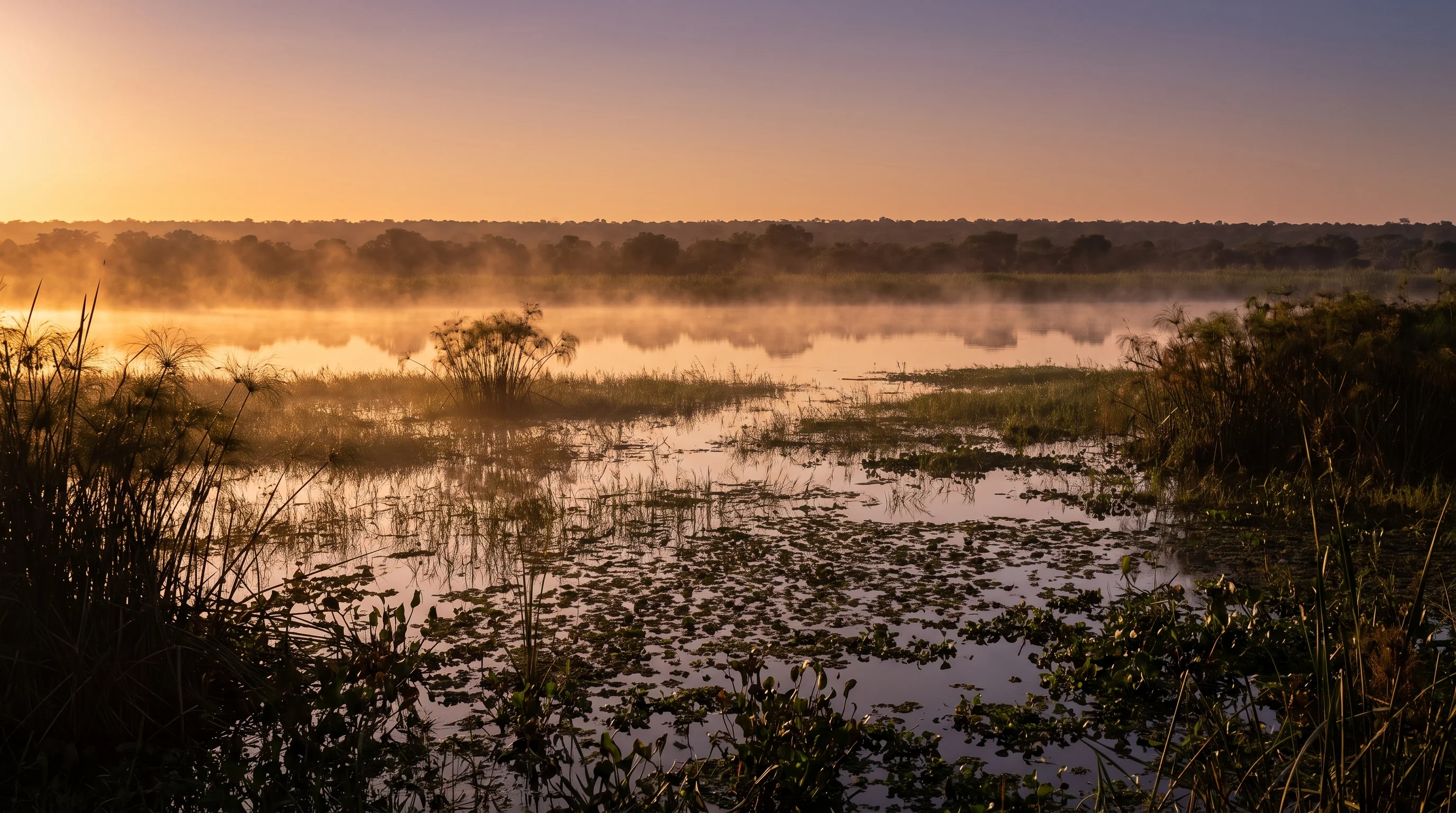
Five things you didn't know about the african bonytongue.
Cited biology that shapes how the african bonytongue feeds, defends, survives.
-
African Bonytongue is Heterotis niloticus, and current fish catalogues place it in Arapaimidae. Source ↗
-
It is an obligate air breather and must return to the surface for air. Source ↗
-
Its diet changes as it grows. Small fish focus on microcrustaceans and aquatic insects; larger fish add more seeds and detritus while keeping invertebrates in the mix. Source ↗
-
A filtering organ behind the gills and a muscular gizzard help it handle tiny prey, seeds and detritus. Source ↗
-
In Lake Hlan, adults built circular nests in shallow aquatic vegetation during the wet and high-water seasons. Source ↗
About the african bonytongue
Where the african bonytongue sits on the tree of life.
-
Class
Actinopterygii
Ray-finned fish — the huge fish group with thin bony fin rays.
-
Order
Osteoglossiformes
A group of related families — Osteoglossiformes.
-
Family
Arapaimidae
A family of related species — Arapaimidae.
-
Species
Heterotis niloticus
African Bonytongue — the species this page is about.


African Bonytongue
Every fact, cited.
Biology cited on this page comes from peer-reviewed zoology and the major species databases. Click through for the underlying study, dataset or assessment.
- Catalog of Fishes species record · researcharchive.calacademy.org
- FishBase species summary · fishbase.se
- Wild diet study · aquaticecology.tamu.edu
- Population and reproduction study · aquaticecology.tamu.edu
- Respiratory gas bladder study · doi.org
- Stock genetics study · doi.org


