
Steppe Wolf
Scientific name Canis lupus campestris
Adult size
- Weight
- ♀F 25 kg ♂M 33 kg
- Length
- ♀F 1.13 m ♂M 1.22 m
- Shoulder height
- ♀F 0.6 m ♂M 0.66 m
- Top speed chase
- ♀F 60 km/h ♂M 60 km/h
- Lifespan
- Wolves often average about 5-6 years in the wild, can reach about 13 years, and may reach about 15 years in captivity.
Represented by Bori Altyn-Emel National Park, Kazakhstan

Steppe wolves live across the open grasslands, semi-deserts, and foothills of Central Asia: southern Russia near the Caspian Sea, Kazakhstan's vast steppe, Mongolia's Gobi margins, and western China's Xinjiang region. Xinjiang sits in far western China, where desert basins meet the Tien Shan, the "Heavenly Mountains" of Central Asia. This is a huge, exposed world of wind, sparse prey, frozen winters, and burning summers.
Where they live
Three angles, one home.
The steppe wolf represented in the Wyld Savage League lives in Altyn-Emel National Park, Kazakhstan. Three views of the same patch of country — at ground level, from above, and bird's-eye.
-
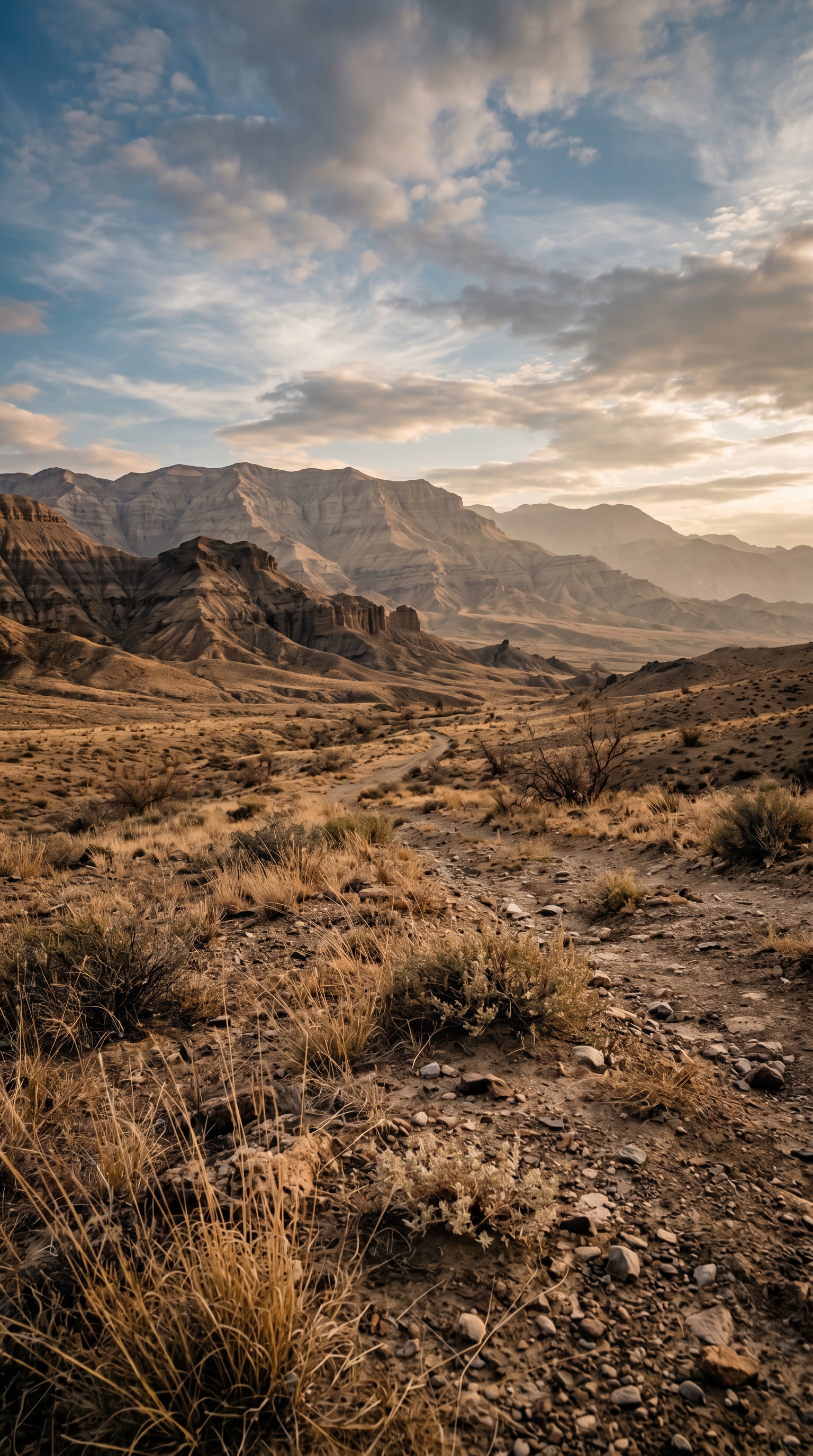
Altyn-Emel National Park, Kazakhstan at ground level — The global IUCN status for Canis lupus is species-level Least Concern, but that headline can hide strong local pressure. -
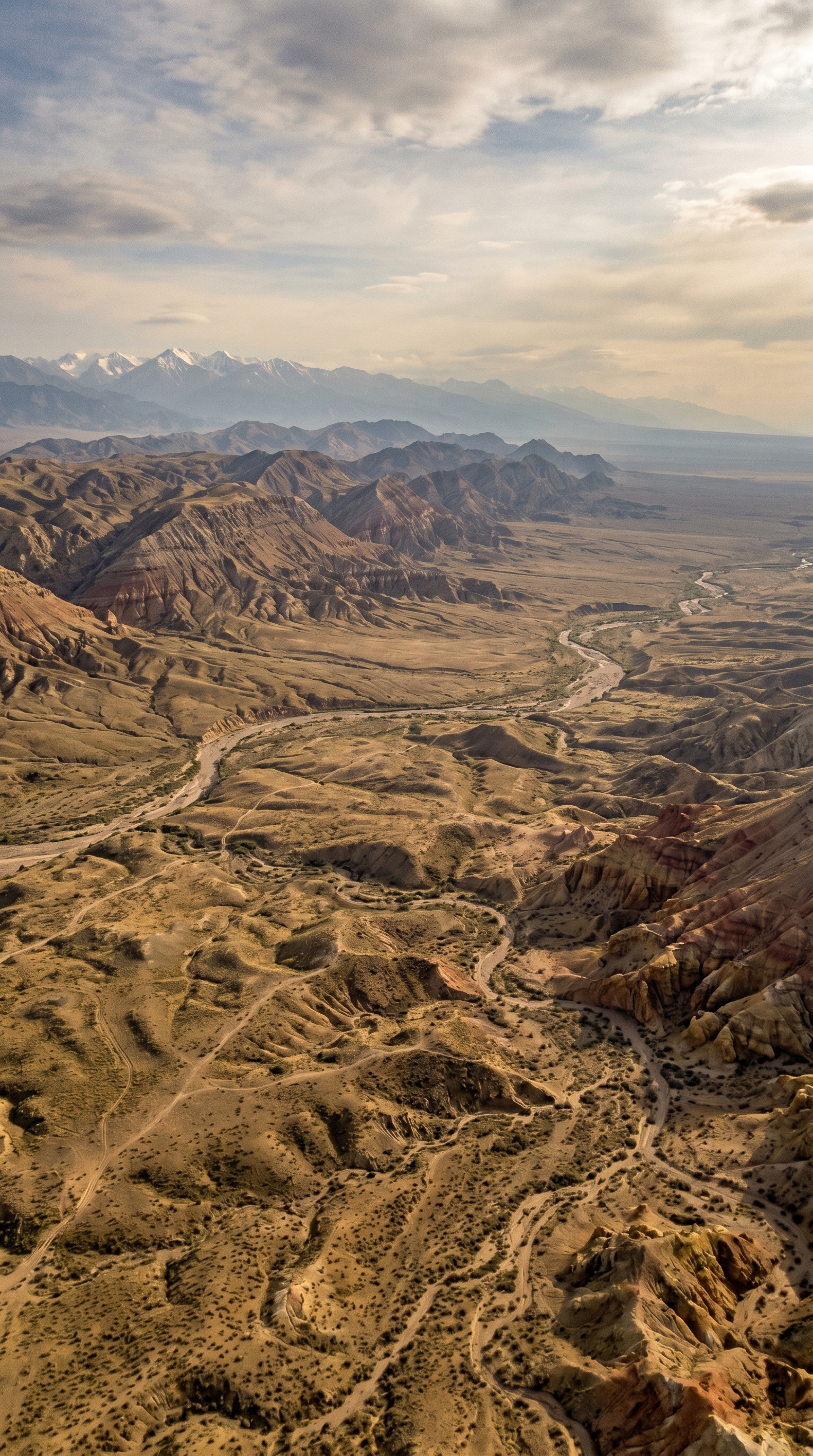
Altyn-Emel National Park, Kazakhstan seen from above — The global IUCN status for Canis lupus is species-level Least Concern, but that headline can hide strong local pressure. -
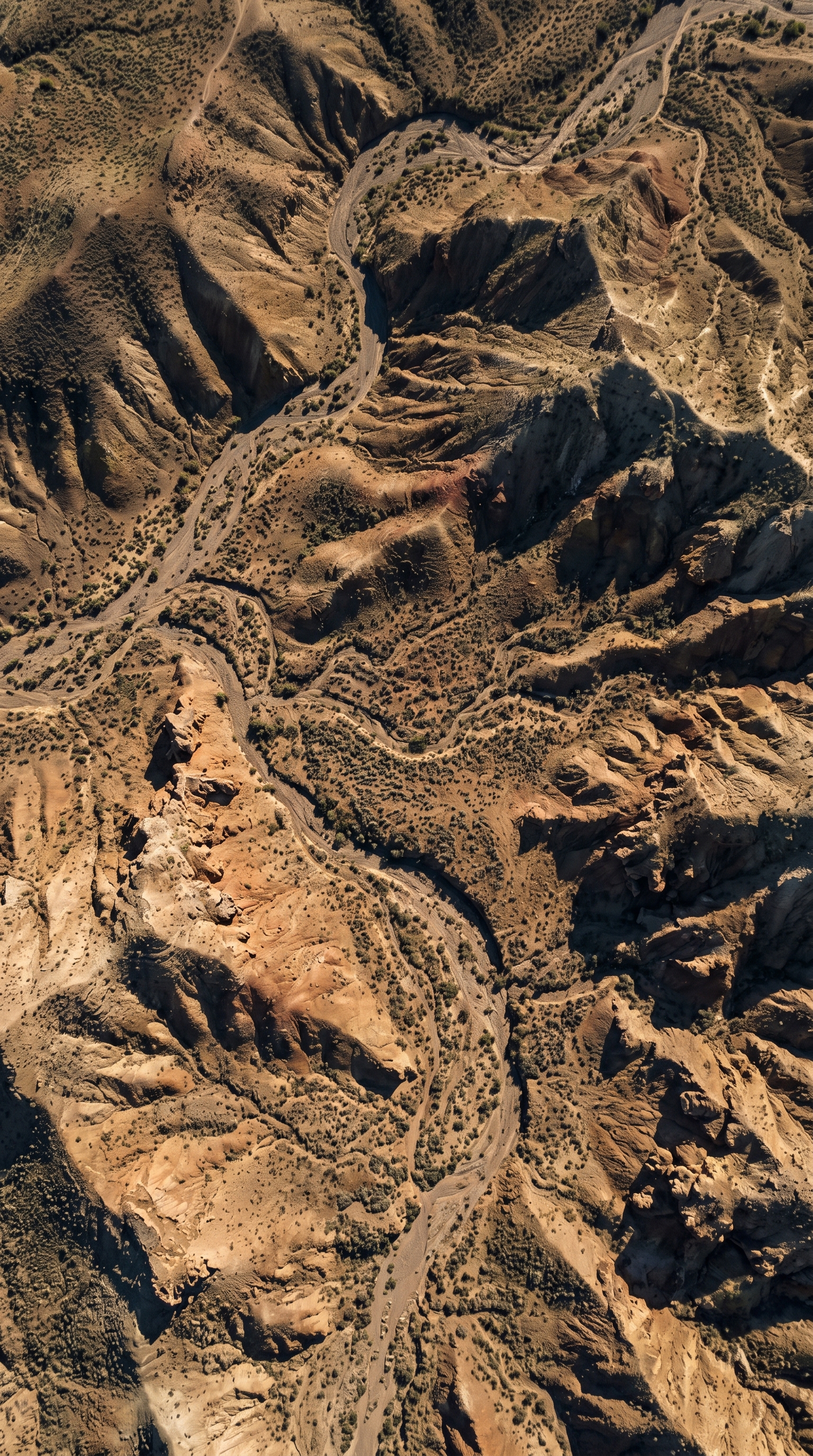
Altyn-Emel National Park, Kazakhstan from high overhead — The global IUCN status for Canis lupus is species-level Least Concern, but that headline can hide strong local pressure.
Native range
Steppe wolves live across the open grasslands, semi-deserts, and foothills of Central Asia: southern Russia near the Caspian Sea, Kazakhstan's vast steppe, Mongolia's Gobi margins, and western China's Xinjiang region. Xinjiang sits in far western China, where desert basins meet the Tien Shan, the "Heavenly Mountains" of Central Asia. This is a huge, exposed world of wind, sparse prey, frozen winters, and burning summers.
The range
Five regions, one species.
The steppe wolf doesn't live in one place. Across the map below, each region has its own pressures, prey, and politics — same biology, different worlds.
-
Kazakhstan
Altyn-Emel National Park
Ili-Balkhash basin steppe-desert mosaic between Ili River and Aqtau range. Official park list names wolf as a common predator and lists goitered gazelle, argali, kulan, Siberian ibex, red deer, Tien Shan brown bear, Turkestan lynx, and snow leopard.
Source ↗ -
Mongolia
Gobi Gurvansaikhan National Park
Mongolia's largest national park (~27,000 km²) on the northern Gobi Desert edge. Wolf sympatric with snow leopard, ibex, argali, and Gobi bear.
Source ↗ -
Mongolia
Great Gobi B Strictly Protected Area
Kaczensky et al. 2008 telemetry study site — documented the 26,619 km² male home range. Black-tailed gazelle and wild ass are key wild prey; livestock predation drives high hunting pressure.
Source ↗ -
Kazakhstan
Ustyurt Plateau (Ustyurt Nature Reserve)
Clay-stony desert shared with Uzbekistan and Turkmenistan; 44 mammal species in the reserve including Ustyurt mouflon, saiga, and goitered gazelle. 2024 Kazakhstan-Uzbekistan cooperation memorandum covers wildlife connectivity.
Source ↗ -
Russia
Orenburg Region (southern steppe)
~200 wolves documented in the Orenburg region; conservation advocates have proposed local Red List inclusion. Northwestern extent of the Central Asian steppe-wolf range.
Source ↗
Daily life
What the steppe wolf does, day to day.
Diet, social behaviour, climate — the everyday biology that shapes how this species hunts, defends and survives.
-
Diet
Obligate carnivore and cooperative pack-hunter.
-
Social life
Pack-living and territorial. Gray-wolf packs vary widely by habitat and prey, with a broad 2-36 range and many packs around 5-9.
-
Climate
Cold continental to arid semi-desert. Tolerates temperature extremes from -40 °C winters on the northern steppe to +45 °C summer surface temperatures on the Ustyurt and Gobi.
Wyld Trivia
Five questions. Most people get them wrong.
But you're not most people.
Tap to reveal.
-
How big is one wolf's territory on the Mongolian steppe?
Show me HideMassive. A single male tracked in Mongolia's Great Gobi B Protected Area roamed over 26,619 square kilometres — bigger than Wales. A nearby female used 1,275 square kilometres. The steppe is sparse, prey is scattered, so wolves have to cover huge distances to find enough food.
-
Is Bori's 50 kg weight normal for a steppe wolf?
Show me HideNo. Kazakh steppe-wolf males in a recent 61-wolf study averaged about 33 kg, and the largest in that sample was 42 kg. The same paper cites older Kazakhstan records up to 55 kg, so Bori's 50 kg is possible as an exceptional character choice, not normal.
-
How does a wolf pack take down prey bigger than themselves?
Show me HideTeamwork. Wolves use group pressure, scent, route choice, and patience. In Altyn-Emel, official park notes say wolves affect Siberian ibex and gazelles first; in wider steppe country, prey can also include argali, saiga, rodents, livestock, and carrion.
-
Are Kazakh steppe wolves huge?
Show me HideNo. The recent Kazakh study found adult males averaging about 33 kg, with a measured maximum of 42 kg in that sample. That makes them lean open-country wolves, even though older records allow rare bigger males.
-
What happens when a wolf's wild prey disappears?
Show me HideIt can turn to livestock, and then conflict with people rises fast. Wolves are adaptable hunters, but that adaptability can make them targets when wild prey is thin and farms are nearby.
The terrain
Where the steppe wolf thrives.
Every animal is built for some places more than others. These are the ground, hours and weather where this species shows its best — and its worst.
Ground
- Steppe grassland Excels
- Open plains Excels
- Rocky terrain Strong
- Semi desert Strong
- Mountain foothills Strong
- Dense forest Struggles
- Mountain Struggles
- Urban Avoids
Hours
- Dawn Excels
- Dusk Excels
- Twilight Excels
- Night Strong
- Day Struggles
Weather
- Cold Excels
- Moderate Strong
- Rain Average
- Wind Struggles
- Hot Avoids
- Storm Avoids

Five things you didn't know about the steppe wolf.
Cited biology that shapes how the steppe wolf feeds, defends, survives.
-
The global IUCN status for Canis lupus is species-level Least Concern, but that headline can hide strong local pressure. In Mongolia's Great Gobi B region, Kaczensky et al. documented heavy wolf hunting and wildlife-product trade around a strict protected area. Source ↗
-
A female wolf monitored in Mongolia's Great Gobi B Strictly Protected Area used a 1,275 km² resident range during the known resident period; a collared male ranged across 26,619 km². Those figures are Mongolian Gobi context, not a safe Altyn-Emel territory number for Bori. Source ↗
-
Altyn-Emel National Park's own mammal list names the wolf as a common predator in the park and says wolf pressure falls first on Siberian ibex and gazelle. The same official fauna context lists kulan, goitered gazelle, argali, red deer, Tien Shan brown bear, Turkestan lynx, and snow leopard. Source ↗
-
Morphometric analysis of 61 wolves across the Kazakh steppes found a west-to-east cline: eastern-section males were longer-bodied (125.4 cm head-body) and western-section males heavier (33.4 kg), with pronounced sexual dimorphism across all regions (males ~31% heavier than females). This regional variation reflects local adaptation to distinct steppe and semi-desert ecosystems. Source ↗
-
Gray wolves are long-distance, social carnivores: daily travel can be very large, the usual pace is about 8 km/h, and wolves can run up to 55-70 km/h. Those numbers are species-wide gray-wolf context, not sustained steppe-wolf chase speeds. Source ↗
About the steppe wolf
Where the steppe wolf sits on the tree of life.
-
Class
Mammalia
Warm-blooded animals with fur or hair that feed their young milk.
-
Order
Carnivora
Mostly meat-eating mammals — cats, dogs, bears and their relatives.
-
Family
Canidae
The dog family — pack-hunting, long-distance runners.
-
Species
Canis lupus campestris
Steppe Wolf — the species this page is about.


Steppe Wolf
Every fact, cited.
Biology cited on this page comes from peer-reviewed zoology and the major species databases. Click through for the underlying study, dataset or assessment.
- bioone.org · bioone.org
- bioone.org · bioone.org
- altynemel.kz · altynemel.kz
- bbrc.in · bbrc.in
- Animal Diversity Web · Animal Diversity Web


