
Giant Panda
Scientific name Ailuropoda melanoleuca
Adult size
- Weight
- ♀F 85 kg ♂M 105 kg
- Length
- ♀F 1.55 m ♂M 1.65 m
- Shoulder height
- ♀F 0.7 m ♂M 0.75 m
- Top speed trot
- ♂M 20 km/h
- Lifespan
- Wild Giant Pandas often live about 10-15 years; captive individuals can reach about 26-34 years.
Represented by Bao Wolong National Nature Reserve (Sichuan), China

Giant pandas live only in China, in six mountain ranges across Sichuan, Shaanxi, and Gansu provinces on the eastern edge of the Tibetan Plateau. Their world is cool, wet bamboo forest between about 1,200 and 3,400 metres up: misty slopes, winter snow, steep valleys, and thickets of bamboo dense enough to swallow a bear.
Where they live
Three angles, one home.
The giant panda represented in the Wyld Savage League lives in Wolong National Nature Reserve (Sichuan), China. Three views of the same patch of country — at ground level, from above, and bird's-eye.
-
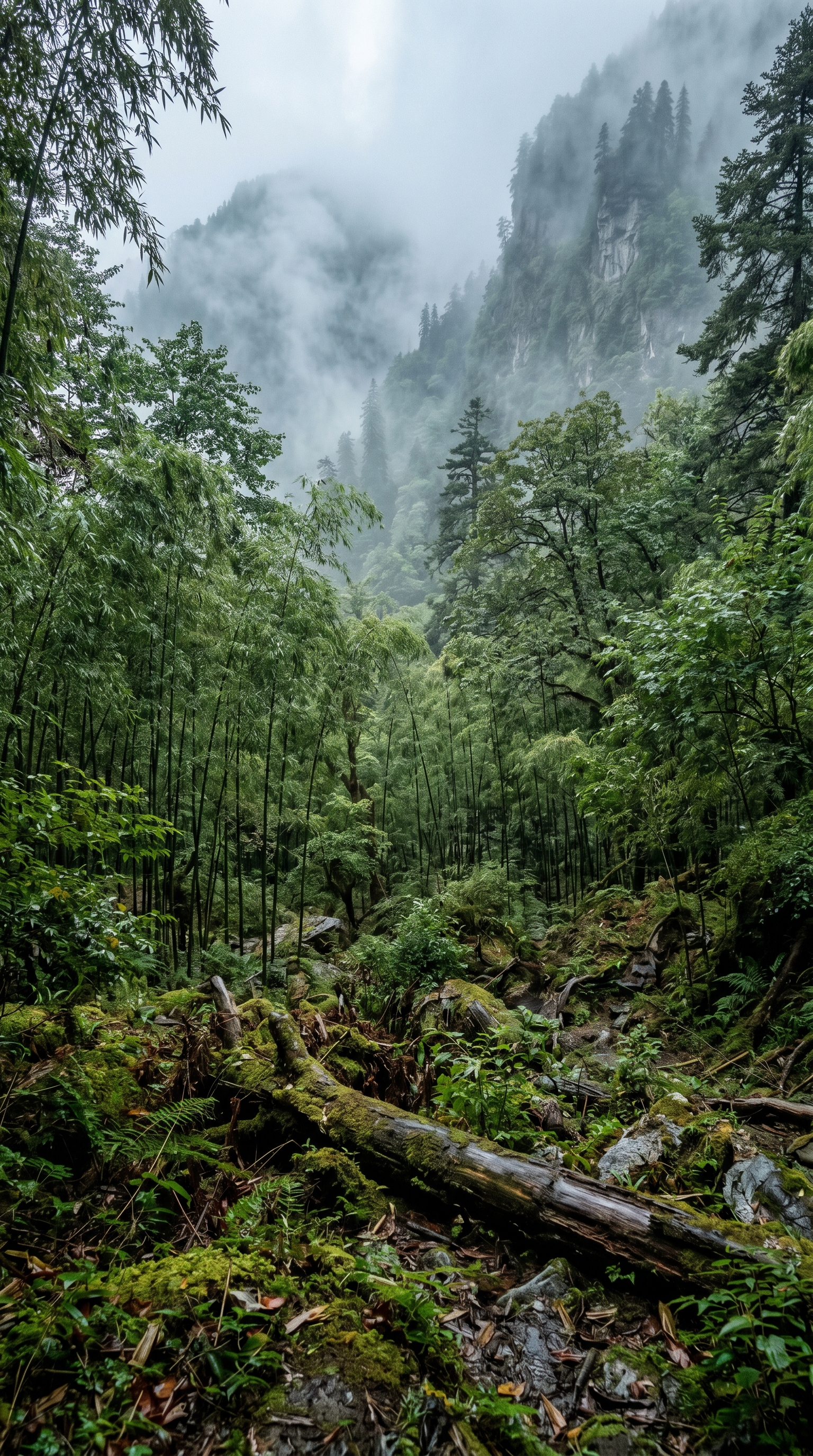
Wolong National Nature Reserve (Sichuan), China at ground level — home of the giant panda. -
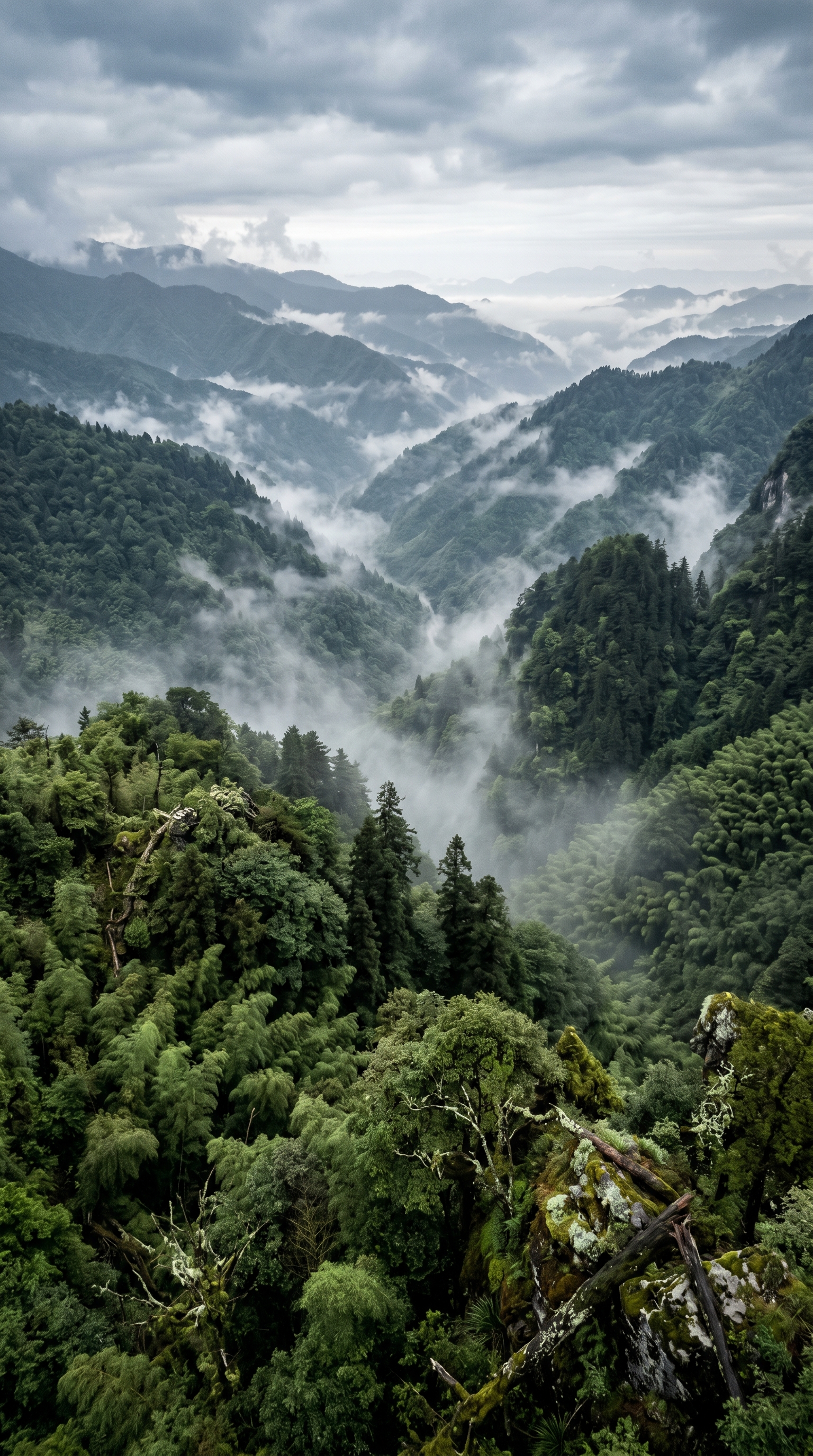
Wolong National Nature Reserve (Sichuan), China seen from above — home of the giant panda. -
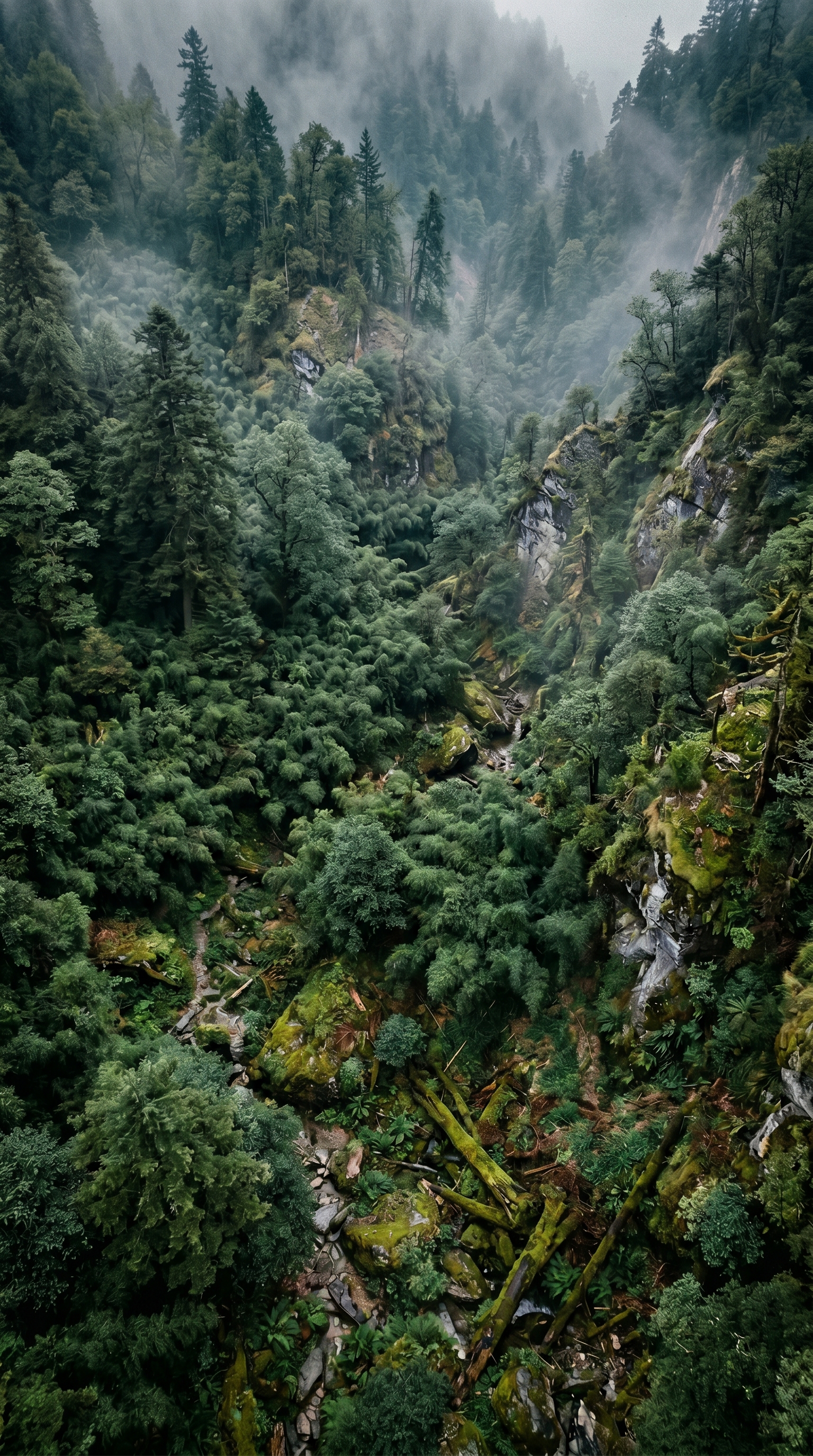
Wolong National Nature Reserve (Sichuan), China from high overhead — home of the giant panda.
Native range
Giant pandas live only in China, in six mountain ranges across Sichuan, Shaanxi, and Gansu provinces on the eastern edge of the Tibetan Plateau. Their world is cool, wet bamboo forest between about 1,200 and 3,400 metres up: misty slopes, winter snow, steep valleys, and thickets of bamboo dense enough to swallow a bear.
The range
Five regions, one species.
The giant panda doesn't live in one place. Across the map below, each region has its own pressures, prey, and politics — same biology, different worlds.
-
China
Wolong National Nature Reserve (Sichuan)
The flagship Sichuan reserve and the most-studied wild-panda landscape in China; core of the Qionglai mountain population.
Source ↗ -
China
Foping National Nature Reserve (Shaanxi — Qinling)
Type locality context for the Qinling subspecies; brown-and-white coat morph documented here.
Source ↗ -
China
Wanglang National Nature Reserve (Sichuan)
Minshan mountain range; one of the earliest (1965) dedicated panda reserves.
Source ↗ -
China
Mabian Dafengding National Nature Reserve (Sichuan)
Liangshan mountains; southernmost extant panda range.
Source ↗ -
China
Giant Panda National Park (Sichuan / Shaanxi / Gansu)
Formally established 2021; consolidates previously separate reserves across three provinces into a single >27,000 km² panda conservation landscape.
Source ↗
Daily life
What the giant panda does, day to day.
Diet, social behaviour, climate — the everyday biology that shapes how this species hunts, defends and survives.
-
Diet
Near-obligate folivore despite a carnivore digestive tract: bamboo makes up more than 99% of the diet — leaves, shoots, and culms from multiple genera including Bashania, Fargesia, Yushania, and Phyllostachys.
-
Social life
Solitary outside the breeding season. Adults maintain overlapping home ranges and mark routes with scent from anogenital glands, urine, and claw rakes on trees.
-
Climate
Cool-moist temperate montane bamboo forest. Core habitat sits at 1,200–3,400 m elevation across the central Chinese mountains; animals shift seasonally up and down slope to track bamboo shoot emergence.
Wyld Trivia
Five questions. Most people get them wrong.
But you're not most people.
Tap to reveal.
-
Does a giant panda really have a 'thumb'?
Show me HideSort of. It's not a real thumb — it's an enlarged wrist bone called the radial sesamoid that has evolved to stick out like a sixth finger. It lets the panda grip bamboo culms with surprising precision, while the rest of the paw stays a normal bear-style foot. No other bear has this.
-
Why does a panda eat bamboo all day long?
Show me HideBecause bamboo is a terrible food. Pandas are built like other bears inside — their gut is a carnivore's gut, not a plant-eater's — so they can only digest a small fraction of the bamboo they eat. To get enough energy, an adult panda has to munch through 12 to 15 kilograms of bamboo every single day.
-
How can a bear's stomach digest plants at all?
Show me HideHelp from the gut bacteria. The microbes that live inside a panda's intestines carry genes for breaking down tough plant fibres — the first time these enzymes have been found in any bear. So the panda body is a carnivore, but the panda's gut is full of plant-digesting bacteria. They work as a team.
-
Why are panda babies so rare?
Show me HideFemale pandas are only fertile for 24 to 72 hours — once a year. They have litters of one or two cubs every two or three years. When twins are born, the mother almost always raises only one. Combined with their tough bamboo diet, this makes pandas one of the slowest-breeding bears on Earth.
-
Is the giant panda actually saved?
Show me HideIt's getting closer. In 2016 the IUCN moved the giant panda from Endangered to Vulnerable after thirty years of habitat protection and reforestation in China. The wild population is now around 1,800 — and in 2021 China created the Giant Panda National Park, joining old reserves across three provinces into one 27,000-square-kilometre home.
The terrain
Where the giant panda thrives.
Every animal is built for some places more than others. These are the ground, hours and weather where this species shows its best — and its worst.
Ground
- Bamboo forest Excels
- Montane forest Excels
- Mixed conifer Strong
- Cloud forest Strong
- Lowland Struggles
- Open plains Avoids
Hours
- Dawn Excels
- Dusk Excels
- Twilight Excels
- Day Strong
- Night Strong
Weather
- Cold Excels
- Moderate Excels
- Rain Strong
- Wind Average
- Storm Struggles
- Hot Struggles

Five things you didn't know about the giant panda.
Cited biology that shapes how the giant panda feeds, defends, survives.
-
In 2016 the IUCN Red List reassessed Ailuropoda melanoleuca from Endangered to Vulnerable, citing three decades of range expansion and population recovery driven by habitat protection and reforestation across the central Chinese mountains — one of the most widely cited conservation success stories of the 21st century. Source ↗
-
The giant panda's famous 'sixth digit' is not a true thumb: it is a modified radial sesamoid — an enlarged wrist bone — opposing the five normal fingers. It lets the panda grip bamboo culms with surgical precision while the rest of the paw remains a carnivore-style plantigrade foot. Source ↗
-
Although the panda is anatomically a carnivore, its gut microbiome carries bacterial genes for cellulose and hemicellulose-digesting enzymes — one clue to how a bear-shaped digestive tract extracts usable energy from a bamboo-heavy diet. Source ↗
-
Giant pandas have one of the lowest reproductive rates of any bear: a single fertile window of 24–72 hours per year, litters of 1–2 cubs every 2–3 years, and — where twins are born — the mother will typically raise only one. Compounded with a pseudo-carnivore diet on low-calorie bamboo, this makes the species ecologically fragile. Source ↗
-
To accommodate bamboo, the panda's skull has been rebuilt: broad zygomatic arches anchor enlarged masseter muscles, the temporomandibular joint permits lateral grinding (unlike the hinge-action TMJ of other bears), and premolars P3/P4 mesh cusp-to-cusp to strip bamboo's abrasive, cyanogenic outer skin before the flat molars crush the inner culm. Source ↗
About the giant panda
Where the giant panda sits on the tree of life.
-
Class
Mammalia
Warm-blooded animals with fur or hair that feed their young milk.
-
Order
Carnivora
Mostly meat-eating mammals — cats, dogs, bears and their relatives.
-
Family
Ursidae
The bear family — large, strong, mostly omnivorous.
-
Species
Ailuropoda melanoleuca
Giant Panda — the species this page is about.


Giant Panda
Every fact, cited.
Biology cited on this page comes from peer-reviewed zoology and the major species databases. Click through for the underlying study, dataset or assessment.
- animals.sandiegozoo.org · animals.sandiegozoo.org
- Animal Diversity Web · Animal Diversity Web
- pnas.org · pnas.org
- Animal Diversity Web · Animal Diversity Web
- Nature · Nature


