
Eastern Chimpanzee
Scientific name Pan troglodytes schweinfurthii
Adult size
- Weight
- ♀F 40 kg ♂M 60 kg
- Length
- ♀F 0.75 m ♂M 0.8 m
- Standing height
- ♀F 1.2 m ♂M 1.3 m
- Top speed charge
- ♂M 25 km/h
- Lifespan
- Eastern Chimpanzees can live for decades; broad chimpanzee sources give about 40-60 years, with captive records near 59 years.
Represented by Akili Kibale National Park, Uganda

Eastern chimpanzees live along the Albertine Rift and East African forest belt: eastern Democratic Republic of the Congo, Uganda, Rwanda, Burundi, western Tanzania, South Sudan, and the eastern edge of the Central African Republic. Their famous research homes include Gombe and Mahale in Tanzania, Kibale and Budongo in Uganda, Kahuzi-Biega and Virunga in eastern Congo, and Nyungwe in Rwanda.
Where they live
Three angles, one home.
The eastern chimpanzee represented in the Wyld Savage League lives in Kibale National Park, Uganda. Three views of the same patch of country — at ground level, from above, and bird's-eye.
-
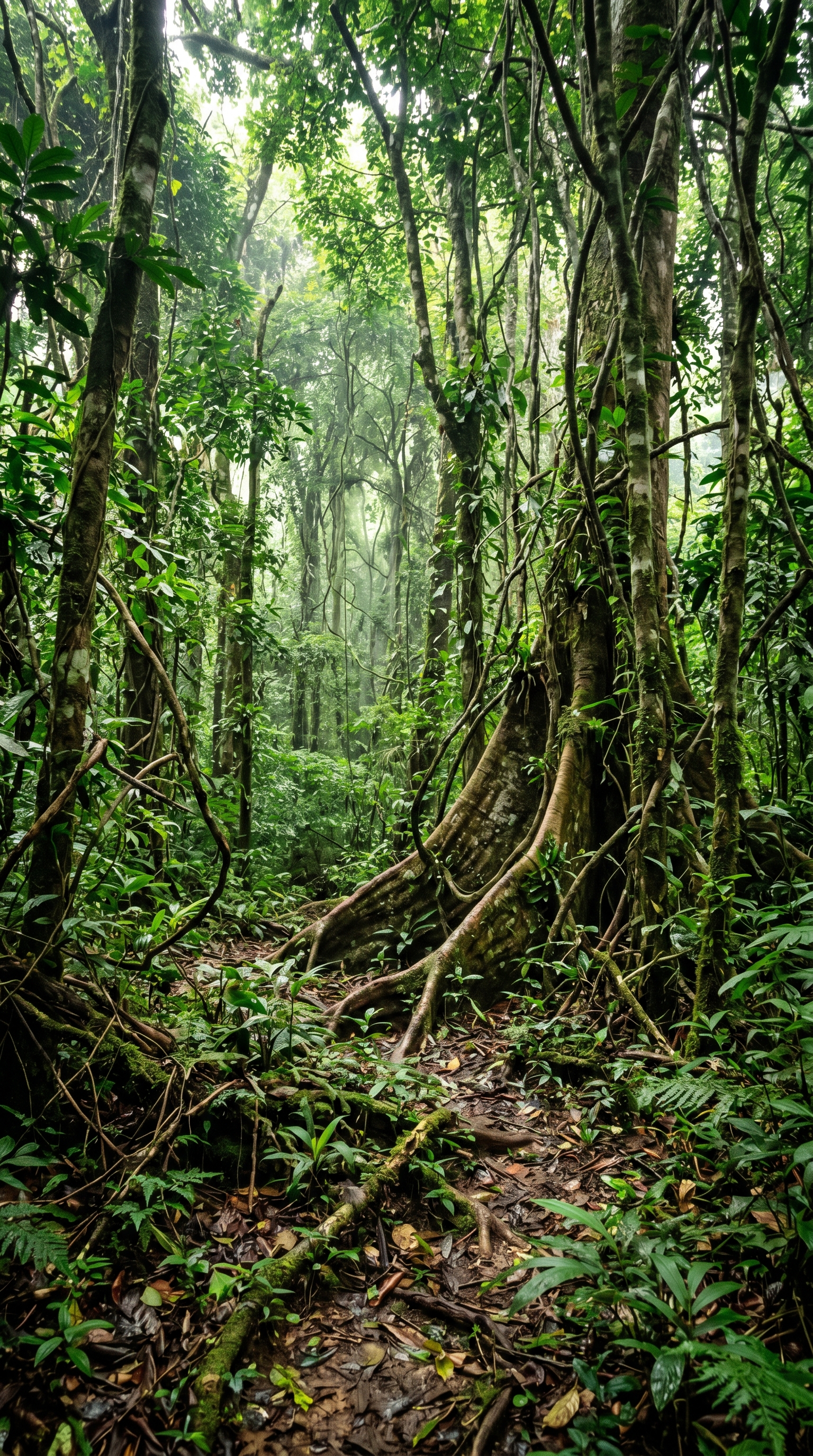
Kibale National Park, Uganda at ground level — Pan troglodytes is listed as Endangered on the IUCN Red List, with a decreasing population trend. -
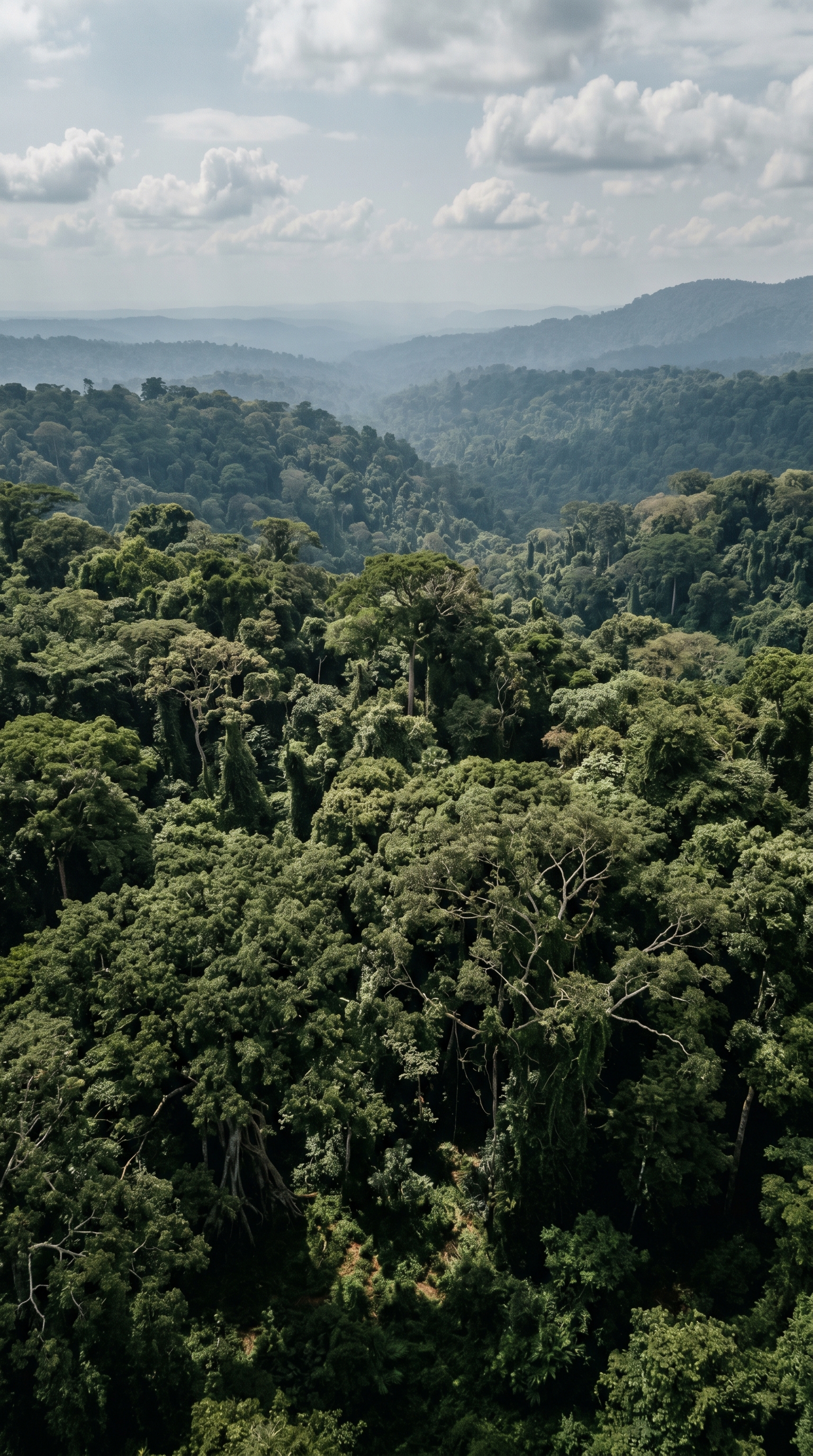
Kibale National Park, Uganda seen from above — Pan troglodytes is listed as Endangered on the IUCN Red List, with a decreasing population trend. -
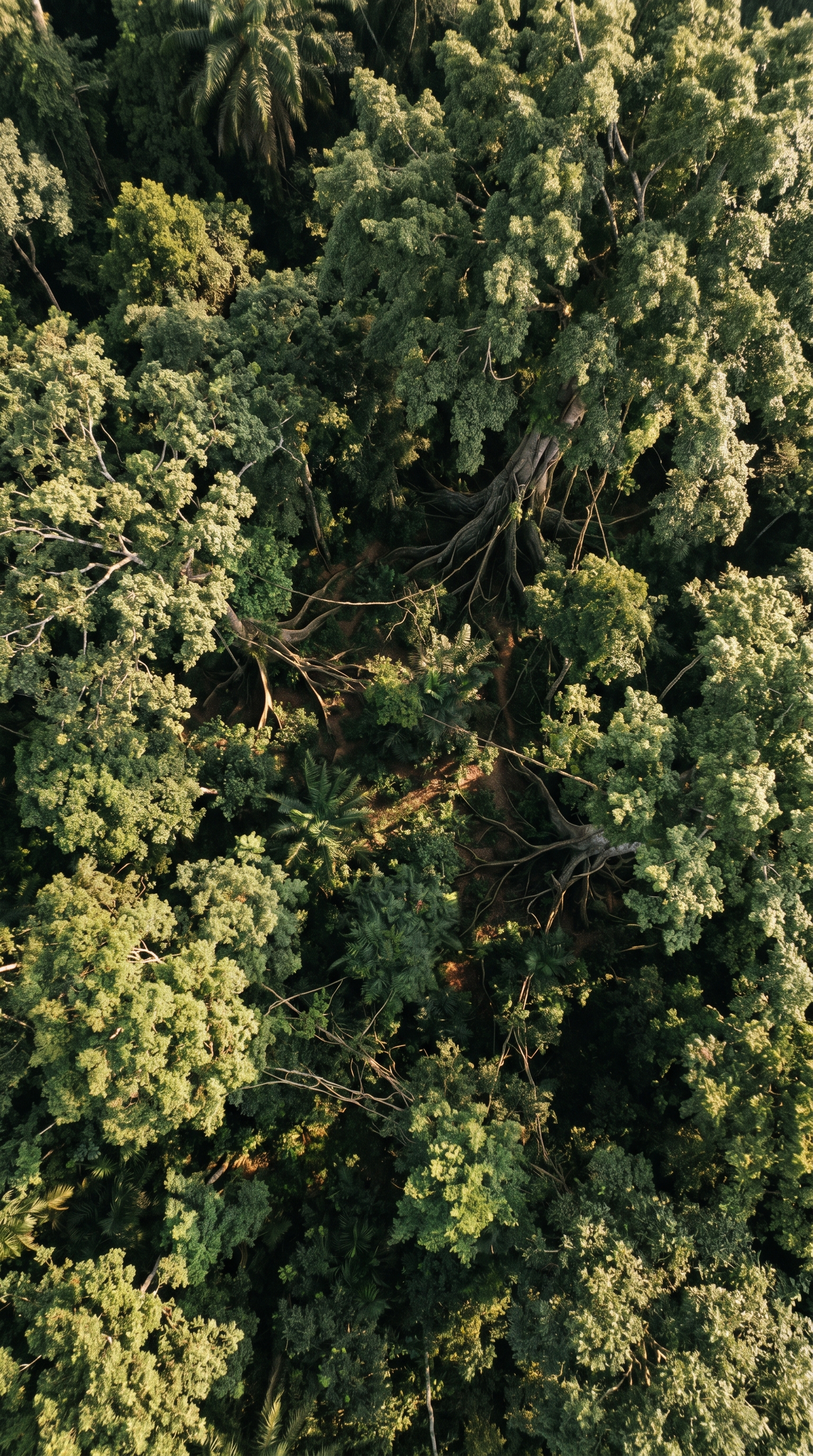
Kibale National Park, Uganda from high overhead — Pan troglodytes is listed as Endangered on the IUCN Red List, with a decreasing population trend.
Native range
Eastern chimpanzees live along the Albertine Rift and East African forest belt: eastern Democratic Republic of the Congo, Uganda, Rwanda, Burundi, western Tanzania, South Sudan, and the eastern edge of the Central African Republic. Their famous research homes include Gombe and Mahale in Tanzania, Kibale and Budongo in Uganda, Kahuzi-Biega and Virunga in eastern Congo, and Nyungwe in Rwanda.
The range
Six regions, one species.
The eastern chimpanzee doesn't live in one place. Across the map below, each region has its own pressures, prey, and politics — same biology, different worlds.
-
Tanzania
Gombe Stream National Park
Jane Goodall's long-term study site (est. 1960). Kasakela and Mitumba communities; foundational tool-use and inter-community aggression observations.
Source ↗ -
Tanzania
Mahale Mountains National Park
Long-term Japanese-led research site (Nishida). M-group / K-group; community-extirpation dynamics observed over decades.
Source ↗ -
Uganda
Kibale National Park
Hosts the Ngogo community — the largest known wild chimpanzee community (~200 individuals) — and the Kanyawara community. Mitani/Watts/Wrangham research centre for cooperative hunting and lethal intergroup aggression.
Source ↗ -
Uganda
Budongo Forest Reserve
Sonso community long-term study; semi-deciduous tropical forest.
Source ↗ -
Democratic Republic of the Congo
Kahuzi-Biega National Park
Montane and lowland forest sympatry zone with eastern lowland gorilla (Gorilla beringei graueri).
Source ↗ -
Rwanda
Nyungwe National Park
Montane Afro-tropical rainforest, high-elevation community.
Source ↗
Daily life
What the eastern chimpanzee does, day to day.
Diet, social behaviour, climate — the everyday biology that shapes how this species hunts, defends and survives.
-
Diet
Omnivorous, with ripe fruit the dietary staple at long-term forest sites.
-
Social life
Fission-fusion multi-male/multi-female communities. The community is the stable social unit; day-to-day parties split and re-form.
-
Climate
Tropical to subtropical equatorial Africa. Distributed roughly 5°N–12°S across the Albertine Rift and East African rainforest belt.
Wyld Trivia
Five questions. Most people get them wrong.
But you're not most people.
Tap to reveal.
-
Are chimpanzees the most prolific tool-users in the animal world after humans?
Show me HideYes, but not every chimp community uses the same tools. Ngogo chimps have been recorded using leaf-sponges, honey-fishing tools, hygiene tools, branch-waving, clubbing, and aimed throwing. Famous nut-cracking and spear-like hunting come from other chimp communities, so we label those carefully.
-
Do chimpanzees actually hunt other animals for meat?
Show me HideYes — and they cooperate to do it. Adult male chimpanzees in East African rainforests hunt red colobus monkeys together, with different chimps playing different roles in the canopy. Some chase, some block escape routes, some wait. When the kill comes, the meat is shared between the hunters.
-
Why do male chimpanzees stay home and female chimpanzees leave?
Show me HideIt's the opposite of most mammals. In chimpanzee societies, males stay in the community they were born in for their entire lives. Females leave when they grow up and join a new community. So an adult male's brothers and uncles surround him for life. His mate is a stranger from far away.
-
Do chimpanzee communities really go to war with each other?
Show me HideYes — sadly, they really do. At long-term research sites in Tanzania, scientists have watched larger chimpanzee communities organise coalitions of adult males to patrol the borders of their territory and attack neighbours. Over decades, this lethal aggression has wiped out smaller neighbouring communities entirely.
-
How high in the mountains can a chimpanzee live?
Show me HideUp to about 2,750 metres in some montane forests of the Albertine Rift. Eastern chimpanzees occupy a wider variety of habitats than any other great ape — from steamy lowland rainforest to dry forest-savanna mosaic, all the way up into cool mountain forest. They're remarkably flexible animals.
The terrain
Where the eastern chimpanzee thrives.
Every animal is built for some places more than others. These are the ground, hours and weather where this species shows its best — and its worst.
Ground
- Tropical rainforest Excels
- Woodland mosaic Excels
- Forest savanna edge Strong
- Montane forest Strong
- Open savanna Struggles
- Desert Avoids
Hours
- Day Excels
- Dawn Strong
- Dusk Strong
- Twilight Average
- Night Avoids
Weather
- Moderate Excels
- Hot Strong
- Rain Strong
- Wind Average
- Storm Struggles
- Cold Avoids

Five things you didn't know about the eastern chimpanzee.
Cited biology that shapes how the eastern chimpanzee feeds, defends, survives.
-
Pan troglodytes is listed as Endangered on the IUCN Red List, with a decreasing population trend. Habitat loss, commercial bushmeat hunting, and emerging-disease transmission (notably Ebola) are the principal drivers of decline across the species' range. Source ↗
-
Eastern chimpanzees occupy an unusually broad habitat range for a great ape — from lowland rainforest and forest-savanna mosaic through montane forest up to approximately 2,750 m elevation. Males remain in their natal community for life while most females transfer out at sexual maturity, a pattern called male philopatry. Source ↗
-
Chimpanzee tools vary by community. At Ngogo, scientists found a small but real toolkit: leaf-clipping displays, leaf-sponges for water, honey-fishing tools, hygiene tools, branch-waving, clubbing, and aimed throwing. Other chimp communities can have different tool traditions, which is one reason chimp culture is so interesting. Source ↗
-
Chimpanzees cooperatively hunt monkeys — principally red colobus — with adult males coordinating roles across the canopy. Ecological and social context drives frequency: some East African communities hunt regularly, while cooperation is more elaborate at West African sites such as Taï in Côte d'Ivoire. Source ↗
-
Inter-community lethal aggression is a documented chimpanzee behaviour — at Gombe and Mahale in Tanzania, larger communities have over decades of observation systematically attacked and extirpated smaller neighbouring groups. These attacks are carried out by coalitions of adult males on boundary patrols. Source ↗
About the eastern chimpanzee
Where the eastern chimpanzee sits on the tree of life.
-
Class
Mammalia
Warm-blooded animals with fur or hair that feed their young milk.
-
Order
Primates
The mammals with grasping hands and big brains — apes, monkeys, lemurs.
-
Family
Hominidae
The great apes — gorillas, orangutans, chimps and humans.
-
Species
Pan troglodytes schweinfurthii
Eastern Chimpanzee — the species this page is about.


Eastern Chimpanzee
Every fact, cited.
Biology cited on this page comes from peer-reviewed zoology and the major species databases. Click through for the underlying study, dataset or assessment.
- IUCN Red List · IUCN Red List
- Animal Diversity Web · Animal Diversity Web
- doi.org · doi.org
- Animal Diversity Web · Animal Diversity Web
- Animal Diversity Web · Animal Diversity Web


