
African Crested Porcupine
Scientific name Hystrix cristata
Adult size
- Weight
- ♂M 10.1 kg
- Length
- ♀F 0.733 m ♂M 0.708 m
- Shoulder height
- ♀F 0.236 m ♂M 0.231 m
- Top speed rush
- 12 km/h
- Lifespan
- Captive individuals can reach 28 years; a precise wild lifespan is less certain.
Represented by Nungo Serengeti National Park, Tanzania

African crested porcupines live across a broken belt of Africa and the Mediterranean edge: from Senegal and Mali through East Africa to Tanzania, along the North African coast, and in long-established populations in Italy and Sicily. Picture dry acacia woodland, rocky hillsides, scrub, caves, and old burrows - places where a slow animal can back into shelter and turn a wall of quills toward trouble.
Where they live
Three angles, one home.
The african crested porcupine represented in the Wyld Savage League lives in Serengeti National Park, Tanzania. Three views of the same patch of country — at ground level, from above, and bird's-eye.
-
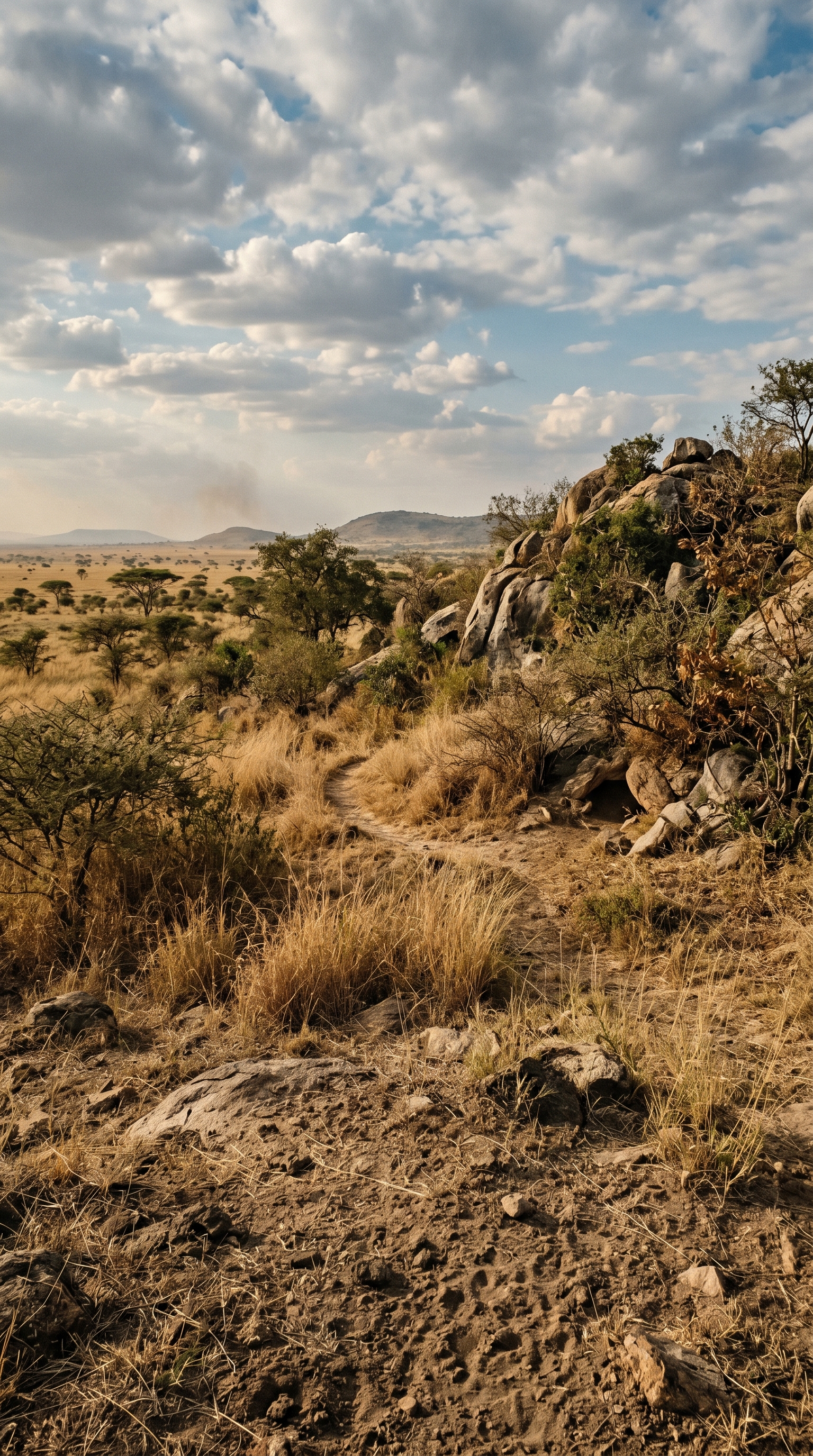
Serengeti National Park, Tanzania at ground level — African crested porcupines do not shoot quills. -
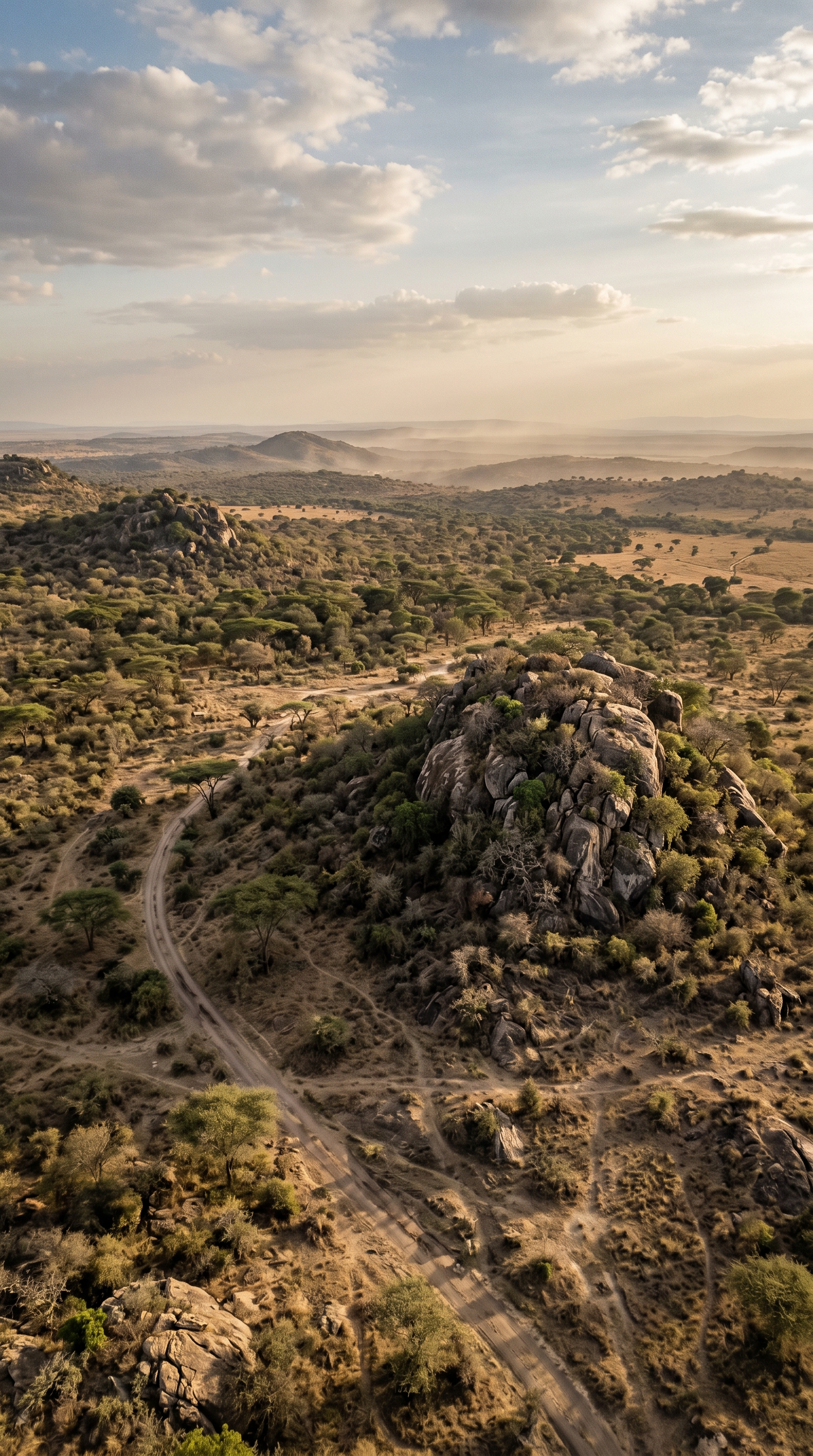
Serengeti National Park, Tanzania seen from above — African crested porcupines do not shoot quills. -
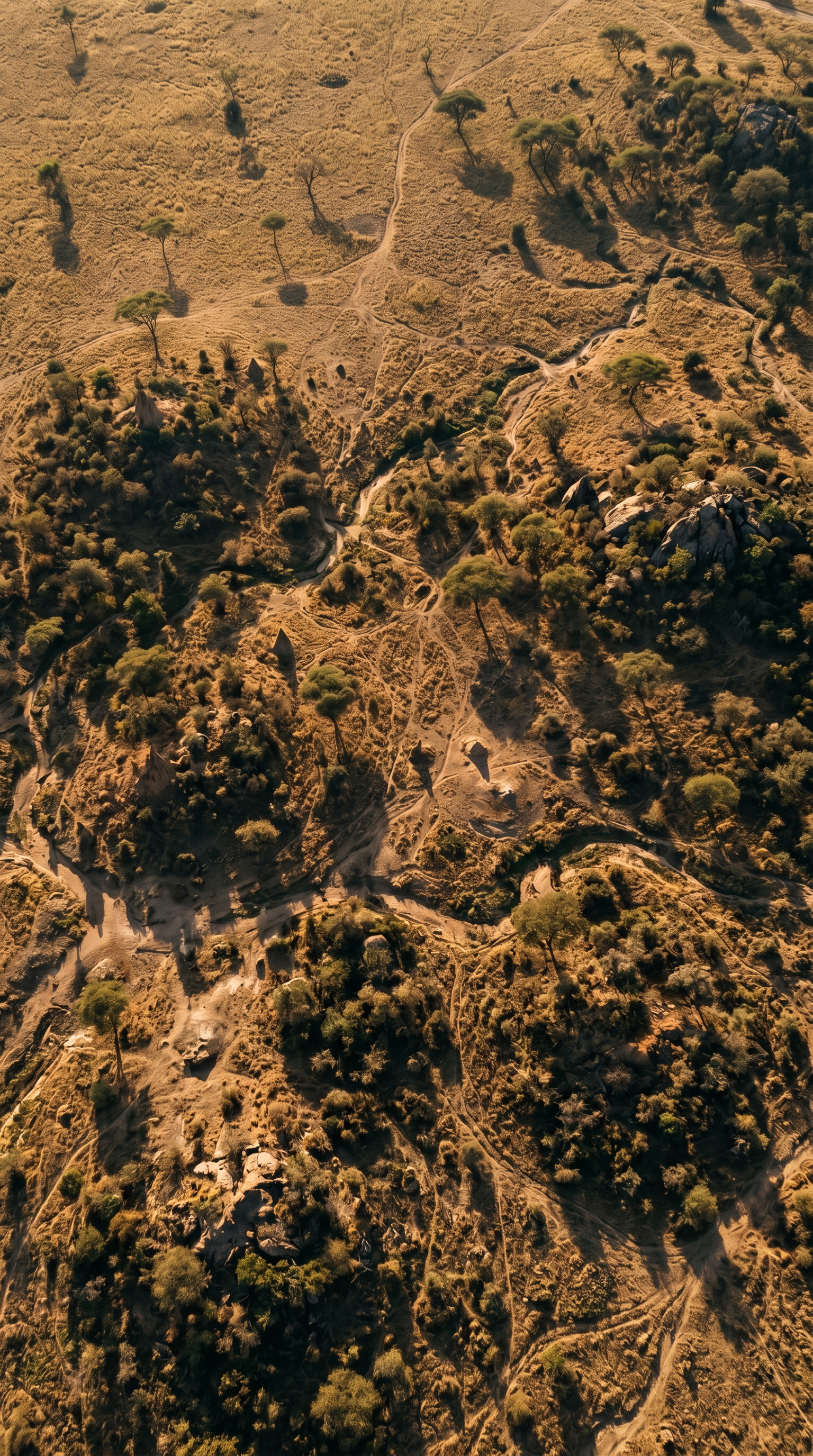
Serengeti National Park, Tanzania from high overhead — African crested porcupines do not shoot quills.
Native range
African crested porcupines live across a broken belt of Africa and the Mediterranean edge: from Senegal and Mali through East Africa to Tanzania, along the North African coast, and in long-established populations in Italy and Sicily. Picture dry acacia woodland, rocky hillsides, scrub, caves, and old burrows - places where a slow animal can back into shelter and turn a wall of quills toward trouble.
The range
Six regions, one species.
The african crested porcupine doesn't live in one place. Across the map below, each region has its own pressures, prey, and politics — same biology, different worlds.
-
Tanzania
Serengeti National Park
Acacia-dominated grassland and open savanna, with Southern African lions in the wider predator community.
Source ↗ -
Tanzania
Kilimanjaro National Park
High-altitude populations documented to 3,500 m. Montane rocky habitat.
Source ↗ -
Kenya
Amboseli / Masai Mara ecosystem
East African stronghold. Semi-arid acacia savanna. Mpala Research Centre documentation.
Source ↗ -
Morocco
Atlas Mountains
North African Mediterranean range. Rocky semi-arid habitat; cedar and oak woodland.
Source ↗ -
Italy
Central and southern peninsula
Long-established Palearctic population, currently expanding northward. Population density ~0.49 individuals/km² (camera-trap survey Lombardy 2022–2023). Mediterranean mixed woodland.
Source ↗ -
Senegal
Sahel zone
Western limit. Semi-arid acacia and shrub vegetation.
Source ↗
Daily life
What the african crested porcupine does, day to day.
Diet, social behaviour, climate — the everyday biology that shapes how this species hunts, defends and survives.
-
Diet
Herbivorous primary: roots, tubers, bark, rhizomes, bulbs, fruits.
-
Social life
Monogamous family pairs sharing complex burrow systems with offspring of multiple age classes.
-
Climate
Semi-arid to savanna; rocky/crevice terrain preferred. Altitude sea level to 2,550 m (documented on Mount Kilimanjaro at 3,500 m).
Wyld Trivia
Five questions. Most people get them wrong.
But you're not most people.
Tap to reveal.
-
Can a porcupine actually shoot its quills?
Show me HideNo. Porcupines cannot fire quills like arrows. The real defence is warning first: crest up, tail rattling, body turned, then a backward rush if the attacker keeps coming.
-
How many quills does an African crested porcupine carry?
Show me HideThe best answer is: a dense coat of defensive quills, not an exact count. The strongest source here proves the special hollow tail quills that make the warning rattle, but it does not count every quill on the body.
-
Can a porcupine really kill a lion?
Show me HideYes, a porcupine can badly injure a lion if the quills go in deep. A lion that cannot hunt properly after a quill injury can starve, get infected, or switch to easier prey. That is not magic. It is a small defender making a big hunter pay for one mistake.
-
Do porcupines mate for life?
Show me HideYes — and that's unusual for a rodent. African crested porcupine pairs form long-lasting monogamous bonds, share the same burrow, and raise the babies together. Both parents help equally with the young. This is rare in the rodent world, where most species are very much not monogamous.
-
How long can a porcupine live?
Show me HideLong enough for adults to build stable family lives. Exact wild lifespan is harder to pin down than quill defence or family behaviour, so the honest answer avoids guessing a neat number.
The terrain
Where the african crested porcupine thrives.
Every animal is built for some places more than others. These are the ground, hours and weather where this species shows its best — and its worst.
Ground
- Rocky savanna Excels
- Scrubland Strong
- Woodland Strong
- Grassland Average
- Rainforest Avoids
- Barren desert Avoids
Hours
- Night Excels
- Dusk Strong
- Twilight Strong
- Dawn Struggles
- Day Avoids
Weather
- Moderate Excels
- Hot Strong
- Cold Average
- Rain Average
- Wind Average
- Storm Struggles

Five things you didn't know about the african crested porcupine.
Cited biology that shapes how the african crested porcupine feeds, defends, survives.
-
African crested porcupines do not shoot quills. Defensive evidence supports a warning sequence: raising the crest and quills, rattling specialised hollow tail quills, presenting the armed rear, and striking backward if the threat closes too far. Source ↗
-
The tail rattle is real anatomy. A 2024 morphological study showed that African crested porcupines produce the warning sound when specialised hollow tail quills collide with each other; the study supports rattle-quill sound, not rattlesnake mimicry. Source ↗
-
Porcupine quills can badly injure predators. A review of lion-porcupine interactions in Africa documented embedded quills, secondary infection, starvation risk, and changes in injured lions' hunting behaviour. Source ↗
-
Stable pair and family life is real for this species. Wild crested porcupines use monogamous pair structure, shared dens, and parental care, with field studies documenting pair overlap, den fidelity, paternal care, and family settlement use. Source ↗
-
A published Italian wild sample gives useful sexed measurements for this species, with males averaging 10.1 kg, 0.231 m at the shoulder, and 0.708 m head-body length. Source ↗
About the african crested porcupine
Where the african crested porcupine sits on the tree of life.
-
Class
Mammalia
Warm-blooded animals with fur or hair that feed their young milk.
-
Order
Rodentia
Gnawing mammals with ever-growing front teeth — mice, rats, beavers, capybara.
-
Family
Hystricidae
A family of related species — Hystricidae.
-
Species
Hystrix cristata
African Crested Porcupine — the species this page is about.


