
Wolverine
Scientific name Gulo gulo
Adult size
- Weight
- ♀F 10 kg ♂M 15 kg
- Length
- ♀F 0.8 m ♂M 0.85 m
- Shoulder height
- ♀F 0.38 m ♂M 0.4 m
- Top speed rush
- ♂M 48 km/h
- Lifespan
- Wild Wolverines generally live about 5-7 years, with wild records reaching up to 13 years.
Represented by Carcajou Banff National Park (Alberta), Canada

Wolverines range across the northern forests of the world — Alaska and northern Canada, Norway, Sweden, Finland, and the Russian Federation from Karelia through Siberia to Kamchatka. Smaller, recovering populations persist in the contiguous United States: the North Cascades of Washington, northern Idaho, western Montana, and Wyoming inside the Greater Yellowstone Ecosystem. They are tied to boreal forest, taiga, subalpine forest, and alpine and high-arctic tundra. Across most of that range they are obligate snowpack denners — reproductive dens require persistent spring snow cover. Lower-latitude populations (Washington Cascades, Yellowstone) survive only at high elevation where spring snowpack is retained.…
Where they live
Three angles, one home.
The wolverine represented in the Wyld Savage League lives in Banff National Park (Alberta), Canada. Three views of the same patch of country — at ground level, from above, and bird's-eye.
-
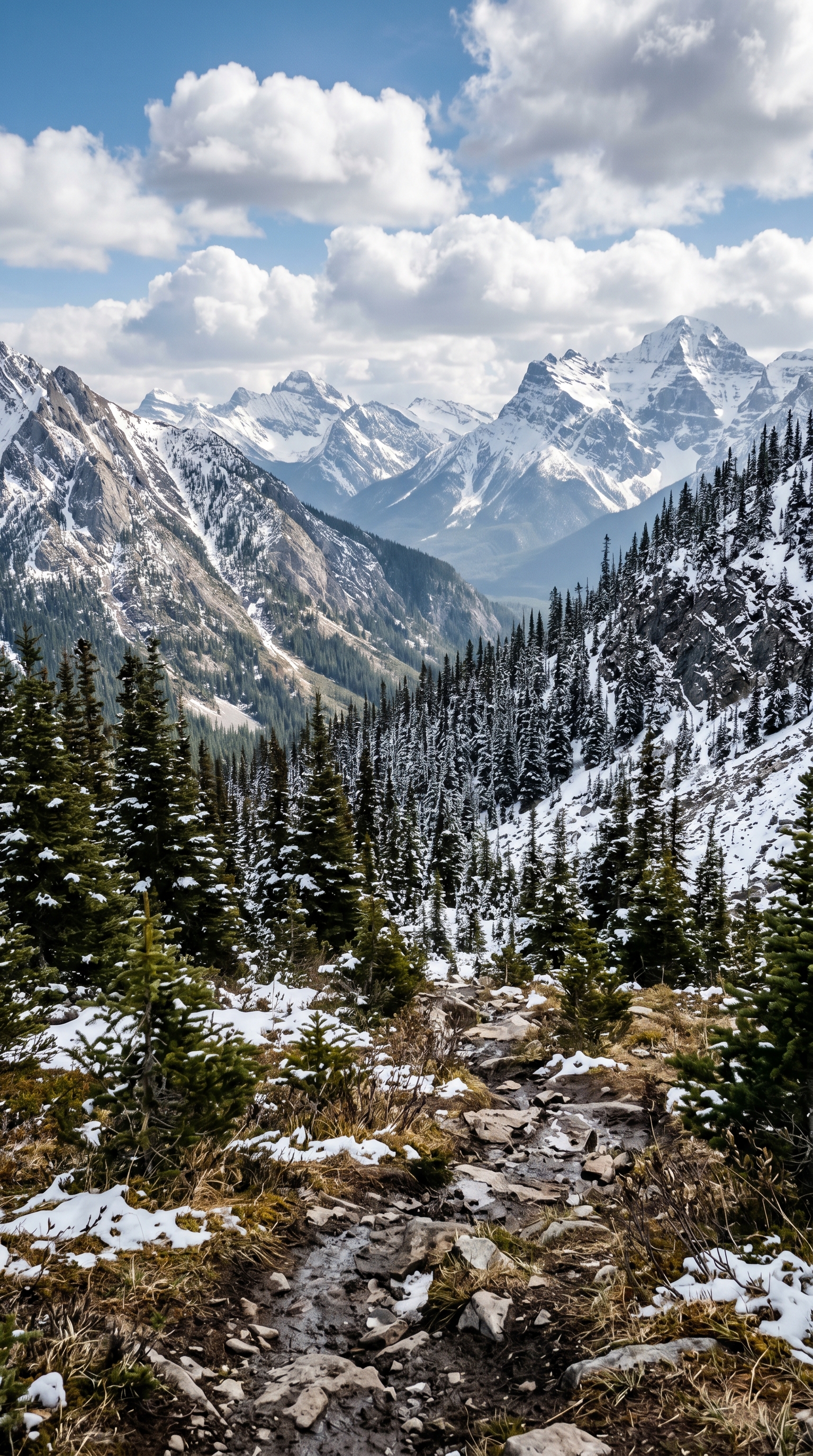
Banff conifer forest at ground level — the sub-alpine spruce belt where wolverines cache meat in deep snow. -
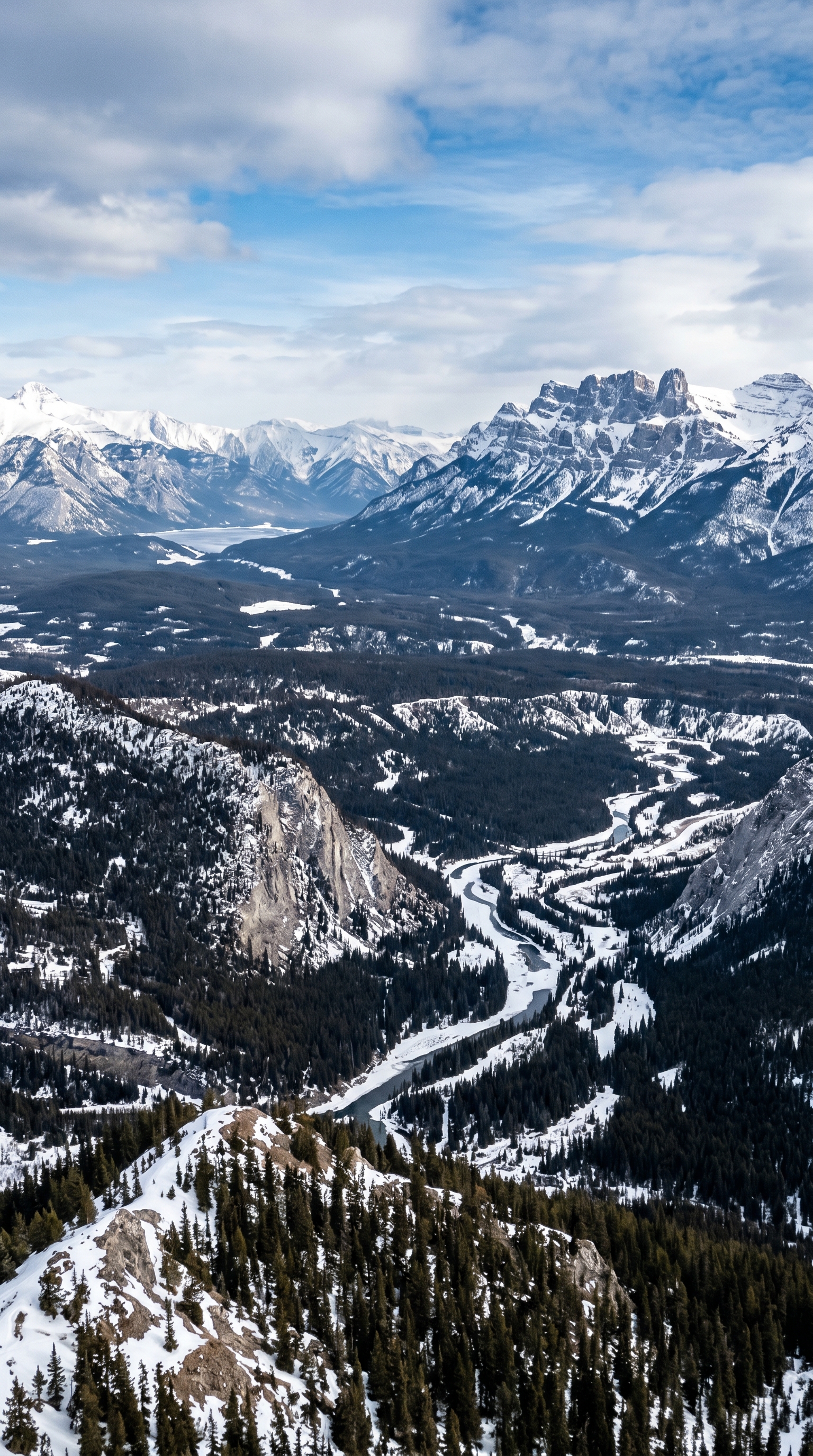
Banff National Park from above — Canada's first national park, 6,000 km² of Rocky Mountains. -
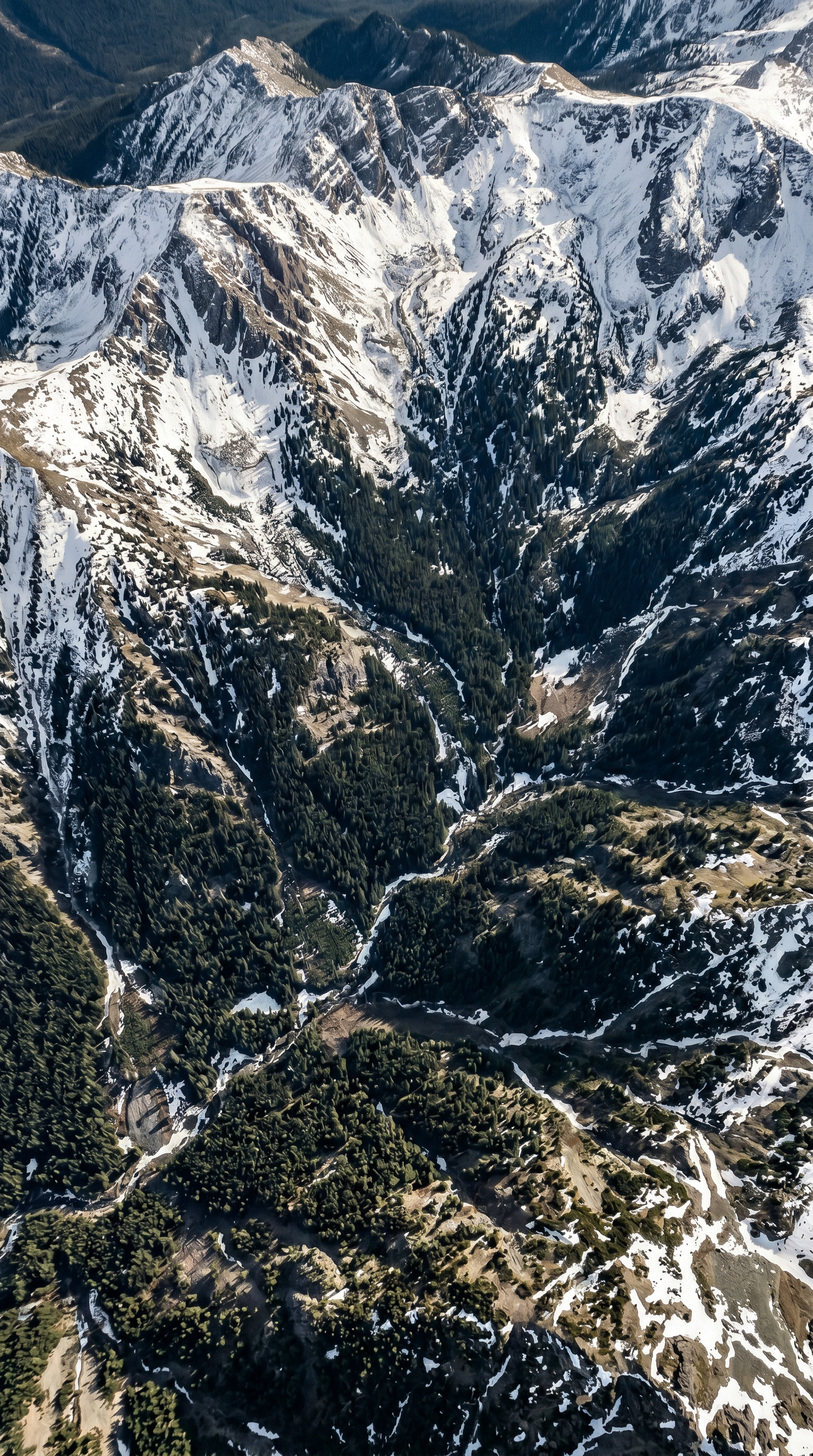
Wolverine country from high overhead — the boreal and sub-arctic forests of North America and Eurasia.
Native range
Wolverines range across the northern forests of the world — Alaska and northern Canada, Norway, Sweden, Finland, and the Russian Federation from Karelia through Siberia to Kamchatka. Smaller, recovering populations persist in the contiguous United States: the North Cascades of Washington, northern Idaho, western Montana, and Wyoming inside the Greater Yellowstone Ecosystem. They are tied to boreal forest, taiga, subalpine forest, and alpine and high-arctic tundra. Across most of that range they are obligate snowpack denners — reproductive dens require persistent spring snow cover. Lower-latitude populations (Washington Cascades, Yellowstone) survive only at high elevation where spring snowpack is retained.…
The range
Six regions, one species.
The wolverine doesn't live in one place. Across the map below, each region has its own pressures, prey, and politics — same biology, different worlds.
-
United States
Denali National Park (Alaska)
Alaskan stronghold — among the densest wolverine populations in North America. Persistent spring snow cover across the Alaska Range supports natal denning.
Source ↗ -
United States
Gates of the Arctic National Park (Alaska)
High-arctic Brooks Range population; represents the species' northern continental core in North America.
Source ↗ -
United States
North Cascades National Park (Washington)
Southern-periphery recolonising population. Persistent high-elevation spring snow is the limiting habitat feature; the area is a focal conservation site under the 2023 US DPS Threatened listing.
Source ↗ -
Canada
Banff National Park (Alberta)
Canadian Rockies population; connects the Alaskan–Yukon core with the contiguous-US southern periphery via the continental alpine corridor.
Source ↗ -
Sweden
Sarek National Park (Laponia)
Reference Scandinavian mountain-tundra population — the Swedish Wolverine Project long-term study area. Snow-persistent fell landscape; key denning habitat in the Copeland et al. (2010) analysis.
Source ↗ -
Russian Federation
Wrangel Island / Chukotka
High-arctic Russian range; represents the easternmost Eurasian population.
Source ↗
Daily life
What the wolverine does, day to day.
Diet, social behaviour, climate — the everyday biology that shapes how this species hunts, defends and survives.
-
Diet
Opportunistic carnivore with heavy scavenging bias.
-
Social life
Solitary outside the breeding season. Polygynous mating system with long-term male–female territorial overlap; males defend large territories against other males via scent-marking from anal glands.
-
Climate
Cold-obligate. Occupies the boreal, taiga, tundra, and alpine zones of the northern hemisphere, typically above 60° N latitude or at high elevation in lower latitudes (Cascades, Rockies, Yellowstone, Scandinavian fells).
Wyld Trivia
Five questions. Most people get them wrong.
But you're not most people.
Tap to reveal.
-
How can a wolverine survive around much bigger predators?
Show me HideA wolverine is not a tiny superhero throwing bears around. Its edge is winter skill: broad paws for snow, stamina over huge ranges, strong teeth for frozen carcasses, and the nerve to contest food when the risk is worth it.
-
What does the wolverine's scientific name actually mean?
Show me HideGulo gulo — from the Latin word for glutton. The wolverine eats almost anything it can find, from huge moose carcasses down to berries and frozen ground squirrels. It's the largest member of the weasel family on land, and it earns the name by eating its way through the harshest winters on Earth.
-
How does a wolverine keep food fresh for months in the wild?
Show me HideIt uses snow as a freezer. Wolverines kill or scavenge in summer and winter, then bury surplus meat in snow, frozen ground, and rock crevices. They spray each cache with scent from anal glands so other animals stay away. Months later they dig the meat back out — still good to eat.
-
How far does a wolverine roam in a day?
Show me HideUp to 45 kilometres — that's like walking from one side of London to the other. A male wolverine's territory can be 600 to 1,000 square kilometres of forest and mountain. Few carnivores anywhere on Earth need so much wild ground per individual.
-
Why does a warming planet matter for wolverine babies?
Show me HideWolverines need deep, late-spring snow for many of their birthing dens. Mother wolverines tunnel into snowpack and raise their cubs there in safety. Across one big study of 562 wolverine dens, every single one was inside the spring-snow zone. Less snow can mean fewer safe places to have cubs.
The terrain
Where the wolverine thrives.
Every animal is built for some places more than others. These are the ground, hours and weather where this species shows its best — and its worst.
Ground
- Boreal forest Excels
- Alpine tundra Excels
- Snowfield Excels
- Mountain slope Strong
- Open tundra Strong
- Lowland Struggles
- Urban Avoids
Hours
- Dawn Strong
- Dusk Strong
- Night Strong
- Day Strong
- Twilight Strong
Weather
- Cold Excels
- Moderate Strong
- Storm Strong
- Rain Average
- Wind Average
- Hot Avoids

Five things you didn't know about the wolverine.
Cited biology that shapes how the wolverine feeds, defends, survives.
-
Gulo gulo is listed as Least Concern on the IUCN Red List at species level, reflecting the wolverine's vast circumboreal range across Canada, Alaska, Fennoscandia, and Russia. Regional listings are stricter: in 2023 the US Fish and Wildlife Service listed the contiguous-US Distinct Population Segment as Threatened under the Endangered Species Act, and Canada classified the species as Special Concern in 2018. Source ↗
-
Reproductive wolverine dens are strongly tied to persistent spring snow cover. A continental analysis of 562 wolverine natal and maternal den sites across Fennoscandia and North America found all fell within the spring-snow envelope, supporting the hypothesis that wolverines are obligate snowpack denners — the climate-change signal that underpins current US conservation status. Source ↗
-
Wolverines hold some of the largest per-individual home ranges of any carnivore relative to body size. Male home ranges can reach 600-1,000 km², and a Greater Yellowstone telemetry study found adult-male home ranges averaging 797 km² at the southern edge of the species' distribution. Source ↗
-
Wolverines exploit snow as a natural refrigerator. Surplus kills and scavenged carcasses are cached in snow, frozen ground, and rock crevices and scent-marked with anal-gland secretions; caches can be retrieved months later, allowing a mid-sized mustelid to compete for carcass resources with wolves, bears, and lynx across the boreal winter. Source ↗
-
Wolverines are small for carnivores but built for winter: broad paws spread weight over snow, dense fur sheds slush, and strong teeth help them feed from frozen carcasses. They can contest carcasses with larger carnivores, but their real advantage is snow, stamina, and refusal to waste food. Source ↗
About the wolverine
Where the wolverine sits on the tree of life.
-
Class
Mammalia
Warm-blooded animals with fur or hair that feed their young milk.
-
Order
Carnivora
Mostly meat-eating mammals — cats, dogs, bears and their relatives.
-
Family
Mustelidae
Long-bodied carnivores — weasels, otters, badgers, wolverines.
-
Species
Gulo gulo
Wolverine — the species this page is about.


Wolverine
Every fact, cited.
Biology cited on this page comes from peer-reviewed zoology and the major species databases. Click through for the underlying study, dataset or assessment.
- IUCN Red List · IUCN Red List
- cdnsciencepub.com · cdnsciencepub.com
- doi.org · doi.org
- Animal Diversity Web · Animal Diversity Web
- Animal Diversity Web · Animal Diversity Web


