
African Wild Dog
Scientific name Lycaon pictus
Adult size
- Weight
- ♀F 25 kg ♂M 25 kg
- Length
- ♀F 0.95 m ♂M 0.95 m
- Shoulder height
- ♀F 0.7 m ♂M 0.7 m
- Top speed chase
- ♀F 60 km/h ♂M 60 km/h
- Lifespan
- African Wild Dogs can live about 10-12 years in the wild; captive records can reach about 17 years.
Represented by Echo The Okavango Delta, Botswana

African wild dogs once ran across open country through much of sub-Saharan Africa. Today their world is broken into a few strongholds, mostly in Southern and East Africa: northern Botswana's Okavango Delta and Chobe, Zimbabwe's Hwange, Namibia's Caprivi strip, Zambia, Tanzania's Serengeti and Nyerere/Selous landscapes, Kenya, Mozambique, and parts of South Africa.
Where they live
Three angles, one home.
The african wild dog represented in the Wyld Savage League lives in The Okavango Delta, Botswana. Three views of the same patch of country — at ground level, from above, and bird's-eye.
-
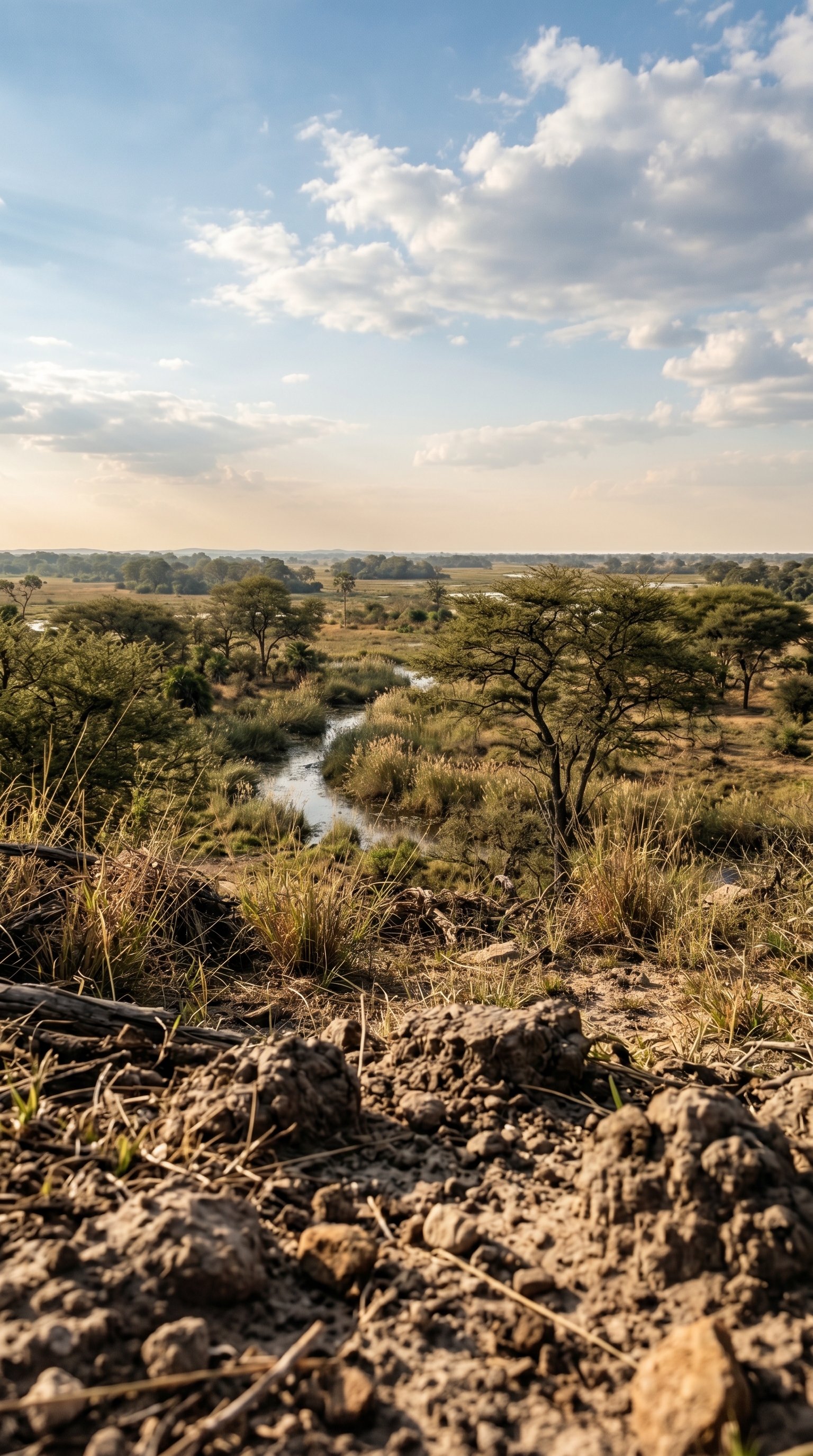
The Okavango Delta, Botswana at ground level — African wild dogs are highly effective social predators, but northern Botswana GPS-collar work changes the usual story. -
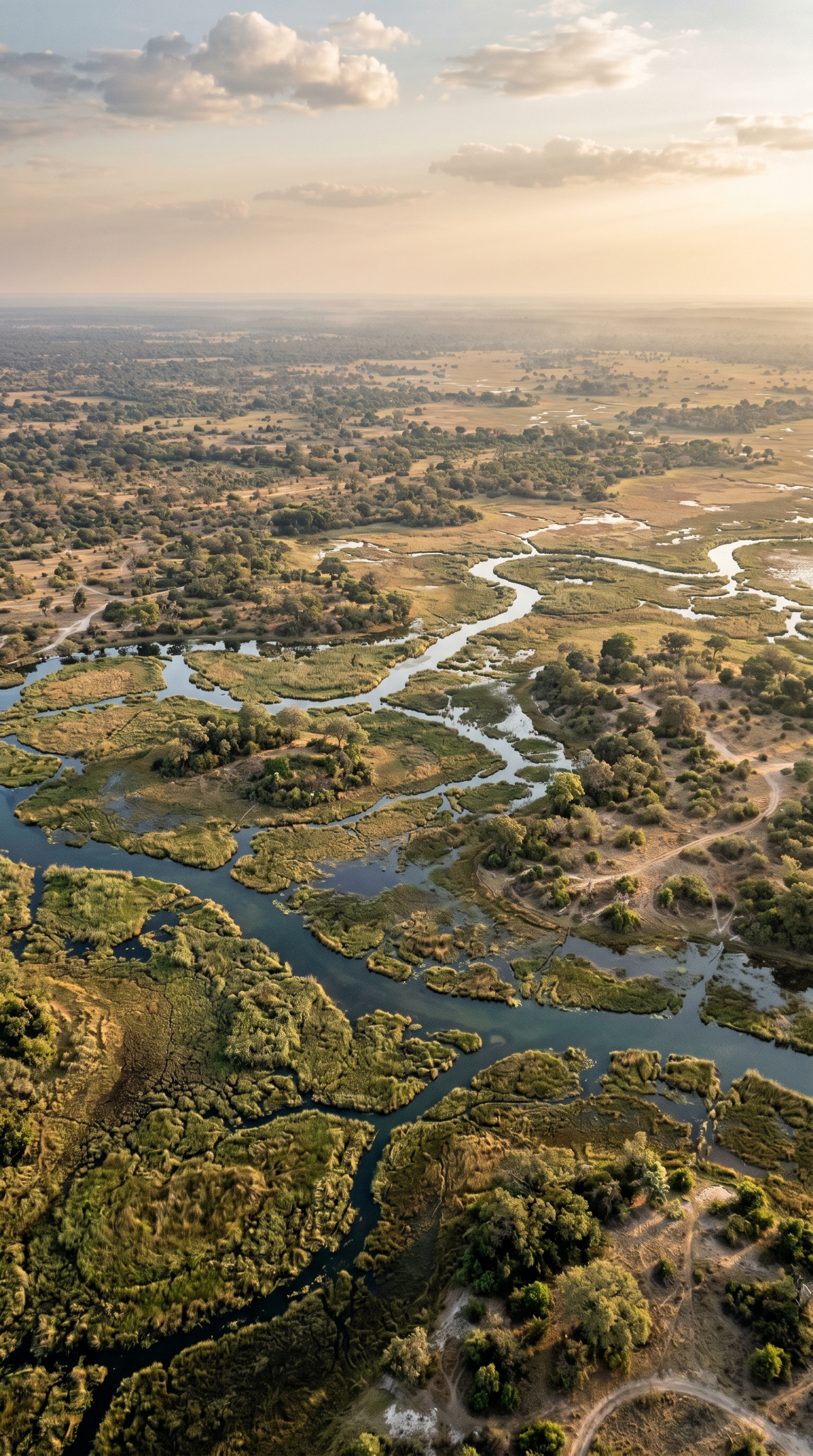
The Okavango Delta, Botswana seen from above — African wild dogs are highly effective social predators, but northern Botswana GPS-collar work changes the usual story. -
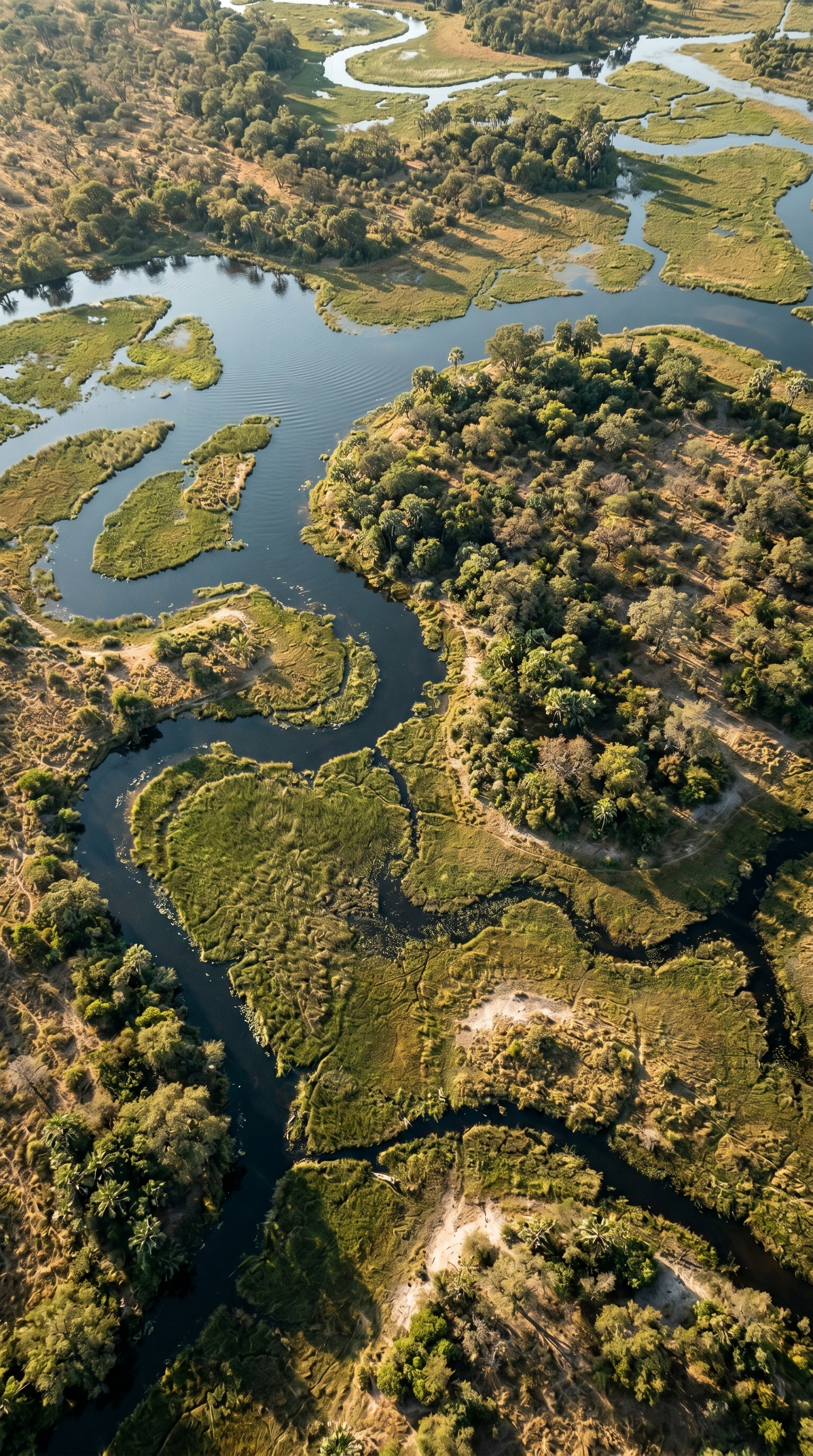
The Okavango Delta, Botswana from high overhead — African wild dogs are highly effective social predators, but northern Botswana GPS-collar work changes the usual story.
Native range
African wild dogs once ran across open country through much of sub-Saharan Africa. Today their world is broken into a few strongholds, mostly in Southern and East Africa: northern Botswana's Okavango Delta and Chobe, Zimbabwe's Hwange, Namibia's Caprivi strip, Zambia, Tanzania's Serengeti and Nyerere/Selous landscapes, Kenya, Mozambique, and parts of South Africa.
The range
Seven regions, one species.
The african wild dog doesn't live in one place. Across the map below, each region has its own pressures, prey, and politics — same biology, different worlds.
-
Botswana
The Okavango Delta
Echo's home territory. Important northern Botswana stronghold with floodplain, grassland, and mixed woodland. Sympatric with the African leopard and Noga (African rock python) in the same Delta ecosystem.
Source ↗ -
Botswana
Chobe and Kwando-Linyanti
Protected northern Botswana landscape with open floodplain and mixed woodland mosaic; part of the broader Okavango/Kwando-Linyanti stronghold.
Source ↗ -
Zimbabwe
Hwange National Park
Major Southern African stronghold in woodland-savanna country; treat as a geographic population, not a public subspecies.
Source ↗ -
South Africa
Kruger National Park
Southern African population with persistent pressure from fragmentation, persecution risk, road mortality, disease, and larger carnivore competition.
Source ↗ -
Tanzania
Serengeti–Mara ecosystem
East African population; historical subspecies names need a later taxonomy review before use.
Source ↗ -
Tanzania
Selous / Nyerere Game Reserve
Large Tanzanian landscape; treat as a geographic population, not a public subspecies.
Source ↗ -
Namibia
Eastern Caprivi
Connectivity corridor toward Botswana and Zambia. Habitat linkage is critical for dispersal and genetic exchange.
Source ↗
Daily life
What the african wild dog does, day to day.
Diet, social behaviour, climate — the everyday biology that shapes how this species hunts, defends and survives.
-
Diet
Hypercarnivorous pack hunter. In northern Botswana collar-study country, impala dominate the prey base; across the wider range, African wild dogs take medium antelope and other hoofed prey where available.
-
Social life
Obligately social. Packs normally include a dominant breeding pair plus related and sometimes unrelated helpers.
-
Climate
Savanna, bushy savanna, mixed woodland, floodplain grassland, and other connected open-to-semi-open landscapes.
Wyld Trivia
Five questions. Most people get them wrong.
But you're not most people.
Tap to reveal.
-
What makes African wild dogs different from every other African predator?
Show me HidePack-coordination. African wild dogs are obligate pack-hunters — they essentially can't survive alone. The whole pack participates: hunting together, sharing food with injured and sick pack-mates, and both males and females taking turns babysitting the pups while others go hunting. No other African carnivore depends on its pack to this extent.
-
Why does every African wild dog have a different pattern?
Show me HideNo two wild dogs in the world have the same coat. The mottled black, white, and tan pattern is a fingerprint — easy to use to identify individuals. Even pups within a single litter look completely different from each other.
-
How big is a wild dog pack's territory?
Show me HideRanges vary hugely by habitat, prey, neighbours, pack size, and whether pups are at a den. The important thing is that a pack needs connected land: too many fences, farms, roads, or broken-up reserves can make the whole system fail.
-
How do African wild dogs decide whether the pack should hunt?
Show me HideThey can use sneezes during a rally. Researchers in Botswana found that when enough sneezes happened, the pack was more likely to leave together. When a dominant dog started the rally, fewer extra sneezes were needed; when a lower-ranking dog started it, more pack members had to join in.
-
How many African wild dogs are left in the wild?
Show me HideOnly a few thousand remain across scattered African strongholds. Mammalian Species summarises the modern estimate at about 6,700 animals, including about 1,400 mature adults. The species is Endangered because connected wild land is disappearing and small packs are vulnerable to people, roads, disease, and competition with larger carnivores.
The terrain
Where the african wild dog thrives.
Every animal is built for some places more than others. These are the ground, hours and weather where this species shows its best — and its worst.
Ground
- Open savanna Excels
- Short grass plain Excels
- Mopane woodland Strong
- Mixed woodland Average
- Dense forest Struggles
- Rocky mountain Struggles
Hours
- Dawn Excels
- Dusk Excels
- Twilight Excels
- Day Strong
- Night Average
Weather
- Moderate Excels
- Cold Average
- Rain Average
- Wind Average
- Storm Struggles
- Hot Avoids

Five things you didn't know about the african wild dog.
Cited biology that shapes how the african wild dog feeds, defends, survives.
-
African wild dogs are highly effective social predators, but northern Botswana GPS-collar work changes the usual story. Individual chase success in the study pack averaged ~15.5%, while group feeding return stayed high because packs made multiple short chases and shared prey freely. Pack cooperation — not solo power — is the competitive edge. Source ↗
-
The northern Botswana collar study found many short, opportunistic chases rather than a neat long-distance relay. Mean chase distance was about 446 m, mean chase duration about 61 seconds, and the study found no high-level coordinated chase roles such as rotating fresh runners. Source ↗
-
African wild dogs are cursorial specialists, but their speed should be described as short-burst speed. A companion *Nature Communications* study recorded top stride speeds up to 19 m/s (~68 km/h), while daily travel was mostly walking and trotting between short chases. Source ↗
-
Distinctive anatomy: large rounded ears, mottled individually variable coat, white tail tip, and four toes on each foot. Mammalian Species gives adult size as 17–36 kg, 76–112 cm head-body length, and 61–78 cm shoulder height. Source ↗
-
Social decisions can be surprisingly measurable. In Botswana, researchers found that sneezes during pack rallies helped predict whether the group would depart, with fewer sneezes needed when dominant animals initiated the rally. Source ↗
About the african wild dog
Where the african wild dog sits on the tree of life.
-
Class
Mammalia
Warm-blooded animals with fur or hair that feed their young milk.
-
Order
Carnivora
Mostly meat-eating mammals — cats, dogs, bears and their relatives.
-
Family
Canidae
The dog family — pack-hunting, long-distance runners.
-
Species
Lycaon pictus
African Wild Dog — the species this page is about.


African Wild Dog
Every fact, cited.
Biology cited on this page comes from peer-reviewed zoology and the major species databases. Click through for the underlying study, dataset or assessment.
- Nature · Nature
- Nature · Nature
- Nature · Nature
- academic.oup.com · academic.oup.com
- PubMed · PubMed


