
Giant Armadillo
Scientific name Priodontes maximus
Adult size
- Weight
- ♀F 28 kg ♂M 35 kg
- Length
- ♀F 0.86 m ♂M 0.9 m
- Shoulder height
- Not reported for this species
- Top speed scurry
- ♂M 8 km/h
- Lifespan
- Giant Armadillos are thought to live about 12-15 years.
Represented by Escudo Emas National Park, Brazil

Giant armadillos live in tropical South America east of the Andes, across Brazil, Bolivia, Paraguay, Argentina, Peru, Colombia, Venezuela, the Guianas, Ecuador, and Suriname. They use a wide mix of habitats: Amazon rainforest, Brazil's Cerrado (open tropical savanna), the Gran Chaco dry woodlands, and the Pantanal wetlands. They usually stay below 500 metres and avoid ground that stays flooded for too long.
Where they live
Three angles, one home.
The giant armadillo represented in the Wyld Savage League lives in Emas National Park, Brazil. Three views of the same patch of country — at ground level, from above, and bird's-eye.
-
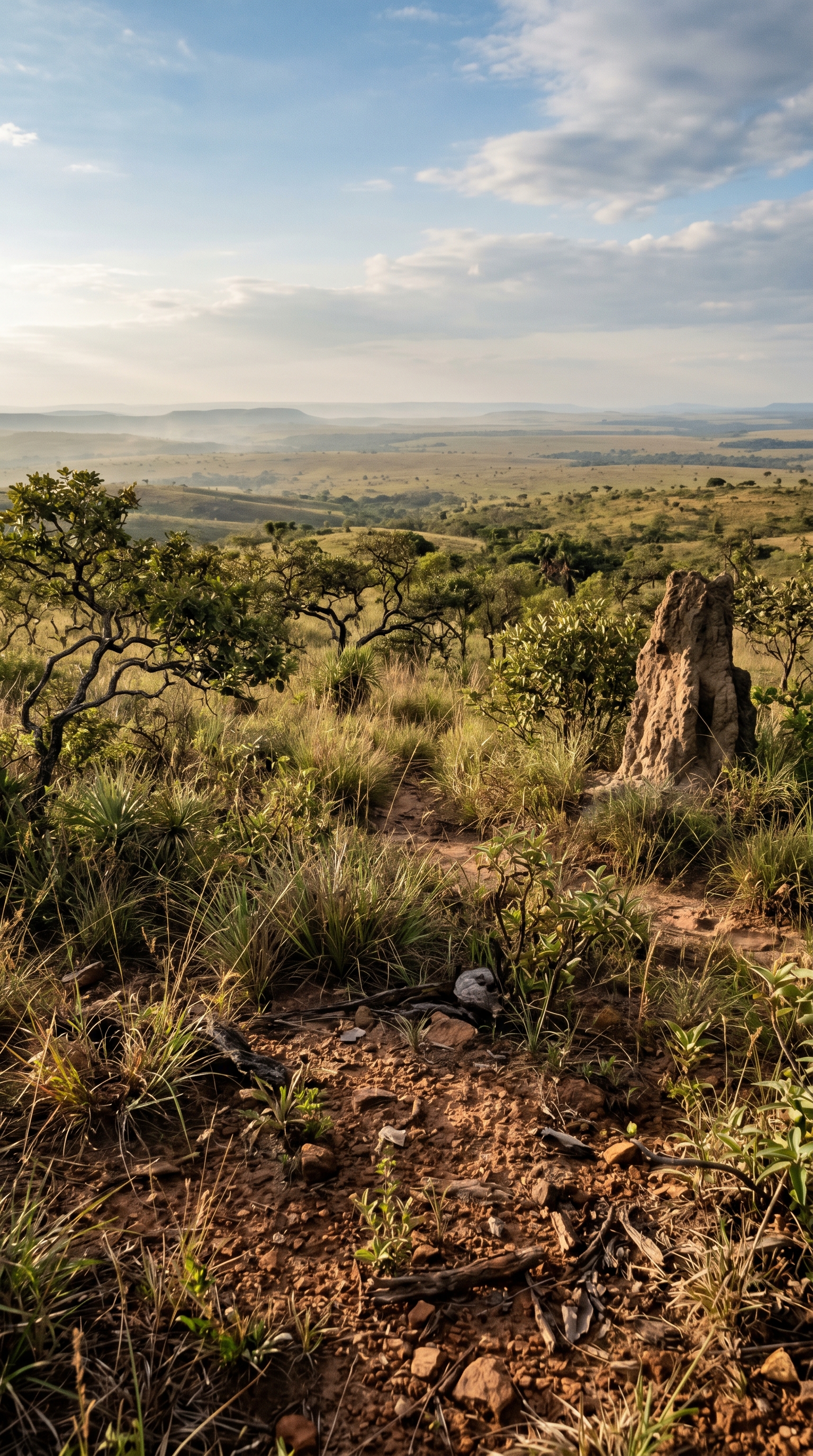
Emas National Park, Brazil at ground level — Priodontes maximus is the largest living armadillo. -
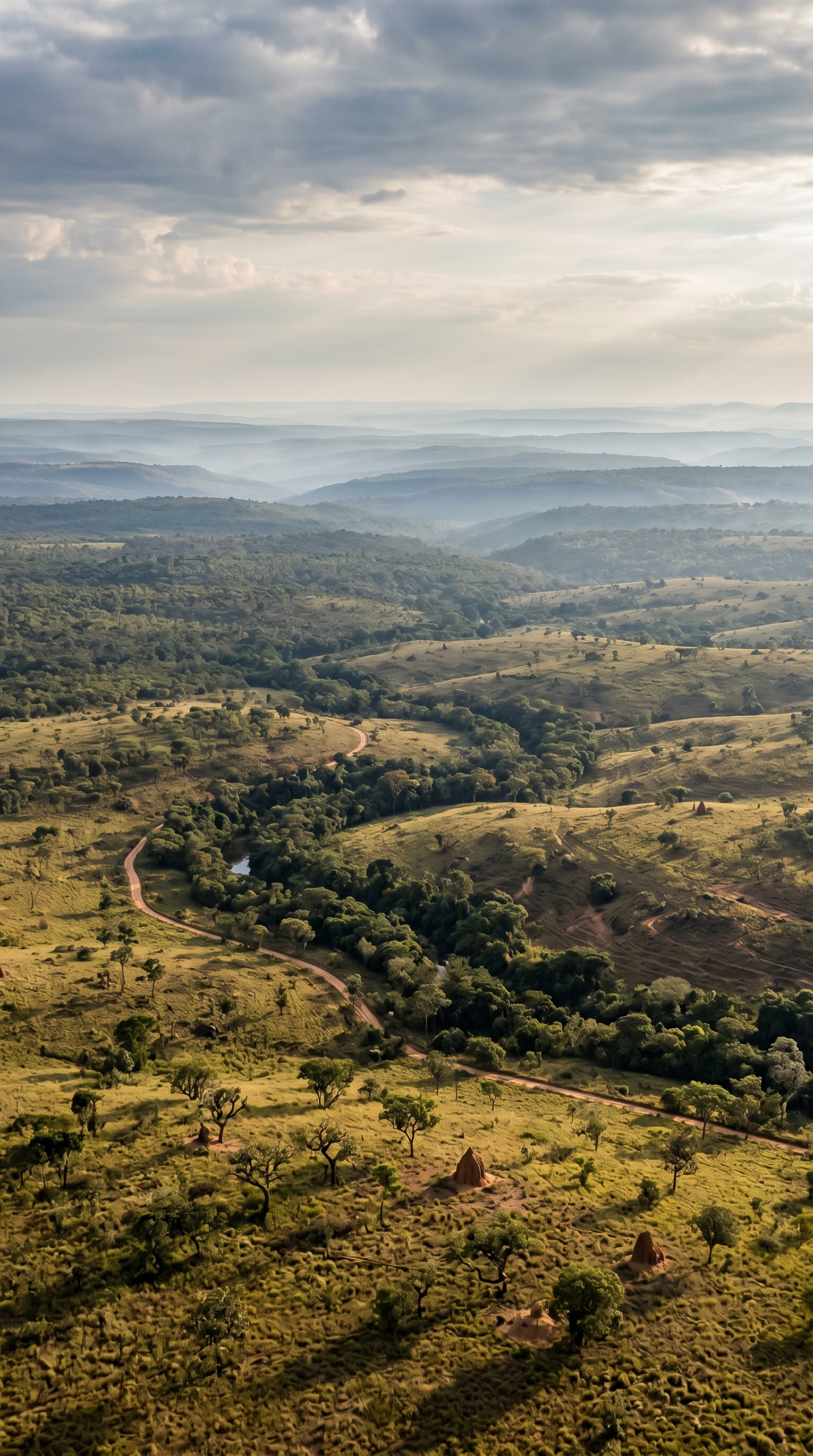
Emas National Park, Brazil seen from above — Priodontes maximus is the largest living armadillo. -
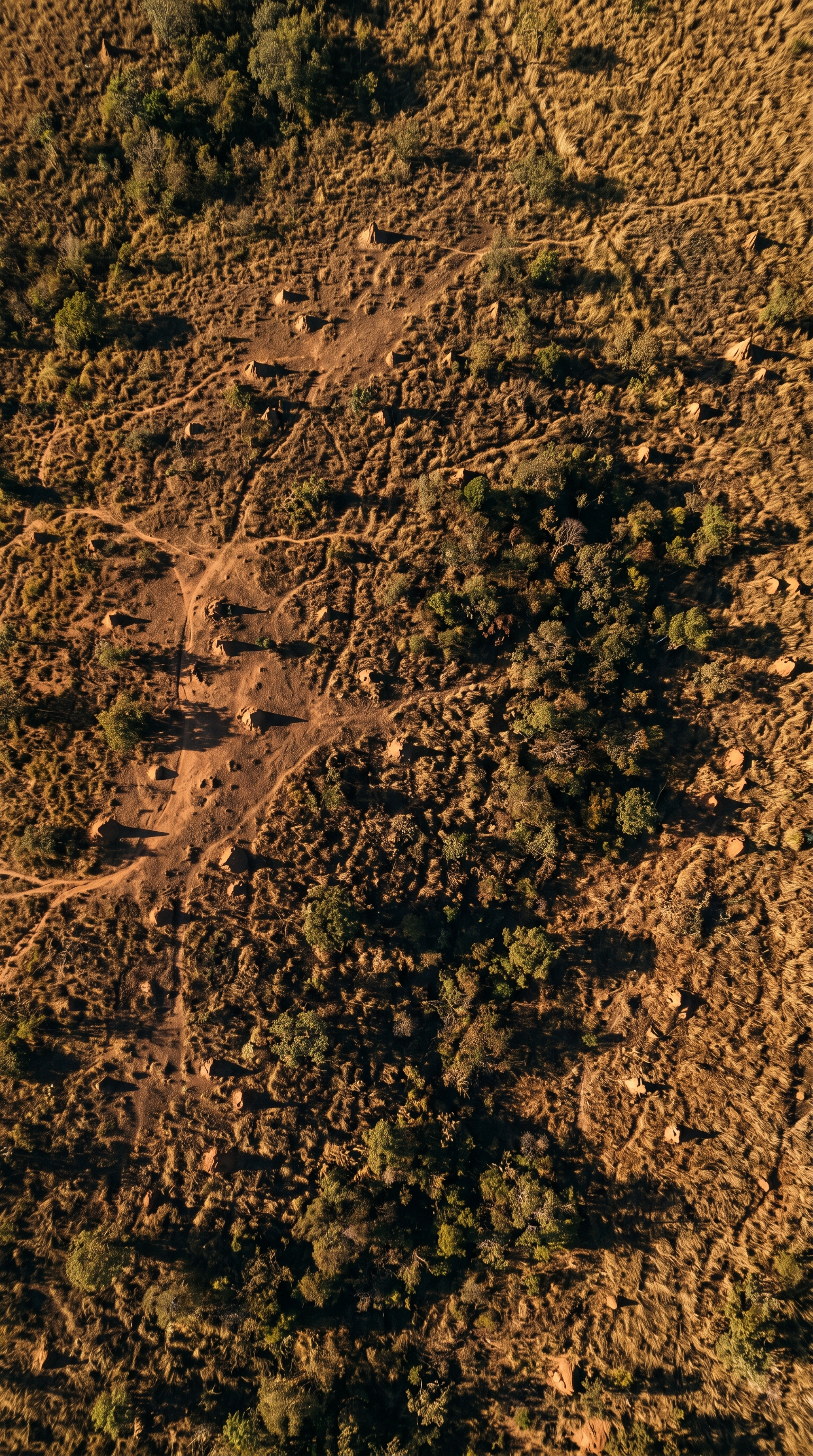
Emas National Park, Brazil from high overhead — Priodontes maximus is the largest living armadillo.
Native range
Giant armadillos live in tropical South America east of the Andes, across Brazil, Bolivia, Paraguay, Argentina, Peru, Colombia, Venezuela, the Guianas, Ecuador, and Suriname. They use a wide mix of habitats: Amazon rainforest, Brazil's Cerrado (open tropical savanna), the Gran Chaco dry woodlands, and the Pantanal wetlands. They usually stay below 500 metres and avoid ground that stays flooded for too long.
The range
Five regions, one species.
The giant armadillo doesn't live in one place. Across the map below, each region has its own pressures, prey, and politics — same biology, different worlds.
-
Brazil
Pantanal
Long-term study landscape of the Pantanal Giant Armadillo Project (Desbiez and team); key site for the 2013 Biotropica ecosystem-engineer paper. Important study landscape, not Escudo's home region.
Source ↗ -
Brazil
Emas National Park
Cerrado grassland-savanna stronghold; documented population within federal protected area.
Source ↗ -
Bolivia
Kaa-Iya del Gran Chaco National Park
Gran Chaco protected-area stronghold; the largest national park in Bolivia and a regional refuge for the species.
Source ↗ -
Ecuador
Yasuni National Park
Amazonian rainforest range in western Amazonia; represents the wet-forest end of the species' habitat mosaic.
Source ↗ -
Colombia
Casanare riparian forest (Orinoco basin)
Camera-trap population density study (5.8 animals per 100 km²) in Journal of Mammalogy 2017; strong riparian-forest preference documented.
Source ↗
Daily life
What the giant armadillo does, day to day.
Diet, social behaviour, climate — the everyday biology that shapes how this species hunts, defends and survives.
-
Diet
Insectivore. Specialises on social insects — primarily termites and several ant species — and can excavate and consume a substantial portion of a single termite colony in one feeding bout.
-
Social life
Generally asocial and solitary. Individuals forage alone and interact with conspecifics mainly around mating and maternal care.
-
Climate
Tropical and subtropical lowlands. Occupies a wide habitat mosaic: Amazonian rainforest, Cerrado (tropical savanna), Gran Chaco, Pantanal floodplains, and arid/semi-arid woodland.
Wyld Trivia
Five questions. Most people get them wrong.
But you're not most people.
Tap to reveal.
-
Which mammal has the longest claws compared to its body?
Show me HideThe giant armadillo. The sickle-shaped middle claw on its front foot grows over 20 centimetres along the curve — the longest claw of any living mammal. It uses that claw to rip open rock-hard termite mounds and to dig burrows so big and deep that other animals move in and live in them.
-
How is one armadillo's burrow a home for 25 other species?
Show me HideGiant armadillo burrows are huge. Once the armadillo moves on, the burrow stays. Brazilian scientists documented at least 24 other vertebrate species using giant armadillo burrows and soil mounds for shelter, escape, and finding food. The armadillo accidentally builds useful little spaces for its neighbours.
-
How big can a giant armadillo grow?
Show me HideA giant armadillo can reach about 1.5 metres from nose to tail and adult males can weigh up to about 60 kilograms, though average adults are much lighter. Despite that size, almost no one sees one in the wild. They are nocturnal, solitary, and spend much of the day underground.
-
Why are giant armadillos so vulnerable to extinction?
Show me HideBecause they grow up and breed slowly. Males may not be sexually mature until about 6.5-8 years old, females usually have one baby, and the young can stay dependent on their mother and her burrows for many months. Hunting, roads, fires, and habitat loss can remove adults faster than the species can replace them.
-
What does a giant armadillo eat for dinner?
Show me HideMostly termites and ants. They tear open termite mounds with that giant claw, then sweep up the insects with a long sticky tongue. A single feeding session can wipe out a big chunk of a termite colony. Worms, larvae, spiders, and the occasional small lizard round out the menu.
The terrain
Where the giant armadillo thrives.
Every animal is built for some places more than others. These are the ground, hours and weather where this species shows its best — and its worst.
Ground
- Open savanna Excels
- Cerrado Excels
- Woodland Strong
- Lowland forest Strong
- Rocky terrain Struggles
- Swamp Avoids
Hours
- Night Excels
- Dusk Strong
- Twilight Strong
- Dawn Average
- Day Avoids
Weather
- Moderate Excels
- Hot Strong
- Rain Average
- Wind Average
- Storm Struggles
- Cold Avoids

Five things you didn't know about the giant armadillo.
Cited biology that shapes how the giant armadillo feeds, defends, survives.
-
Priodontes maximus is the largest living armadillo. Adult male giant armadillos can weigh up to about 60 kg, average adult mass is closer to 30 kg, and total length can reach roughly 1.5 m including the tail. Source ↗
-
The sickle-shaped central claw on the third forefinger reaches 20.3 cm along the curve — the largest claw of any living mammal — and is the primary tool for breaking open termite mounds and excavating burrows. Source ↗
-
Giant armadillos are physical ecosystem engineers. In Brazilian Pantanal research, their burrows and soil mounds were used by at least 24 other vertebrate species for shelter, thermal refuge, foraging, and predator avoidance. Source ↗
-
Reproduction is extremely slow. Male giant armadillos are estimated to reach sexual maturity at about 6.5-8 years, young can depend on the mother and her burrows until around 18 months, and interbirth intervals probably exceed three years. Source ↗
-
The species is listed as Vulnerable on the IUCN Red List under criteria A2cd, with a decreasing population driven by habitat loss, agricultural expansion, hunting for meat, and illegal wildlife trade across its South American range. Source ↗
About the giant armadillo
Where the giant armadillo sits on the tree of life.
-
Class
Mammalia
Warm-blooded animals with fur or hair that feed their young milk.
-
Order
Cingulata
Armoured mammals — armadillos and their relatives.
-
Family
Chlamyphoridae
The giant armadillos — the largest armoured mammals.
-
Species
Priodontes maximus
Giant Armadillo — the species this page is about.


Giant Armadillo
Every fact, cited.
Biology cited on this page comes from peer-reviewed zoology and the major species databases. Click through for the underlying study, dataset or assessment.
- academic.oup.com · academic.oup.com
- academic.oup.com · academic.oup.com
- Wiley · Wiley
- doi.org · doi.org
- IUCN Red List · IUCN Red List


