
Giant Anteater
Scientific name Myrmecophaga tridactyla
Adult size
- Weight
- ♀F 30 kg ♂M 32 kg
- Length
- ♀F 1.9 m ♂M 2 m
- Shoulder height
- Not reported for this species
- Top speed gallop
- ♂M 48 km/h
- Lifespan
- Wild lifespan is not cleanly known; captive Giant Anteaters can reach about 25-26 years.
Represented by Garra Pantanal Wetlands, Brazil

Giant anteaters range from Central America into South America, from Honduras and parts of the old Central American range through the Amazon edge, Cerrado, Pantanal, Chaco, Paraguay, Bolivia, Brazil, and northern Argentina. Some countries have already lost them, including Guatemala and El Salvador, and Belize is uncertain. Their strongest modern homes include Brazil's Cerrado and Pantanal - open savanna, wetland, forest patches, and termite-rich grassland.
Where they live
Three angles, one home.
The giant anteater represented in the Wyld Savage League lives in Pantanal Wetlands, Brazil. Three views of the same patch of country — at ground level, from above, and bird's-eye.
-
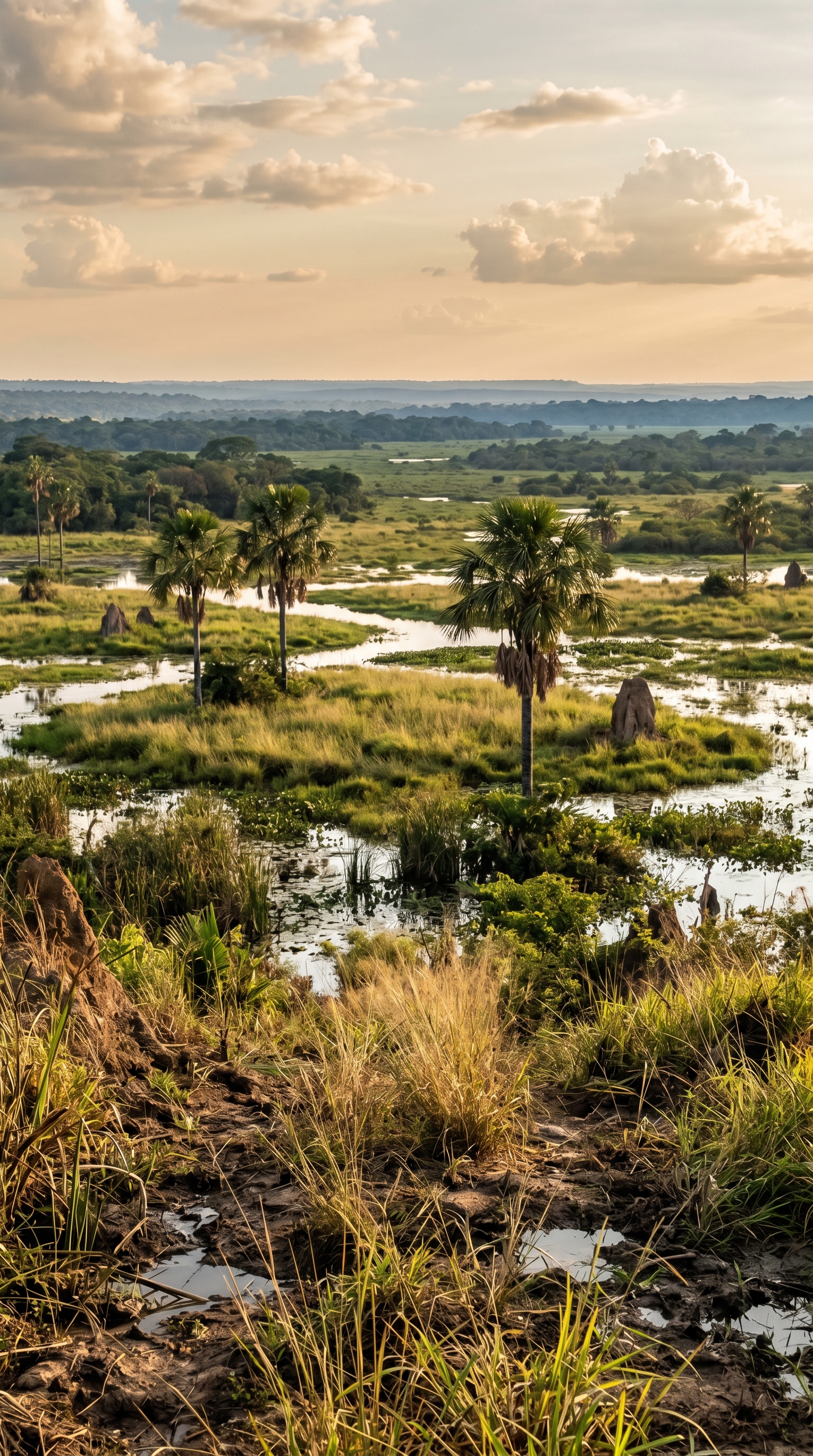
Pantanal grassland at ground level — termite-mound country where giant anteaters tear into colonies with 60 cm claws. -
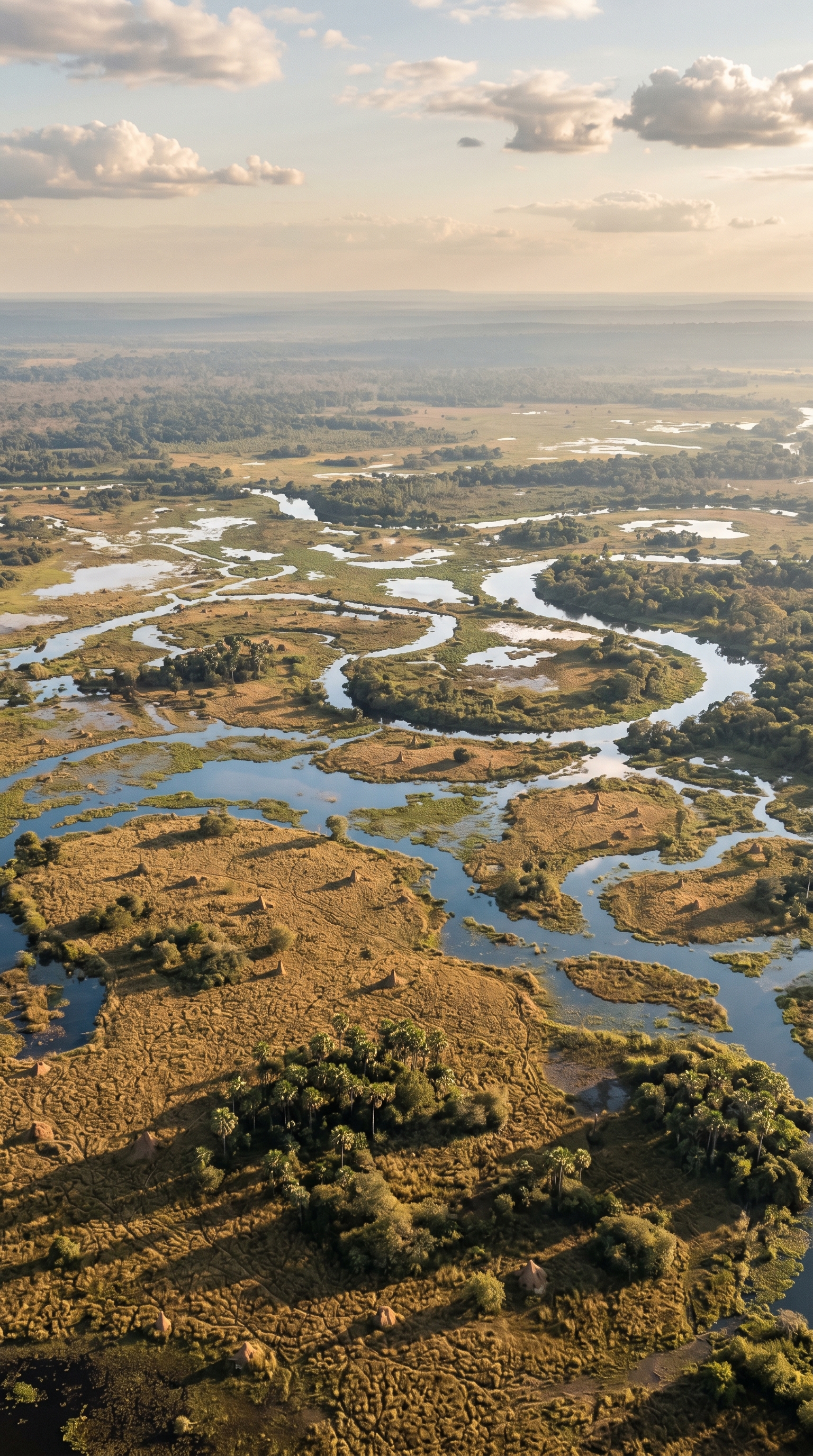
The Pantanal from above — seasonally flooded grassland that anteaters cross hundreds of kilometres of every year. -
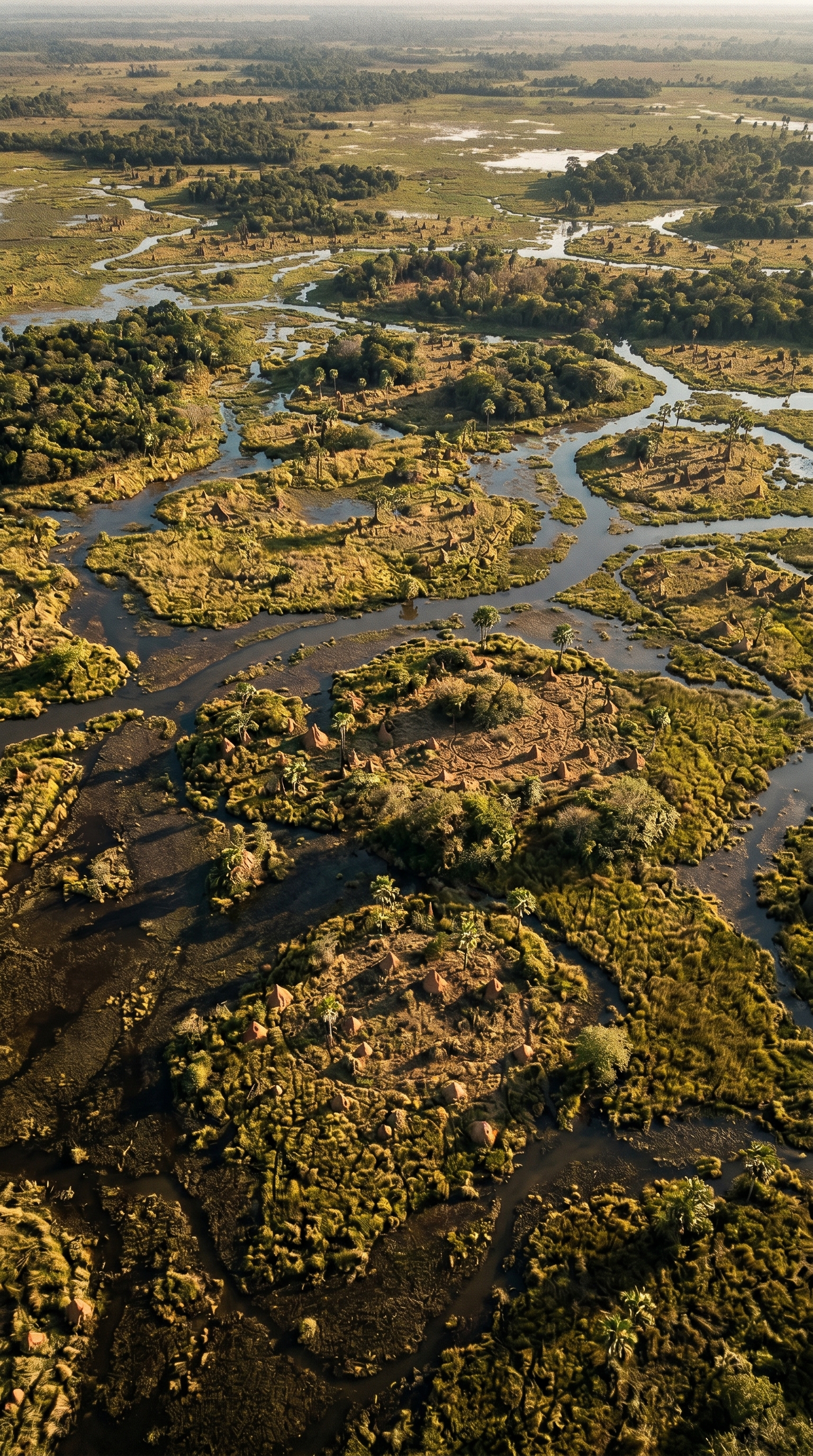
Anteater country from high overhead — the lowland tropics of South America, from Honduras to northern Argentina.
Native range
Giant anteaters range from Central America into South America, from Honduras and parts of the old Central American range through the Amazon edge, Cerrado, Pantanal, Chaco, Paraguay, Bolivia, Brazil, and northern Argentina. Some countries have already lost them, including Guatemala and El Salvador, and Belize is uncertain. Their strongest modern homes include Brazil's Cerrado and Pantanal - open savanna, wetland, forest patches, and termite-rich grassland.
The range
Six regions, one species.
The giant anteater doesn't live in one place. Across the map below, each region has its own pressures, prey, and politics — same biology, different worlds.
-
Brazil
Pantanal Wetlands
Garra's home territory. High Brazilian population diversity; sympatric with jaguars (Panthera onca), which do prey on giant anteaters. Male Pantanal home ranges reported around 4.0–7.5 km², females up to 11.9 km².
Source ↗ -
Brazil
Serra da Canastra National Park (Cerrado)
Cerrado stronghold with high genetic diversity and recent population expansion — key refugial habitat. Home ranges 2.7 km² (smallest documented for species).
Source ↗ -
Brazil
Emas National Park
Second major Cerrado stronghold. Grassland-savanna mosaic; fire-adapted ecosystem. Sympatric with giant armadillo (Escudo's home range).
Source ↗ -
Argentina
Iberá Natural Reserve
Southern range limit. Largest documented home ranges (32.5 km²). Reintroduction candidate sites; ongoing rewilding.
Source ↗ -
Paraguay
Chaco
Peripheral; semi-arid population under pressure from habitat conversion and vehicle mortality.
Source ↗ -
Colombia
Llanos and trans-Andean ranges
Fragmented northern range entry; species-level identity remains clearest pending targeted taxonomy evidence.
Source ↗
Daily life
What the giant anteater does, day to day.
Diet, social behaviour, climate — the everyday biology that shapes how this species hunts, defends and survives.
-
Diet
Obligate insectivore. Primary diet ants and termites. No teeth; specialised feeding uses an elongated sticky tongue and powerful hooked foreclaws that break into nests.
-
Social life
Usually solitary outside of breeding and maternal care. Males and females can maintain overlapping home ranges without defending territory aggressively; in one Pantanal study, male ranges were about 4.
-
Climate
Subtropical to tropical. Giant anteaters have low body temperature and low metabolism for a placental mammal, so behavioural thermoregulation matters: they shift activity with temperature and use forest patches, shade, and open foraging areas across a habitat mosaic.
Wyld Trivia
Five questions. Most people get them wrong.
But you're not most people.
Tap to reveal.
-
Why is a "harmless" giant anteater one of the most dangerous animals to corner?
Show me HideGiant anteaters look slow and gentle, and usually try to avoid trouble. But cornered, they can rear up on their hind legs and strike with long hooked foreclaws. Medical case reports show those claws can cause severe, even fatal, injuries. The claws were built to crack open termite mounds. They just work in defence too.
-
How long is a giant anteater's tongue?
Show me HideVery long. Giant anteaters have no teeth, so the tongue does the fine work: it reaches into narrow ant and termite tunnels, sticks to prey, then pulls the insects back into the mouth.
-
Why does a giant anteater walk on its knuckles instead of its paws?
Show me HideTo protect its claws. The anteater's foreclaws are its main feeding tool and its emergency defence. Walking on the knuckles helps keep the hooked claw tips from wearing down, so they stay useful for opening termite mounds.
-
Does a giant anteater see well or smell well?
Show me HideSmell, by 40 times. Giant anteaters have weak eyesight but their sense of smell is roughly 40 times stronger than a human's. They can locate a termite mound underground from metres away — through wind and forest noise.
-
Are anteaters actually related to sloths?
Show me HideYes. Both belong to a group called Xenarthra — South American mammals with extra joints in their backbones, slow metabolisms, and unusual skeletons. Anteaters, sloths, and armadillos are all distant cousins.
The terrain
Where the giant anteater thrives.
Every animal is built for some places more than others. These are the ground, hours and weather where this species shows its best — and its worst.
Ground
- Cerrado savanna Excels
- Pantanal wetland Excels
- Tropical rainforest Strong
- Riparian grassland Strong
- Dry chaco scrub Average
- Open plain Struggles
Hours
- Night Excels
- Twilight Excels
- Dawn Strong
- Dusk Strong
- Day Struggles
Weather
- Moderate Excels
- Hot Average
- Rain Average
- Wind Average
- Cold Struggles
- Storm Struggles

Five things you didn't know about the giant anteater.
Cited biology that shapes how the giant anteater feeds, defends, survives.
-
Giant anteaters have no teeth. They break into ant and termite nests with powerful hooked foreclaws, then feed with a very long sticky tongue built for narrow tunnels. Source ↗
-
Medical case reports document giant anteaters rearing up and using hooked foreclaws defensively; one vascular-injury report describes forepaw claws reaching up to about 6.5 cm. Source ↗
-
Jaguars do prey on giant anteaters in the Pantanal, but a cornered giant anteater's foreclaws can make a close attack dangerous. Source ↗
-
Giant anteaters have low body temperature and low metabolism for a placental mammal, so they rely heavily on behaviour: shifting activity with temperature and using forest patches or shade as thermal shelter. Source ↗
-
Usually solitary foragers. In one Pantanal study, male home ranges were about 4.0–7.5 km² and females ranged up to 11.9 km². Source ↗
About the giant anteater
Where the giant anteater sits on the tree of life.
-
Class
Mammalia
Warm-blooded animals with fur or hair that feed their young milk.
-
Order
Pilosa
Sloths and anteaters — slow or slim mammals from the Americas.
-
Family
Myrmecophagidae
The American anteaters — long snouts and longer tongues.
-
Species
Myrmecophaga tridactyla
Giant Anteater — the species this page is about.


Giant Anteater
Every fact, cited.
Biology cited on this page comes from peer-reviewed zoology and the major species databases. Click through for the underlying study, dataset or assessment.


