
Honey Badger
Scientific name Mellivora capensis
Adult size
- Weight
- ♀F 6.2 kg ♂M 9.4 kg
- Length
- ♀F 0.6 m ♂M 0.65 m
- Shoulder height
- ♀F 0.23 m ♂M 0.25 m
- Top speed rush
- 30 km/h
- Lifespan
- Honey Badgers can live up to about 8 years in the wild and about 24 years in captivity.
Represented by Pelo The Okavango Delta, Botswana

Honey badgers range across most of sub-Saharan Africa, the Arabian Peninsula, India, and into parts of Central Asia. They are missing from deep rainforest and true open desert, but almost everywhere else they find a way: savanna, thorn scrub, rocky hills, dry woodland, farm edges, and semi-desert where prey hides under stones and in burrows.
Where they live
Three angles, one home.
The honey badger represented in the Wyld Savage League lives in The Okavango Delta, Botswana. Three views of the same patch of country — at ground level, from above, and bird's-eye.
-
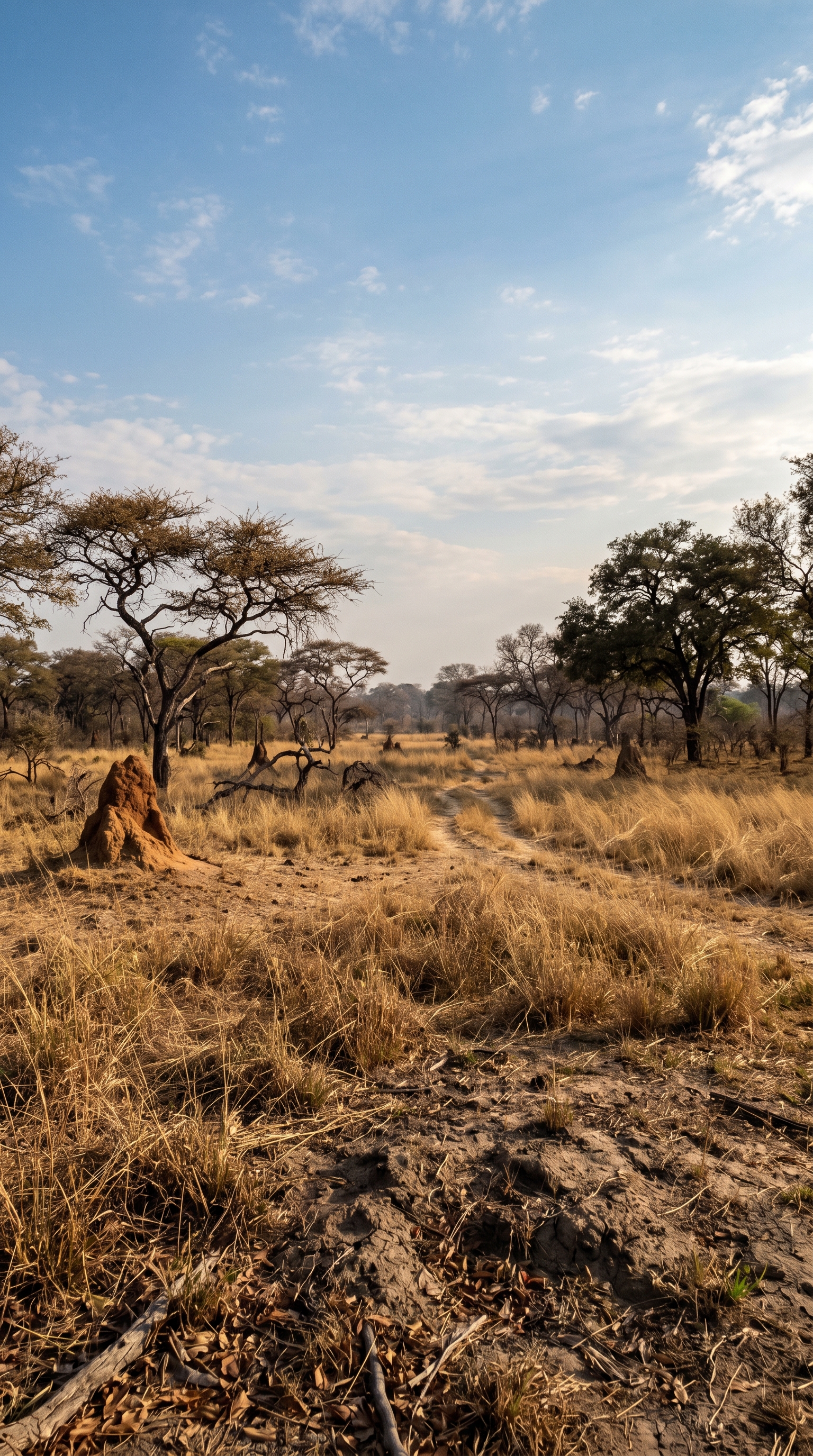
The Okavango Delta, Botswana at ground level — home of the honey badger. -
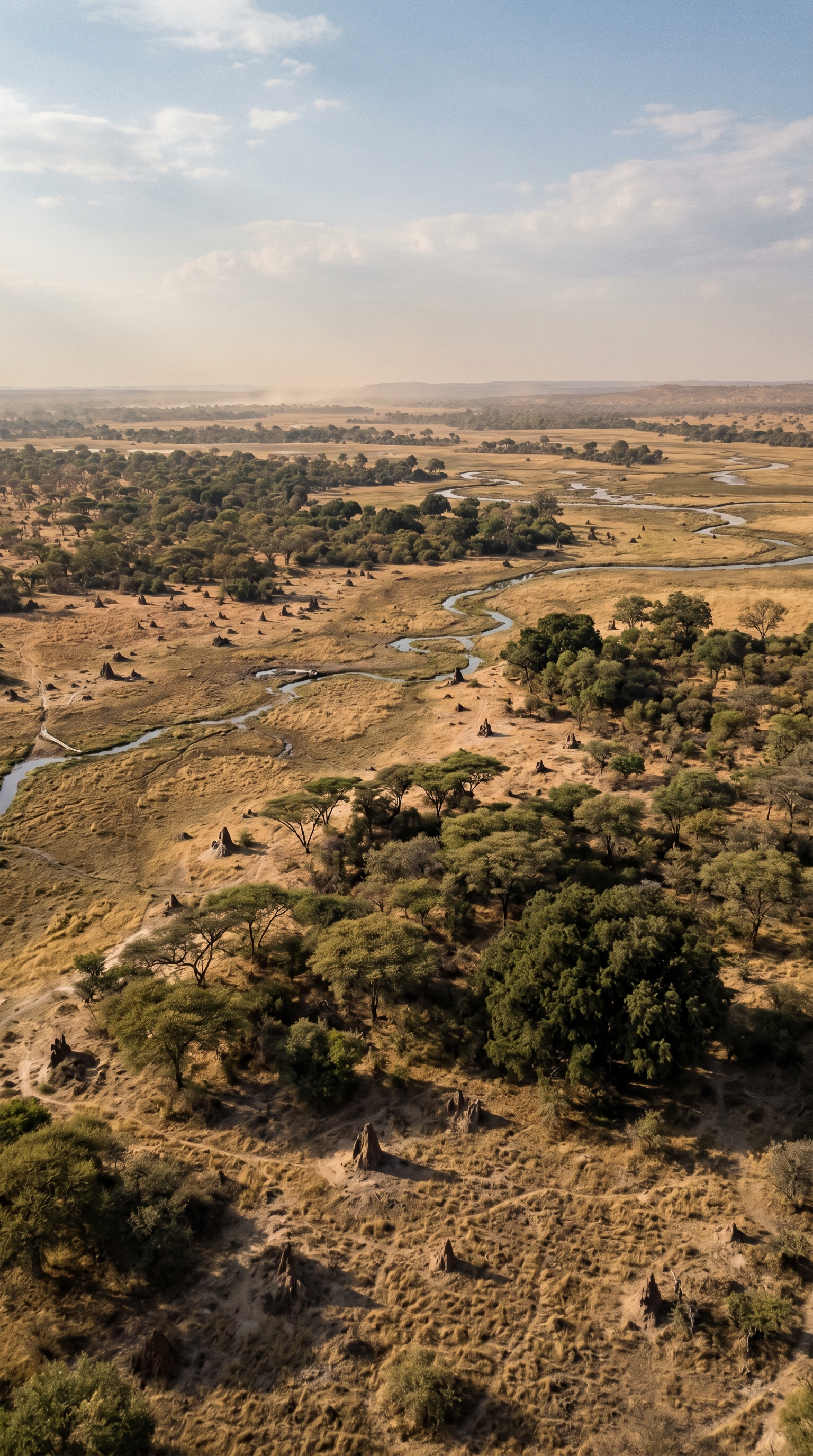
The Okavango Delta, Botswana seen from above — home of the honey badger. -
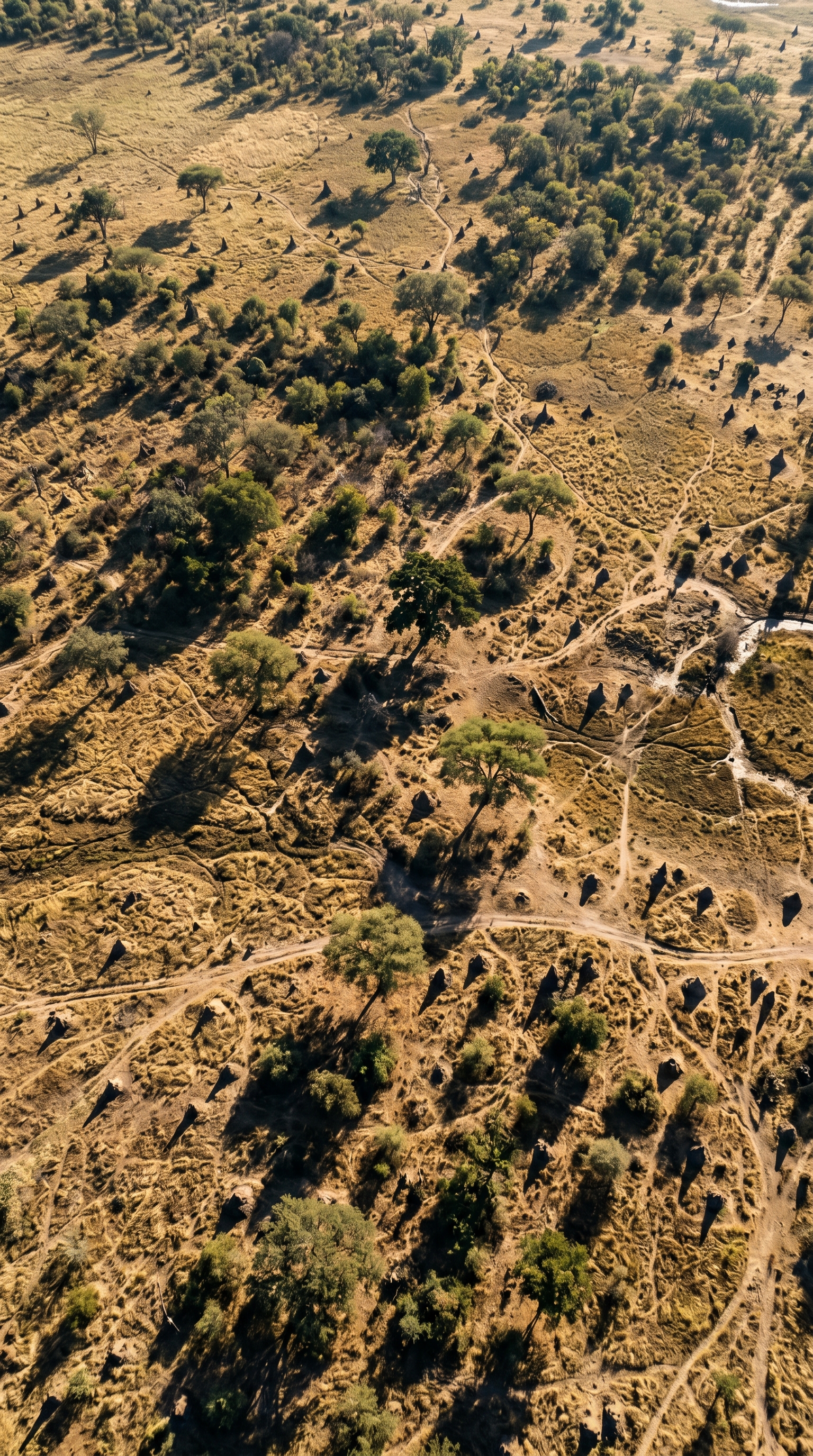
The Okavango Delta, Botswana from high overhead — home of the honey badger.
Native range
Honey badgers range across most of sub-Saharan Africa, the Arabian Peninsula, India, and into parts of Central Asia. They are missing from deep rainforest and true open desert, but almost everywhere else they find a way: savanna, thorn scrub, rocky hills, dry woodland, farm edges, and semi-desert where prey hides under stones and in burrows.
The range
Six regions, one species.
The honey badger doesn't live in one place. Across the map below, each region has its own pressures, prey, and politics — same biology, different worlds.
-
Botswana
The Okavango Delta
Sympatric with the Southern African python. Keep python-encounter language cautious: honey badgers can attack snakes and have loose-skin defences, but Noga's exact scar event is character fiction, not a documented natural-history case.
Source ↗ -
South Africa
Kruger National Park
Southern African stronghold; long-term presence documented across the park's savanna and mixed-woodland habitats.
Source ↗ -
Kenya
Serengeti-Mara ecosystem
East African population — part of the species' near-continuous sub-Saharan range.
Source ↗ -
Botswana
Southern Kalahari (Kgalagadi Transfrontier Park)
Type site for the Begg long-term honey badger field study. Reference population for diet composition (70+ prey species), home range (males ~541 km², females ~126 km²), and activity plasticity data used across this record.
Source ↗ -
Oman
Dhofar (Arabian peninsula)
Arabian peninsula range — represents the species' northward extension out of Africa. Originally framed as Chuma's Group H region under the CSV v6.6 'Africa / Middle East' designation; Session 11 authoring relocated Pelo (← Chuma) to the Okavango Delta for reciprocal-pair sympatry with Noga (African Rock Python), so this Arabian entry is no longer a character-anchor but remains a valid species-range record.
Source ↗ -
India
Ranthambore National Park
Indian subcontinent population — easternmost extent of the contiguous Afro-Asian range before the Central Asian populations.
Source ↗
Daily life
What the honey badger does, day to day.
Diet, social behaviour, climate — the everyday biology that shapes how this species hunts, defends and survives.
-
Diet
Omnivore with strong carnivorous bias.
-
Social life
Mostly solitary and nomadic. Long-term pair bonds are absent; male–female association is brief and limited to mating.
-
Climate
Broad climatic tolerance — one of the most widely distributed mustelids on Earth.
Wyld Trivia
Five questions. Most people get them wrong.
But you're not most people.
Tap to reveal.
-
Why can't a leopard hold on to a honey badger?
Show me HideA honey badger's skin is loose over the neck and shoulders. If a predator gets a bite grip, the badger may still twist, turn, and bite back. That does not make it unbeatable, but it makes holding one much harder than its size suggests.
-
Why can a honey badger survive a cobra bite that would kill a dog?
Show me HideHoney badgers have tiny changes in one of their nerve cell receptors, including a W187R substitution, that make some cobra-style nerve venoms harder to bind properly. They can still be hurt, but they have real resistance. The discovery was published in 2015.
-
How big is a honey badger really?
Show me HideSmaller than people expect. In the best Kalahari field data we checked, adult males averaged about 9.4 kilograms, and another paper described adult males at 10 to 12 kilograms. That is exactly why Pelo is a brilliant lower-weight animal, not a 25 kg Savage League animal.
-
Why do honey badgers attack things much bigger than themselves?
Show me HideBecause they are hard to hold and quick to bite back. Loose skin can help them turn inside a predator's grip, long claws help them dig and defend, and their boldness can make bigger animals hesitate. That does not mean they always win. It means they are costly prey.
-
What's the honey badger in the famous internet video actually doing — and why?
Show me HideRaiding a bee colony for honey AND for the bee larvae underneath. Honey badgers are one of the only mammals that can survive enough stings to keep raiding — their thick loose skin blocks most stingers. Heavy stings from a really big swarm can occasionally still kill a badger, but most raids end with badger fed and bees still queening.
The terrain
Where the honey badger thrives.
Every animal is built for some places more than others. These are the ground, hours and weather where this species shows its best — and its worst.
Ground
- Open savanna Excels
- Rocky scrubland Excels
- Semi desert Strong
- Woodland Strong
- Wetland Average
- Dense forest Struggles
Hours
- Night Excels
- Dusk Excels
- Dawn Strong
- Twilight Strong
- Day Struggles
Weather
- Moderate Excels
- Hot Strong
- Rain Average
- Wind Average
- Cold Struggles
- Storm Struggles

Five things you didn't know about the honey badger.
Cited biology that shapes how the honey badger feeds, defends, survives.
-
Honey badgers carry convergent amino-acid substitutions (W187R and F189L/I) in the α-1 subunit of the nicotinic acetylcholine receptor — the same molecular target elapid snake venoms attack. The mutations introduce a positively charged residue that blocks α-neurotoxin binding while preserving normal receptor function. The same solution evolved independently in hedgehogs and pigs; mongooses reach the same outcome by a different mechanism (glycosylation). Source ↗
-
Mellivora capensis is listed as Least Concern on the IUCN Red List. The species' exceptional geographic breadth — across sub-Saharan Africa, the Arabian peninsula, the Indian subcontinent, and into Central Asia — and its ecological plasticity underpin the low-concern assessment. Source ↗
-
Honey badgers possess thick, loose skin over the neck and shoulders. The safest launch claim is that this helps the animal twist inside a bite grip and bite back; it is a real defensive advantage, not a guarantee against every large predator. Source ↗
-
In the southern Kalahari, honey badger dietary records catalogue more than 70 prey species across reptiles, small mammals, birds, and invertebrates. Adult males consume ~1.3 kg per day; adult females ~0.9 kg. Males patrol average home ranges of 541 km² — one of the largest per-individual ranges recorded for any mustelid. Source ↗
-
Activity is plastic: honey badgers are documented as diurnal, nocturnal, and crepuscular in the same populations, with Kalahari animals shifting toward nocturnal activity in summer heat and diurnal activity in winter. This flexibility, combined with a non-territorial social system and overlapping home ranges, allows densities to track prey rather than competitor pressure. Source ↗
About the honey badger
Where the honey badger sits on the tree of life.
-
Class
Mammalia
Warm-blooded animals with fur or hair that feed their young milk.
-
Order
Carnivora
Mostly meat-eating mammals — cats, dogs, bears and their relatives.
-
Family
Mustelidae
Long-bodied carnivores — weasels, otters, badgers, wolverines.
-
Species
Mellivora capensis
Honey Badger — the species this page is about.


Honey Badger
Every fact, cited.
Biology cited on this page comes from peer-reviewed zoology and the major species databases. Click through for the underlying study, dataset or assessment.
- PubMed · PubMed
- IUCN Red List · IUCN Red List
- Animal Diversity Web · Animal Diversity Web
- Animal Diversity Web · Animal Diversity Web
- Animal Diversity Web · Animal Diversity Web


