
Red Kangaroo
Scientific name Osphranter rufus
Adult size
- Weight
- ♀F 28 kg ♂M 65 kg
- Length
- ♀F 0.95 m ♂M 1.3 m
- Standing height
- ♀F 1.1 m ♂M 1.65 m
- Top speed bound
- ♀F 48 km/h ♂M 56 km/h
- Lifespan
- Red Kangaroos can be recorded up to about 22 years in the wild.
Represented by Marlu Sturt National Park (New South Wales), Australia

Red kangaroos live only on mainland Australia, across the dry and semi-dry interior of New South Wales, Queensland, South Australia, the Northern Territory, and Western Australia. Their world is open outback: grassland, saltbush, shrubland, desert plain, open woodland, and red earth where shade is precious and rain can change the map almost overnight.
Where they live
Three angles, one home.
The red kangaroo represented in the Wyld Savage League lives in Sturt National Park (New South Wales), Australia. Three views of the same patch of country — at ground level, from above, and bird's-eye.
-
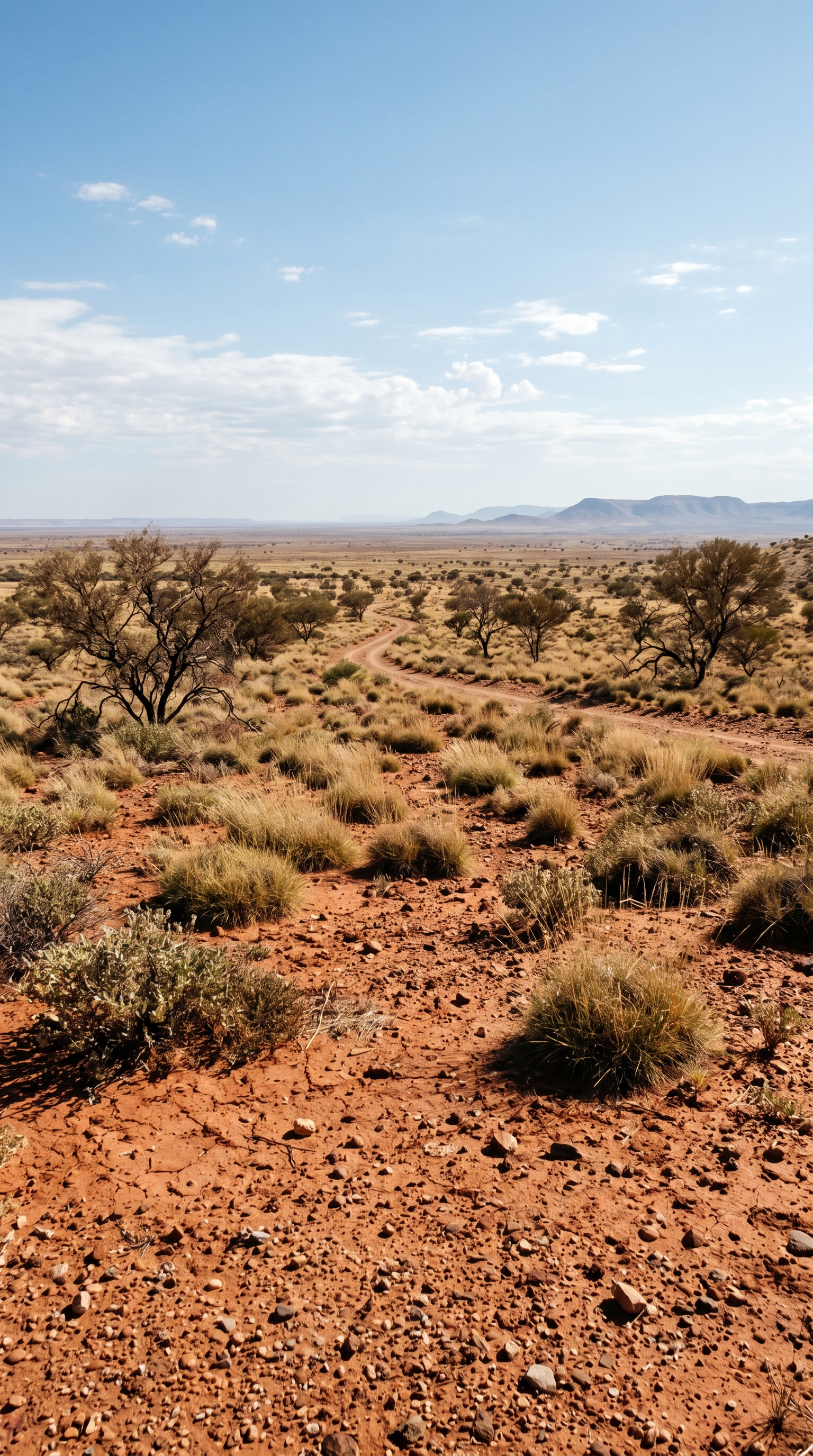
Sturt National Park (New South Wales), Australia at ground level — The red kangaroo is the largest living marsupial. -
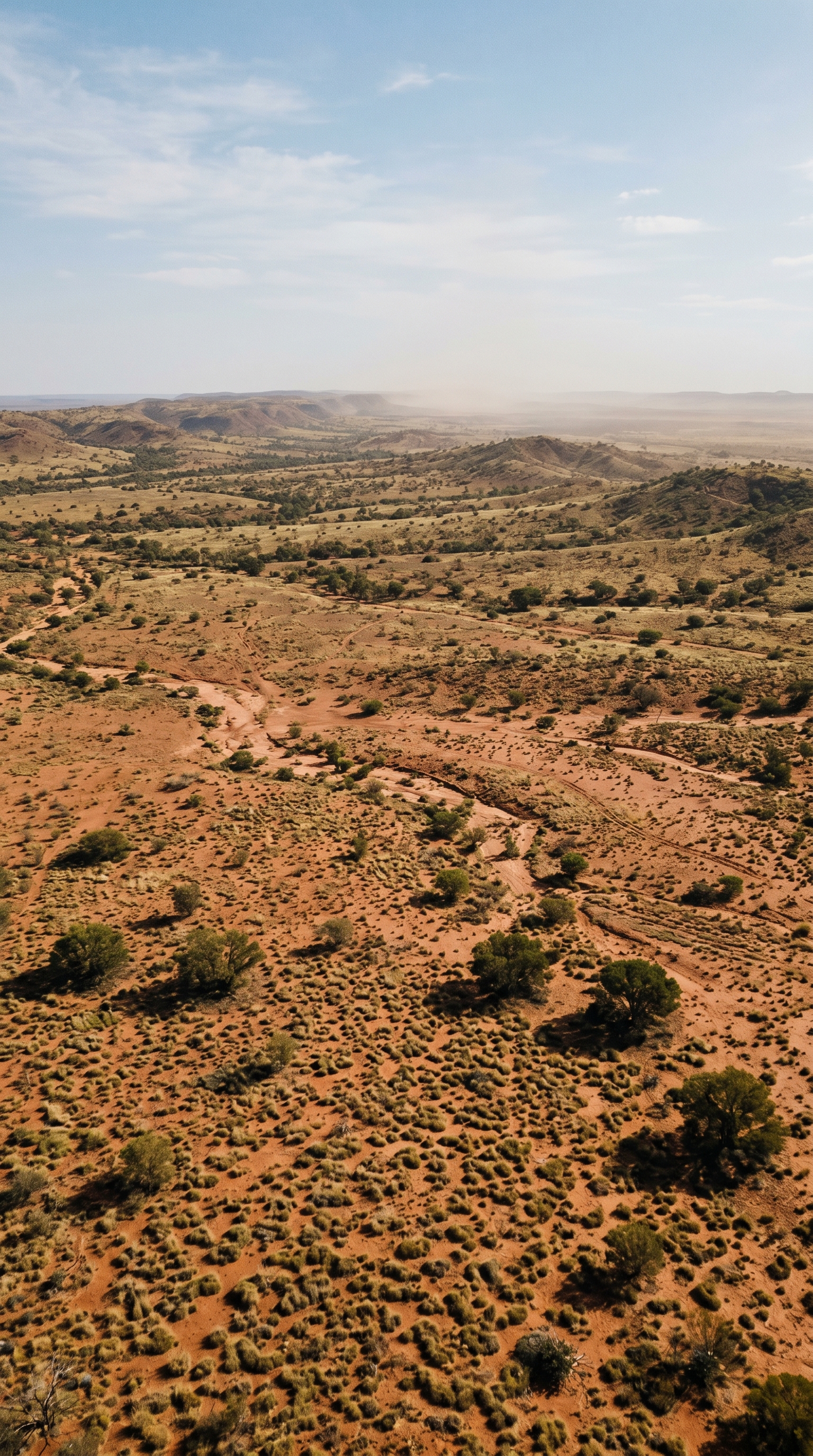
Sturt National Park (New South Wales), Australia seen from above — The red kangaroo is the largest living marsupial. -
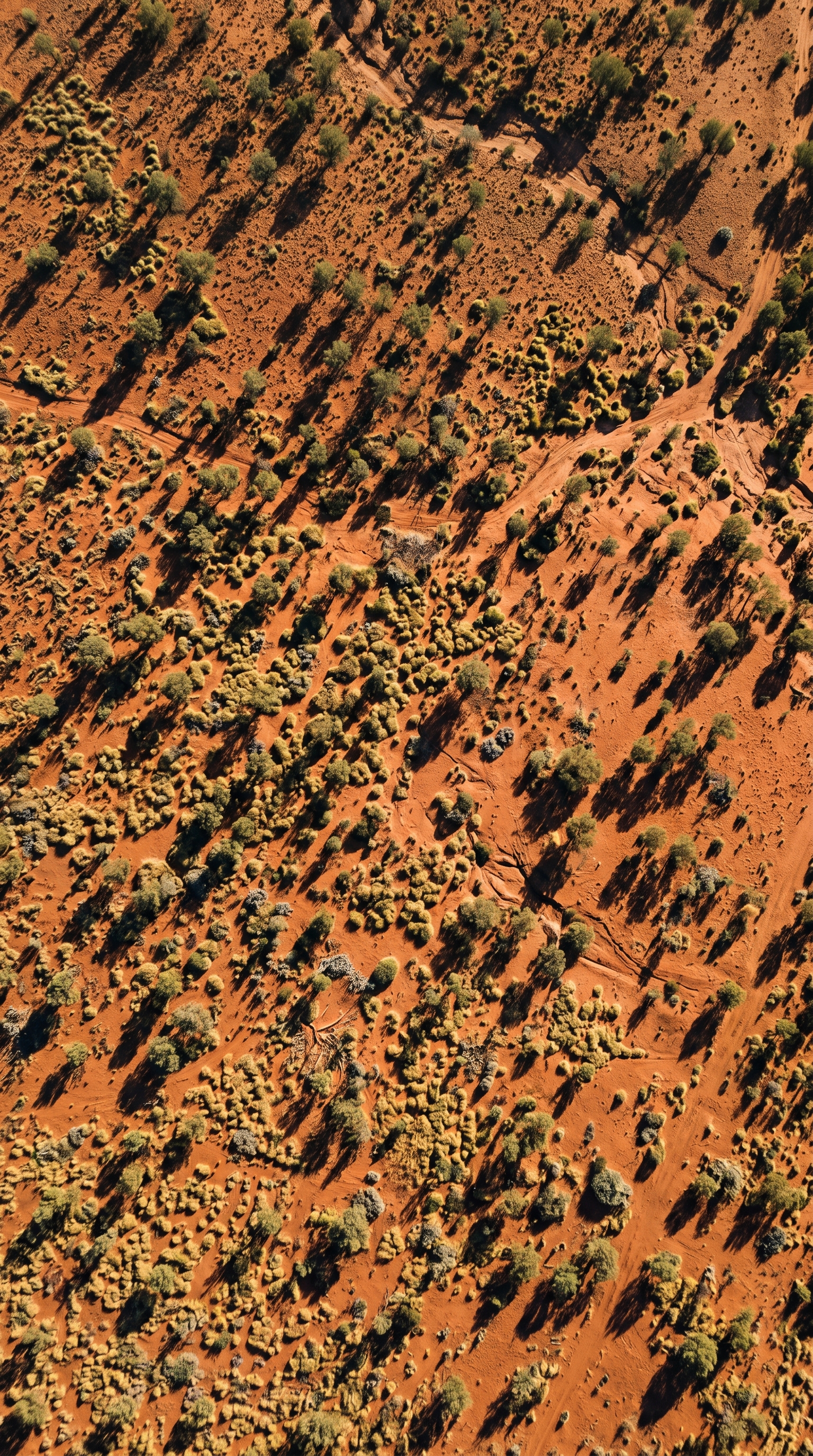
Sturt National Park (New South Wales), Australia from high overhead — The red kangaroo is the largest living marsupial.
Native range
Red kangaroos live only on mainland Australia, across the dry and semi-dry interior of New South Wales, Queensland, South Australia, the Northern Territory, and Western Australia. Their world is open outback: grassland, saltbush, shrubland, desert plain, open woodland, and red earth where shade is precious and rain can change the map almost overnight.
The range
Five regions, one species.
The red kangaroo doesn't live in one place. Across the map below, each region has its own pressures, prey, and politics — same biology, different worlds.
-
Australia
Sturt National Park (New South Wales)
Arid-corner NSW park — Strzelecki and Sturt Stony Desert margins. High-density red kangaroo habitat; candidate home region for Kura (Group G).
Source ↗ -
Australia
Sturt Stony Desert (SA / NT / QLD junction)
Gibber-plain core arid interior; archetypal red-kangaroo open-outback terrain.
Source ↗ -
Australia
Kinchega National Park (New South Wales)
Darling River floodplain saltbush/bluebush plains in far-west NSW; long-running red-kangaroo ecological research site.
Source ↗ -
Australia
Flinders Ranges National Park (South Australia)
Arid-mountain / chenopod-plain mosaic; red kangaroos at the southern edge of the core range.
Source ↗ -
Australia
Mungo National Park (New South Wales)
World Heritage Willandra Lakes region; semi-arid mallee/saltbush supporting sympatric red and western grey kangaroos.
Source ↗
Daily life
What the red kangaroo does, day to day.
Diet, social behaviour, climate — the everyday biology that shapes how this species hunts, defends and survives.
-
Diet
Obligate herbivore. Grazer specialising in native grasses, supplemented with forbs and the leaves of shrubs (ADW: 'exclusively plant-eaters, with a preferred diet of green herbage including grasses and dicotyledonous flowering plants').
-
Social life
Fluid 'mobs' typically of around 10 individuals (ADW), occasionally aggregating into groups of 100+ where forage is concentrated.
-
Climate
Hot, arid-to-semi-arid interior Australia — the driest mainland zone.
Wyld Trivia
Five questions. Most people get them wrong.
But you're not most people.
Tap to reveal.
-
How does a red kangaroo move when it's not in a hurry?
Show me HideIt walks on five legs. When a red kangaroo is grazing slowly, it plants its big muscular tail on the ground in step with its front and back legs. Scientists measuring the forces in this slow gait found the tail does as much pushing as the front and back legs combined. So the tail is not just for balance — it's a real propulsive fifth leg (O'Connor et al. 2014, Biology Letters).
-
How do two big male kangaroos compete?
Show me HideThey box. Adult males — called 'boomers' — square up, balance on tail and toes, grapple with their forelimbs, and sometimes kick with both hind legs at the same time. The kicks look fearsome, but in the behaviour literature serious injury is described as rare, not normal. In many contests the goal is to shove the rival off balance, not to inflict spectacular damage.
-
Can a kangaroo really pause her pregnancy?
Show me HideYes. It's called embryonic diapause. While a mother red kangaroo is still feeding a joey in her pouch, her next tiny embryo waits at the 85-cell stage and doesn't grow any further. As soon as the older joey is ready to leave the pouch, the paused embryo starts developing again. In a long drought, she can pause reproduction completely until rain returns and there's enough food again.
-
How big is the world's biggest marsupial?
Show me HideThe red kangaroo. Wild adult males are usually 45 to 85 kilograms, with very large 'boomers' recorded up to about 89 kilograms in field studies — heavier than most adult humans. Their head and body can be up to 160 centimetres long, with a tail adding 70 to 115 centimetres on top. Females are about a third of the male's mass.
-
How does a red kangaroo cool down in 40°C heat?
Show me HideIt licks its arms. The skin on the inside of a kangaroo's forearms has lots of surface vessels close to the skin. Licking the fur there with saliva works like sweat — the saliva evaporates and pulls heat out through circulation. Combined with shade-resting during the day and feeding in the cooler hours, it lets red kangaroos survive Australia's outback heat without needing much drinking water.
The terrain
Where the red kangaroo thrives.
Every animal is built for some places more than others. These are the ground, hours and weather where this species shows its best — and its worst.
Ground
- Open outback Excels
- Grassland Excels
- Scrubland Strong
- Savanna Strong
- Dense bush Struggles
- Mountain Struggles
- Forest Avoids
Hours
- Dawn Excels
- Dusk Excels
- Twilight Excels
- Night Strong
- Day Struggles
Weather
- Hot Excels
- Moderate Strong
- Rain Average
- Wind Average
- Cold Struggles
- Storm Struggles

Five things you didn't know about the red kangaroo.
Cited biology that shapes how the red kangaroo feeds, defends, survives.
-
The red kangaroo is the largest living marsupial. Wild adult males are much larger than females and are usually about 45 to 85 kg, with very large 'boomers' recorded up to about 89 kg in field samples. Adult male head-and-body length is about 94 to 160 cm, with a tail adding 70 to 115 cm on top. Source ↗
-
Red kangaroos use two main ways of moving. When they graze, they walk slowly with their tail working as a true fifth leg — measurements show the tail provides as much push as the front and back legs combined (O'Connor et al. 2014, Biology Letters). When they need speed, they switch to a fast two-legged hop. Source ↗
-
Females have a clever reproductive trick called embryonic diapause. While she is still nursing a joey in her pouch, a mother red kangaroo can pause the development of her next embryo at about the 85-cell stage. It stays on hold until the older joey is ready to leave the pouch, then development restarts. This helps red kangaroos cope with boom-and-bust desert conditions. Source ↗
-
Red kangaroos are crepuscular and nocturnal, resting in shade during the hot part of the day. Adult males settle dominance through 'boxing' contests — grappling with the forelimbs, balancing on tail and toes, and sometimes kicking with both hind legs. In play contests the winners push and wrestle more, while serious injury in these contests is actually described as rare in the behaviour literature. Source ↗
-
Dingoes are red kangaroos' main wild predator across the arid interior. In one direct observation from north-western New South Wales, a group of five dingoes killed 83 red kangaroos over seven weeks near a watering point — but all except three were juveniles, not adult males. Fence comparisons across the Strzelecki Desert also show kangaroo abundance is much higher where dingoes are rare. Source ↗
About the red kangaroo
Where the red kangaroo sits on the tree of life.
-
Class
Mammalia
Warm-blooded animals with fur or hair that feed their young milk.
-
Order
Diprotodontia
Plant-eating marsupials — kangaroos, koalas, possums and wombats.
-
Family
Macropodidae
Hopping marsupials — kangaroos, wallabies and their kin.
-
Species
Osphranter rufus
Red Kangaroo — the species this page is about.


