
Southern African Rock Python
Scientific name Python natalensis
Adult size
- Weight
- ♀F 55 kg ♂M 44 kg
- Length
- ♀F 5 m ♂M 4.25 m
- Body girth
- Not reported for this species
- Top speed crawl
- ♂M 2 km/h
- Lifespan
- Southern African Rock Pythons can live for more than 27 years and reach sexual maturity at about 3-5 years.
Represented by Noga The Okavango Delta, Botswana

African rock pythons are really two close relatives sharing one everyday name. The northern species is the Central African rock python. Noga's species is the southern form, which ranges across southern Africa, including Botswana and the Okavango Delta, where floodplains and reed beds give a large python cover, warmth, and water.
Where they live
Three angles, one home.
The southern african rock python represented in the Wyld Savage League lives in The Okavango Delta, Botswana. Three views of the same patch of country — at ground level, from above, and bird's-eye.
-
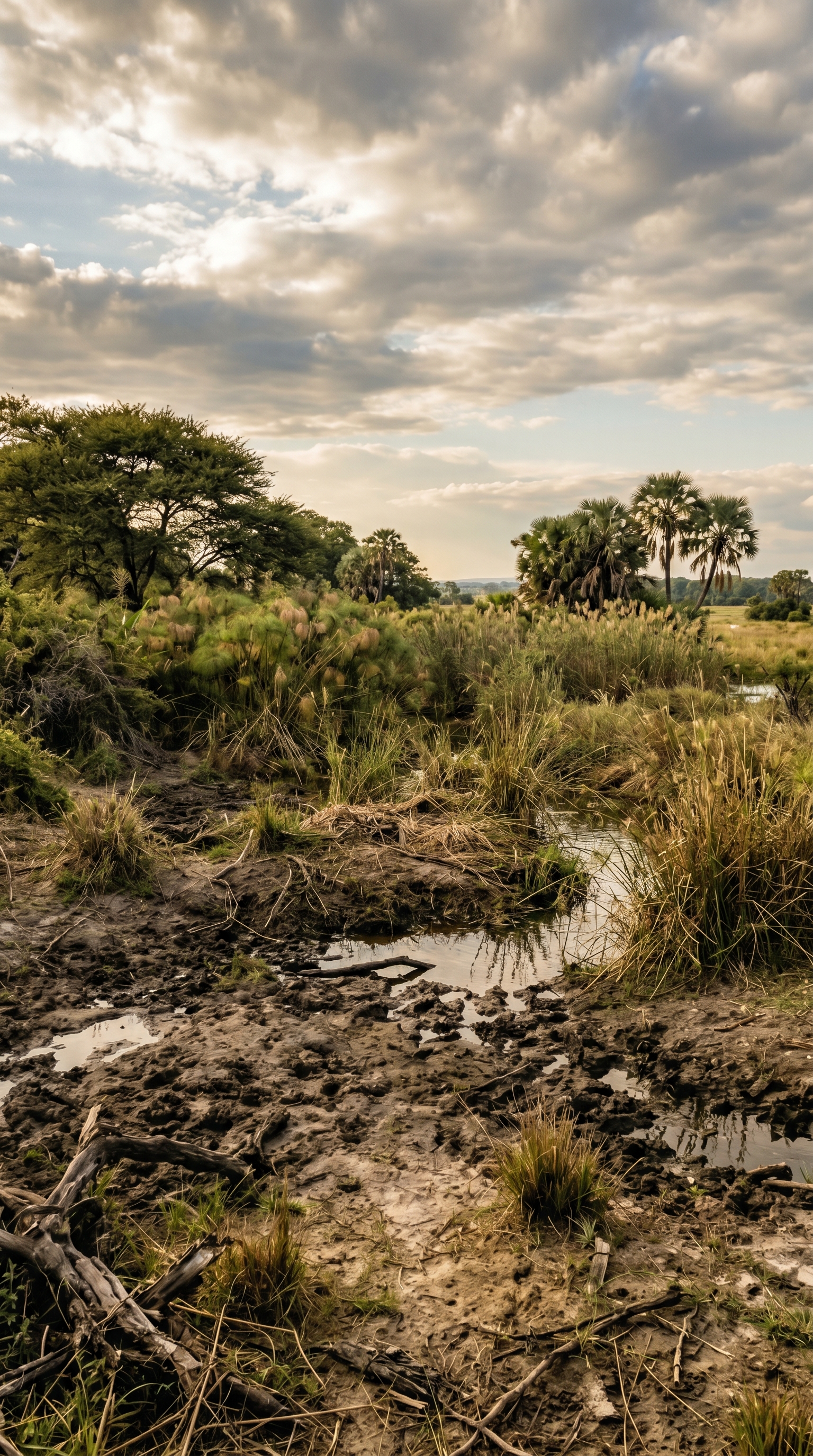
The Okavango Delta, Botswana at ground level — Southern African pythons are large constrictors. -
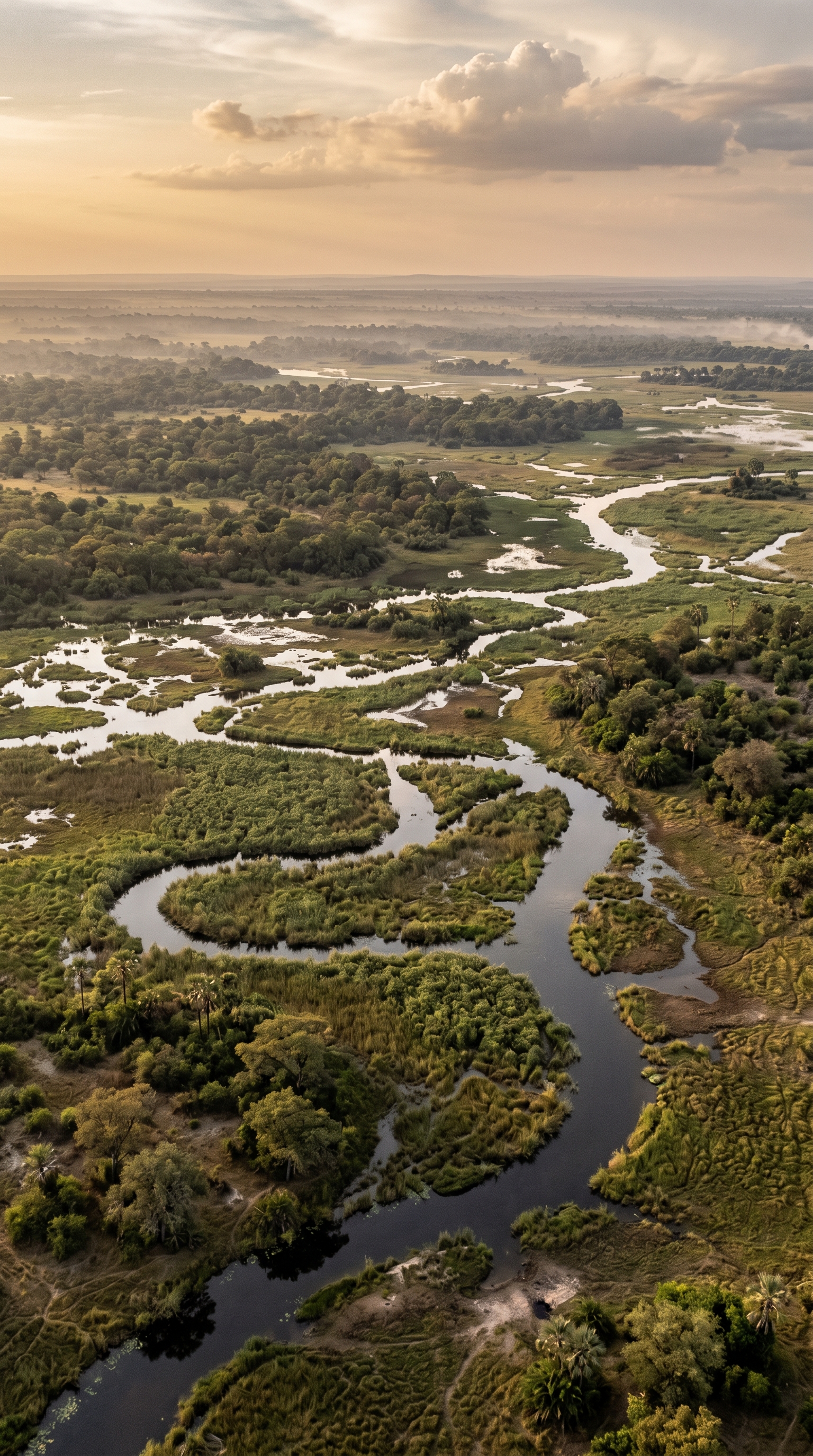
The Okavango Delta, Botswana seen from above — Southern African pythons are large constrictors. -
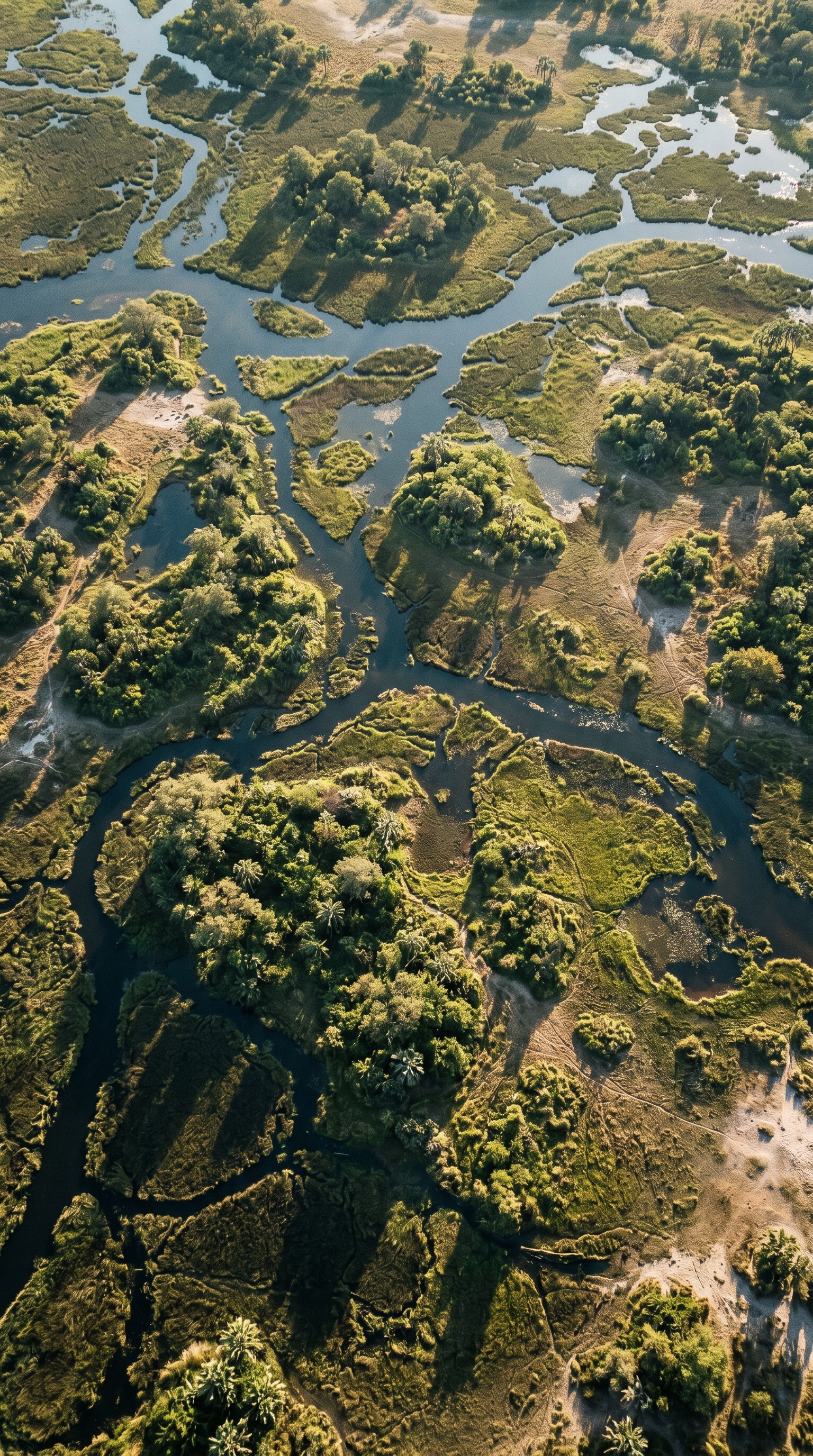
The Okavango Delta, Botswana from high overhead — Southern African pythons are large constrictors.
Native range
African rock pythons are really two close relatives sharing one everyday name. The northern species is the Central African rock python. Noga's species is the southern form, which ranges across southern Africa, including Botswana and the Okavango Delta, where floodplains and reed beds give a large python cover, warmth, and water.
The range
Six regions, one species.
The southern african rock python doesn't live in one place. Across the map below, each region has its own pressures, prey, and politics — same biology, different worlds.
-
Botswana
The Okavango Delta
Noga's home territory. Core stronghold for P. natalensis. Wetland/floodplain mosaic with rocky outcrops and savanna woodland. Sympatric with the African leopard and Echo (African wild dog) in the same Delta ecosystem.
Source ↗ -
South Africa
KwaZulu-Natal
Southern African stronghold. Lowveld, coastal forest, rocky savanna. Protected under South African herpetofauna legislation.
Source ↗ -
Zimbabwe
Hwange / Zambezi Valley
Granite kopjes, savanna woodland. Intermediate P. natalensis stronghold.
Source ↗ -
Senegal
Guinea savanna
Western limit of P. sebae. Sahel-zone Guinea savanna. Forest-savanna mosaic.
Source ↗ -
Democratic Republic of the Congo
Congo Basin
P. sebae core rainforest distribution. Wetland margins and stream systems. Highest genetic diversity within species.
Source ↗ -
Ethiopia
East African highlands
Eastern range limit of P. sebae. Savanna and rocky highland outcrops up to ~2,000 m.
Source ↗
Daily life
What the southern african rock python does, day to day.
Diet, social behaviour, climate — the everyday biology that shapes how this species hunts, defends and survives.
-
Diet
Obligate carnivore, non-venomous constrictor. Direct Southern African python evidence supports a broad diet including mammals, birds, reptiles, and fish, with larger individuals taking larger mammalian prey.
-
Social life
Solitary. Aggregation only during mating season or at shared basking/ shelter sites (no true social interaction).
-
Climate
Warm southern African habitats with usable cover and water access: forest, savanna, shrubland, grassland, rocky areas, wetlands, rocky outcrops, moist savanna, lowland forest, and places close to water.
Wyld Trivia
Five questions. Most people get them wrong.
But you're not most people.
Tap to reveal.
-
How big is Africa's biggest snake?
Show me HideFor Noga's southern African species, adult males can reach 4.25 metres and adult females can reach 5 metres. That is still a snake longer than many small cars, but it avoids using northern-species record sizes for Noga.
-
What's the biggest meal a snake has ever eaten?
Show me HideSouthern African pythons eat many kinds of animals, including mammals, birds, reptiles, and fish. Bigger pythons can take bigger mammal prey, but Noga's public stat-card does not use a single maximum-prey record unless the source is directly tied to his species.
-
How does a python kill prey by squeezing?
Show me HideA python's coil is a restraint system, not just a big squeeze. Broader constrictor research shows that tight coils can stop circulation working properly, but Noga's page avoids exact timing claims because those were not verified directly for Southern African pythons.
-
Do python mums look after their babies?
Show me HideYes. Female Southern African pythons coil around their eggs, then can stay with the hatchlings for about two weeks after they emerge. That is unusual care for a snake.
-
Are there really two different species of African rock python?
Show me HideYes — and the split was only made official in 2012. Scientists Broadley and Hughes showed that what people had called one species is actually two: Python sebae in Central, West and East Africa, and Python natalensis in Southern Africa. Both are commonly called 'African rock python', so most people don't know.
The terrain
Where the southern african rock python thrives.
Every animal is built for some places more than others. These are the ground, hours and weather where this species shows its best — and its worst.
Ground
- Wetland margin Excels
- Rocky crevice Excels
- Savanna Strong
- Woodland Strong
- Grassland Average
- Arid desert Avoids
Hours
- Night Excels
- Twilight Excels
- Dawn Strong
- Dusk Strong
- Day Average
Weather
- Moderate Excels
- Rain Strong
- Hot Average
- Wind Average
- Storm Struggles
- Cold Avoids

Five things you didn't know about the southern african rock python.
Cited biology that shapes how the southern african rock python feeds, defends, survives.
-
Southern African pythons are large constrictors. Adult males can reach 44 kg and 4.25 m, and adult females can reach 55 kg and 5.0 m. Source ↗
-
The Southern African python is recognised by IUCN as Python natalensis and assessed as Least Concern, but the global population trend is decreasing. Source ↗
-
Diet evidence for Python natalensis supports mammals, birds, reptiles, and fish, with larger pythons shifting toward larger mammalian prey. Source ↗
-
Female Southern African pythons brood their eggs by coiling around the clutch, and mothers can remain with hatchlings for about two weeks after hatching. Source ↗
-
Brooding females can keep higher, steadier body temperatures by basking and darkening, but Alexander's study did not find facultative thermogenesis. Source ↗
About the southern african rock python
Where the southern african rock python sits on the tree of life.
-
Class
Reptilia
Cold-blooded animals with scales — like crocodiles, lizards and snakes.
-
Order
Squamata
The scaly reptiles — snakes and lizards.
-
Family
Pythonidae
Non-venomous snakes that kill by squeezing.
-
Species
Python natalensis
Southern African Rock Python — the species this page is about.


Southern African Rock Python
Every fact, cited.
Biology cited on this page comes from peer-reviewed zoology and the major species databases. Click through for the underlying study, dataset or assessment.
- sanbi.org · sanbi.org
- IUCN Red List · IUCN Red List
- doi.org · doi.org
- doi.org · doi.org
- doi.org · doi.org


