
Burmese Python
Scientific name Python bivittatus
Adult size
- Weight
- ♂M 55 kg
- Length
- ♀F 5.74 m ♂M 4.93 m
- Body girth
- ♂M 0.205 m
- Top speed crawl
- ♂M 2 km/h
- Lifespan
- Wild lifespan is not cleanly known; Burmese Pythons can live more than 20 years in captivity.
Represented by Sanca Everglades National Park (Florida), United States

Burmese pythons are native to wet, warm parts of South and Southeast Asia: north-east India, southern Bhutan, Bangladesh, Myanmar, Thailand, Laos, Cambodia, Vietnam, southern China, and parts of Indonesia including Java, Bali, and south-west Sulawesi. They follow water - river corridors, marshes, swamps, mangrove edges, flooded forest, and grassland-forest mosaics where a huge ambush snake can hide close to prey.
Where they live
Three angles, one home.
The burmese python represented in the Wyld Savage League lives in Everglades National Park (Florida), United States. Three views of the same patch of country — at ground level, from above, and bird's-eye.
-
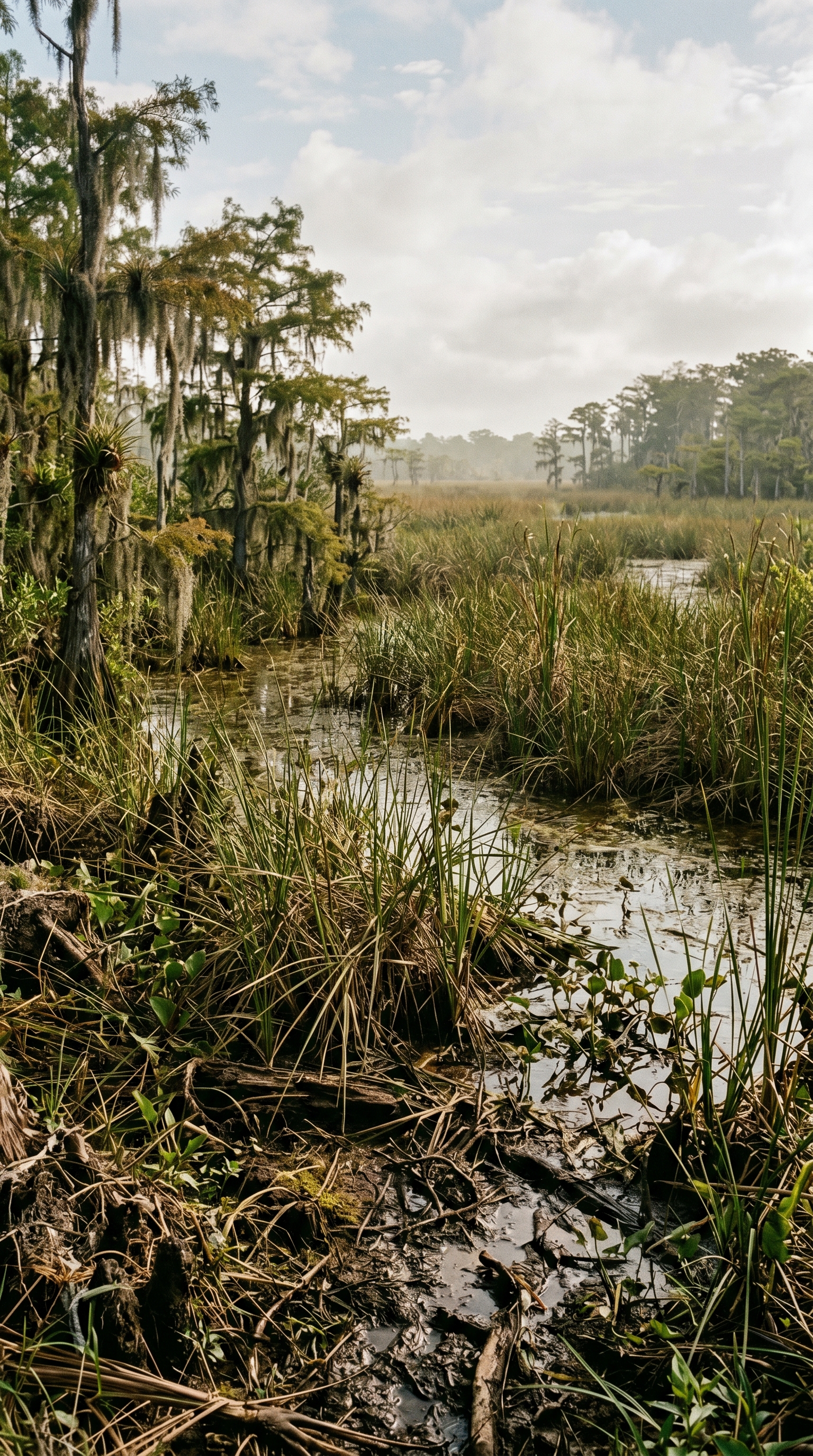
Cypress slough at ground level — the still water and dappled shade where invasive pythons coil for days at a time. -
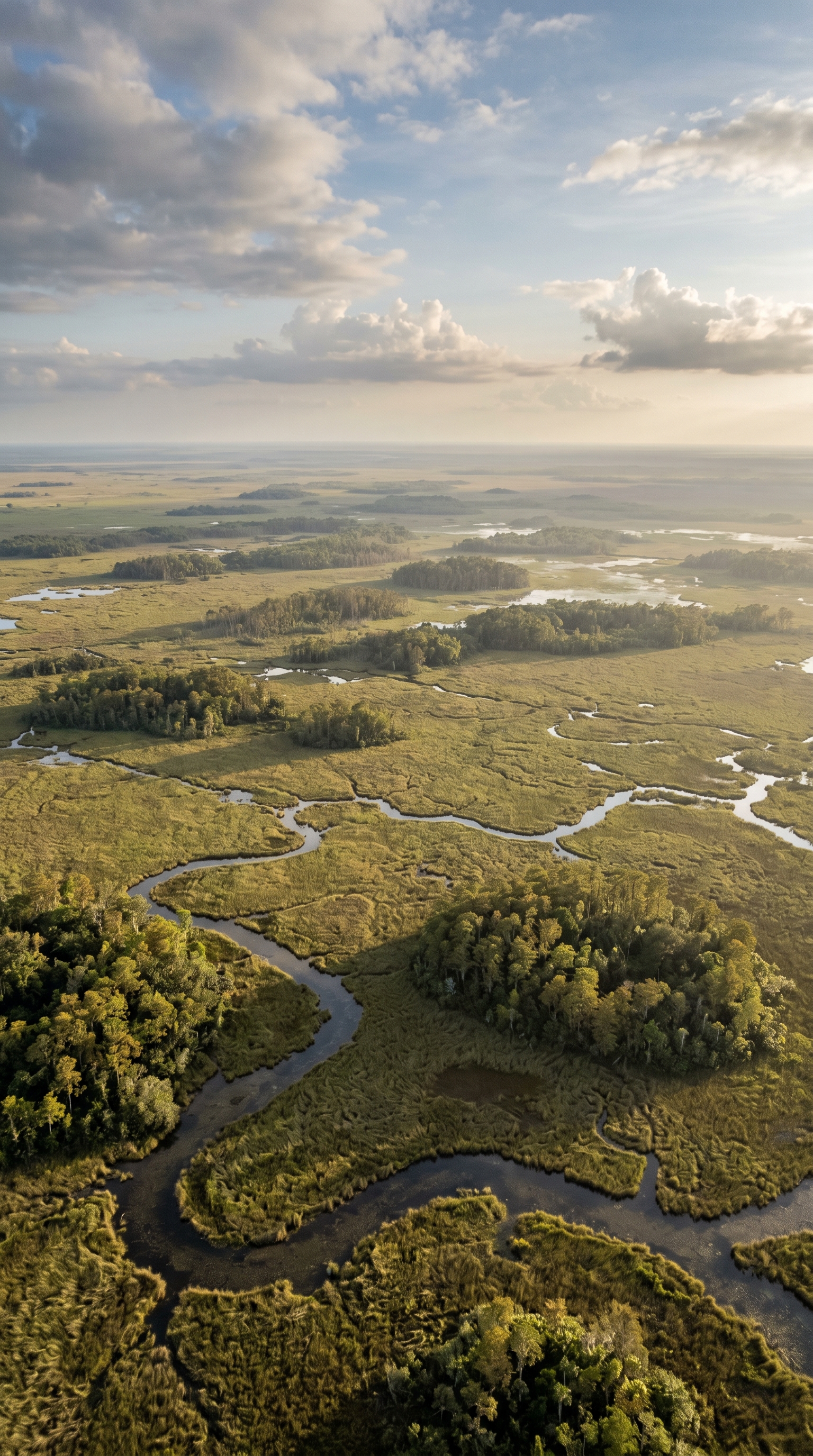
The Everglades from above — 1.5 million acres of sawgrass and mangrove that pythons have made their second home. -
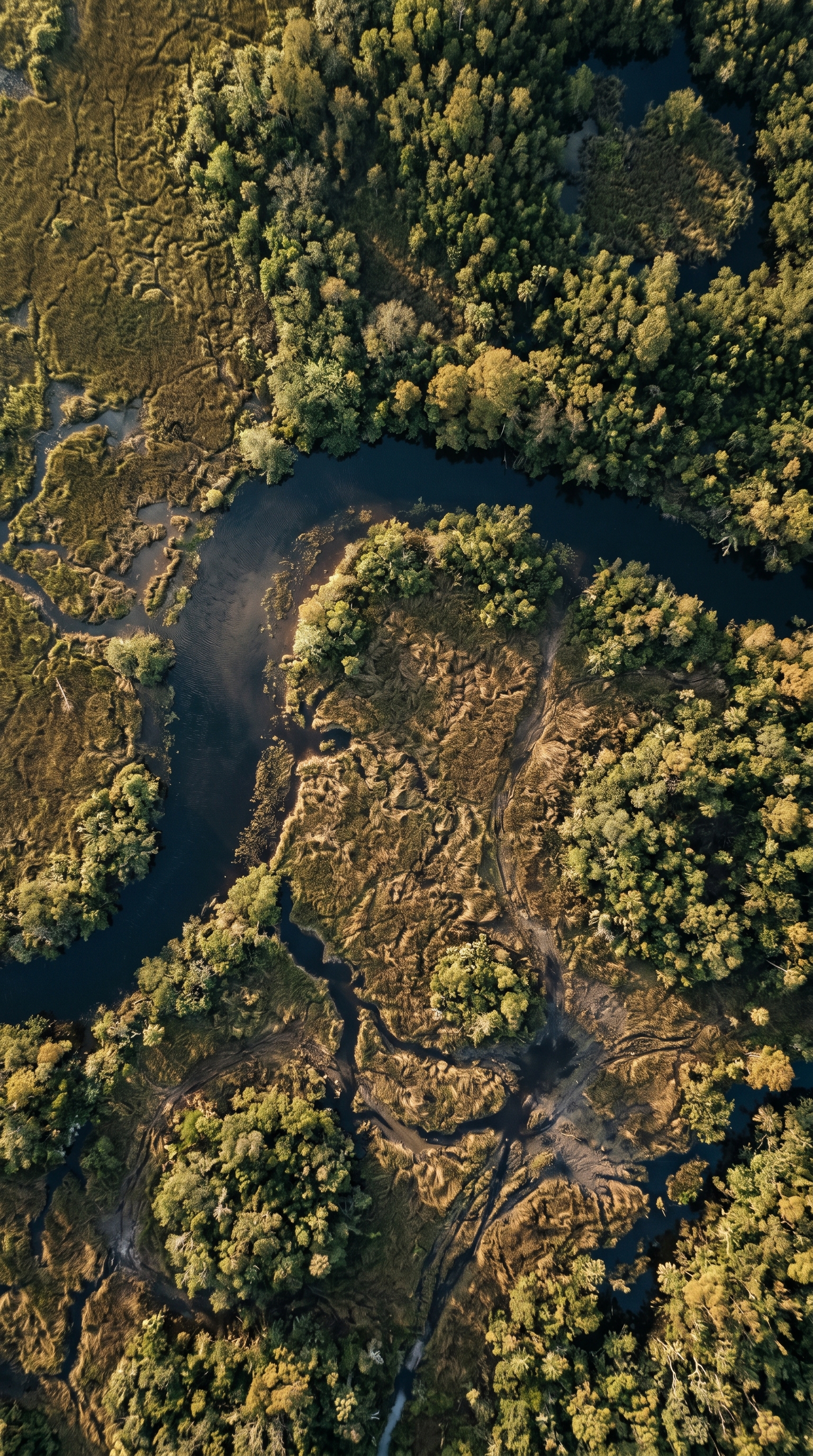
Florida's southern wetlands from high overhead — the only place in North America where Burmese pythons hunt wild.
Native range
Burmese pythons are native to wet, warm parts of South and Southeast Asia: north-east India, southern Bhutan, Bangladesh, Myanmar, Thailand, Laos, Cambodia, Vietnam, southern China, and parts of Indonesia including Java, Bali, and south-west Sulawesi. They follow water - river corridors, marshes, swamps, mangrove edges, flooded forest, and grassland-forest mosaics where a huge ambush snake can hide close to prey.
The range
Six regions, one species.
The burmese python doesn't live in one place. Across the map below, each region has its own pressures, prey, and politics — same biology, different worlds.
-
Thailand
Khao Yai National Park
Native Thai stronghold. Evergreen and monsoonal forest mosaic with riparian corridors. Alternative candidate home region for Sanca if Rob later chooses to re-route the narrative from the Session-8-locked Everglades-invasive framing to a native Southeast Asian home.
Source ↗ -
Myanmar
Hlawga Wildlife Park (and broader Ayeyarwady lowlands)
Native range core in the species' namesake country (Burma / Myanmar). Lowland forest and wetland mosaic.
Source ↗ -
United States
Everglades National Park (Florida)
Invasive stronghold. Sawgrass prairie, cypress swamp, freshwater marsh. Site of Dorcas et al. 2012 mammal-decline study. Sympatric with American Alligator — this is the habitat that anchors the Halpata vs Sanca invasive-collision nemesis narrative and Sanca's Session-8-locked Everglades-invasive home_region.
Source ↗ -
United States
Big Cypress National Preserve (Florida)
Second invasive stronghold adjacent to Everglades NP. Cypress swamp and pine rockland mosaic. Documented American Alligator predation on juvenile pythons here — the bidirectional predator-prey relationship with Alligator mississippiensis.
Source ↗ -
Vietnam
Cát Tiên National Park
Native range in southern Vietnam. Lowland evergreen forest with riparian network. Regional VU-status stronghold.
Source ↗ -
Cambodia
Kulen Promtep Wildlife Sanctuary
Native range in northern Cambodia. Deciduous dipterocarp forest and seasonal wetland.
Source ↗
Daily life
What the burmese python does, day to day.
Diet, social behaviour, climate — the everyday biology that shapes how this species hunts, defends and survives.
-
Diet
Obligate carnivore, non-venomous ambush constrictor. Native-range prey: rodents, hares, small-to-medium mammals (monkeys, civets, small deer), birds (waterbirds and galliformes), and occasional reptiles.
-
Social life
Solitary. No pack, pair-bond, or social hierarchy. Adults interact only during breeding season.
-
Climate
Tropical and subtropical humid zones. Strong association with permanent water: riparian corridors, floodplains, marshes, swamps, mangrove margins, and lake shores.
Wyld Trivia
Five questions. Most people get them wrong.
But you're not most people.
Tap to reveal.
-
How does a python actually kill prey by squeezing?
Show me HideNot the slow suffocation story people often hear. Constrictor studies show the squeeze can disrupt circulation and heart function very quickly. For Sanca, the safe wording is simple: the coil works by pressure on the body and circulation, not by slowly crushing bones.
-
Can a Burmese python really eat an alligator?
Show me HideYes. In Florida, where Burmese pythons have invaded the Everglades, scientists have documented pythons eating white-tailed deer and American alligators. The right lesson is gape and body size: a giant python can swallow surprisingly large prey, but whether it fits depends on the size and shape of both animals.
-
How long does a Burmese python grow?
Show me HideVery large Florida males can reach just under five metres: one documented male was 4.93 m total length and 63.5 kg. Sanca is 4.5 m, so he is an exceptional large male, not an average male.
-
What happened to the animals in the Everglades when pythons arrived?
Show me HideAlmost all of them disappeared. A 2012 road-survey study found raccoons had dropped by 99.3%, opossums by 98.9%, and bobcats by 87.5%. Marsh rabbits and foxes had effectively vanished. It is one of the most devastating examples of an invasive predator anywhere on Earth.
-
How does a snake keep its eggs warm?
Show me HideFemale Burmese pythons coil around their eggs during incubation. Researchers in the Greater Everglades have documented brooding and shivering thermogenesis — tiny muscle contractions that help warm the nest. Most snakes do not guard eggs like this; pythons are one of the striking exceptions.
The terrain
Where the burmese python thrives.
Every animal is built for some places more than others. These are the ground, hours and weather where this species shows its best — and its worst.
Ground
- Swamp Excels
- Wetland Excels
- Tropical forest floor Strong
- Grassland Average
- Open water Average
- Cold forest Struggles
- Desert Avoids
Hours
- Night Excels
- Dusk Excels
- Twilight Excels
- Dawn Strong
- Day Average
Weather
- Hot Excels
- Moderate Strong
- Rain Strong
- Wind Average
- Storm Average
- Cold Avoids

Five things you didn't know about the burmese python.
Cited biology that shapes how the burmese python feeds, defends, survives.
-
Python bivittatus is listed as Vulnerable on the IUCN Red List (2012 assessment, Stuart et al.) under criteria A3cd — the wild native-range population is estimated to have declined by at least 30% in the first decade of the 21st century, driven by harvest for skins and meat plus habitat loss across Southeast Asia. Source ↗
-
An invasive Burmese python population is established across the Greater Everglades ecosystem. Road-survey data from 2003–2011 coincide with catastrophic mammal declines: raccoons down 99.3%, opossums 98.9%, bobcats 87.5%, and marsh rabbits and foxes undetected in surveys — one of the most severe documented cases of invasive-predator ecological release. Source ↗
-
Constriction is not the slow suffocation story people often hear. Experimental work on boa constrictors and mammalian prey showed rapid cardiovascular disruption during constriction, supporting circulatory-collapse wording as broader constrictor context rather than a species-specific kill-time claim for wild Burmese pythons. Source ↗
-
Among the world's largest snake species. In giant pythons, including Burmese pythons, peak constriction pressure scales with body diameter, helping explain why very large individuals can restrain large prey when the coil closes cleanly. Source ↗
-
Taxonomic status: Jacobs, Auliya & Böhme (2009) elevated the taxon to a full species, Python bivittatus, distinct from the Indian python (Python molurus). Two subspecies are now recognised: P. b. bivittatus (mainland Southeast Asia + Java/Bali) and P. b. progschai (south-west Sulawesi). Source ↗
About the burmese python
Where the burmese python sits on the tree of life.
-
Class
Reptilia
Cold-blooded animals with scales — like crocodiles, lizards and snakes.
-
Order
Squamata
The scaly reptiles — snakes and lizards.
-
Family
Pythonidae
Non-venomous snakes that kill by squeezing.
-
Species
Python bivittatus
Burmese Python — the species this page is about.


Burmese Python
Every fact, cited.
Biology cited on this page comes from peer-reviewed zoology and the major species databases. Click through for the underlying study, dataset or assessment.
- IUCN Red List · IUCN Red List
- PubMed · PubMed
- PubMed · PubMed
- PubMed · PubMed
- Reptile Database · Reptile Database


