
American Alligator
Scientific name Alligator mississippiensis
Adult size
- Weight
- ♀F 80 kg ♂M 150 kg
- Length
- ♀F 2.6 m ♂M 3.5 m
- Body height
- Not reported for this species
- Top speed lunge
- ♂M 15 km/h
- Lifespan
- Typical wild lifespan is about 20-30 years, with documented wild ages reaching 56 years and captive records passing 70.
Represented by Halpata Everglades National Park, Florida, United States

American alligators belong to the warm wetlands of the south-eastern United States, with a small edge into north-eastern Mexico. Their strongholds are Florida and Louisiana, but they also live through coastal plains, swamps, rivers, marshes, oxbow lakes, and wetland edges from the Carolinas to Texas, with Oklahoma and North Carolina marking the colder edge of the range.
Where they live
Three angles, one home.
The american alligator represented in the Wyld Savage League lives in Everglades National Park, Florida, United States. Three views of the same patch of country — at ground level, from above, and bird's-eye.
-
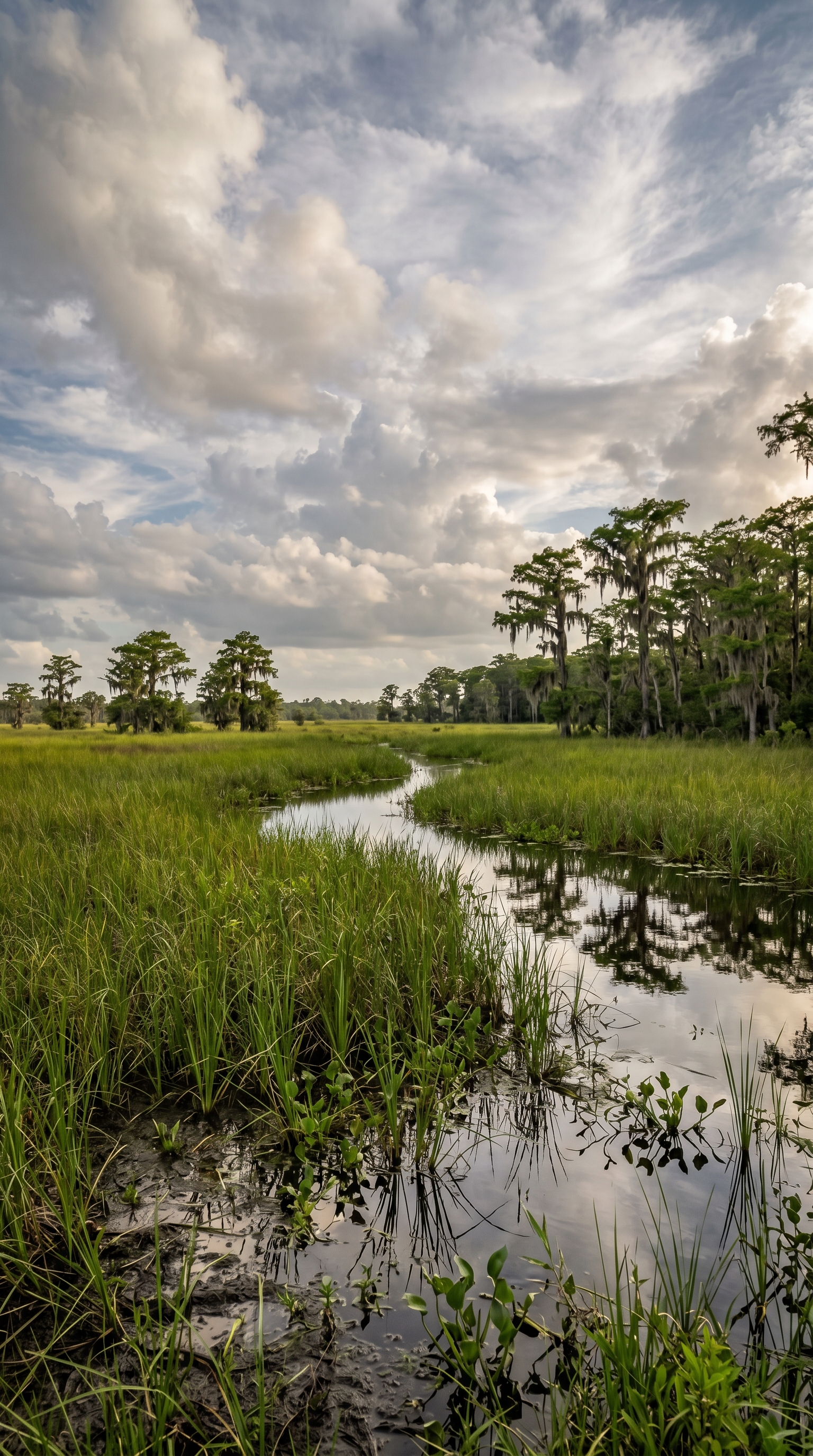
Everglades National Park, Florida, United States at ground level — Crocodilian bite-force capacity scales almost isometrically with body mass. -
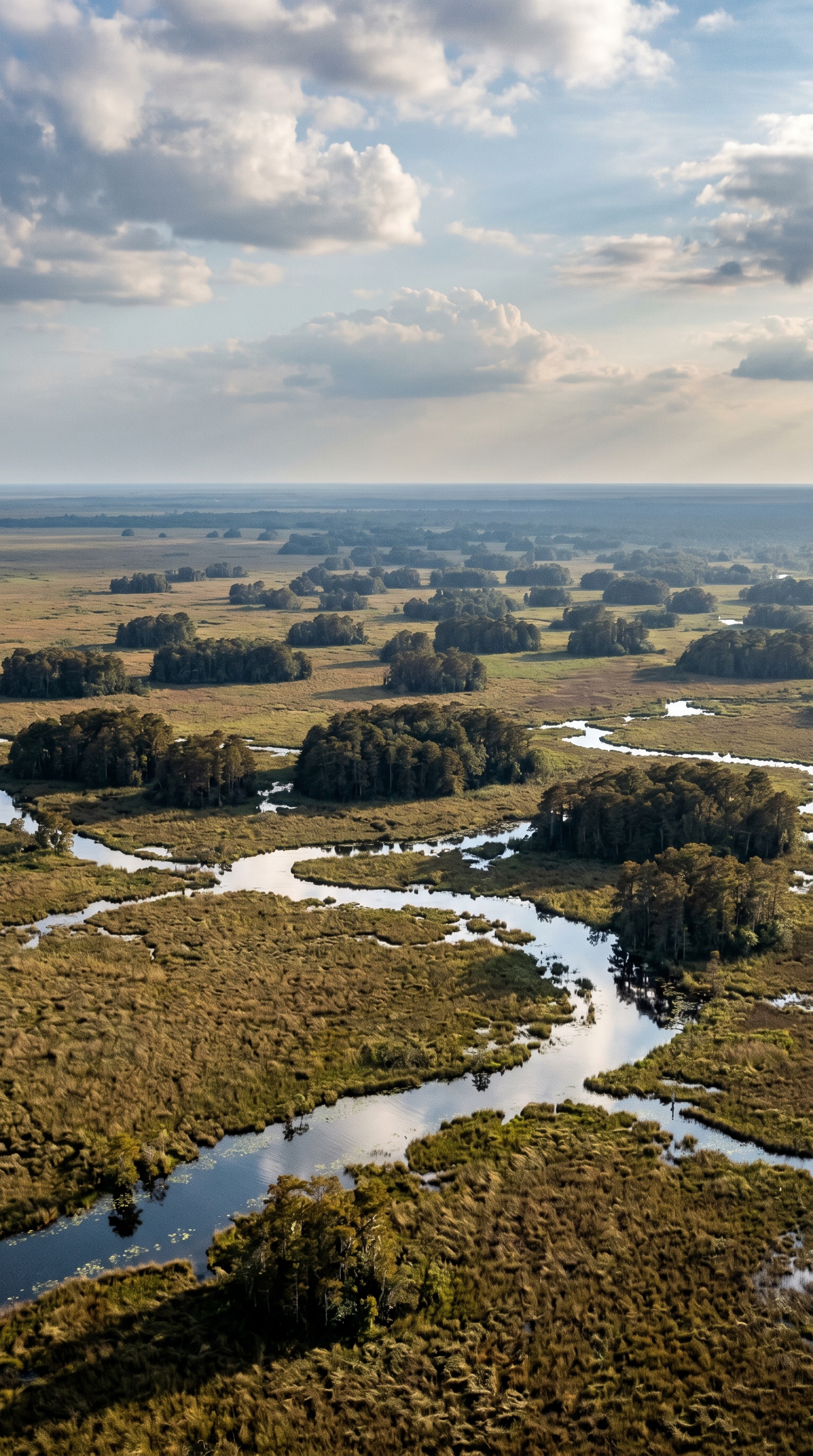
Everglades National Park, Florida, United States seen from above — Crocodilian bite-force capacity scales almost isometrically with body mass. -
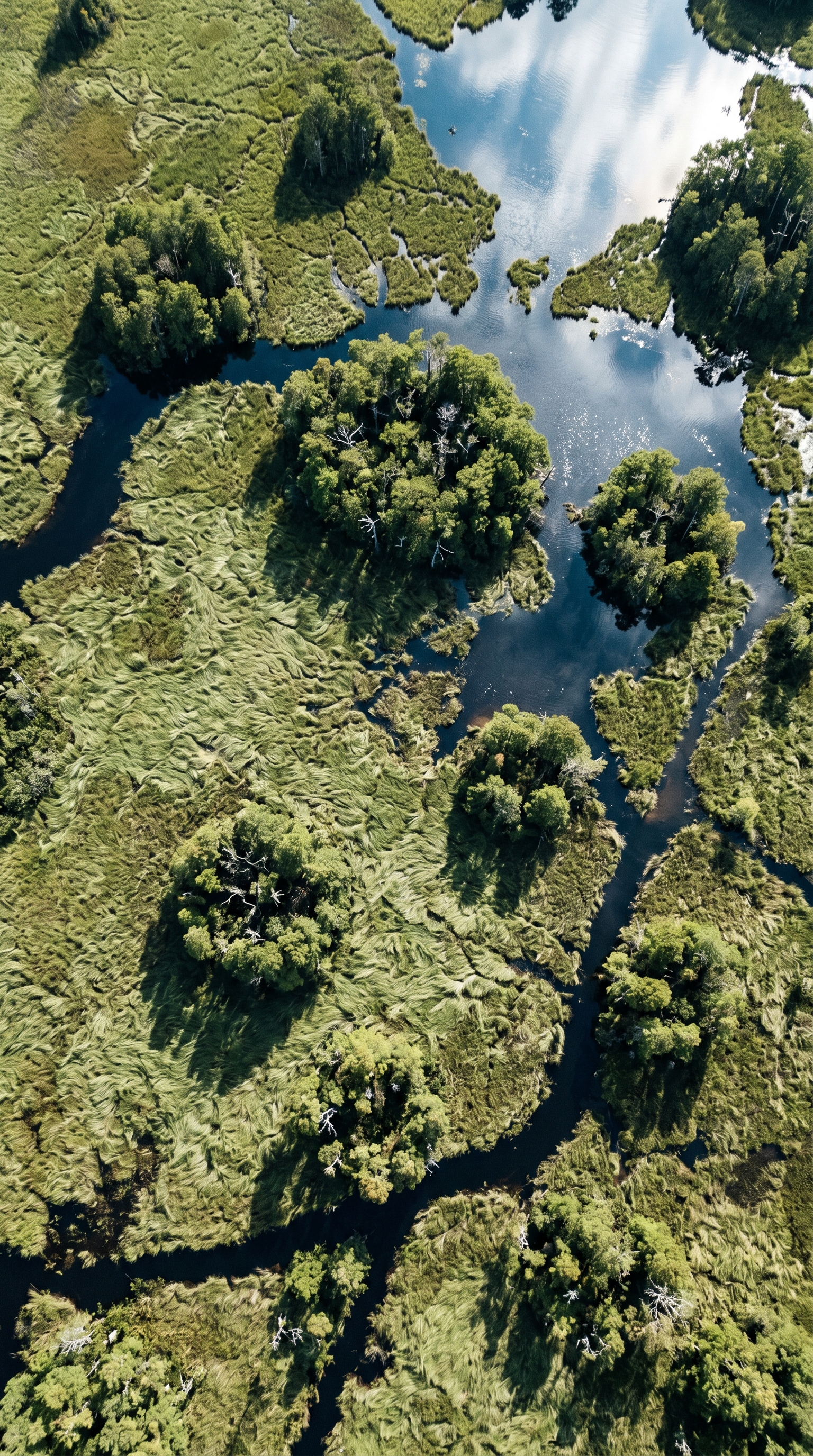
Everglades National Park, Florida, United States from high overhead — Crocodilian bite-force capacity scales almost isometrically with body mass.
Native range
American alligators belong to the warm wetlands of the south-eastern United States, with a small edge into north-eastern Mexico. Their strongholds are Florida and Louisiana, but they also live through coastal plains, swamps, rivers, marshes, oxbow lakes, and wetland edges from the Carolinas to Texas, with Oklahoma and North Carolina marking the colder edge of the range.
The range
Five regions, one species.
The american alligator doesn't live in one place. Across the map below, each region has its own pressures, prey, and politics — same biology, different worlds.
-
United States
Everglades National Park, Florida
Keystone species of the Everglades freshwater system; builds 'alligator holes' that sustain dry-season water refugia. Southern extreme of the species' continental range. Halpata's home territory.
Source ↗ -
United States
Okefenokee Swamp, Georgia / Florida
Black-water peat swamp straddling the GA/FL state line; large established alligator population in cypress-dominated wetland mosaic.
Source ↗ -
United States
Atchafalaya Basin, Louisiana
Largest river-basin swamp in the continental US; Louisiana holds the densest state-level alligator population in the species' range.
Source ↗ -
United States
Big Cypress National Preserve, Florida
Adjacent to Everglades NP; mixed cypress/prairie habitat. Heavily affected by the Burmese python invasion that anchors Halpata's Season 1 nemesis dynamic.
Source ↗ -
United States
Aransas National Wildlife Refuge, Texas
Gulf Coast brackish-marsh site near the western edge of the species' range; the largest wild specimen on record (436.9 cm, 408 kg, 1998) was taken in Jackson County, Texas.
Source ↗
Daily life
What the american alligator does, day to day.
Diet, social behaviour, climate — the everyday biology that shapes how this species hunts, defends and survives.
-
Diet
Apex carnivore and opportunistic generalist. Adults take fish, turtles, snakes, birds, and mammals up to deer and wild boar; also consume carrion.
-
Social life
Adults can show strong site fidelity and breeding-season spacing, but movement and home areas vary with sex, habitat, season, water, and temperature.
-
Climate
Warm-temperate to subtropical freshwater wetlands — marshes, swamps, rivers, ponds, and lagoons; occasionally brackish water.
Wyld Trivia
Five questions. Most people get them wrong.
But you're not most people.
Tap to reveal.
-
How strong is an American alligator's bite?
Show me HideStrong enough to rank with the most powerful bites measured in living animals. The safest rule is simple: in crocodilians, bigger bodies mean stronger bites. That makes a large adult alligator a serious jaw-power specialist without needing a single magic number.
-
What's a 'gator hole' and why does the Everglades need them?
Show me HideAdult alligators dig deep depressions in the wetland mud — gator holes — and these depressions hold water through the dry season when most of the Everglades is parched. Turtles, fish, and wading birds shelter there waiting for the rains to return. Without the gators digging, much of the swamp's life would die off in dry years.
-
How did the American alligator come back from almost extinct?
Show me HideHide hunting nearly wiped them out. In 1967 they were federally listed as endangered. The hunting was banned, regulated alligator farms started up, and the wild population recovered so well that by 1987 they were taken off the endangered list. Today there are over a million wild alligators — one of the great American conservation stories.
-
Can an alligator stop eating in winter?
Show me HideYes. Alligators are cold-blooded, so they can't generate their own body heat. When water drops below about 21°C they stop hunting. In a Louisiana or Florida winter they retreat to bankside burrows and enter a slowed-down state called brumation — like reptile hibernation — until the warm weather returns.
-
How long can a wild alligator live?
Show me HideWild alligators usually live 20 to 30 years, but the oldest documented wild gator made it to 56. In captivity, where life is easier, some have lived past 70. They keep growing slowly throughout life — old males just get bigger and bigger.
The terrain
Where the american alligator thrives.
Every animal is built for some places more than others. These are the ground, hours and weather where this species shows its best — and its worst.
Ground
- Swamp wetland Excels
- Slow moving water Excels
- River lake Excels
- Marsh edge Strong
- Forest floor Struggles
- Open plains Avoids
- Dry scrubland Avoids
Hours
- Night Excels
- Dusk Excels
- Twilight Excels
- Dawn Strong
- Day Average
Weather
- Moderate Excels
- Hot Strong
- Rain Strong
- Wind Average
- Storm Average
- Cold Avoids

Five things you didn't know about the american alligator.
Cited biology that shapes how the american alligator feeds, defends, survives.
-
Crocodilian bite-force capacity scales almost isometrically with body mass. In the largest comparative study to date, Erickson and colleagues tested 83 adult specimens across all 23 living crocodilian species (body range 1.24–4.59 m, 7–531 kg) and showed that body size accounts for nearly all interspecific variance in bite force — placing large American alligators among the most powerful bites measured on any living vertebrate. Source ↗
-
American alligators were federally listed as endangered in 1967 and removed from the endangered species list in 1987 — a recovery driven by outlawing hunting and establishing regulated alligator farms. The species is now classified as Least Concern. Source ↗
-
Adult American alligators function as a keystone species in the Everglades by excavating 'alligator holes' — depressions that hold water through the dry season and provide refuge for turtles, fish, and wading birds when other surface water disappears. Source ↗
-
Alligators are ectotherms, feeding is governed by water temperature: foraging effectively ceases when water drops below about 20–21°C (68–73°F). Animals bask on banks in early morning year-round, and spend winter in bankside burrows in a dormancy-like state (brumation). Source ↗
-
American alligators are long-lived even by reptile standards — typical wild lifespan is 20–30 years, with the oldest recorded wild individual reaching 56 years. Captive animals have lived past 70. Source ↗
About the american alligator
Where the american alligator sits on the tree of life.
-
Class
Reptilia
Cold-blooded animals with scales — like crocodiles, lizards and snakes.
-
Order
Crocodilia
The large semi-aquatic reptiles — crocodiles, alligators and gharials.
-
Family
Alligatoridae
Alligators and caimans — broad-snouted crocodilian ambush predators.
-
Species
Alligator mississippiensis
American Alligator — the species this page is about.


American Alligator
Every fact, cited.
Biology cited on this page comes from peer-reviewed zoology and the major species databases. Click through for the underlying study, dataset or assessment.
- PLOS · PLOS
- U.S. National Park Service · U.S. National Park Service
- U.S. National Park Service · U.S. National Park Service
- U.S. National Park Service · U.S. National Park Service
- Animal Diversity Web · Animal Diversity Web


