
Asian Water Monitor
Scientific name Varanus salvator
Adult size
- Weight
- ♀F 8 kg ♂M 12 kg
- Length
- ♀F 1.5 m ♂M 2 m
- Body height
- Not reported for this species
- Top speed dash
- ♂M 25 km/h
- Lifespan
- A clean wild lifespan is not pinned down, but captive Asian Water Monitor records average about 10.6 years.
Represented by Natee Kaeng Krachan National Park, Thailand

Asian water monitors have one of the widest ranges of any monitor lizard, spread across South and Southeast Asia and many Indonesian islands. They live in Sri Lanka, north-eastern India, Bangladesh, Nepal, Myanmar, Thailand, Cambodia, Laos, Vietnam, southern China, Malaysia, Singapore, and Indonesia, including Borneo, Sumatra, Java, Bali, and Sulawesi.
Where they live
Three angles, one home.
The asian water monitor represented in the Wyld Savage League lives in Kaeng Krachan National Park, Thailand. Three views of the same patch of country — at ground level, from above, and bird's-eye.
-
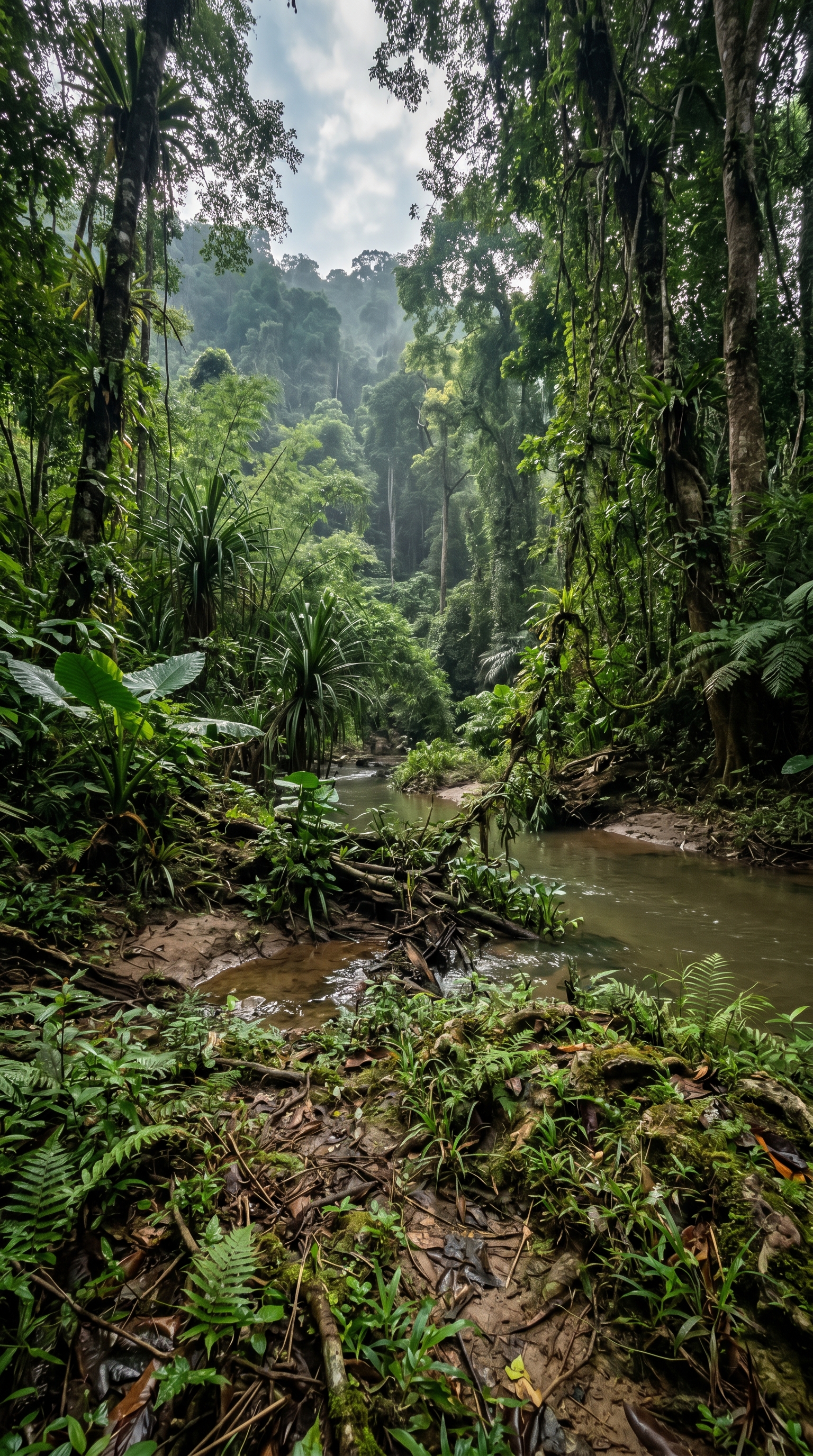
Kaeng Krachan National Park, Thailand at ground level — Varanus salvator is one of the world's longest lizards. -
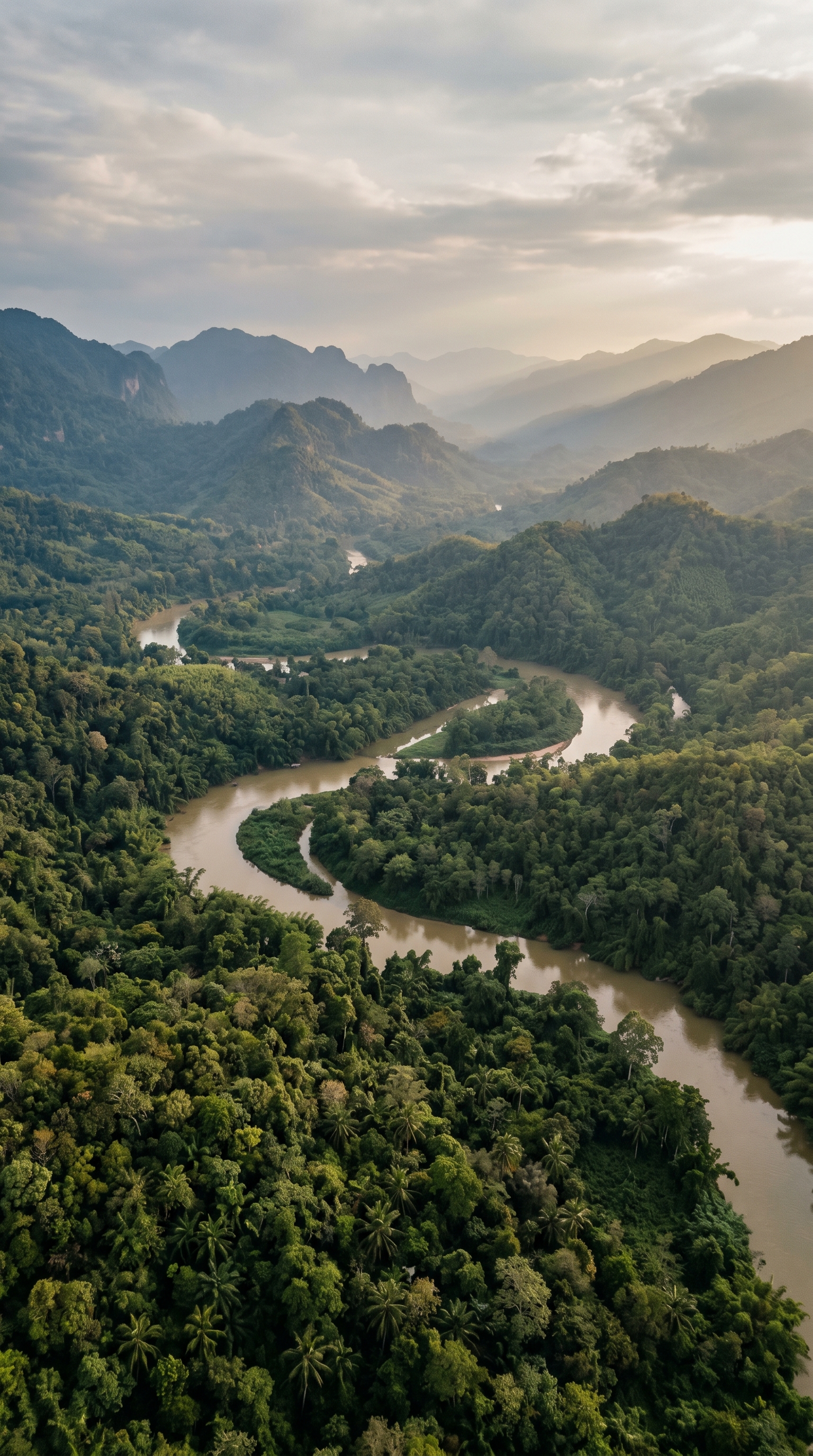
Kaeng Krachan National Park, Thailand seen from above — Varanus salvator is one of the world's longest lizards. -
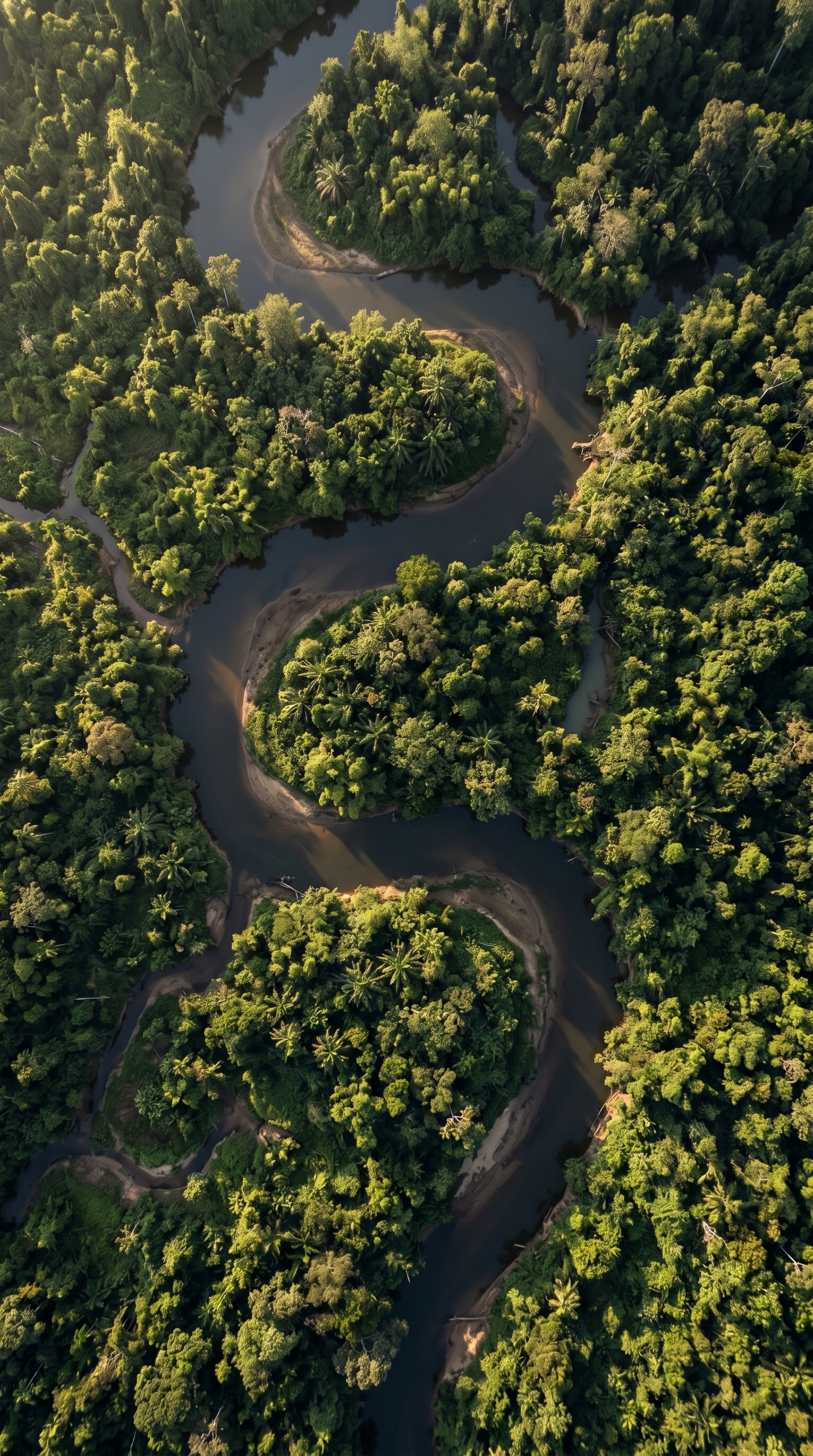
Kaeng Krachan National Park, Thailand from high overhead — Varanus salvator is one of the world's longest lizards.
Native range
Asian water monitors have one of the widest ranges of any monitor lizard, spread across South and Southeast Asia and many Indonesian islands. They live in Sri Lanka, north-eastern India, Bangladesh, Nepal, Myanmar, Thailand, Cambodia, Laos, Vietnam, southern China, Malaysia, Singapore, and Indonesia, including Borneo, Sumatra, Java, Bali, and Sulawesi.
The range
Seven regions, one species.
The asian water monitor doesn't live in one place. Across the map below, each region has its own pressures, prey, and politics — same biology, different worlds.
-
Thailand
Khao Yai National Park
Major protected riparian and forest landscape in central Thailand; candidate home region for Natee.
Source ↗ -
Thailand
Kaeng Krachan National Park
Largest Thai national park, Tenasserim Hills; alternate candidate home region for Natee.
Source ↗ -
Bangladesh
Sundarbans
Mangrove-delta stronghold shared with Bengal tiger; candidate home region if Natee's backstory leans mangrove-specialist.
Source ↗ -
India
Sundarbans National Park
Indian portion of the Sundarbans mangrove complex.
Source ↗ -
Malaysia
Taman Negara
Peninsular Malaysia's flagship lowland tropical forest reserve; riparian systems throughout.
Source ↗ -
Malaysia
Kuala Selangor Nature Park
Estuarine/mangrove reserve well known for Asian water monitor sightings.
Source ↗ -
Indonesia
Ujung Kulon National Park
Westernmost Java protected area; UNESCO World Heritage Site.
Source ↗
Daily life
What the asian water monitor does, day to day.
Diet, social behaviour, climate — the everyday biology that shapes how this species hunts, defends and survives.
-
Diet
Opportunistic generalist carnivore and scavenger. Diet includes fish, frogs, crabs and other invertebrates, birds and eggs, small mammals such as rats, reptiles including snakes, carrion, and human refuse where monitors live near people.
-
Social life
Mostly solitary outside breeding and feeding hotspots. Spatial studies show home ranges and core areas strongly linked to water bodies; some populations show dominance and agonistic interactions around concentrated food.
-
Climate
Tropical to subtropical and strongly semi-aquatic. Associated with rivers, swamps, flooded forest, wetlands, canals, rice paddies, mangroves and estuarine edges across the wider species range.
Wyld Trivia
Five questions. Most people get them wrong.
But you're not most people.
Tap to reveal.
-
Which is the second-longest lizard in the world?
Show me HideThe Asian water monitor is one of the longest. Only the Komodo dragon is the famous bigger giant. Many water monitors are around 1.5 metres long, but exceptional animals can reach about 3 metres from snout to tail-tip.
-
How long can a water monitor stay underwater?
Show me HideLong enough to disappear from view while it swims and searches along the bank. The safe fact is not a stopwatch number: it is that water monitors are strong swimmers with flattened tails that help push them through the water.
-
Does Natee win with venom?
Show me HideNo. Some monitor-lizard venom research exists, but Wyld Rivals does not have strong enough species-specific evidence to call Asian water monitor venom Natee's weapon. His safe weapons are bite, claws, a whip-like tail, swimming, and patience.
-
Why does a water monitor live in city canals?
Show me HideBecause it is flexible. Water monitors can hunt fish and frogs, scavenge scraps, follow canals, and use river edges that run through cities. Bangkok wetland research recorded water monitors hunting, scavenging, floating, and basking in the same urban landscape.
-
Why are millions of water monitor skins exported every year?
Show me HideFor leather and other uses. The trade is one reason Asian water monitors are listed under CITES Appendix II, which means international trade has to be regulated even though the species is currently listed as Least Concern.
The terrain
Where the asian water monitor thrives.
Every animal is built for some places more than others. These are the ground, hours and weather where this species shows its best — and its worst.
Ground
- Wetland Excels
- Riparian Excels
- Mangrove Excels
- Tropical forest Strong
- Urban edge Strong
- Dry scrub Struggles
- Desert Avoids
Hours
- Day Excels
- Dawn Strong
- Dusk Strong
- Twilight Strong
- Night Struggles
Weather
- Hot Excels
- Moderate Strong
- Rain Strong
- Wind Average
- Storm Struggles
- Cold Avoids

Five things you didn't know about the asian water monitor.
Cited biology that shapes how the asian water monitor feeds, defends, survives.
-
Varanus salvator is one of the world's longest lizards. Adults are often around 1.5 m long, while exceptional animals can reach about 3 m in total length. Source ↗
-
Six subspecies of Varanus salvator are currently recognised by Reptile Database, including V. s. macromaculatus for mainland Southeast Asia. Scientists still treat the wider water-monitor complex carefully because several former subspecies have been split out as full species. Source ↗
-
In Kaeng Krachan National Park, Varanus salvator has been recorded at Pala-U and along the Phetchaburi River, so Natee's Thai river home is a real-world fit. Source ↗
-
GPS work on Asian water monitors found that their core home ranges were always linked to water bodies, showing how strongly the species' movements are tied to rivers, swamps, and other wet places. Source ↗
-
Water monitors in a Bangkok wetland hunted fish, scavenged food, floated in water, and basked during the day. That makes them flexible water-edge hunters rather than one-note ambush animals. Source ↗
About the asian water monitor
Where the asian water monitor sits on the tree of life.
-
Class
Reptilia
Cold-blooded animals with scales — like crocodiles, lizards and snakes.
-
Order
Squamata
The scaly reptiles — snakes and lizards.
-
Family
Varanidae
The monitor lizards — large active reptile predators.
-
Species
Varanus salvator
Asian Water Monitor — the species this page is about.


Asian Water Monitor
Every fact, cited.
Biology cited on this page comes from peer-reviewed zoology and the major species databases. Click through for the underlying study, dataset or assessment.
- Animal Diversity Web · Animal Diversity Web
- Reptile Database · Reptile Database
- thesiamsociety.org · thesiamsociety.org
- doi.org · doi.org
- doi.org · doi.org
- doi.org · doi.org


