
Komodo Dragon
Scientific name Varanus komodoensis
Adult size
- Weight
- ♀F 60 kg ♂M 90 kg
- Length
- ♀F 2.3 m ♂M 2.6 m
- Body height
- ♀F 0.28 m ♂M 0.32 m
- Top speed lunge
- ♀F 20 km/h ♂M 20 km/h
- Lifespan
- Komodo Dragons that survive to adulthood can live around 50 years.
Represented by Ora Komodo National Park, Indonesia

Komodo dragons live naturally on only a handful of Indonesian islands in the Lesser Sundas: Komodo, Rinca, smaller nearby islands in Komodo National Park such as Gili Motang, and parts of western and northern Flores. Older range lists include Padar, but Padar should be treated cautiously rather than as a strong living population. Their habitat is hot, dry island country - volcanic hills, open monsoon forest, savanna, dry riverbeds, beaches, and scrub where deer trails cross ambush points.
Where they live
Three angles, one home.
The komodo dragon represented in the Wyld Savage League lives in Komodo National Park, Indonesia. Three views of the same patch of country — at ground level, from above, and bird's-eye.
-
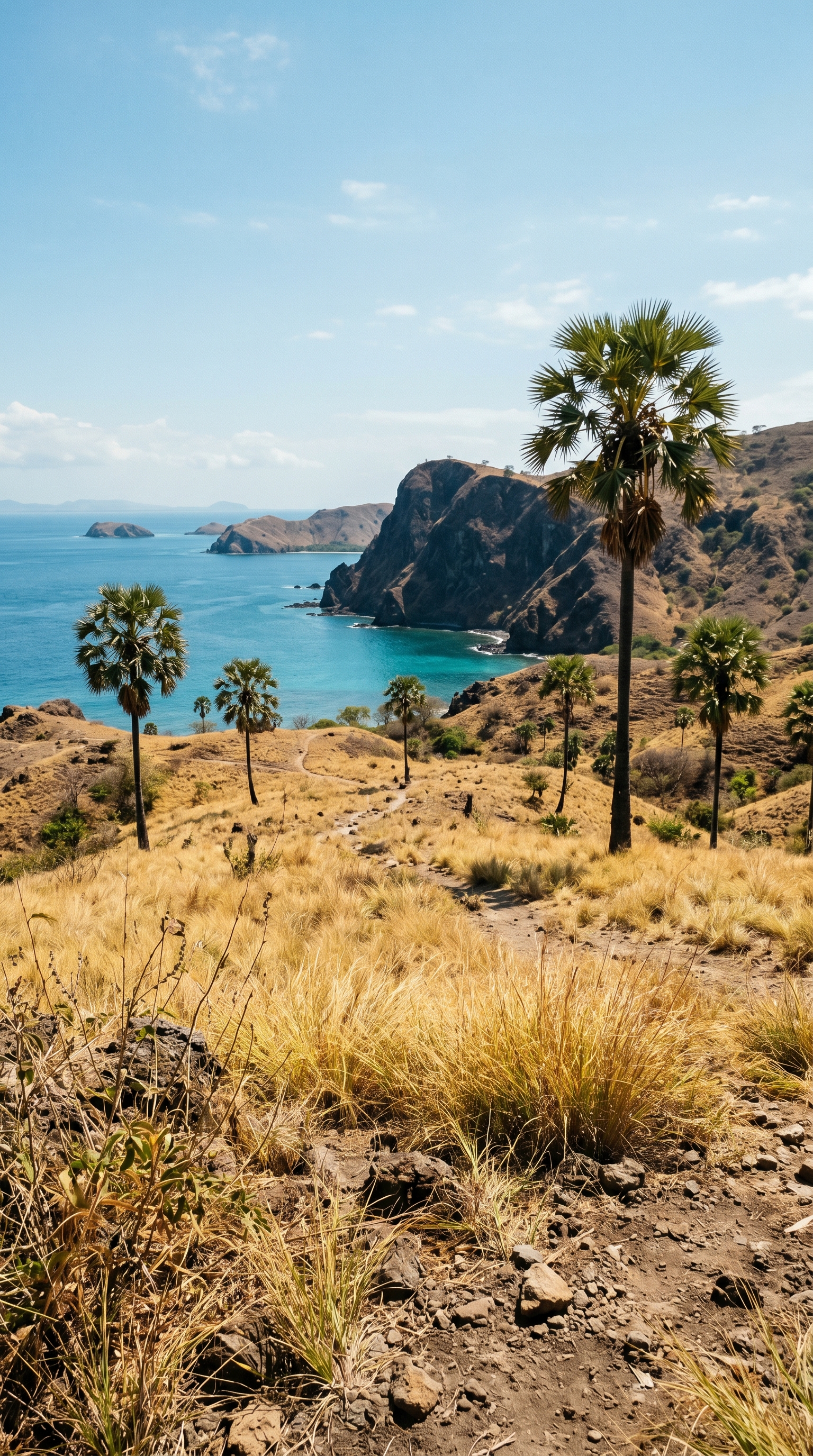
Komodo savanna at ground level — open lontar palm woodland where the world's largest lizards ambush deer and water buffalo. -
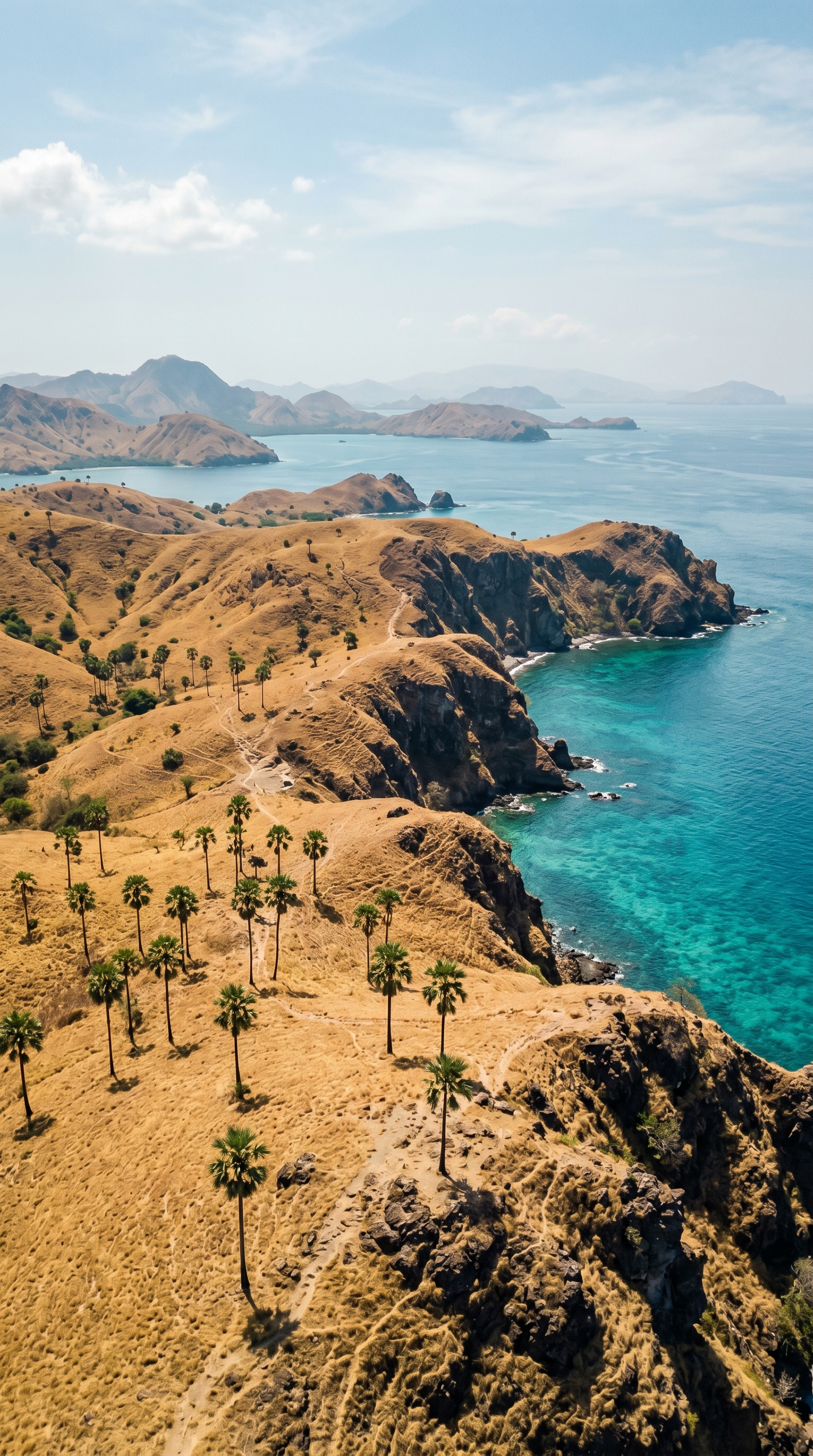
The Komodo islands from above — a chain of dry volcanic Indonesian islands wrapped in coral reef. -
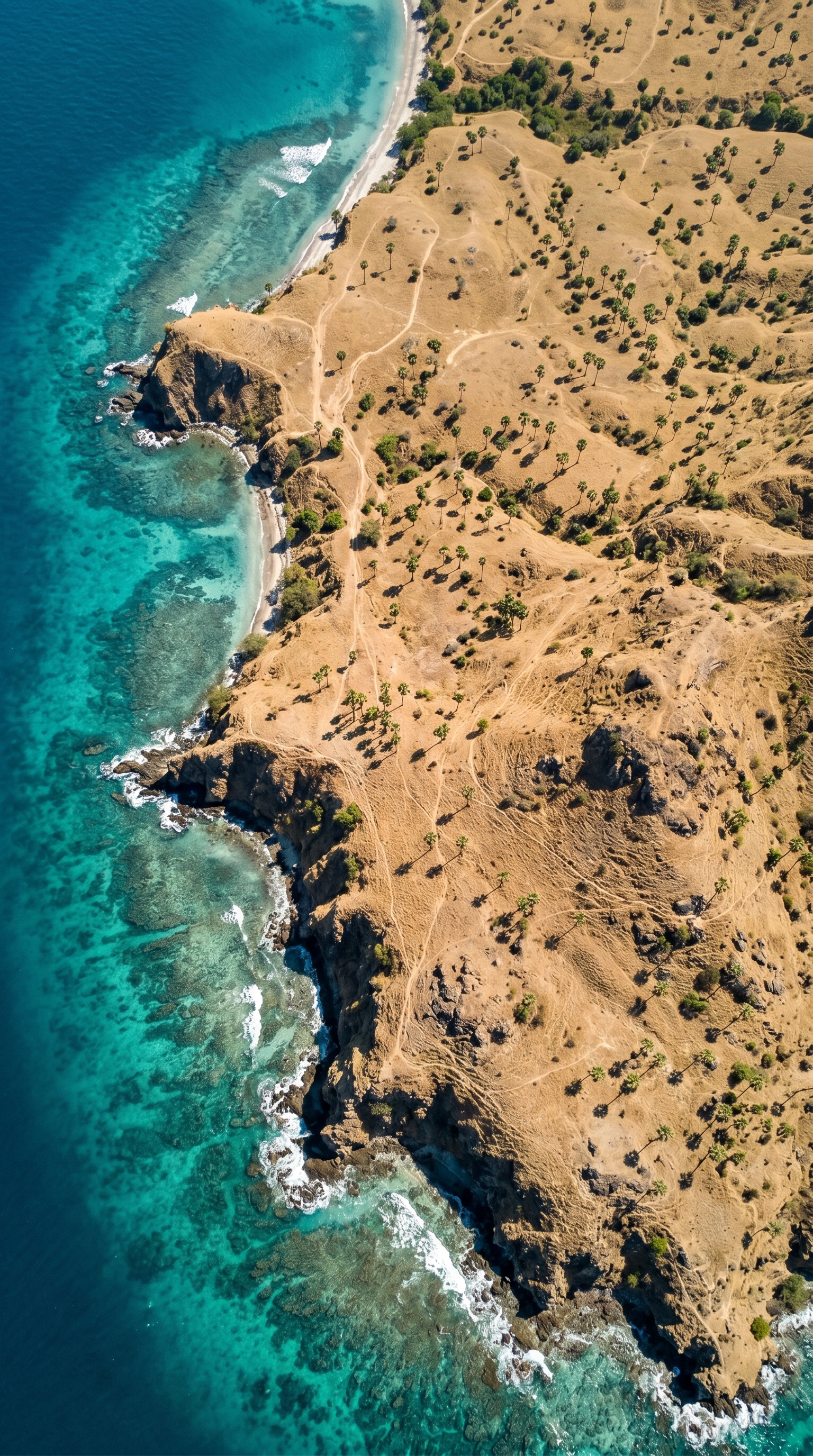
Komodo country from high overhead — the Lesser Sundas, Indonesia's drier eastern arc.
Native range
Komodo dragons live naturally on only a handful of Indonesian islands in the Lesser Sundas: Komodo, Rinca, smaller nearby islands in Komodo National Park such as Gili Motang, and parts of western and northern Flores. Older range lists include Padar, but Padar should be treated cautiously rather than as a strong living population. Their habitat is hot, dry island country - volcanic hills, open monsoon forest, savanna, dry riverbeds, beaches, and scrub where deer trails cross ambush points.
The range
Five regions, one species.
The komodo dragon doesn't live in one place. Across the map below, each region has its own pressures, prey, and politics — same biology, different worlds.
-
Indonesia
Komodo National Park
Komodo Island (the main island) is the type locality (Ouwens 1912). Primary stronghold and flagship habitat. Ora's home region.
Source ↗ -
Indonesia
Komodo National Park — Rinca Island
Second-largest island population after Komodo.
Source ↗ -
Indonesia
Komodo National Park — Gili Motang
Small island population within the park boundary.
Source ↗ -
Indonesia
Komodo National Park — Padar Island
Historical range on Padar; treat as historical unless a current institutional source pins a strong living population.
Source ↗ -
Indonesia
Flores — western and northern coasts
Only Komodo-dragon population outside the national park; ~300–500 individuals. Fragmented, and the most exposed to human-wildlife conflict.
Source ↗
Daily life
What the komodo dragon does, day to day.
Diet, social behaviour, climate — the everyday biology that shapes how this species hunts, defends and survives.
-
Diet
Apex carnivore and facultative scavenger. Adult prey includes Timor deer (Rusa timorensis), wild boar, water buffalo, goats, horses, carrion, and smaller Komodo dragons.
-
Social life
Solitary outside feeding aggregations and mating. Dominance hierarchies can form at carcasses, with large adults feeding first.
-
Climate
Hot, dry tropical — monsoonal savanna and open lowland forest of the Lesser Sunda Islands.
Wyld Trivia
Five questions. Most people get them wrong.
But you're not most people.
Tap to reveal.
-
How can a Komodo dragon kill a water buffalo?
Show me HideNot by magic bacteria. A Komodo dragon is an ambush predator: serrated teeth open a deep cut, the whole body helps pull and tear, and venom from the lower jaw can slow clotting and disrupt circulation. Huge buffalo are risky prey, so Wyld Rivals treats exact buffalo-kill timings as story lore, not a guaranteed biology rule.
-
Does a Komodo dragon really have venom?
Show me HideYes. Scientists found venom glands in the lower jaw and venom effects linked to clotting and circulatory pressure. That evidence is much stronger than the old story that Komodo dragons kill mainly with septic saliva.
-
How big can a Komodo dragon get?
Show me HideLarge males can reach about 3 metres long, and the biggest recorded individuals are far heavier than most people expect. They are the largest lizards alive on Earth today.
-
Where do Komodo dragons live, and why nowhere else?
Show me HideOnly in a small part of Indonesia: Komodo, Rinca, nearby smaller islands in Komodo National Park, and parts of Flores. Older sources list Padar too, but Padar should not be presented as a strong current population.
-
What's the strangest thing about how a Komodo dragon smells its food?
Show me HideIt uses its tongue as a scent tool. The forked tongue collects scent particles and delivers them to the Jacobson's organ in the roof of the mouth, helping the dragon follow trails through hot island air.
The terrain
Where the komodo dragon thrives.
Every animal is built for some places more than others. These are the ground, hours and weather where this species shows its best — and its worst.
Ground
- Savanna Excels
- Scrubland Strong
- Rocky ridge Strong
- Beach dry riverbed Strong
- Open forest Strong
- Dense forest Struggles
- Water Struggles
Hours
- Day Excels
- Dawn Strong
- Twilight Strong
- Dusk Average
- Night Avoids
Weather
- Hot Excels
- Moderate Strong
- Wind Average
- Rain Struggles
- Cold Avoids
- Storm Avoids

Five things you didn't know about the komodo dragon.
Cited biology that shapes how the komodo dragon feeds, defends, survives.
-
Varanus komodoensis is the largest living lizard. Adult males can reach about 3 m and 136 kg, while exceptional individuals have been recorded above that range. Source ↗
-
Fry et al. (2009) found compound mandibular venom glands in Komodo dragons and rejected the old idea that a special septic-bacteria cocktail explains their prey-killing system. Source ↗
-
Komodo dragon teeth are serrated, curved, blade-shaped teeth. LeBlanc et al. (2024) found iron-enriched coatings concentrated along their cutting edges and tips. Source ↗
-
Young Komodo dragons spend much more time in trees, where they are safer from large adults. As they grow, they shift toward terrestrial ambush hunting and larger prey. Source ↗
-
Female Komodo dragons are capable of facultative parthenogenesis in captivity, meaning isolated females have produced viable young without mating. Source ↗
About the komodo dragon
Where the komodo dragon sits on the tree of life.
-
Class
Reptilia
Cold-blooded animals with scales — like crocodiles, lizards and snakes.
-
Order
Squamata
The scaly reptiles — snakes and lizards.
-
Family
Varanidae
The monitor lizards — large active reptile predators.
-
Species
Varanus komodoensis
Komodo Dragon — the species this page is about.


Komodo Dragon
Every fact, cited.
Biology cited on this page comes from peer-reviewed zoology and the major species databases. Click through for the underlying study, dataset or assessment.
- animals.sandiegozoo.org · animals.sandiegozoo.org
- PubMed · PubMed
- PubMed · PubMed
- PubMed · PubMed
- PubMed · PubMed


