
European Wild Boar
Scientific name Sus scrofa
Adult size
- Weight
- ♀F 80 kg ♂M 125 kg
- Length
- ♀F 1.4 m ♂M 1.5 m
- Shoulder height
- ♀F 0.85 m ♂M 0.95 m
- Top speed charge
- ♀F 40 km/h ♂M 40 km/h
- Lifespan
- Wild Boar often live only 1-2 years in hunted wild settings, but wild records can reach about 12-13 years and captive records 27 years.
Represented by Taran Bialowieza Forest, Poland

European wild boar are native across most of mainland Europe, from Iberia through France, Germany, Italy, the Balkans, Poland, the Baltic states, and western Russia. After being wiped out in some places, they have pushed back into Britain, Scandinavia, and the Alpine arc. Their best country is mast-rich woodland - oak, beech, chestnut, wet edges, and muddy wallows where a sounder can root for food and vanish into cover.
Where they live
Three angles, one home.
The european wild boar represented in the Wyld Savage League lives in Bialowieza Forest, Poland. Three views of the same patch of country — at ground level, from above, and bird's-eye.
-
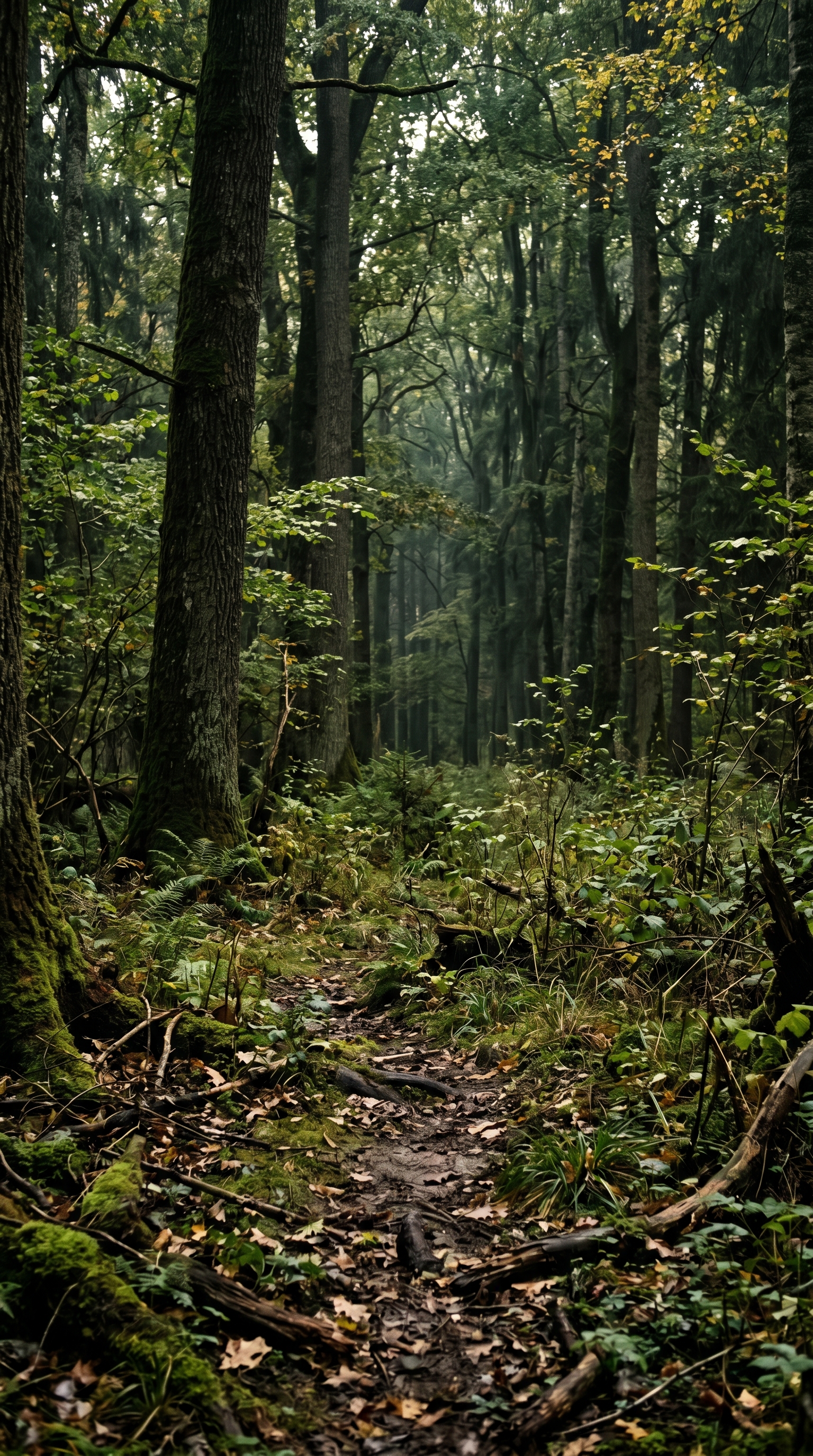
Bialowieza Forest, Poland at ground level — home of the european wild boar. -
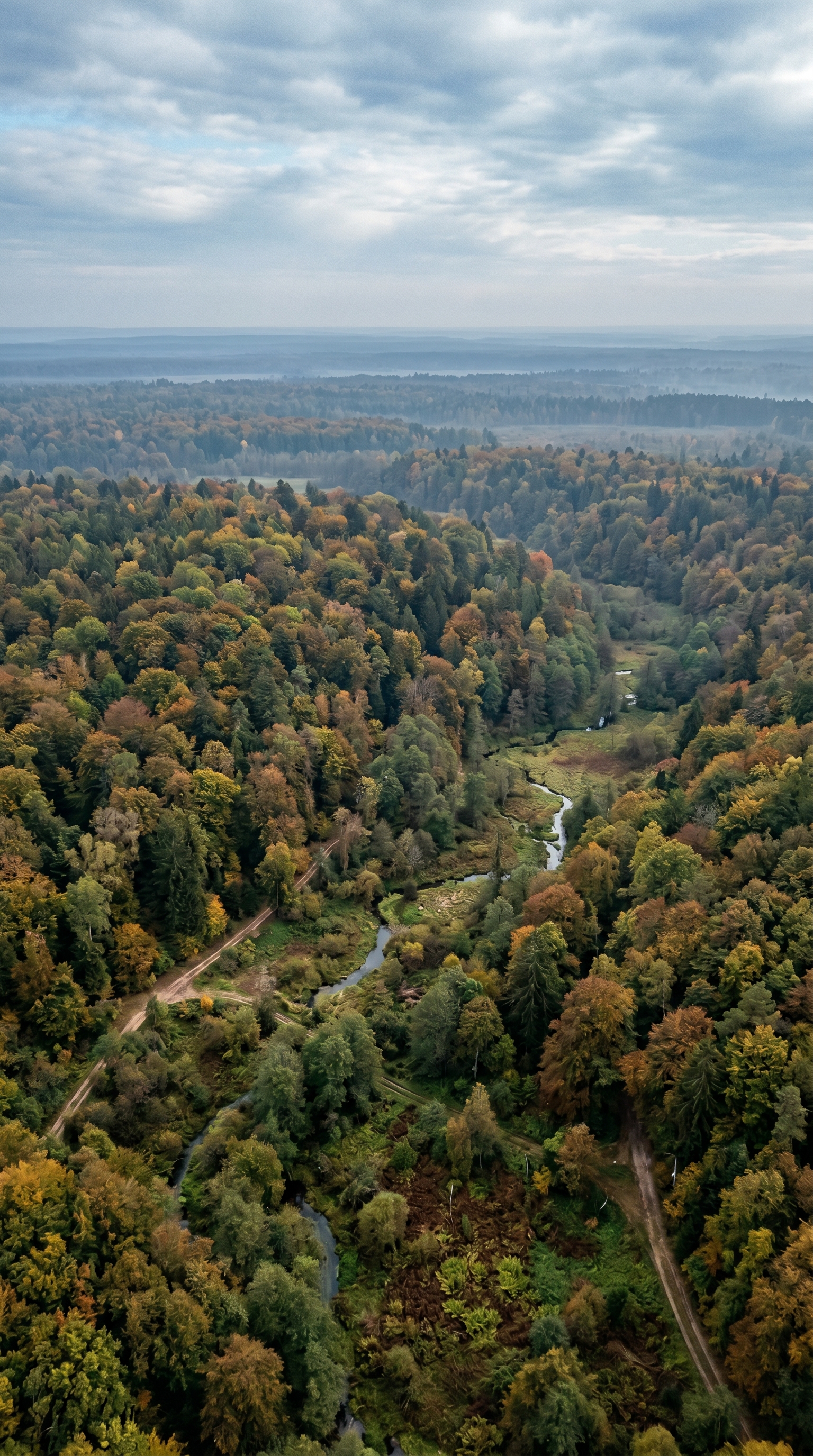
Bialowieza Forest, Poland seen from above — home of the european wild boar. -
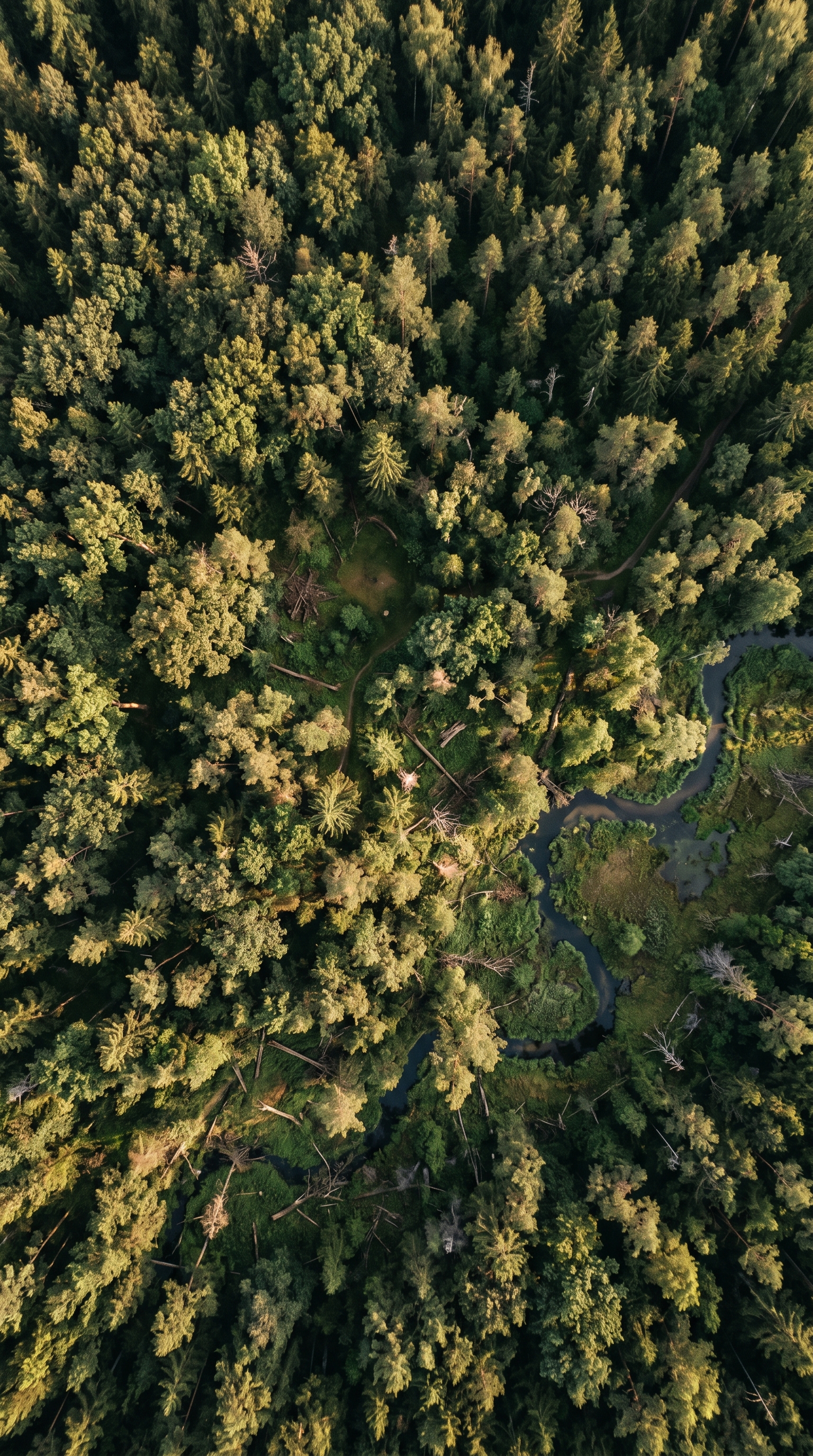
Bialowieza Forest, Poland from high overhead — home of the european wild boar.
Native range
European wild boar are native across most of mainland Europe, from Iberia through France, Germany, Italy, the Balkans, Poland, the Baltic states, and western Russia. After being wiped out in some places, they have pushed back into Britain, Scandinavia, and the Alpine arc. Their best country is mast-rich woodland - oak, beech, chestnut, wet edges, and muddy wallows where a sounder can root for food and vanish into cover.
The range
Seven regions, one species.
The european wild boar doesn't live in one place. Across the map below, each region has its own pressures, prey, and politics — same biology, different worlds.
-
Poland
Bialowieza Forest
Primary European old-growth temperate forest — UNESCO World Heritage site straddling the Poland–Belarus border. Bialowieza is a documented wild-boar and wolf research landscape, making it a strong home-region anchor for Taran without needing a fixed territory-size claim.
Source ↗ -
Germany
Bavarian Forest National Park
Germany's oldest national park; mixed-conifer / deciduous forest along the Czech border. High-density wild boar population with active rooting impact on forest floor communities.
Source ↗ -
France
Cévennes National Park
Mediterranean montane oak-chestnut mosaic in the southern Massif Central — prime acorn and chestnut mast habitat. UNESCO Biosphere Reserve.
Source ↗ -
Spain
Iberian Montado / Dehesa
Open oak woodland (holm and cork oak) across southern Spain and Portugal — exceptional acorn productivity supports high wild boar densities. Site of traditional acorn-fed pig husbandry.
Source ↗ -
Italy
Maremma Regional Park
Coastal Tuscan Mediterranean scrub and oak woodland. Wild boar occupy both protected and agricultural areas across the reserve.
Source ↗ -
Ukraine
Chernobyl Exclusion Zone
Re-wilded landscape where wild boar densities rebounded following human depopulation after 1986. Frequently studied as a passive-rewilding case alongside wolves, lynx, and Przewalski's horse.
Source ↗ -
USA
Great Smoky Mountains National Park
Feral population established since 1912, when Eurasian wild boars escaped from a private hunting preserve on Hooper Bald in Graham County NC and hybridised with domestic swine stock. Documented hard-mast competition with Ursus americanus (acorns, beech nuts, hickory nuts) plus territorial conflict at fall feeding sites. NPS-managed active removal programme has been running continuously for decades. Anchors the asymmetric nemesis loop for Yona (B1, Group B, Great Smokies). Subspecies name stored as generic 'Sus scrofa' rather than 'scrofa scrofa' because the feral population is a mixed-ancestry hybrid of Eurasian wild boar + domestic swine, not the European nominate alone.
Source ↗
Daily life
What the european wild boar does, day to day.
Diet, social behaviour, climate — the everyday biology that shapes how this species hunts, defends and survives.
-
Diet
Omnivorous generalist. Autumn–winter: heavily dependent on hard mast — acorns (Quercus spp.
-
Social life
Matriarchal sounders — family groups of closely-related adult females, juveniles, and piglets, with WPSG noting average groups around 20 and larger temporary associations reported.
-
Climate
Temperate generalist — native across most European climatic zones from Mediterranean scrub (Iberia, southern Italy) through temperate deciduous and mixed forest (France, Germany, Poland, Carpathians) to the cold continental edge (eastern European plains).
Wyld Trivia
Five questions. Most people get them wrong.
But you're not most people.
Tap to reveal.
-
How can a wild boar's tusks stay sharp without ever being filed?
Show me HideEach time the boar opens and closes its jaw, the lower canine teeth rub against the upper canines. That keeps the tusk edges sharp without a file, a bit like two blades honing each other.
-
Who's in charge in a wild boar group?
Show me HideUsually an experienced sow. Wild boars live in female family groups called sounders, made of related females and their young. Adult males mostly live alone and join female groups during the breeding season.
-
Where on Earth can you find a wild boar?
Show me HideAlmost everywhere except Antarctica. They are native to Europe, North Africa, and Asia, and have been introduced to North America, South America, and Australia. That makes them one of the most widely distributed large land mammals on the planet — from Spanish forests to Russian taiga to Australian outback.
-
Did every farm pig come from the wild boar?
Show me HideYes. Every domestic pig in the world is descended from Sus scrofa — the wild boar. Thousands of years of farming have turned a stripy, tusked forest hunter into the pink, friendly pig you see on a farm today. The DNA is still nearly identical. A boar piglet and a domestic piglet are the same species.
-
Why is a single wild boar 'rooting' bad news for a forest?
Show me HideWild boars dig up the forest floor with their snouts to find roots, fungi, and grubs. A few boars enrich the soil. Too many — and that's increasingly common across Europe — and the constant rooting strips the understory, kills tree seedlings, and reshapes which plants can survive. They are powerful but accidental forest engineers.
The terrain
Where the european wild boar thrives.
Every animal is built for some places more than others. These are the ground, hours and weather where this species shows its best — and its worst.
Ground
- Deciduous forest Excels
- Mixed forest Excels
- Woodland Strong
- Wetland edge Strong
- Open plains Average
- High mountain Struggles
- Desert Avoids
Hours
- Night Excels
- Dusk Excels
- Twilight Excels
- Dawn Strong
- Day Struggles
Weather
- Moderate Excels
- Cold Strong
- Rain Strong
- Wind Average
- Hot Struggles
- Storm Struggles

Five things you didn't know about the european wild boar.
Cited biology that shapes how the european wild boar feeds, defends, survives.
-
Sus scrofa is listed as Least Concern and is one of the most widespread wild suids in the world, native across Europe, North Africa, and Asia, with introduced or feral populations established far beyond the native range. Source ↗
-
Adult male wild boars carry prominent tusks. The upper canines curve out and upward, while the lower canines are kept sharp by rubbing against the uppers. Source ↗
-
Wild boars live in female-led family groups called sounders, while adult males are usually solitary outside the breeding season. Source ↗
-
Every modern domestic pig descends from Sus scrofa — wild boars are the direct wild ancestor of the domesticated pig, with selective breeding producing the divergent body form, docility, and productivity of livestock breeds over millennia of agricultural use. Source ↗
-
Wild boars are ecosystem engineers through their rooting behaviour — grubbing for tubers, invertebrates, and fungi displaces soil and understory, accelerating soil turnover but also driving erosion, reducing seedling survival in damaged patches, and reshaping plant community composition across European forests. Source ↗
About the european wild boar
Where the european wild boar sits on the tree of life.
-
Class
Mammalia
Warm-blooded animals with fur or hair that feed their young milk.
-
Order
Artiodactyla
Hoofed mammals with an even number of toes — pigs, deer, cattle.
-
Family
Suidae
Pigs and their wild relatives — tough omnivores with tusks.
-
Species
Sus scrofa
European Wild Boar — the species this page is about.


European Wild Boar
Every fact, cited.
Biology cited on this page comes from peer-reviewed zoology and the major species databases. Click through for the underlying study, dataset or assessment.
- IUCN Red List · IUCN Red List
- iucn-wpsg.org · iucn-wpsg.org
- iucn-wpsg.org · iucn-wpsg.org
- National Geographic · National Geographic
- Animal Diversity Web · Animal Diversity Web


