
Nile Crocodile
Scientific name Crocodylus niloticus
Adult size
- Weight
- ♀F 180 kg ♂M 400 kg
- Length
- ♀F 3 m ♂M 5 m
- Body height
- ♀F 0.42 m ♂M 0.55 m
- Top speed
- ♀F 30 km/h ♂M 30 km/h
- Lifespan
- Nile Crocodiles average about 45 years in the wild.
Nile crocodiles live across East and Southern Africa and Madagascar, wherever big warm water can hold an ambush predator: rivers, lakes, swamps, floodplains, deltas, and some brackish estuaries. Strongholds include the Nile Basin, the Rift Valley lakes, the Mara and Grumeti rivers, the Zambezi, the Okavango Delta, Kruger National Park, Lake Turkana, and Madagascar's western wetlands.
The range
Five regions, one species.
The nile crocodile doesn't live in one place. Across the map below, each region has its own pressures, prey, and politics — same biology, different worlds.
-
Kenya
Masai Mara National Reserve
Mara River crossing site — one of the most-filmed Nile crocodile predation spectacles on Earth. Resident adult crocodiles ambush wildebeest and zebra during the annual Serengeti–Mara migration (July–October), with individual adults of 4–5 m taking ungulates of several hundred kilograms.
Source ↗ -
Tanzania
Serengeti National Park (Grumeti and Mara Rivers)
Grumeti River holds some of the largest recorded wild Nile crocodiles in East Africa, several reported over 5 m. Migration-corridor ambush site complementing the Mara crossings further north.
Source ↗ -
South Africa
Kruger National Park
Primary Southern African stronghold; large populations along the Olifants, Letaba, Sabie, and Crocodile Rivers. Long-running monitoring programme since the Olifants die-off events of the late 2000s. Sympatric with Southern African lion (Tau's home landscape) and with African buffalo.
Source ↗ -
Botswana
Okavango Delta
Seasonal-flood inland delta; one of the highest-density Nile crocodile populations in Southern Africa, sustained by the annual Kalahari flood pulse. Sympatric with hippopotamus, African buffalo, and lion — primary multi-species encounter-overlap site.
Source ↗ -
Kenya
Lake Turkana
World's largest desert lake and historically the world's largest breeding population of Nile crocodiles (densities on Central Island estimated in the tens of thousands at peak). Fish-dominated diet driven by the lake's Nile perch and tilapia fishery; some of the largest wild specimens in East Africa are Turkana-basin animals.
Source ↗
Daily life
What the nile crocodile does, day to day.
Diet, social behaviour, climate — the everyday biology that shapes how this species hunts, defends and survives.
-
Diet
Apex carnivore and opportunistic generalist. Juveniles take insects, amphibians, crustaceans, and small fish.
-
Social life
Solitary in the strict territorial sense, but gregariously tolerant at feeding concentrations and basking sites.
-
Climate
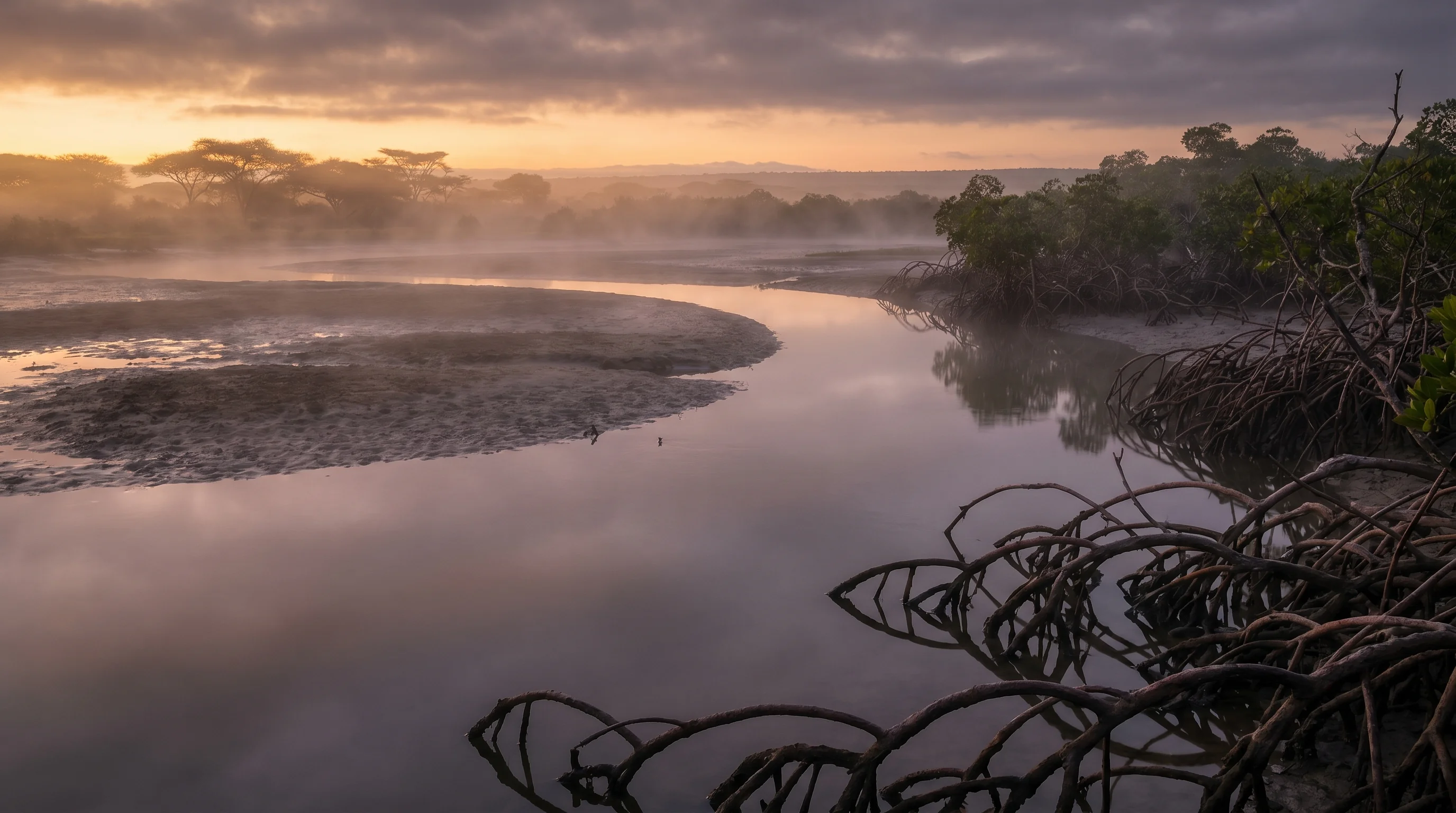
Tropical and subtropical. Freshwater rivers, lakes, swamps, marshes, and floodplains are primary habitat, with tolerance for brackish estuaries and occasional coastal mangrove use.
Wyld Trivia
Five questions. Most people get them wrong.
But you're not most people.
Tap to reveal.
-
Could two look-alike crocodiles really be different species without most people noticing?
Show me HideYes — and it took DNA to spot it. Hekkala et al. 2011 sampled crocodiles across Africa, plus DNA from mummified crocodiles in ancient Egyptian tombs, and showed the African 'Nile crocodile' is actually two species: Crocodylus niloticus (East and Southern Africa) and the smaller Crocodylus suchus (West and Central Africa, the sacred crocodile of ancient Egypt). They look similar. They're genetically distinct.
-
Why would a baby crocodile ride inside a mouth full of teeth?
Show me HideBecause mum is helping. A.C. Pooley's classic 1977 field study showed Nile crocodile mothers respond when hatchlings call from inside the nest, dig the nest open, then carry hatchlings — and unhatched eggs — to water in a special soft pouch in the jaw. The pouch is gentle. The teeth aren't used. It's real parental care, but it's been observed in some individuals at some sites — not a 100% rule.
-
Is the Mara River crossing a crocodile hunt, or a giant river food pulse?
Show me HideMostly a food pulse. Subalusky et al. 2017 measured the wildebeest crossings carefully and found about 6,250 carcasses and 1,100 tons of biomass enter the Mara River every year. Most of that gets processed by decomposition, fish, and aquatic food webs — NOT counted up as crocodile kills. Crocodiles do hunt, but the bigger story is the river feeding a whole ecosystem.
-
Can a mother crocodile hear how small a baby is just from its call?
Show me HideLooks like it. Chabert et al. 2015 played hatchling crocodile calls back to wild and captive females and showed mothers responded MORE strongly to calls from smaller hatchlings. Younger, smaller babies need help most — and the calls carry that information. It isn't 'crocodile language' or human-style talk. It's signal-based parental care that scientists can test with playback experiments.
-
Why is counting crocodile attacks harder than repeating a scary number?
Show me HideBecause most attacks aren't recorded the way you'd think. Pooley et al. 2020 reconstructed 214 Nile crocodile attacks in South Africa and eSwatini from 1949 to 2016 — using literature, archives, and reports. Most happened during swimming, fishing, fetching water, or crossing rivers. The honest finding: we have local reconstructed datasets, NOT a clean Africa-wide deaths-per-year total. Folklore numbers like '200 a year' aren't backed by primary epidemiology.
The terrain
Where the nile crocodile thrives.
Every animal is built for some places more than others. These are the ground, hours and weather where this species shows its best — and its worst.
Ground
- River Excels
- Wetland Excels
- Lake Excels
- Estuary Strong
- Coastal Average
- Terrestrial Avoids
Hours
- Dusk Excels
- Night Excels
- Twilight Excels
- Dawn Strong
- Day Strong
Weather
- Hot Excels
- Moderate Strong
- Rain Strong
- Wind Average
- Storm Average
- Cold Avoids
Five things you didn't know about the nile crocodile.
Cited biology that shapes how the nile crocodile feeds, defends, survives.
-
The Nile crocodile is Africa's largest freshwater predator and one of the two largest extant crocodilians (alongside Crocodylus porosus). Adults typically measure around 5 m (16 ft), exceptional individuals can reach 6-7 m (20+ ft), published specimens can reach about 1,650 lb (~750 kg), and the largest historical wild individuals exceeded 900 kg. Source ↗
-
In 2011 the Nile crocodile was split into two species. Hekkala and colleagues, using mitochondrial and nuclear DNA markers plus karyotype data and ancient DNA from Egyptian crocodile mummies, resurrected Crocodylus suchus as a distinct species native to West and Central Africa, with C. niloticus now applied to populations in East and Southern Africa and Madagascar. DNA from mummified crocodiles at Thebes and Grottes de Samoun matched C. suchus, confirming the two lineages coexisted historically in the Nile. Source ↗
-
Adult Nile crocodiles are among the very few non-human predators that routinely kill prey larger than themselves. Large congregations take wildebeest, zebra, and adult Cape buffalo at river crossings during the annual East African migration — the Mara River and Grumeti River crossings are the most spectacularly documented, with hundreds of crocodiles ambushing tens of thousands of ungulates each season. Source ↗
-
Crocodilian bite-force capacity scales almost isometrically with body mass. Erickson and colleagues (2012, PLOS ONE) tested 83 adult specimens across all 23 extant crocodilian species (range 1.24–4.59 m, 7–531 kg) and recorded molariform bite forces from 900 N up to 16,414 N, with larger-bodied species producing proportionally more force. Because C. niloticus reaches body sizes rivalled only by C. porosus, adult Nile crocodiles sit near the very top of the measured bite-force hierarchy for any living animal. Source ↗
-
Nile crocodiles display parental care that is exceptionally advanced for a reptile. Females guard nests of 40–60 eggs through a 70–100 day incubation, excavate the nest at hatching to help offspring emerge, and carry hatchlings to the water in their jaws — a behaviour shared only with other crocodilians and not seen in any other living reptile lineage. Both parents have been documented defending nest sites. Source ↗
About the nile crocodile
Where the nile crocodile sits on the tree of life.
-
Class
Reptilia
Cold-blooded animals with scales — like crocodiles, lizards and snakes.
-
Order
Crocodilia
The large semi-aquatic reptiles — crocodiles, alligators and gharials.
-
Family
Crocodylidae
True crocodiles — narrow-jawed reptiles with bone-crushing bite.
-
Species
Crocodylus niloticus
Nile Crocodile — the species this page is about.


Nile Crocodile
Every fact, cited.
Biology cited on this page comes from peer-reviewed zoology and the major species databases. Click through for the underlying study, dataset or assessment.
- National Geographic · National Geographic
- PubMed · PubMed
- National Geographic · National Geographic
- PLOS · PLOS
- National Geographic · National Geographic


