
Bornean Orangutan
Scientific name Pongo pygmaeus
Adult size
- Weight
- ♀F 37 kg ♂M 30-87 kg
- Length
- ♀F 0.78 m ♂M 0.97 m
- Standing height
- ♂M 1.366 m
- Top speed climb
- 5 km/h
- Lifespan
- Bornean Orangutans can live past 50 in the wild, and captive records reach 59 years.
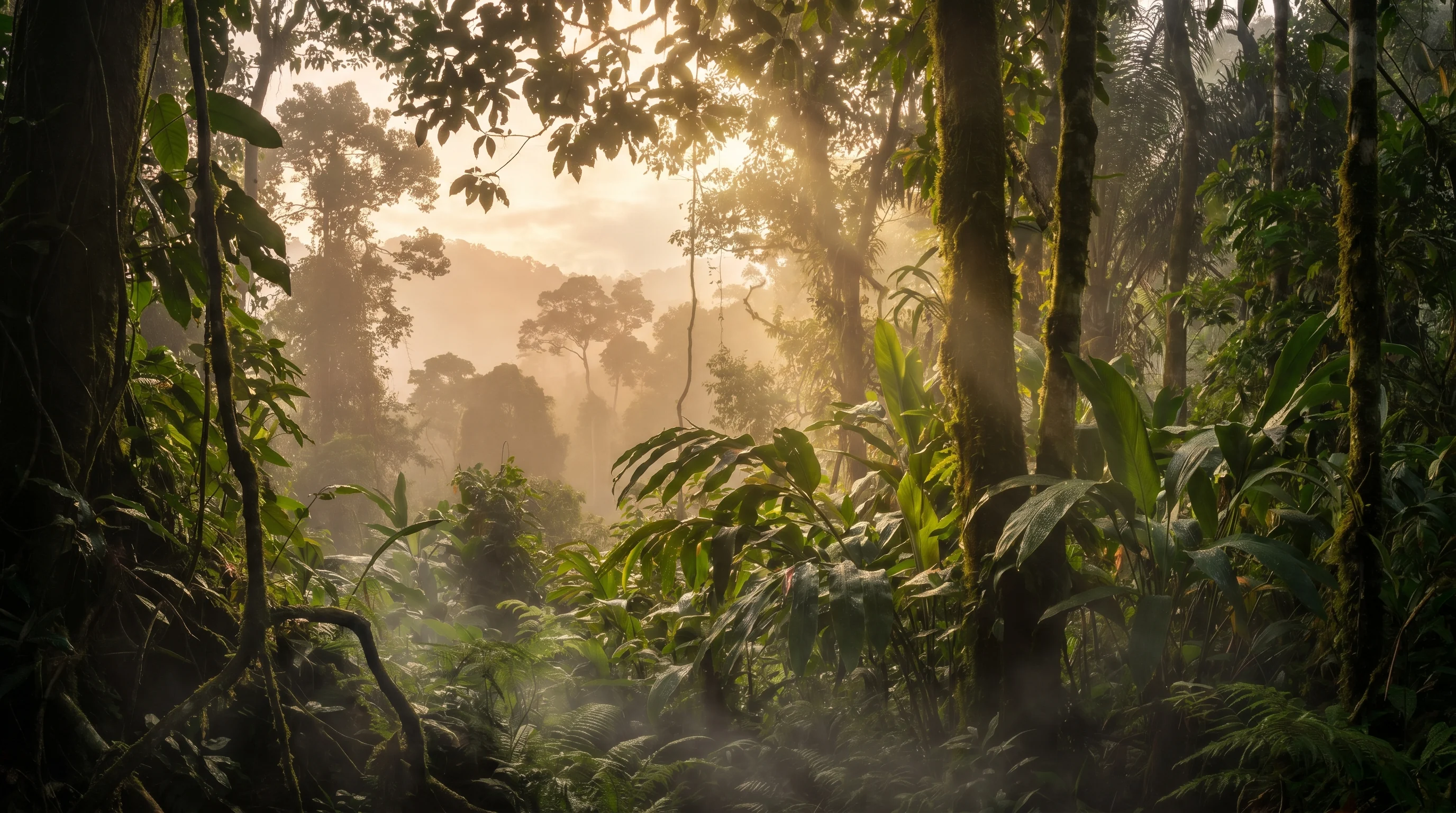
Bornean Orangutan lives on Borneo, with source accounts recording distribution in Indonesia and Malaysia and Mammal Diversity Database noting Borneo except the southeast. The range story stays tied to Borneo rainforest, lowland swamp forest, peat swamp forest and lower-elevation secondary forest rather than borrowing from Sumatran or Tapanuli orangutans.
The range
Three regions, one species.
The bornean orangutan doesn't live in one place. Across the map below, each region has its own pressures, prey, and politics — same biology, different worlds.
-
Indonesia
Borneo / Kalimantan rainforest and swamp-forest range
MDD records Indonesia within the Bornean Orangutan distribution.
Source ↗ -
Malaysia
Borneo rainforest and swamp-forest range
MDD records Malaysia within the Bornean Orangutan distribution.
Source ↗ -
Borneo
Old-growth, lowland swamp, dipterocarp, peat swamp and lower-elevation secondary forest
ADW habitat context; useful for page ecology and terrain modifiers.
Source ↗
Daily life
What the bornean orangutan does, day to day.
Diet, social behaviour, climate — the everyday biology that shapes how this species hunts, defends and survives.
-
Diet
Mostly fruit, with leaves, shoots, bark, sap, vines, insects, spider webs, eggs, fungi, flowers and soil adding variety when fruit is less available.
-
Social life
Mostly solitary outside mother-young bonds and temporary fruiting-tree gatherings.
-
Climate
Humid tropical Borneo rainforest, especially connected lowland and swamp-forest canopy.
Wyld Trivia
Five questions. Most people get them wrong.
But you're not most people.
Tap to reveal.
-
Is a Bornean Orangutan the same animal as a Sumatran Orangutan?
Show me HideNo. Bornean Orangutan is Pongo pygmaeus, while Sumatran Orangutan is Pongo abelii. They are close relatives, but their island ranges and species identities are different.
-
Why do some adult males look so different?
Show me HideAdult male orangutans can be flanged or unflanged. Flanged males develop large cheek pads and a throat pouch, while unflanged males can remain smaller-looking even when mature.
-
Why does this page not show a speed number?
Show me HideBecause the strongest exact sources describe canopy life, climbing, nests and forest movement, but not a verified maximum sprint speed. A clean page is better without a weak number.
-
Why do rivers matter so much?
Show me HideBornean Orangutans cannot swim, so rivers can divide forest space even for an animal that is brilliant at moving through trees.
-
What does a Bornean Orangutan eat?
Show me HideMostly fruit, but not fruit alone. Leaves, shoots, insects, sap, vines, spider webs, eggs, fungi, flowers, bark and even soil can all appear in the diet.
The terrain
Where the bornean orangutan thrives.
Every animal is built for some places more than others. These are the ground, hours and weather where this species shows its best — and its worst.
Ground
- Borneo rainforest canopy Excels
- Lowland swamp forest Excels
- Peat swamp forest Excels
- Dipterocarp forest Excels
- Secondary lowland forest Strong
- Connected tree cover Strong
- Open ground Avoids
- Deep water barrier Avoids
Hours
- Day Excels
- Dawn Strong
- Dusk Strong
- Night Avoids
Weather
- Humid tropical forest Excels
- Wet lowland forest Excels
- Warm canopy Strong
- Dry open Struggles
- Cold Avoids
Five things you didn't know about the bornean orangutan.
Cited biology that shapes how the bornean orangutan feeds, defends, survives.
-
Pongo pygmaeus is the accepted Bornean Orangutan species, recorded from the Indonesian and Malaysian parts of Borneo. Source ↗
-
Bornean Orangutans are Critically Endangered, which means their forests and surviving groups need urgent protection. Source ↗
-
They live in old-growth forest, lowland swamp forest, dipterocarp forest, peat swamp and lower-elevation secondary forest, rarely above 1,000 m. Source ↗
-
They are mostly active by day and mostly live in trees, often building sleeping nests high in the canopy. Source ↗
-
Fruit can make up more than 60% of the diet, with leaves, shoots, insects, eggs, fungi, flowers, bark and soil adding variety. Source ↗
About the bornean orangutan
Where the bornean orangutan sits on the tree of life.
-
Class
Mammalia
Warm-blooded animals with fur or hair that feed their young milk.
-
Order
Primates
The mammals with grasping hands and big brains — apes, monkeys, lemurs.
-
Family
Hominidae
The great apes — gorillas, orangutans, chimps and humans.
-
Species
Pongo pygmaeus
Bornean Orangutan — the species this page is about.


Bornean Orangutan
Every fact, cited.
Biology cited on this page comes from peer-reviewed zoology and the major species databases. Click through for the underlying study, dataset or assessment.
- mammaldiversity.org · mammaldiversity.org
- mammaldiversity.org · mammaldiversity.org
- Animal Diversity Web · Animal Diversity Web
- Animal Diversity Web · Animal Diversity Web
- Animal Diversity Web · Animal Diversity Web
- Animal Diversity Web · Animal Diversity Web
- ielc.libguides.com · ielc.libguides.com
- genomics.senescence.info · genomics.senescence.info


