
Western Lowland Gorilla
Scientific name Gorilla gorilla gorilla
Adult size
- Weight
- ♀F 80 kg ♂M 170 kg
- Length
- ♀F 0.734 m ♂M 0.9 m
- Standing height
- ♀F 1.45 m ♂M 1.75 m
- Top speed charge
- ♂M 23 km/h
- Lifespan
- Male Western Lowland Gorillas become mature silverbacks from about 18 years onward; a 19-year-old is a mature adult.
Represented by Mokonzi Nouabalé-Ndoki National Park, Republic of Congo

Western lowland gorillas live in the lowland rainforests of Central Africa's Congo Basin: Cameroon, Central African Republic, Republic of Congo, Gabon, Equatorial Guinea, far western Democratic Republic of the Congo, and Cabinda in Angola. They use primary and secondary rainforest, swamp forest, river corridors, and forest clearings called bais, where animals gather in open, marshy pockets inside the trees.
Where they live
Three angles, one home.
The western lowland gorilla represented in the Wyld Savage League lives in Nouabalé-Ndoki National Park, Republic of Congo. Three views of the same patch of country — at ground level, from above, and bird's-eye.
-
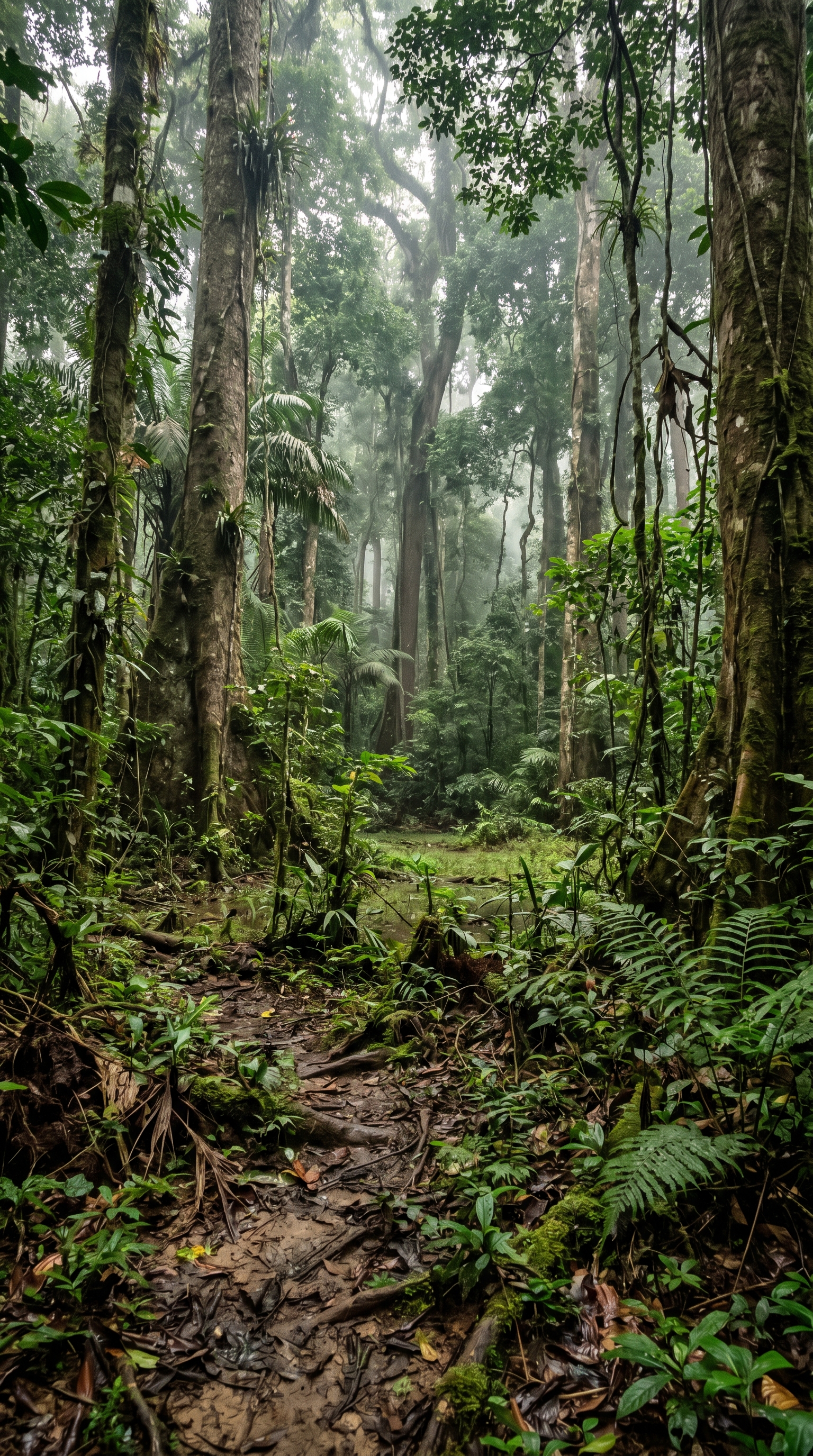
Nouabalé-Ndoki forest at ground level — Congo Basin lowland rainforest where gorilla family groups feed on leaves and pith. -
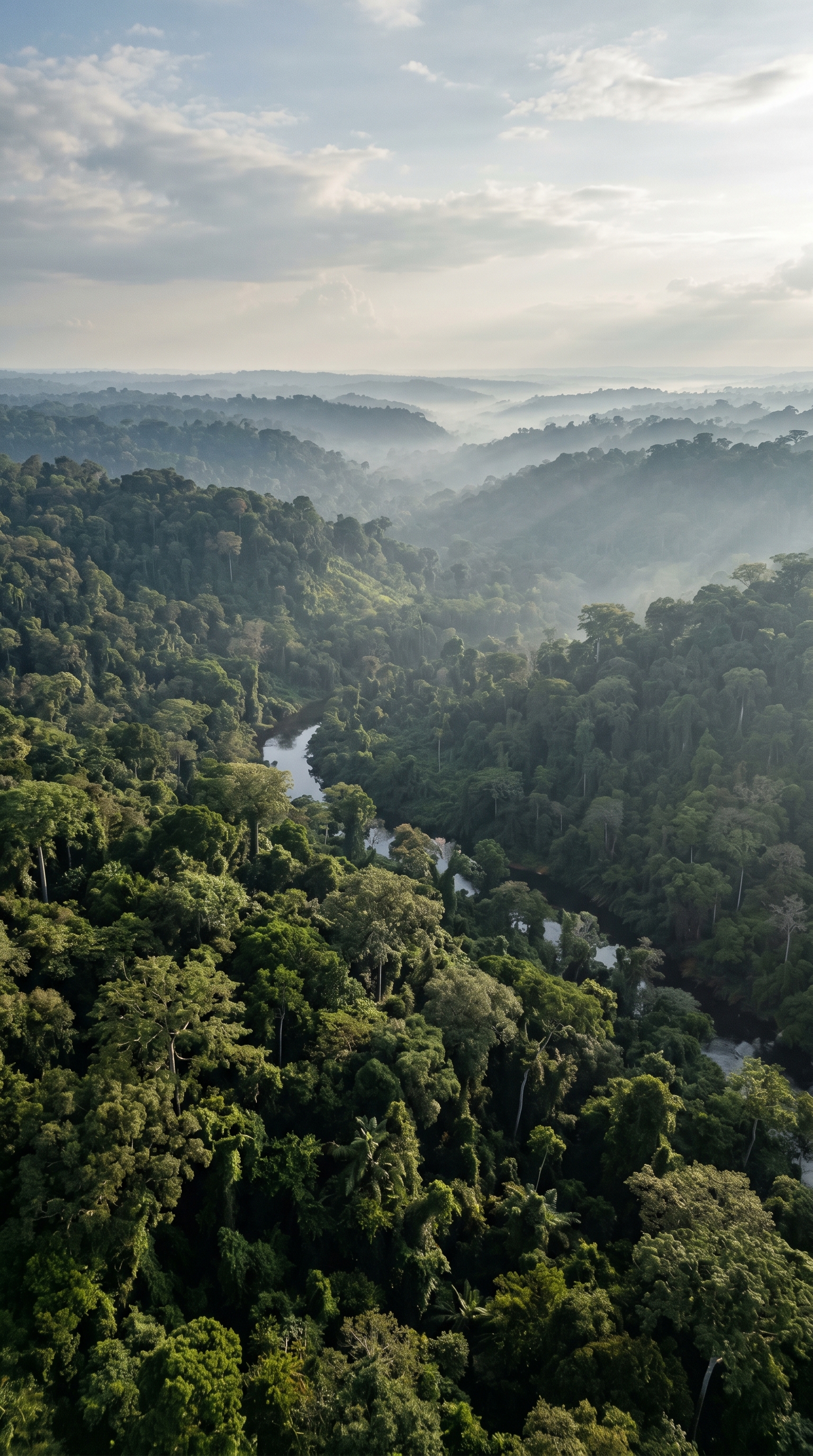
Nouabalé-Ndoki National Park from above — the Republic of Congo's untouched core, part of the Sangha Trinational forest. -
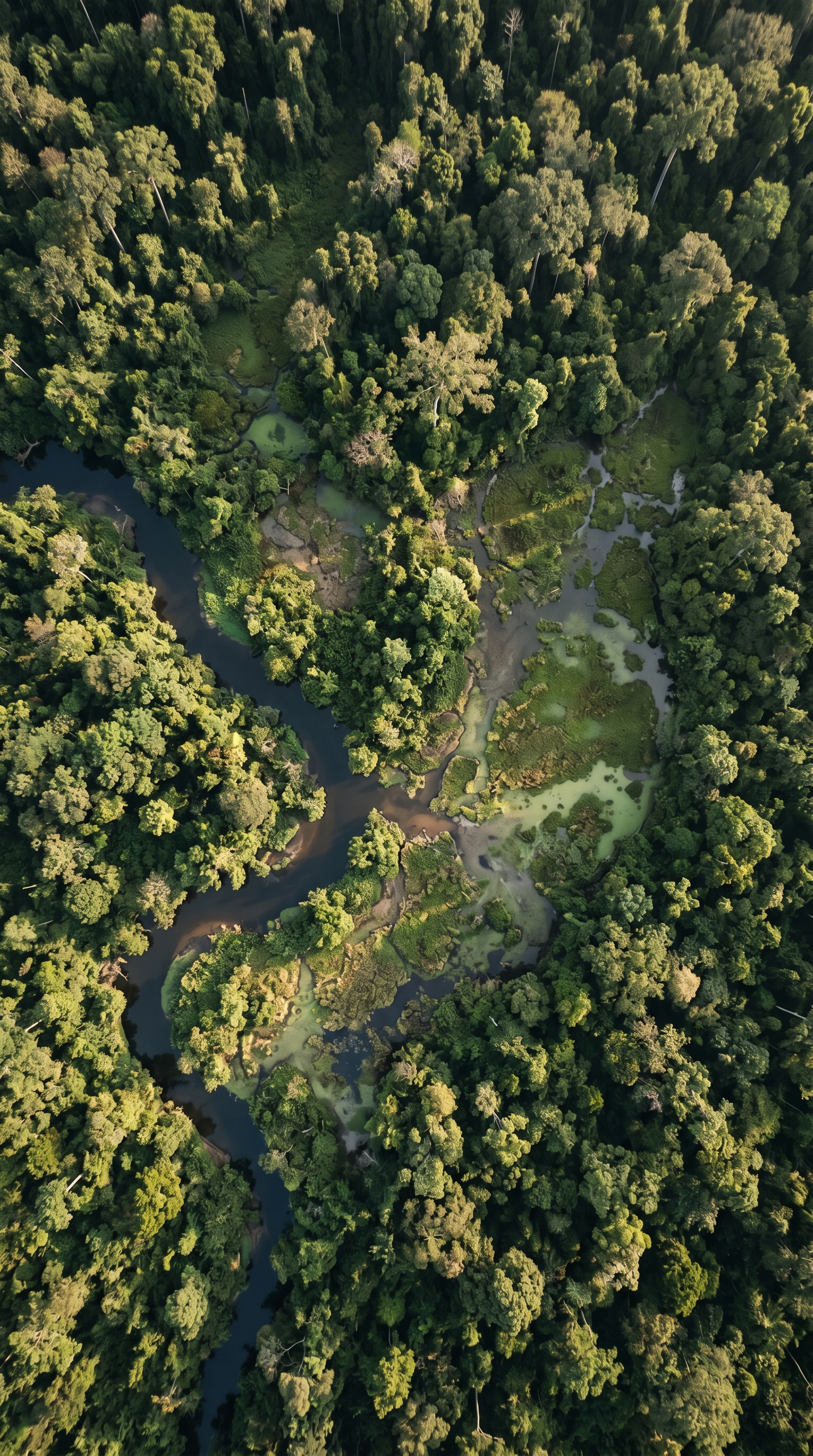
Gorilla country from high overhead — the Congo Basin, second-largest rainforest on Earth.
Native range
Western lowland gorillas live in the lowland rainforests of Central Africa's Congo Basin: Cameroon, Central African Republic, Republic of Congo, Gabon, Equatorial Guinea, far western Democratic Republic of the Congo, and Cabinda in Angola. They use primary and secondary rainforest, swamp forest, river corridors, and forest clearings called bais, where animals gather in open, marshy pockets inside the trees.
The range
Six regions, one species.
The western lowland gorilla doesn't live in one place. Across the map below, each region has its own pressures, prey, and politics — same biology, different worlds.
-
Republic of Congo
Nouabalé-Ndoki National Park
Mbeli Bai — the swampy forest clearing where Breuer et al. first documented wild-gorilla tool use in 2004–2005. Major habituation and long-term observation site.
Source ↗ -
Republic of Congo
Odzala-Kokoua National Park
Holds one of the densest remaining western lowland gorilla populations; alternate candidate home region. Mokonzi (Group D1) is based at Nouabalé-Ndoki / Mbeli Bai; Odzala-Kokoua is a plausible dispersal corridor.
Source ↗ -
Gabon
Loango National Park
Long-term habituated-group study site (Robbins, Ortmann, Seiler 2022); unusual nut-feeding behaviour up to 41% of feeding time recorded here.
Source ↗ -
Gabon
Ivindo National Park
Forest-clearing (bai) habitat; contiguous forest block linking to Odzala across the Congo border.
Source ↗ -
Central African Republic
Dzanga-Ndoki National Park
Part of the Sangha Trinational protected-area complex with Nouabalé-Ndoki and Lobéké; long-running Bai Hokou habituation site.
Source ↗ -
Cameroon
Dja Faunal Reserve
UNESCO World Heritage Site; one of the principal Cameroonian strongholds for the subspecies.
Source ↗
Daily life
What the western lowland gorilla does, day to day.
Diet, social behaviour, climate — the everyday biology that shapes how this species hunts, defends and survives.
-
Diet
Primarily herbivorous frugivore-folivore.
-
Social life
Stable troops are usually centred on one mature silverback, several adult females, and their young.
-
Climate
Equatorial tropical rainforest and swamp forest of the Congo Basin.
Wyld Trivia
Five questions. Most people get them wrong.
But you're not most people.
Tap to reveal.
-
Why does a silverback gorilla beat his chest?
Show me HideIt is a warning display before a clash, not just showing off. In mountain gorillas, scientists found that bigger males made lower-sounding chest beats, so the drum can carry a clue about body size. For western lowland gorillas we keep that as a careful Gorilla-family comparison, not a made-up exact number.
-
Do gorillas use tools like chimpanzees do?
Show me HideThey didn't think so for years. Then in 2005, scientists at Mbeli Bai in Congo filmed an adult female gorilla using a stick to test how deep a swamp was before crossing. Another used a tree trunk as a walking stick. The first proof that wild gorillas use tools — they had simply never been seen doing it before.
-
How much DNA do humans share with gorillas?
Show me HideAbout 98%. Gorillas are our second-closest living relatives, just behind chimpanzees and bonobos. The whole gorilla genome was first sequenced from a captive female named Kamilah. Around 15% of human DNA is actually closer to gorilla DNA than to chimp DNA — a quirk of how our family tree branched.
-
How big is a fully grown silverback?
Show me HideA big adult male western lowland gorilla can stand about 1.75 to 1.8 metres upright and weigh well over 130 kilograms, with some specialist sources giving large males over 200 kilograms. The 'silver' part of the name comes from the grey saddle of fur that grows across an adult male's back.
-
How many western lowland gorillas are left in the wild?
Show me HideA huge 2018 survey estimated about 362,000 western lowland gorillas for 2013. That sounds like a lot, but the population was still falling by about 2.7% each year. Poaching, Ebola, and forest loss mean the species is still Critically Endangered.
The terrain
Where the western lowland gorilla thrives.
Every animal is built for some places more than others. These are the ground, hours and weather where this species shows its best — and its worst.
Ground
- Dense jungle Excels
- Swamp forest Strong
- Forest clearing Strong
- Woodland Average
- Mountain Struggles
- Open savanna Avoids
Hours
- Day Excels
- Dawn Strong
- Dusk Strong
- Twilight Strong
- Night Avoids
Weather
- Moderate Excels
- Hot Strong
- Rain Strong
- Wind Average
- Storm Struggles
- Cold Avoids

Five things you didn't know about the western lowland gorilla.
Cited biology that shapes how the western lowland gorilla feeds, defends, survives.
-
Gorilla gorilla is listed as Critically Endangered on the IUCN Red List. The Strindberg et al. 2018 range-wide assessment estimated about 361,900 western lowland gorillas in 2013, with numbers declining by approximately 2.7% annually and a projected >80% reduction across three generations if pressures continue. Source ↗
-
The first documented observation of tool use in wild gorillas came from Mbeli Bai in Nouabalé-Ndoki National Park, Republic of Congo. An adult female western lowland gorilla used a detached branch to probe water depth and as a walking stick across a pool; a second female used a tree trunk as a stabiliser while foraging and as a bridge across swampy ground — the first direct evidence that wild gorillas use detached objects as functional tools. Source ↗
-
Gorillas are among humans' closest living relatives after chimpanzees and bonobos. The Scally et al. 2012 gorilla genome sequencing (reference individual: a western lowland gorilla named Kamilah) established that humans share approximately 98% of their DNA with gorillas, with around 15% of the human genome actually closer to gorilla than to chimpanzee due to incomplete lineage sorting during ape evolution. Source ↗
-
Western lowland gorillas live in stable troops usually centred on one mature silverback, adult females, and their young. Long-term western-gorilla studies report average group sizes around 8-10, with many groups in the 5-15 range and larger groups possible. Source ↗
-
Chest beats are one of the most famous gorilla displays. A peer-reviewed study in mountain gorillas found that larger males produced lower peak-frequency chest beats, so Wyld Rivals treats chest beats as a broader Gorilla display clue while keeping the measured evidence labelled as mountain-gorilla research. Source ↗
About the western lowland gorilla
Where the western lowland gorilla sits on the tree of life.
-
Class
Mammalia
Warm-blooded animals with fur or hair that feed their young milk.
-
Order
Primates
The mammals with grasping hands and big brains — apes, monkeys, lemurs.
-
Family
Hominidae
The great apes — gorillas, orangutans, chimps and humans.
-
Species
Gorilla gorilla gorilla
Western Lowland Gorilla — the species this page is about.


