
Sumatran Orangutan
Scientific name Pongo abelii
Adult size
- Weight
- ♀F 40 kg ♂M 83 kg
- Length
- ♀F 0.82 m ♂M 0.89 m
- Standing height
- ♀F 1.1 m ♂M 1.4 m
- Top speed climb
- ♂M 5 km/h
- Lifespan
- Sumatran Orangutans grow slowly; a 17-year-old male is a young adult, while full lifespan can stretch much longer.
Represented by Rimba Gunung Leuser National Park, Indonesia

Sumatran orangutans are endemic to northern Sumatra, Indonesia — a dramatic range contraction from a Pleistocene distribution that once spanned much more of the island and extended into Java. Today the Leuser Ecosystem and neighbouring forests in Aceh and North Sumatra hold the species' great stronghold. The species occupies lowland rainforest, peat-swamp forest, river forest, and mountain forest up to about 1,500 m. Wich et al. (2016) estimated about 14,613 individuals from 2015 transect surveys, but the species remains Critically Endangered because forest loss, fragmentation, fire, hunting, and conflict continue to reduce viable habitat.…
Where they live
Three angles, one home.
The sumatran orangutan represented in the Wyld Savage League lives in Gunung Leuser National Park, Indonesia. Three views of the same patch of country — at ground level, from above, and bird's-eye.
-
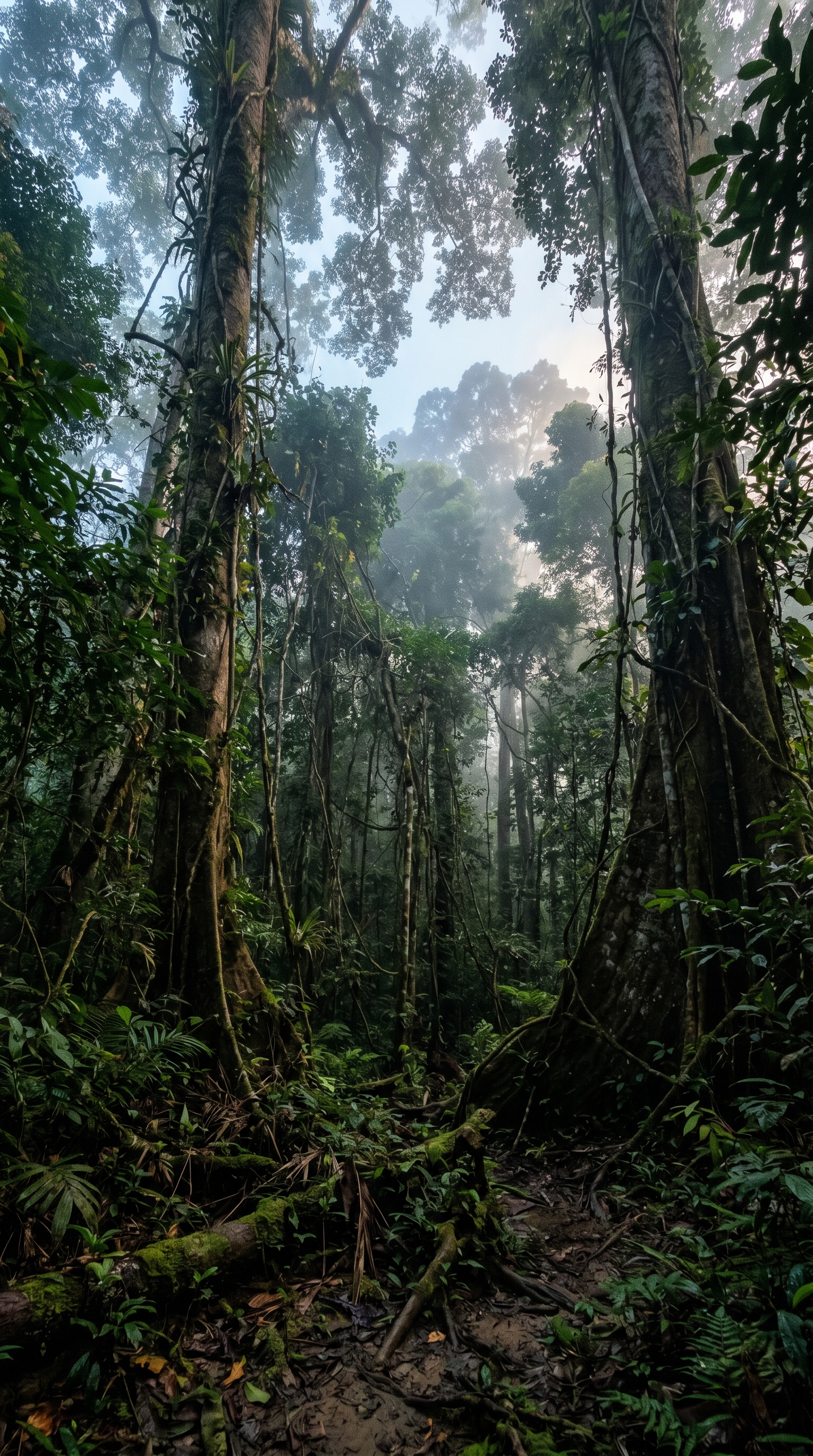
Gunung Leuser National Park, Indonesia at ground level — Pongo abelii is listed as Critically Endangered. -
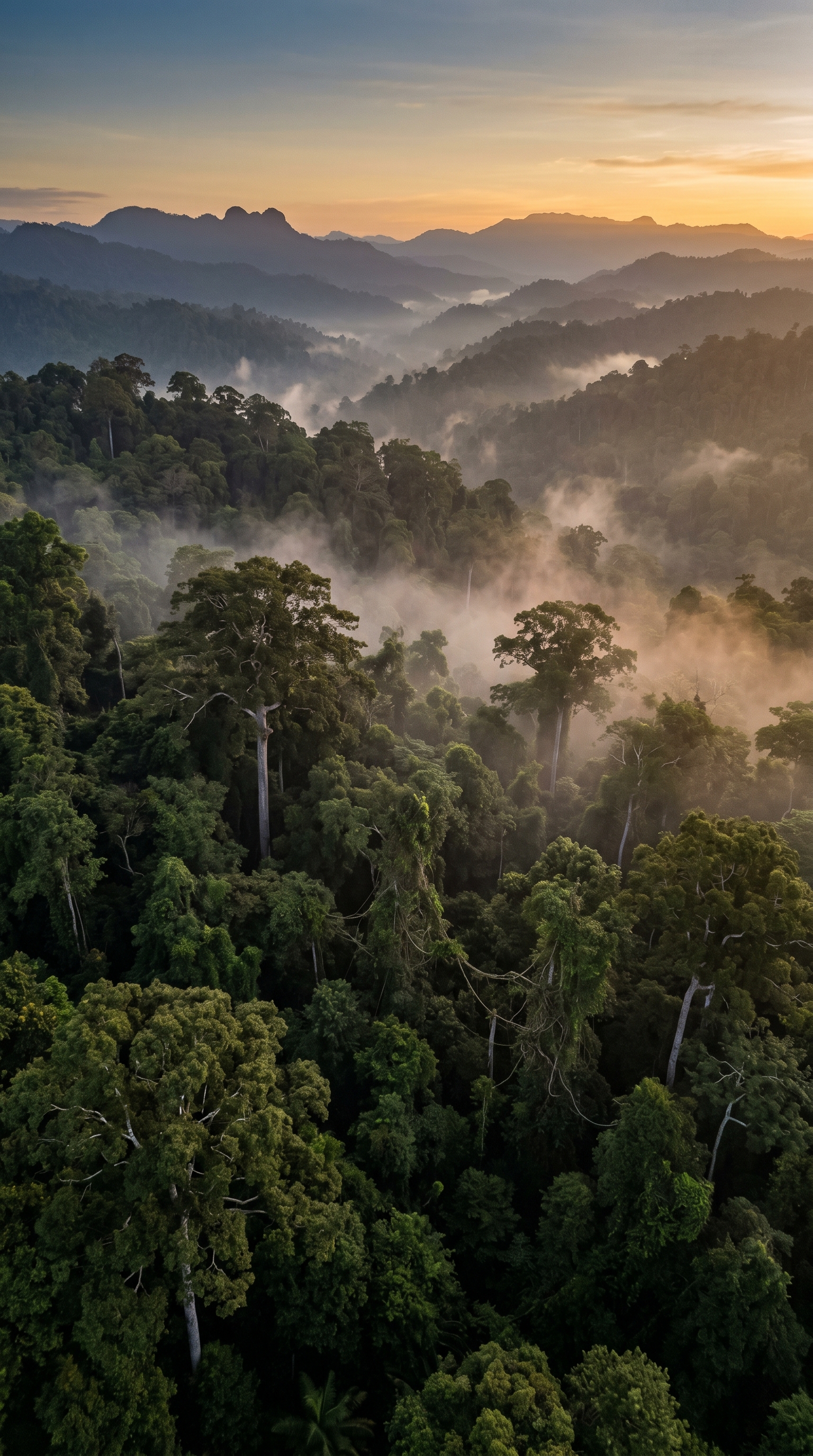
Gunung Leuser National Park, Indonesia seen from above — Pongo abelii is listed as Critically Endangered. -
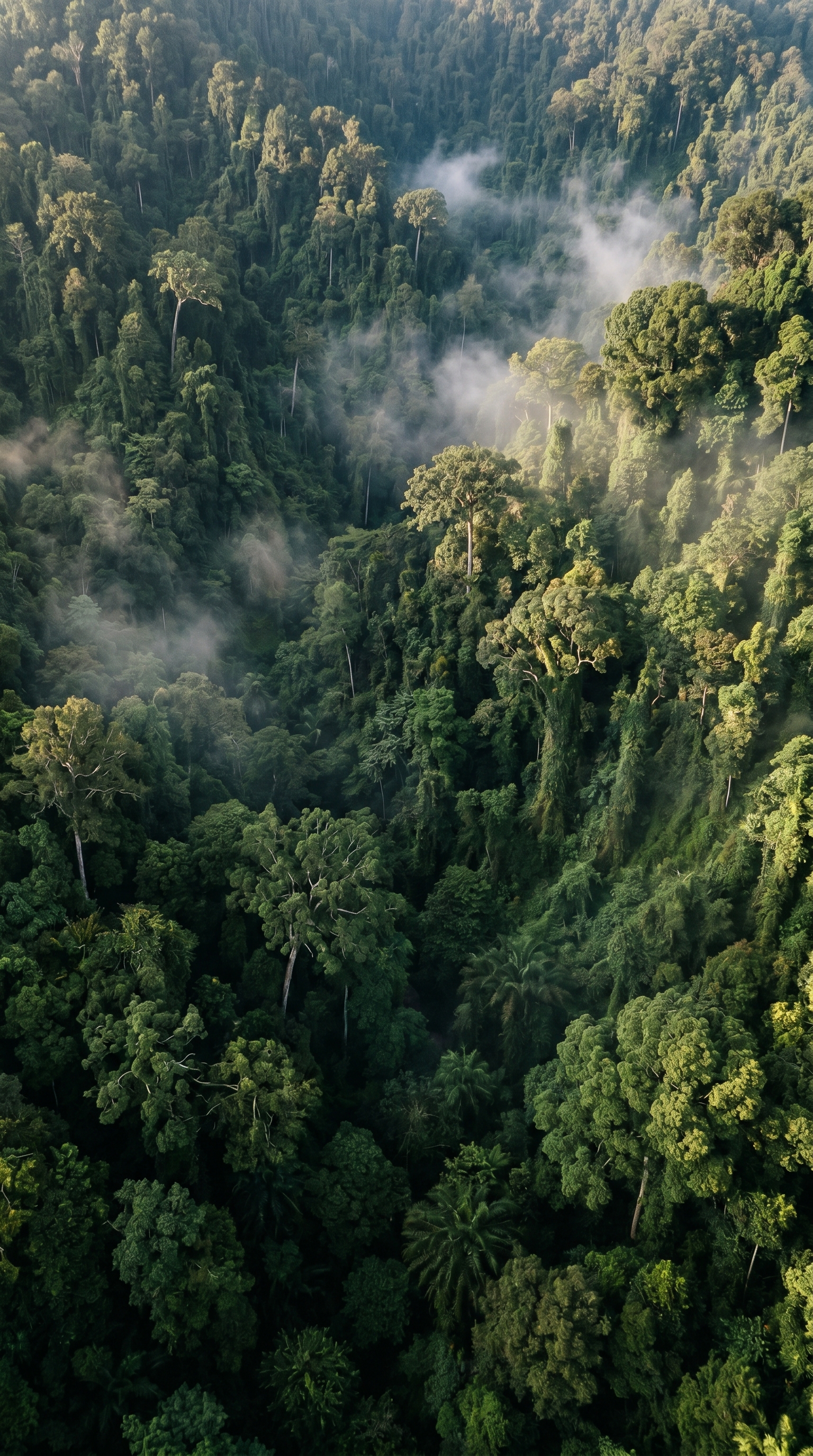
Gunung Leuser National Park, Indonesia from high overhead — Pongo abelii is listed as Critically Endangered.
Native range
Sumatran orangutans are endemic to northern Sumatra, Indonesia — a dramatic range contraction from a Pleistocene distribution that once spanned much more of the island and extended into Java. Today the Leuser Ecosystem and neighbouring forests in Aceh and North Sumatra hold the species' great stronghold. The species occupies lowland rainforest, peat-swamp forest, river forest, and mountain forest up to about 1,500 m. Wich et al. (2016) estimated about 14,613 individuals from 2015 transect surveys, but the species remains Critically Endangered because forest loss, fragmentation, fire, hunting, and conflict continue to reduce viable habitat.…
The range
Five regions, one species.
The sumatran orangutan doesn't live in one place. Across the map below, each region has its own pressures, prey, and politics — same biology, different worlds.
-
Indonesia
Gunung Leuser National Park
Primary stronghold of the species. Part of the Leuser Ecosystem UNESCO World Heritage Site; spans Aceh and North Sumatra provinces. Rimba's home territory (Group F3).
Source ↗ -
Indonesia
Bukit Tigapuluh National Park
Jambi / Riau province — home to a re-introduced population established by the Frankfurt Zoological Society and partners; an important ex-situ conservation anchor.
Source ↗ -
Indonesia
Batang Gadis National Park
North Sumatra province; small remnant population on the southern edge of the species' northern range.
Source ↗ -
Indonesia
Sikundur Research Station
Long-term orangutan research site on the northern edge of Gunung Leuser NP; key site for behavioural, dietary, and tool-use studies.
Source ↗ -
Indonesia
Bukit Barisan Selatan National Park
Southern Sumatra. Historical range only — no confirmed extant P. abelii population here; the park now lies well south of the current species range (modern range is restricted to northern Sumatra, primarily Aceh).
Source ↗
Daily life
What the sumatran orangutan does, day to day.
Diet, social behaviour, climate — the everyday biology that shapes how this species hunts, defends and survives.
-
Diet
Mostly fruit, especially figs and other seasonal rainforest fruits, with young leaves, flowers, bark, insects, and occasional eggs adding variety when fruit drops.
-
Social life
Semi-solitary. Adult males and females use overlapping home ranges but usually travel alone outside temporary associations and fruiting-tree gatherings.
-
Climate
Equatorial tropical rainforest. Humid year-round (~80–90% RH), mean temperatures 20–32 °C, heavy annual rainfall (2,000–3,500 mm).
Wyld Trivia
Five questions. Most people get them wrong.
But you're not most people.
Tap to reveal.
-
How long does a young orangutan stay with its mum?
Show me HideFor many years. Young Sumatran orangutans have one of the slowest childhoods in the animal world, which gives them time to learn food, nest-building, safe routes, and, in some forests, tool skills by watching older orangutans.
-
Why do some adult male orangutans have huge cheek pads and others don't?
Show me HideAdult male orangutans can follow two routes. Some become flanged, with cheek pads, a big throat sac, and long calls. Others stay unflanged for years while still being adults. That flexible timing is one of the strangest things about orangutan males.
-
How much of an orangutan's life is spent in the trees?
Show me HideAlmost all of it. Sumatran orangutans live among rainforest branches, feed in trees, sleep in tree nests, and usually travel through the canopy. Females virtually never go to the ground, and adult males only do so rarely.
-
Did scientists really discover a new species of orangutan in 2017?
Show me HideYes. A team led by Alexander Nater described a third orangutan species — the Tapanuli orangutan — in southern Sumatra. Genetic analysis of 37 orangutan genomes revealed it had been a separate lineage for over 3 million years. With fewer than 800 left, it became one of the most endangered great apes on Earth from the moment it was named.
-
How many Sumatran orangutans are left in the wild?
Show me HideAbout 14,600 were estimated from 2015 surveys, but that does not mean they are safe. Sumatran orangutans are still Critically Endangered because their forests are being broken up and cleared.
The terrain
Where the sumatran orangutan thrives.
Every animal is built for some places more than others. These are the ground, hours and weather where this species shows its best — and its worst.
Ground
- Rainforest canopy Excels
- Peat swamp forest Excels
- Lowland forest Strong
- Riparian forest Strong
- Secondary forest Average
- Mountain slope Struggles
- Open ground Avoids
Hours
- Day Excels
- Dawn Strong
- Dusk Strong
- Twilight Average
- Night Avoids
Weather
- Moderate Excels
- Rain Excels
- Hot Strong
- Wind Average
- Storm Struggles
- Cold Avoids

Five things you didn't know about the sumatran orangutan.
Cited biology that shapes how the sumatran orangutan feeds, defends, survives.
-
Pongo abelii is listed as Critically Endangered. Wich et al. (2016) estimated about 14,613 Sumatran orangutans from 2015 transect surveys, while warning that land-cover change still predicts steep future declines. Source ↗
-
In 2017, a team led by Alexander Nater (Current Biology, Cell Press) described a third orangutan species — Pongo tapanuliensis, the Tapanuli orangutan of the Batang Toru forest — after genomic and morphological analysis of 37 orangutan genomes. The study showed the deepest split in extant Pongo lineage occurred ~3.38 Mya between the Batang Toru population and the northern Sumatran population, while Sumatran (P. abelii) and Bornean (P. pygmaeus) orangutans diverged only ~674,000 years ago. Source ↗
-
Young Sumatran orangutans stay close to their mothers for many years. Wich et al. (2004) describe a long juvenile period in wild Sumatran orangutans, giving youngsters time to learn food, routes, nest-building, and social behaviour. Source ↗
-
Adult male Sumatran orangutans exhibit bimaturism. Some males become flanged, with cheek pads, enlarged throat sacs and long calls; other adult males can remain unflanged for years while still being reproductively active. Source ↗
-
Sumatran orangutans are almost exclusively arboreal. Females virtually never travel on the ground, and adult males do so rarely, so canopy access is central to how the species feeds, sleeps and moves. Source ↗
About the sumatran orangutan
Where the sumatran orangutan sits on the tree of life.
-
Class
Mammalia
Warm-blooded animals with fur or hair that feed their young milk.
-
Order
Primates
The mammals with grasping hands and big brains — apes, monkeys, lemurs.
-
Family
Hominidae
The great apes — gorillas, orangutans, chimps and humans.
-
Species
Pongo abelii
Sumatran Orangutan — the species this page is about.


Sumatran Orangutan
Every fact, cited.
Biology cited on this page comes from peer-reviewed zoology and the major species databases. Click through for the underlying study, dataset or assessment.
- doi.org · doi.org
- sciencedirect.com · sciencedirect.com
- doi.org · doi.org
- doi.org · doi.org
- WWF · WWF


