
Rocky Mountain Goat
Scientific name Oreamnos americanus
Adult size
- Weight
- ♀F 65 kg ♂M 100 kg
- Length
- ♀F 1.4 m ♂M 1.5 m
- Shoulder height
- ♀F 0.92 m ♂M 1 m
- Top speed bound
- ♂M 25 km/h
- Lifespan
- Horn rings can show a mountain goat's age; a 12-year-old billy is an older adult.
Represented by Nimbus Glacier National Park (Montana), United States

Rocky Mountain goats live in the steep mountains of north-western North America. Their native range runs through south-east Alaska, Yukon, British Columbia, Alberta, Washington, Idaho, and Montana, with introduced populations farther south in places such as Colorado, Utah, Nevada, Oregon, South Dakota, and Wyoming. British Columbia holds roughly half the world's mountain goats.
Where they live
Three angles, one home.
The rocky mountain goat represented in the Wyld Savage League lives in Glacier National Park (Montana), United States. Three views of the same patch of country — at ground level, from above, and bird's-eye.
-
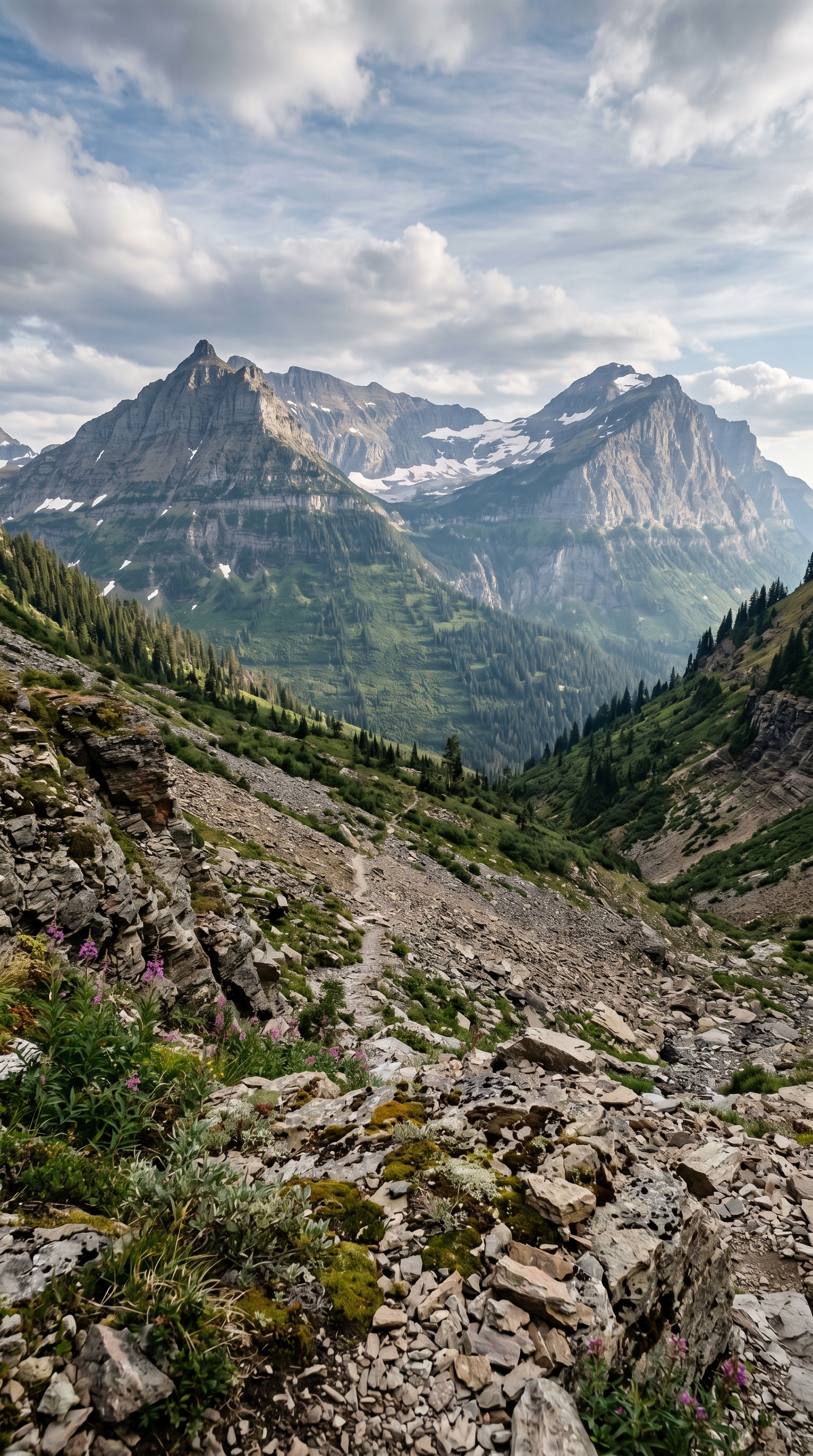
Glacier National Park (Montana), United States at ground level — Despite the name, the Rocky Mountain Goat is not a true goat. -
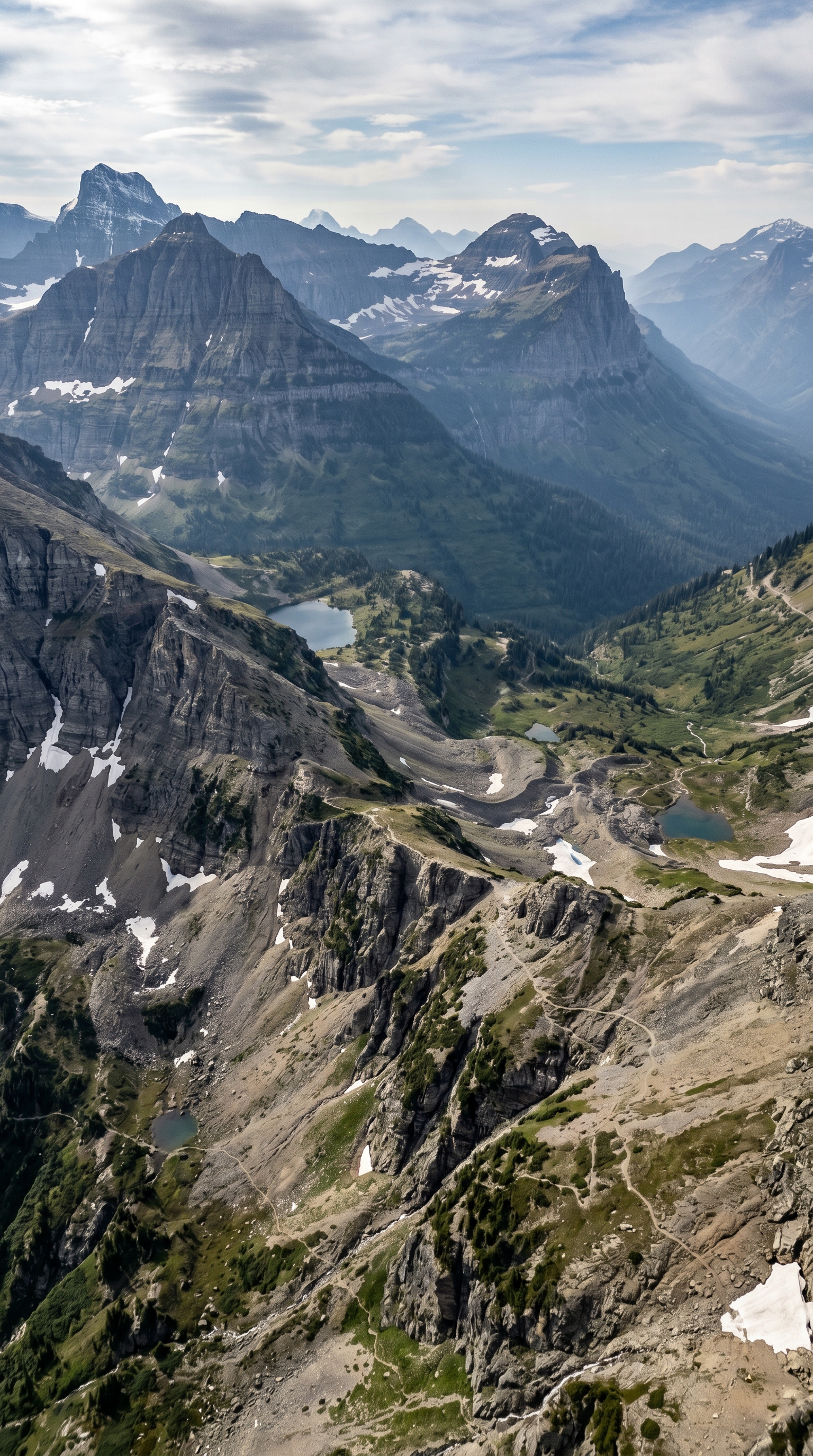
Glacier National Park (Montana), United States seen from above — Despite the name, the Rocky Mountain Goat is not a true goat. -
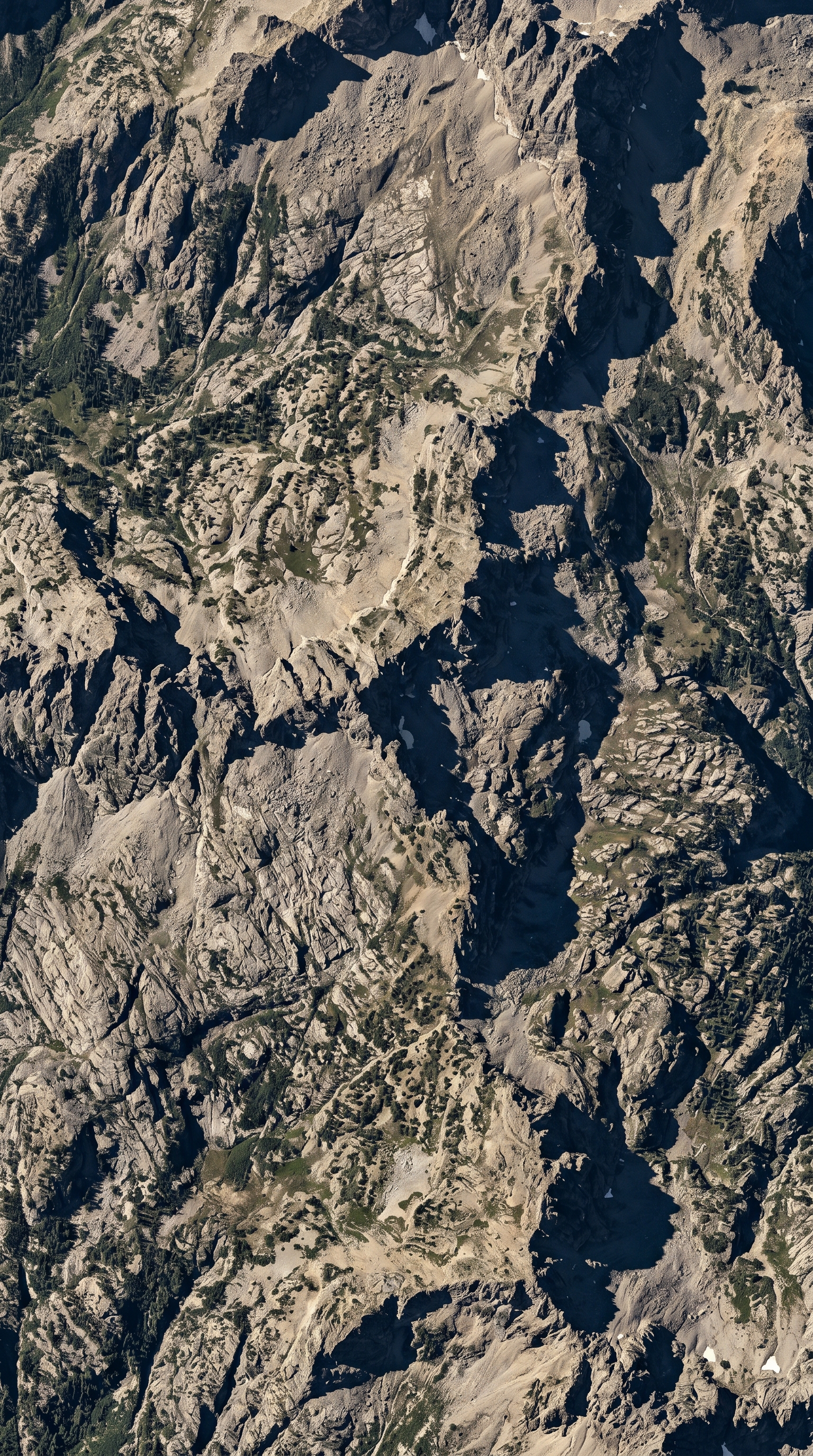
Glacier National Park (Montana), United States from high overhead — Despite the name, the Rocky Mountain Goat is not a true goat.
Native range
Rocky Mountain goats live in the steep mountains of north-western North America. Their native range runs through south-east Alaska, Yukon, British Columbia, Alberta, Washington, Idaho, and Montana, with introduced populations farther south in places such as Colorado, Utah, Nevada, Oregon, South Dakota, and Wyoming. British Columbia holds roughly half the world's mountain goats.
The range
Six regions, one species.
The rocky mountain goat doesn't live in one place. Across the map below, each region has its own pressures, prey, and politics — same biology, different worlds.
-
United States
Glacier National Park (Montana)
Nimbus's home territory. NPS identifies Glacier's goats as native to the landscape and one of the largest lower-48 populations; use species-level Oreamnos americanus rather than the historical missoulae label.
Source ↗ -
United States
Rocky Mountain National Park (Colorado)
Colorado population is introduced — goats colonised the park from state-managed reintroductions in adjacent ranges during the twentieth century.
Source ↗ -
United States
Denali National Park and Preserve (Alaska)
Northern native population at the cold extreme of the species' climatic range.
Source ↗ -
United States
Olympic National Park (Washington)
Olympic Peninsula goats were introduced in the 1920s and became controversial due to ecological impact on endemic alpine flora; a multi-agency removal/relocation programme ran 2018–2020. Not a native population.
Source ↗ -
Canada
Jasper National Park (Alberta)
Canadian Rockies native population; Jasper's high-elevation cliffs and alpine meadows are textbook Oreamnos habitat.
Source ↗ -
Canada
British Columbia (provincial range)
British Columbia holds approximately half of the global population of the species across its coastal and interior mountain ranges.
Source ↗
Daily life
What the rocky mountain goat does, day to day.
Diet, social behaviour, climate — the everyday biology that shapes how this species hunts, defends and survives.
-
Diet
Generalist alpine herbivore. Consumes grasses, sedges, forbs, ferns, mosses, lichens, herbaceous plants, woody browse, conifer needles, bark and stems (functions as both folivore and lignivore).
-
Social life
Female-led bands (nannies + kids + yearlings, typically 4–12 animals) form the core social unit; adult billies are largely solitary outside the November–December rut.
-
Climate
Cold alpine and subalpine specialist. Occupies steep, rocky terrain from low-elevation coastal cliffs in northern populations to high alpine meadows and ridges; in the northern Rockies, mountain goats are tied to cliffs, talus, krummholz, snow patches, and nearby meadows.
Wyld Trivia
Five questions. Most people get them wrong.
But you're not most people.
Tap to reveal.
-
What's actually inside a mountain goat's hoof that lets it walk up cliffs?
Show me HideA mountain goat is not a race animal. It is a careful cliff animal. Its short powerful body, strong forequarters, split hooves, and soft inner hoof pads help it place each step on steep rock.
-
How do two rival mountain goats compete?
Show me HideThey use threats, shoves, and horn jabs. Full clashes are risky, so good billies often try to win with posture and pressure before a real clash starts.
-
How high up the mountain can a mountain goat live?
Show me HideIn Glacier National Park they live in high, cool, rocky terrain. They can use cliffs, talus, alpine meadows, krummholz, mineral licks, and even summer snow patches when heat rises.
-
In a mountain goat herd, who's actually in charge?
Show me HideOften the nannies. Female groups have strong rank systems, and young goats learn routes, feeding places, and safe cliff paths from older females. Adult males are more often alone or with other males outside the rut.
-
Why isn't a mountain goat actually a goat?
Show me HideIt looks like one and climbs like one, but the Rocky Mountain Goat is the only species in its whole genus — and its closest cousins are the chamois, the takin, and the serow, not regular farm-yard goats. It's the lone climber on its own branch of the family tree.
The terrain
Where the rocky mountain goat thrives.
Every animal is built for some places more than others. These are the ground, hours and weather where this species shows its best — and its worst.
Ground
- Steep cliff Excels
- Alpine Excels
- Rocky terrain Excels
- Mountain slope Strong
- Tundra Average
- Forest Struggles
- Lowland Avoids
Hours
- Dawn Excels
- Dusk Excels
- Twilight Excels
- Day Strong
- Night Average
Weather
- Cold Excels
- Moderate Strong
- Wind Strong
- Rain Average
- Storm Struggles
- Hot Avoids

Five things you didn't know about the rocky mountain goat.
Cited biology that shapes how the rocky mountain goat feeds, defends, survives.
-
Despite the name, the Rocky Mountain Goat is not a true goat. It sits in the subfamily Caprinae alongside goats, sheep, chamois, takin and serow, but is the sole living species in the genus Oreamnos — more closely related to the chamois, takin and serow than to any Capra goat. Source ↗
-
Glacier National Park goats use very steep refuge terrain when danger appears. In one Glacier study, goats exposed to a grizzly-like threat moved toward terrain close to slopes over 60 degrees, so the safe fact is steep escape terrain — not an exact speed or leap number. Source ↗
-
Both sexes carry pure black horns about 200-300 mm long. The horns are not shed, and annual growth rings help researchers estimate a goat's age. Source ↗
-
Natural salt licks matter to mountain goats. Classic and GPS-collar studies show goats travelling to mineral licks even though leaving perfect cliff safety can add travel cost and predator risk. Source ↗
-
Oreamnos americanus is listed as Least Concern on the IUCN Red List. The species is distributed across the mountainous regions of northwestern North America, with the core native range spanning Alaska, Yukon, British Columbia, Alberta, Washington, Idaho and Montana; introduced populations exist further south and east. Source ↗
About the rocky mountain goat
Where the rocky mountain goat sits on the tree of life.
-
Class
Mammalia
Warm-blooded animals with fur or hair that feed their young milk.
-
Order
Artiodactyla
Hoofed mammals with an even number of toes — pigs, deer, cattle.
-
Family
Bovidae
A family of related species — Bovidae.
-
Species
Oreamnos americanus
Rocky Mountain Goat — the species this page is about.


Rocky Mountain Goat
Every fact, cited.
Biology cited on this page comes from peer-reviewed zoology and the major species databases. Click through for the underlying study, dataset or assessment.
- Animal Diversity Web · Animal Diversity Web
- doi.org · doi.org
- Animal Diversity Web · Animal Diversity Web
- doi.org · doi.org
- IUCN Red List · IUCN Red List


