
African Leopard
Scientific name Panthera pardus pardus
Adult size
- Weight
- ♀F 40 kg ♂M 60 kg
- Length
- ♀F 1.2 m ♂M 1.3 m
- Shoulder height
- ♀F 0.6 m ♂M 0.65 m
- Top speed sprint
- ♂M 41 km/h
- Lifespan
- African Leopards usually live about 10-12 years in the wild; captive leopards can reach 21-23 years, with rare records to 27.
Represented by Kivuli Queen Elizabeth National Park, Uganda

African leopards still range across much of sub-Saharan Africa, from Congo Basin rainforest to East African savanna, the Okavango Delta, Kruger, the Kalahari edge, and mountain forests. They are the big cat that can make almost any cover work: riverine thickets, rocky kopjes, wet forest, dry woodland, and even the edges of farms, as long as there is prey, cover, and a tree or rock ledge for caching a kill.
Where they live
Three angles, one home.
The african leopard represented in the Wyld Savage League lives in Queen Elizabeth National Park, Uganda. Three views of the same patch of country — at ground level, from above, and bird's-eye.
-
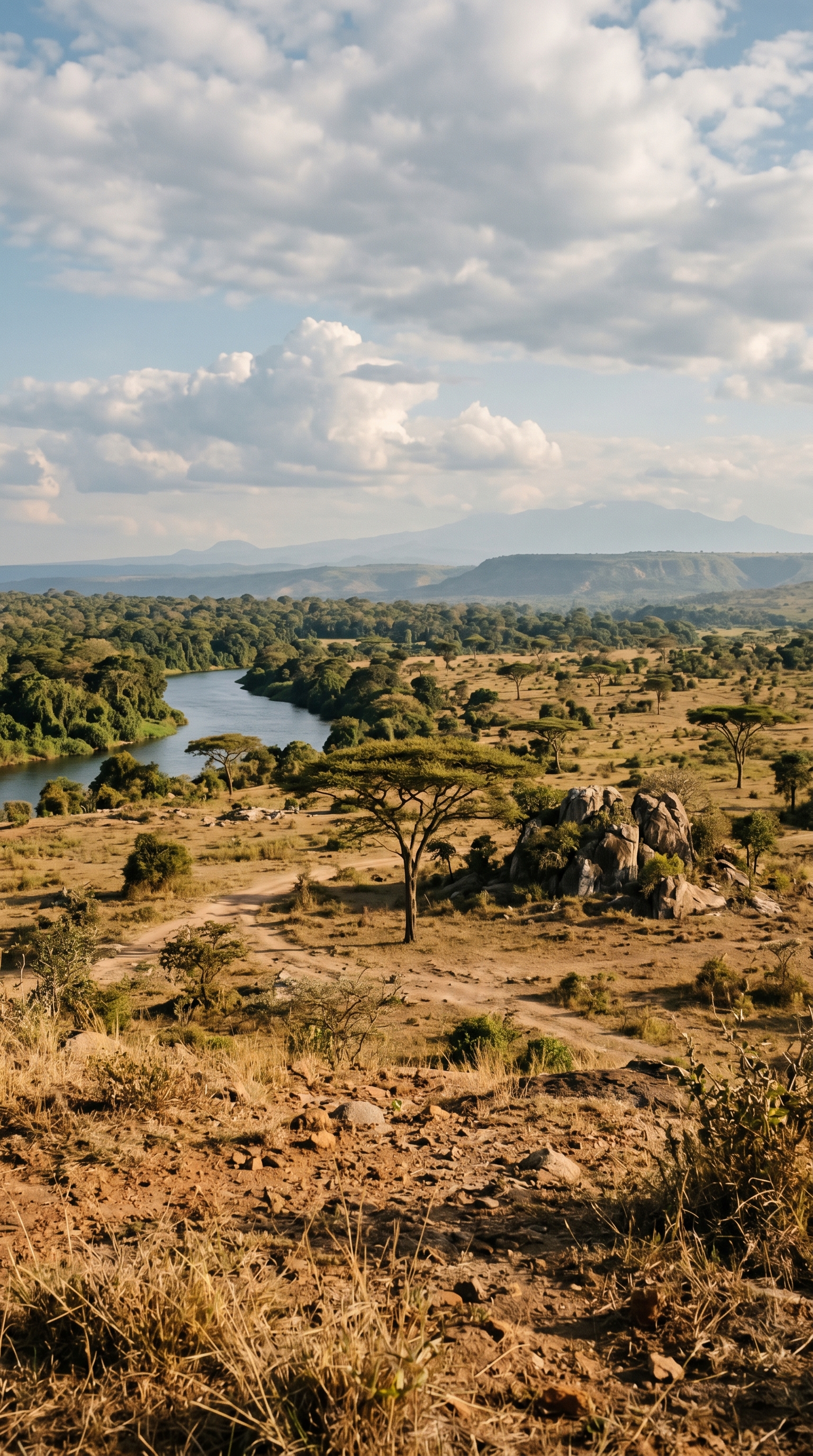
Queen Elizabeth National Park, Uganda at ground level — Leopards often drag or hoist kills into trees or sheltered places. -
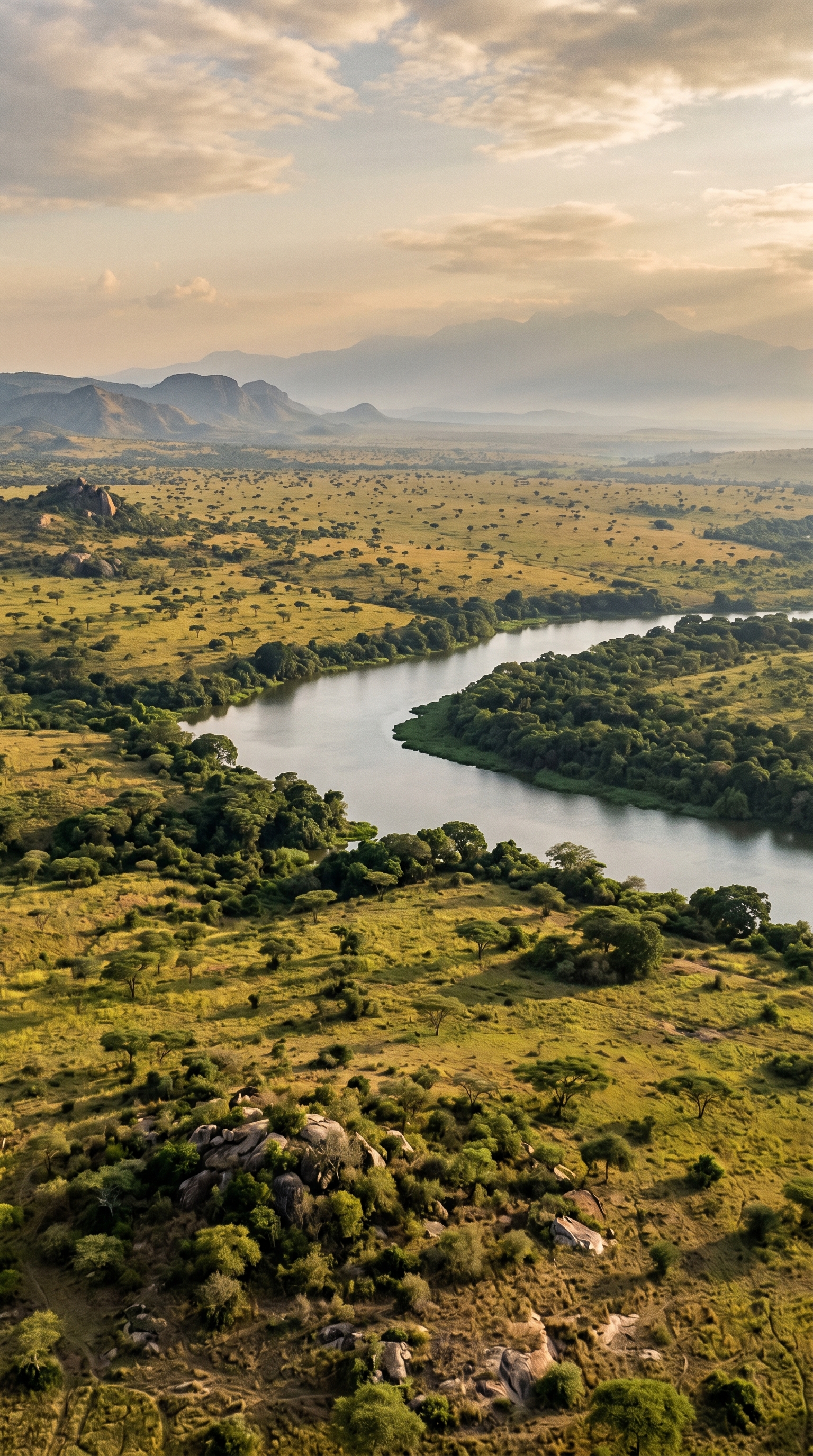
Queen Elizabeth National Park, Uganda seen from above — Leopards often drag or hoist kills into trees or sheltered places. -
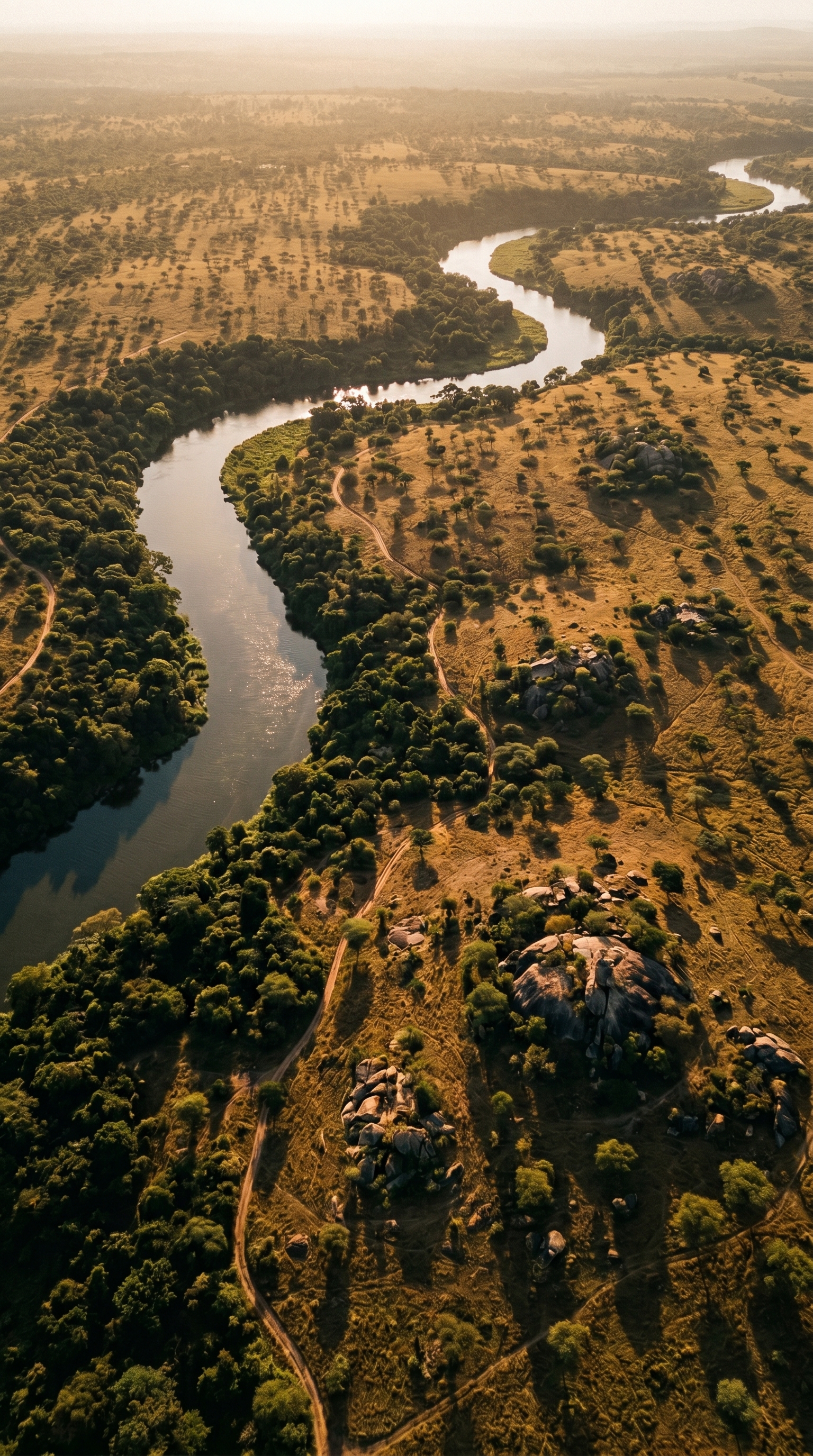
Queen Elizabeth National Park, Uganda from high overhead — Leopards often drag or hoist kills into trees or sheltered places.
Native range
African leopards still range across much of sub-Saharan Africa, from Congo Basin rainforest to East African savanna, the Okavango Delta, Kruger, the Kalahari edge, and mountain forests. They are the big cat that can make almost any cover work: riverine thickets, rocky kopjes, wet forest, dry woodland, and even the edges of farms, as long as there is prey, cover, and a tree or rock ledge for caching a kill.
The range
Six regions, one species.
The african leopard doesn't live in one place. Across the map below, each region has its own pressures, prey, and politics — same biology, different worlds.
-
Uganda
Queen Elizabeth National Park
Kivuli's home territory. Braczkowski et al. 2022 estimated African leopard density and abundance in the northern Mweya/Kasenyi plains area and southern Ishasha sector of the Queen Elizabeth Conservation Area.
Source ↗ -
Uganda
Bwindi Impenetrable Forest
Within African leopard range and sympatric with giant forest hog (Hylochoerus meinertzhageni, Boma's home), but current launch canon should not present adult giant forest hog predation as a normal leopard prey claim.
Source ↗ -
Tanzania
Serengeti National Park
Stable, well-studied population. Wet-season density ~5.72/100 km²; dry-season ~5.41/100 km².
Source ↗ -
South Africa
Kruger National Park
Flagship Southern African population. Entire park 9–16 leopards/100 km² (males 2–4/100 km², females 7–12/100 km² — indicating successful breeding). Northern/north-western regions densest.
Source ↗ -
Botswana
Okavango Delta
Regional stronghold. 15,000 km² wetland-woodland mosaic. Sympatric with the African rock python and Echo (African wild dog) in the same Delta range.
Source ↗ -
Congo Basin
Dzanga-Sangha / Nouabalé-Ndoki
Central African rainforest refugium. Coastal West-Central African mitochondrial lineage; use this as range/ecology context, not as a claim that adult giant forest hogs or other very large animals are normal leopard prey.
Source ↗
Daily life
What the african leopard does, day to day.
Diet, social behaviour, climate — the everyday biology that shapes how this species hunts, defends and survives.
-
Diet
Obligate carnivore and ecological generalist. >100 prey species documented — primary prey medium-sized ungulates (impala, bushbuck, duiker; ~10–40 kg sweet spot around 25 kg).
-
Social life
Solitary. Sexually dimorphic; males significantly larger than females.
-
Climate
Ecological generalist of exceptional breadth — widest habitat range of any big cat.
Wyld Trivia
Five questions. Most people get them wrong.
But you're not most people.
Tap to reveal.
-
Why does a leopard drag dead animals up into trees?
Show me HideTo stop them being stolen. In places with hyenas and other hungry neighbours, a kill left on the ground can disappear fast. A leopard may drag or hoist its food into a tree, where it can feed for longer and lose fewer meals.
-
Which big cat lives in the most different places on Earth?
Show me HideThe leopard. Same species, same subspecies in Africa, but it lives in deserts, dense rainforest, mountain forests up to 5,700 metres on Kilimanjaro, and even on the edges of cities. Its menu has more than 100 different prey species. No other big cat is as flexible.
-
How does a leopard get close enough to its prey to strike?
Show me HideLeopards stalk in the dark. They use cover, rosette-pattern fur, and silent movement to get close, then make a short rush. They're ambush hunters, not distance chasers.
-
What's happened to leopards in West Africa?
Show me HideThey've nearly disappeared. The leopard's African range has shrunk by half over 300 years. In West Africa specifically, 95% of leopard habitat is gone — only about 354 adult leopards are left in the entire region. East and Southern Africa are now the species' last big strongholds.
-
How big is a leopard, and how big is the prey it can take?
Show me HideAn African leopard male often weighs far less than a lion or tiger. Its best prey is usually medium-sized — animals it can kill quickly, drag into cover, and sometimes cache away from scavengers.
The terrain
Where the african leopard thrives.
Every animal is built for some places more than others. These are the ground, hours and weather where this species shows its best — and its worst.
Ground
- Dense forest canopy Excels
- Rocky outcrops with cover Excels
- Riparian cover Strong
- Savanna woodland Strong
- Open grassland Struggles
- Open desert Avoids
Hours
- Night Excels
- Twilight Excels
- Dawn Strong
- Dusk Strong
- Day Avoids
Weather
- Moderate Excels
- Rain Strong
- Cold Average
- Hot Average
- Wind Average
- Storm Struggles

Five things you didn't know about the african leopard.
Cited biology that shapes how the african leopard feeds, defends, survives.
-
Leopards often drag or hoist kills into trees or sheltered places. Peer-reviewed research shows this caching can reduce food theft, especially from spotted hyenas, and helps explain why leopards can keep feeding beside larger scavengers and predators. Source ↗
-
IUCN Vulnerable globally, with declining trend. African range has contracted 48–67% from the historical footprint over ~300 years. West Africa has experienced catastrophic 95% range loss with only ~354 mature individuals remaining (Endangered regional status, 2024 reassessment). East and Southern Africa remain strongholds; sub-Saharan Africa is the species' last major refuge. Source ↗
-
Ecological breadth is the widest of any big cat. A single subspecies — P. p. pardus — occupies desert-edge (Kalahari), wet rainforest (Congo Basin), montane forest (Kilimanjaro to 5,700 m), riparian corridors, and increasingly urban-peripheral farmland. Dietary flexibility (>100 prey species) and solitary hunting style (no herd-following specialisation) underpin this versatility. Phenotype varies — grayer fur in cold climates, darker gold in rainforests. Source ↗
-
Hunting is stalk-ambush-burst: nocturnal/crepuscular movement, dense cover, rosette camouflage, and silent approach followed by a short rush. Smaller prey may be killed with a bite to the back of the neck or skull; larger prey are usually taken with a throat bite. Leopards are concealment predators, not long-distance pursuit predators. Source ↗
-
Leopards usually favour medium-sized prey, often around 10–40 kg. Very large or dangerous animals may appear in diet records or rare observations, but they should be described as exceptional context rather than normal leopard targets. Source ↗
About the african leopard
Where the african leopard sits on the tree of life.
-
Class
Mammalia
Warm-blooded animals with fur or hair that feed their young milk.
-
Order
Carnivora
Mostly meat-eating mammals — cats, dogs, bears and their relatives.
-
Family
Felidae
The cat family — solitary hunters with retractable claws.
-
Species
Panthera pardus pardus
African Leopard — the species this page is about.


African Leopard
Every fact, cited.
Biology cited on this page comes from peer-reviewed zoology and the major species databases. Click through for the underlying study, dataset or assessment.
- Wiley · Wiley
- panthera.org · panthera.org
- sciencedirect.com · sciencedirect.com
- Animal Diversity Web · Animal Diversity Web
- doi.org · doi.org


