
Bengal Tiger
Scientific name Panthera tigris tigris
Adult size
- Weight
- ♀F 140 kg ♂M 221 kg
- Length
- ♀F 2.75 m ♂M 3 m
- Shoulder height
- ♀F 1 m ♂M 0.91-1.25 m
- Top speed sprint
- ♂M 56 km/h
- Lifespan
- Typical wild lifespan is around 8-10 years, while captive lifespan is often around 16-18 years, with captive records up to 26 years.
Represented by Tejas Jigme Dorji National Park, Bhutan

Bengal tigers are the Indian-subcontinent population of the continental tiger. They live across India, Bangladesh, Nepal, and Bhutan, with small edges into western Myanmar and Himalayan foothills. Their habitats stretch from hot lowland forest and tall grass jungle to the Sundarbans - the huge mangrove forest shared by India and Bangladesh - and, in Bhutan, cold mountain forest where tigers have been recorded above 4,000 metres.
Where they live
Three angles, one home.
The bengal tiger represented in the Wyld Savage League lives in Jigme Dorji National Park, Bhutan. Three views of the same patch of country — at ground level, from above, and bird's-eye.
-
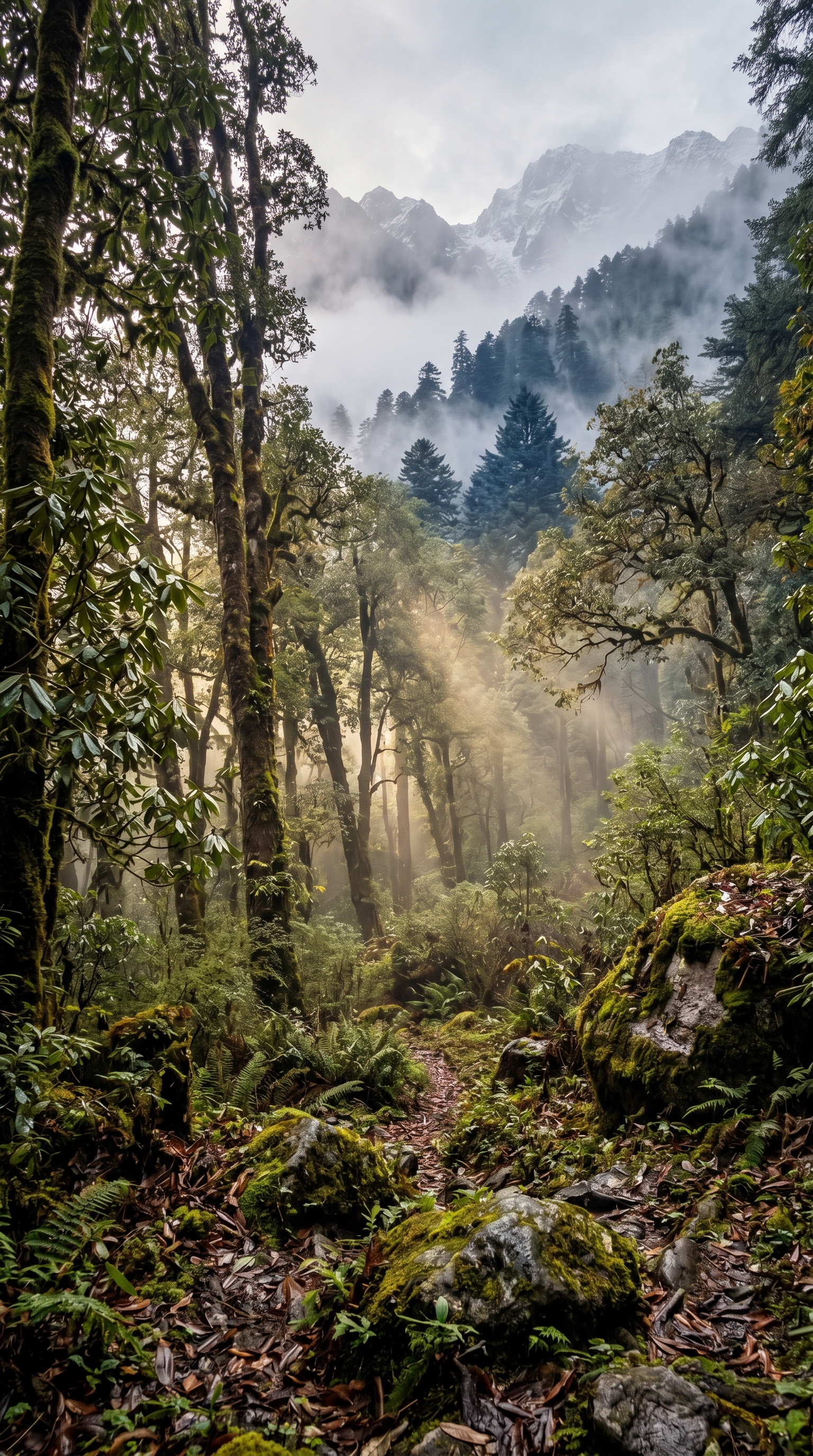
Bhutanese alpine forest at ground level — bamboo and rhododendron understory where the world's highest-living tigers patrol. -
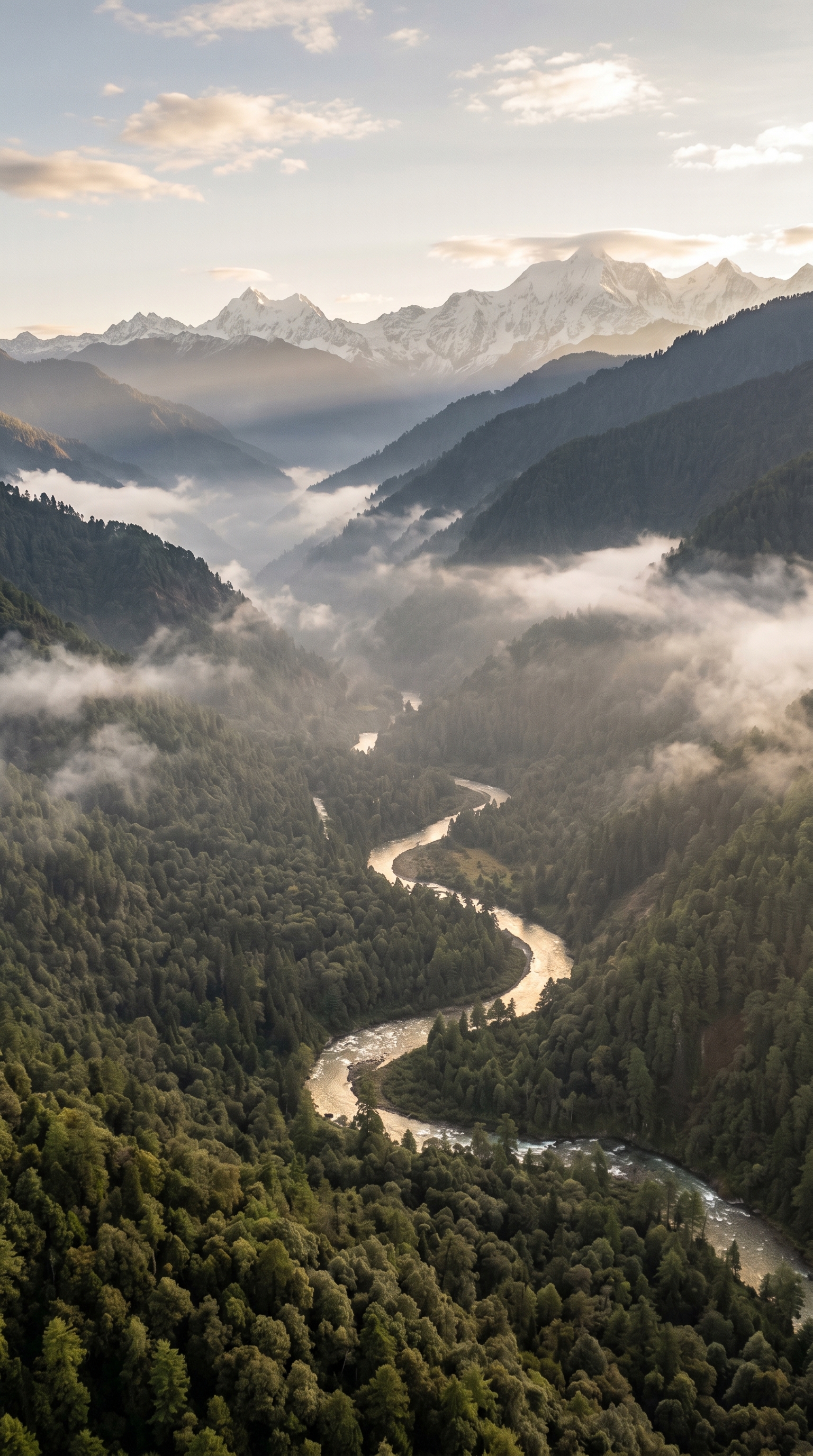
The Himalayan foothills from above — Jigme Dorji's vertical forests where Bengal tigers climb to 4,000 metres. -
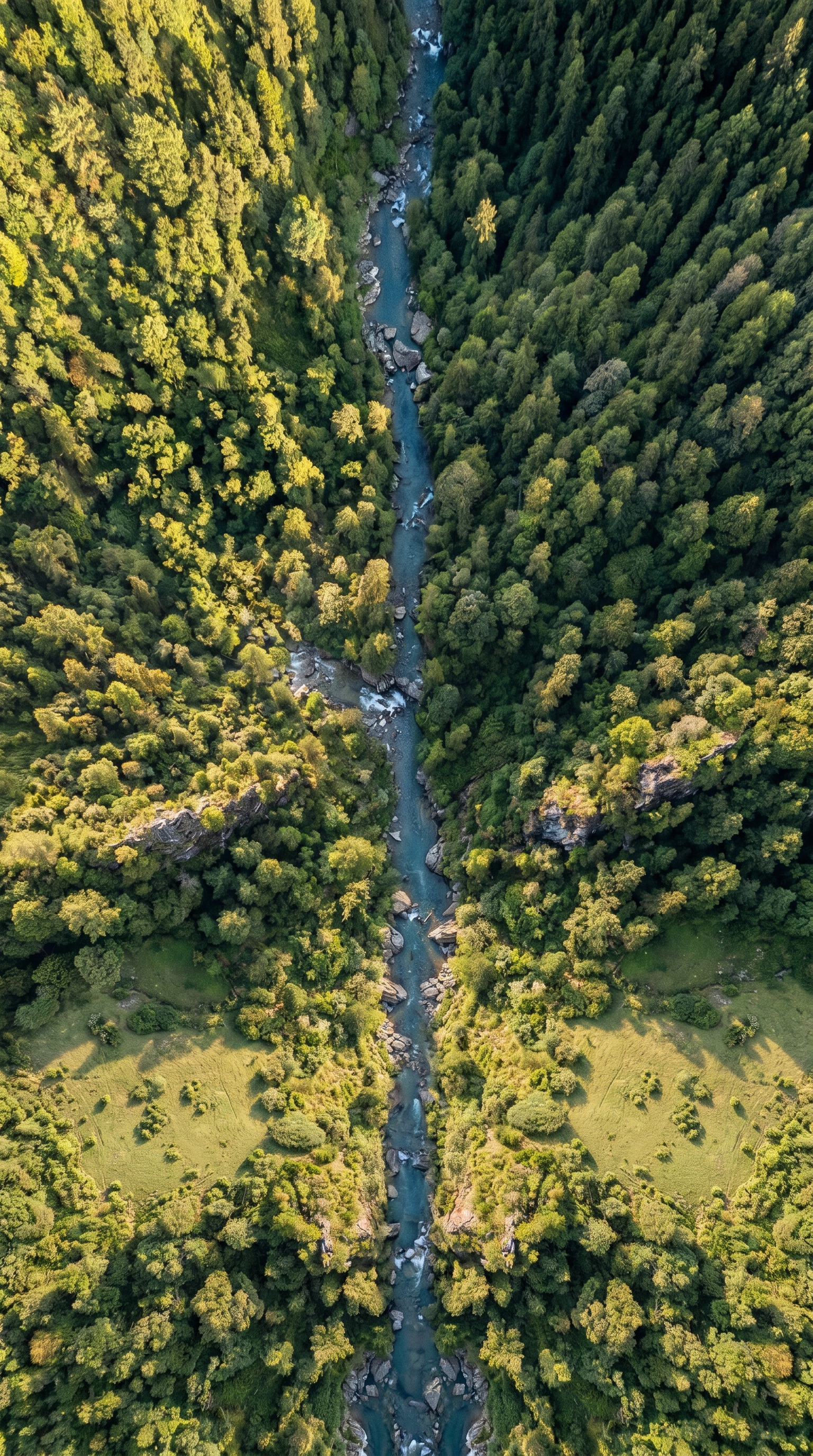
Tiger country from high overhead — the eastern Himalayas, where India, Nepal and Bhutan meet.
Native range
Bengal tigers are the Indian-subcontinent population of the continental tiger. They live across India, Bangladesh, Nepal, and Bhutan, with small edges into western Myanmar and Himalayan foothills. Their habitats stretch from hot lowland forest and tall grass jungle to the Sundarbans - the huge mangrove forest shared by India and Bangladesh - and, in Bhutan, cold mountain forest where tigers have been recorded above 4,000 metres.
The range
Five regions, one species.
The bengal tiger doesn't live in one place. Across the map below, each region has its own pressures, prey, and politics — same biology, different worlds.
-
India
Sundarbans
Stronghold of the Indian population; unique mangrove-adapted behaviour.
Source ↗ -
Bhutan
Jigme Dorji National Park
Tejas's home territory. A 2023 camera-trap study identifies Jigme Dorji as an important tiger conservation area, with tiger records across a 1,200-4,300 m survey gradient.
Source ↗ -
Bhutan
Royal Manas National Park
Source ↗ -
Nepal
Chitwan National Park
Source ↗ -
India
Jim Corbett National Park
Source ↗
Daily life
What the bengal tiger does, day to day.
Diet, social behaviour, climate — the everyday biology that shapes how this species hunts, defends and survives.
-
Diet
Obligate carnivore. Primary prey varies by landscape and includes large ungulates such as sambar, chital, hog deer, barking deer, wild pig, and other regionally available prey.
-
Social life
Solitary. Only long-term social bond is mother–offspring. Adult males and females interact briefly for mating.
-
Climate
Tropical to subtropical and montane. Tigers in Bhutan use lowland forest, temperate forest, and high mountain routes; direct Jigme Dorji records reach 4,010 m and Bhutan literature reports tiger records up to about 4,400 m.
Wyld Trivia
Five questions. Most people get them wrong.
But you're not most people.
Tap to reveal.
-
Why is a tiger dangerous from 30 metres but not from 300?
Show me HideTigers are ambush hunters. They use stealth and cover — every rock, tree and bush is a hiding spot — and they rely on getting close before the rush. Out in open country, many prey animals can escape. In cover, the danger is that the tiger is already near before the prey knows it.
-
Whose canine teeth are longer — a tiger's or a lion's?
Show me HideBoth lions and tigers have huge canine teeth built for gripping prey. The safest launch claim is not a trophy-measure contest: tigers are large cats with powerful jaws and canines adapted for holding large prey during a close-range kill.
-
Where on Earth do tigers hunt at the highest altitude?
Show me HideBhutan is one of the clearest answers. Research there reports tiger records from low southern foothills all the way up to about 4,400 metres. That is mountain-cat territory for an animal many people still imagine only in hot jungles.
-
Why does a tiger's roar carry through dense forest where higher-pitched sounds fade out?
Show me HideA tiger's roar is a long-distance warning. It tells other tigers that this ground is occupied, and it can help rivals avoid a risky face-to-face clash. The safe claim is communication and territory, not a magic fear weapon.
-
Why is one tiger in Bhutan a bigger conservation win than ten in a zoo?
Show me HideBhutan has constitutional protection for 60% forest cover and a CA|TS-certified protection programme. Wild tiger numbers grew from 103 to 131 in seven years — every wild tiger means the whole ecosystem they depend on is intact.
The terrain
Where the bengal tiger thrives.
Every animal is built for some places more than others. These are the ground, hours and weather where this species shows its best — and its worst.
Ground
- Open forest clearing Excels
- Grassland edge Strong
- River corridor Strong
- Mountain slope Average
- Steep rocky Struggles
- Dense bamboo Avoids
- Urban Avoids
Hours
- Dawn Excels
- Dusk Excels
- Twilight Excels
- Night Strong
- Day Struggles
Weather
- Moderate Excels
- Rain Strong
- Cold Average
- Wind Average
- Storm Struggles
- Hot Avoids

Five things you didn't know about the bengal tiger.
Cited biology that shapes how the bengal tiger feeds, defends, survives.
-
Panthera tigris is listed as Endangered on the IUCN Red List under criteria A2abcd — population declines caused by direct exploitation, habitat loss, and reduction in prey base are the principal drivers. Source ↗
-
Bhutan's national tiger survey estimated 131 wild tigers across the country in the 2021–22 assessment, up 27% from 103 tigers in the 2015 baseline survey. Jigme Dorji National Park is one of three Bhutanese sites registered under CA|TS (Conservation Assured | Tiger Standards). Source ↗
-
A 2023 Jigme Dorji National Park camera-trap study identified six individual tigers and estimated park density at about 0.263 tigers per 100 km². The study recorded tiger activity as crepuscular, with a peak around 17:00–18:00. Source ↗
-
Tigers are ambush predators, not long-distance chase specialists. They stalk close, use cover, and launch a short rush when the opening appears. Source ↗
-
Published bite-force values for tigers are model estimates, not direct live measurements. Wroe, McHenry and Thomason (2005) modelled a tiger canine bite force at 1,525 N, so bite force is best treated as research context rather than a simple power number. Source ↗
About the bengal tiger
Where the bengal tiger sits on the tree of life.
-
Class
Mammalia
Warm-blooded animals with fur or hair that feed their young milk.
-
Order
Carnivora
Mostly meat-eating mammals — cats, dogs, bears and their relatives.
-
Family
Felidae
The cat family — solitary hunters with retractable claws.
-
Species
Panthera tigris tigris
Bengal Tiger — the species this page is about.


Bengal Tiger
Every fact, cited.
Biology cited on this page comes from peer-reviewed zoology and the major species databases. Click through for the underlying study, dataset or assessment.


