
Jaguar
Scientific name Panthera onca
Adult size
- Weight
- ♀F 76 kg ♂M 100 kg
- Length
- ♀F 1.55 m ♂M 1.75 m
- Shoulder height
- ♀F 0.65 m ♂M 0.7 m
- Top speed sprint
- ♂M 50 km/h
- Lifespan
- Jaguars usually live about 11-12 years in the wild; captive records can pass 20 years and reach about 28 years.
Represented by Jagua Pantanal Wetlands, Brazil

Jaguars range from Mexico through Central America and across South America to northern Argentina. The Amazon Basin holds the biggest connected population, while the Pantanal wetlands of Brazil, Bolivia, and Paraguay hold some of the largest jaguars on Earth. In the Pantanal, water is not a barrier: jaguars swim channels, stalk riverbanks, and hunt caiman in floodplain marsh.
Where they live
Three angles, one home.
The jaguar represented in the Wyld Savage League lives in Pantanal Wetlands, Brazil. Three views of the same patch of country — at ground level, from above, and bird's-eye.
-
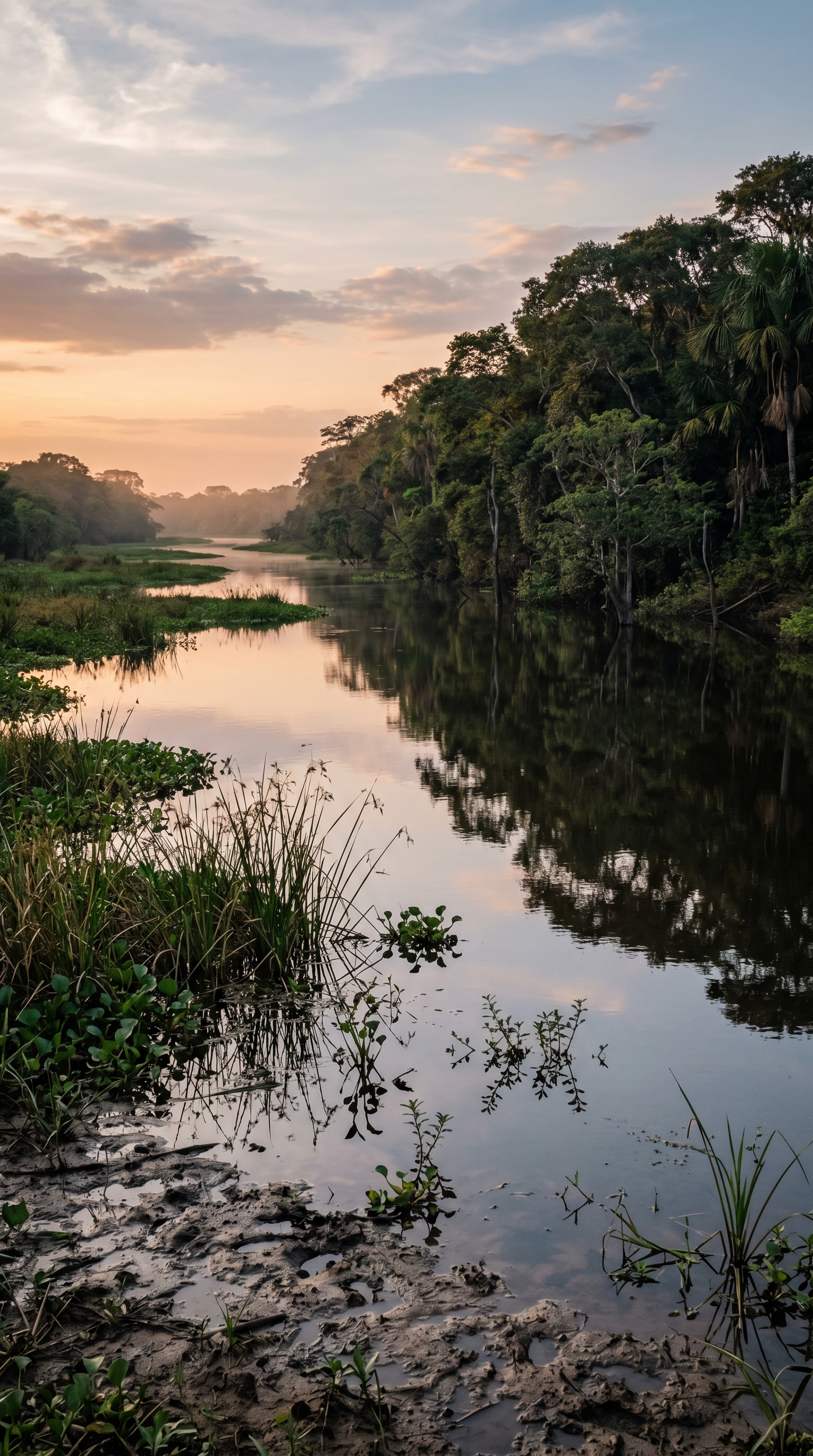
Pantanal floodplain at ground level — water-edge stalking ground where jaguars kill caiman with a single skull-piercing bite. -
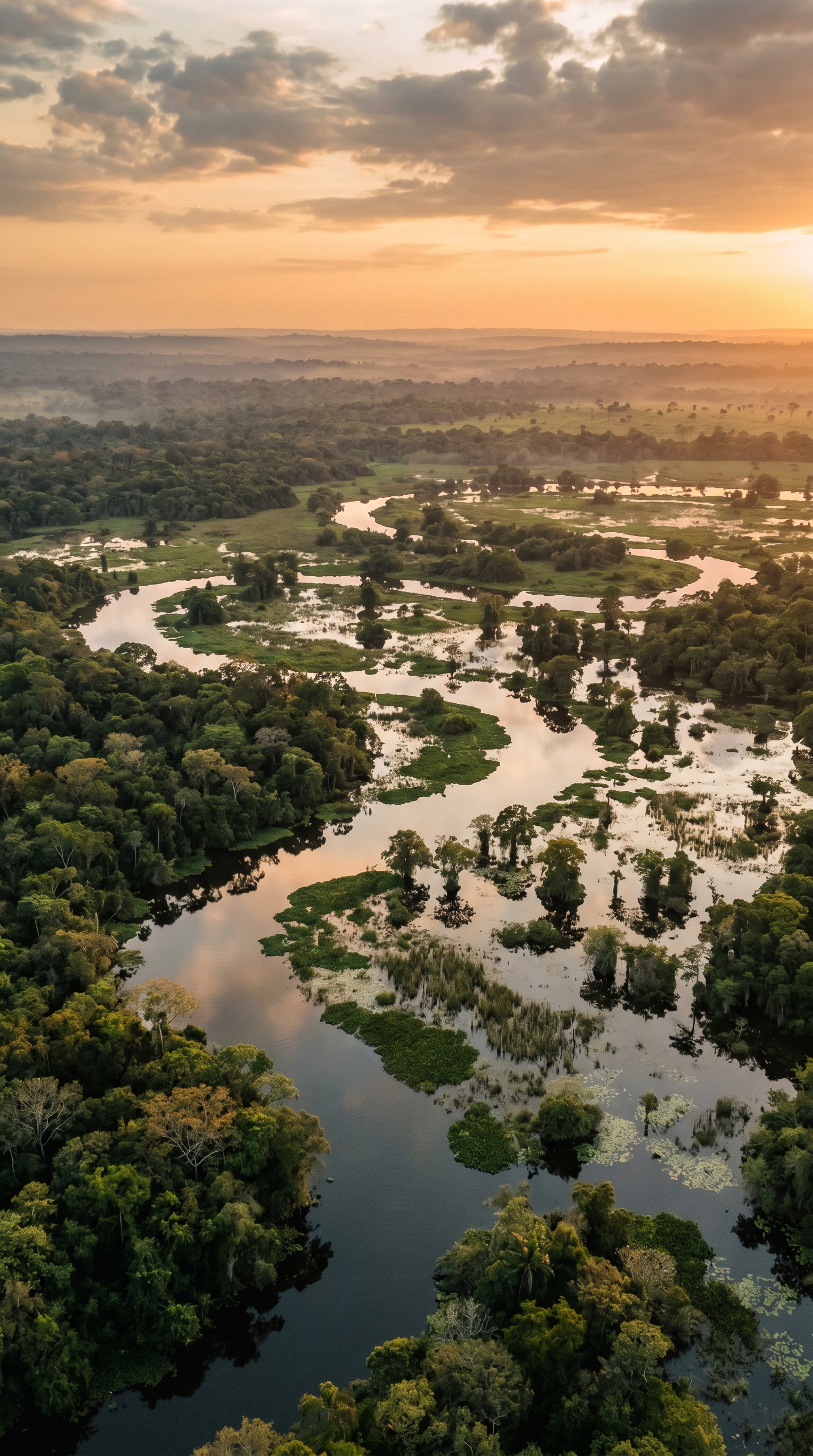
The Pantanal from above — the world's largest tropical wetland, home to the heaviest jaguars on Earth. -
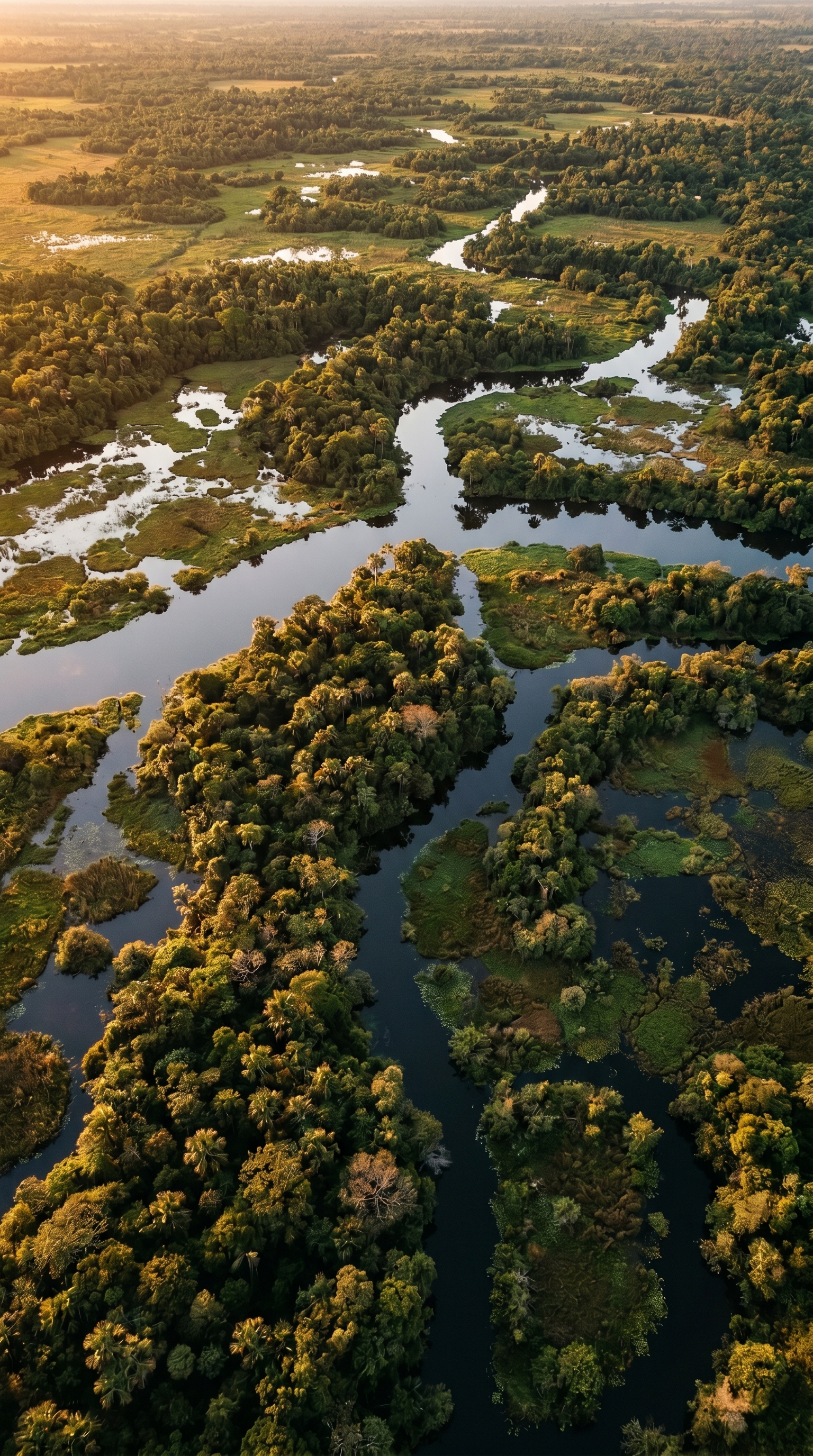
Jaguar country from high overhead — 18 Latin American range states from Mexico to Argentina.
Native range
Jaguars range from Mexico through Central America and across South America to northern Argentina. The Amazon Basin holds the biggest connected population, while the Pantanal wetlands of Brazil, Bolivia, and Paraguay hold some of the largest jaguars on Earth. In the Pantanal, water is not a barrier: jaguars swim channels, stalk riverbanks, and hunt caiman in floodplain marsh.
The range
Five regions, one species.
The jaguar doesn't live in one place. Across the map below, each region has its own pressures, prey, and politics — same biology, different worlds.
-
Brazil
Pantanal Wetlands
World's largest jaguars and one of the highest population densities. Sympatric with the giant anteater — documented predator-prey dynamic; jaguars take anteaters at 3.2% of kills in southern Pantanal.
Source ↗ -
Brazil
Amazon Basin
Largest contiguous jaguar population. Dense lowland rainforest; melanistic individuals more common here.
Source ↗ -
Mexico
Calakmul Biosphere Reserve
Northernmost stronghold of breeding jaguars. Tropical moist broadleaf forest of the Yucatán Peninsula; gateway for Mesoamerican dispersal.
Source ↗ -
Belize
Cockscomb Basin Wildlife Sanctuary
World's first jaguar reserve (est. 1990). High-density Central American population in broadleaf rainforest.
Source ↗ -
Argentina
Gran Chaco
Southernmost extant jaguar range; fragmented population under heavy pressure from land-conversion and livestock conflict.
Source ↗
Daily life
What the jaguar does, day to day.
Diet, social behaviour, climate — the everyday biology that shapes how this species hunts, defends and survives.
-
Diet
Apex obligate carnivore with a very broad prey base — more than 85 prey species are recorded range-wide.
-
Social life
Solitary except for the mother–cub bond. Polygynandrous at breeding.
-
Climate
Tropical to subtropical. Strongly water-associated — favours dense lowland forest, seasonally flooded wetland, swamp, and riparian corridor.
Wyld Trivia
Five questions. Most people get them wrong.
But you're not most people.
Tap to reveal.
-
How does a jaguar kill prey differently from a lion or tiger?
Show me HideMost big cats often use throat grips on large prey. Jaguars are famous for a more skull-focused style too: a bite to the braincase or nape, useful against tough animals like caiman, turtles, and peccaries. It is a jaguar signature, not a magic number.
-
Which big cat actually likes water — and hunts in it?
Show me HideThe jaguar. They are excellent swimmers and Pantanal jaguars really do hunt around rivers and floodplains. In one southern Pantanal GPS study, caiman made up 24.4% of recorded prey items.
-
Where do the biggest jaguars in the world live?
Show me HideIn Brazil's Pantanal — the world's largest tropical wetland. Pantanal males average about 100 kg, almost twice as heavy as jaguars in Central America (Honduran males average just 57 kg). The wetland is full of giant prey — caiman, capybara, peccary — and big jaguars need big food.
-
What's on the menu for a jaguar?
Show me HideAlmost anything they can catch. Scientists have recorded more than 85 prey species, including peccaries, capybaras, caimans, turtles, fish, deer, armadillos, and livestock where wild prey has been reduced.
-
Why don't we give jaguars a big top-speed number?
Show me HideBecause their best weapon is not a long sprint. Jaguars are built for power, cover, surprise, and a short ambush rush, so Jagua's profile describes speed in words instead of using a single race number the evidence does not lock down.
The terrain
Where the jaguar thrives.
Every animal is built for some places more than others. These are the ground, hours and weather where this species shows its best — and its worst.
Ground
- Dense rainforest Excels
- Flooded wetland Excels
- River corridor Excels
- Gallery forest Strong
- Scrubland Average
- Open grassland Struggles
- Steep rocky Struggles
Hours
- Dawn Excels
- Dusk Excels
- Twilight Excels
- Night Strong
- Day Struggles
Weather
- Rain Excels
- Moderate Strong
- Hot Average
- Wind Average
- Storm Average
- Cold Avoids

Five things you didn't know about the jaguar.
Cited biology that shapes how the jaguar feeds, defends, survives.
-
Panthera onca is listed as Near Threatened on the IUCN Red List with a decreasing population trend, driven primarily by habitat loss, fragmentation, and retaliatory killing over livestock conflict. Source ↗
-
Jaguars are the largest cat in the Americas. The heaviest published public range endpoints reach 158 kg, but those endpoints are exceptional; Brazilian/Pantanal males average about 95-100 kg in institutional accounts. Source ↗
-
The largest average-bodied jaguars live in the Brazilian Pantanal — males average 100 kg and females 76 kg — substantially heavier than populations further north, where Honduran males average just 57 kg. Source ↗
-
In a four-year GPS-collar study of 10 southern-Pantanal jaguars, Cavalcanti & Gese documented 438 kills across 415 sites, with cattle (31.7%), caiman (24.4%), and peccary (21.0%) dominating the diet. Giant anteaters made up 3.2% of kills, confirming anteaters as regular but uncommon prey. Source ↗
-
Jaguar head and bite features are unusual within Panthera: thick canines, well-developed head muscles, and a fatal bite directed to the braincase or nape help them dispatch dangerous or armoured prey quickly. Source ↗
About the jaguar
Where the jaguar sits on the tree of life.
-
Class
Mammalia
Warm-blooded animals with fur or hair that feed their young milk.
-
Order
Carnivora
Mostly meat-eating mammals — cats, dogs, bears and their relatives.
-
Family
Felidae
The cat family — solitary hunters with retractable claws.
-
Species
Panthera onca
Jaguar — the species this page is about.


Jaguar
Every fact, cited.
Biology cited on this page comes from peer-reviewed zoology and the major species databases. Click through for the underlying study, dataset or assessment.
- IUCN Red List · IUCN Red List
- fws.gov · fws.gov
- Animal Diversity Web · Animal Diversity Web
- academic.oup.com · academic.oup.com
- doi.org · doi.org
- Nature · Nature


