
American Black Bear
Scientific name Ursus americanus
Adult size
- Weight
- ♀F 65 kg ♂M 135 kg
- Length
- ♀F 1.5 m ♂M 1.7 m
- Shoulder height
- ♀F 0.85 m ♂M 0.95 m
- Top speed charge
- ♀F 55 km/h ♂M 55 km/h
- Lifespan
- Wild American Black Bears often live about 12-15 years; maturity is usually reached around 3-5 years.
Represented by Yona Great Smoky Mountains National Park, USA

American black bears are North America's most widespread bears. They live from Alaska and almost all of Canada through roughly 40 US states and into the mountains of northern Mexico, using boreal forest, Pacific rainforest, Appalachian hardwoods, Rocky Mountain conifers, southern swamps, and the Sierra Madre. The Great Smoky Mountains are a classic stronghold: dense oak-hickory forest, hollow-tree dens, berries, acorns, and around 1,900 bears.
Where they live
Three angles, one home.
The american black bear represented in the Wyld Savage League lives in Great Smoky Mountains National Park, USA. Three views of the same patch of country — at ground level, from above, and bird's-eye.
-
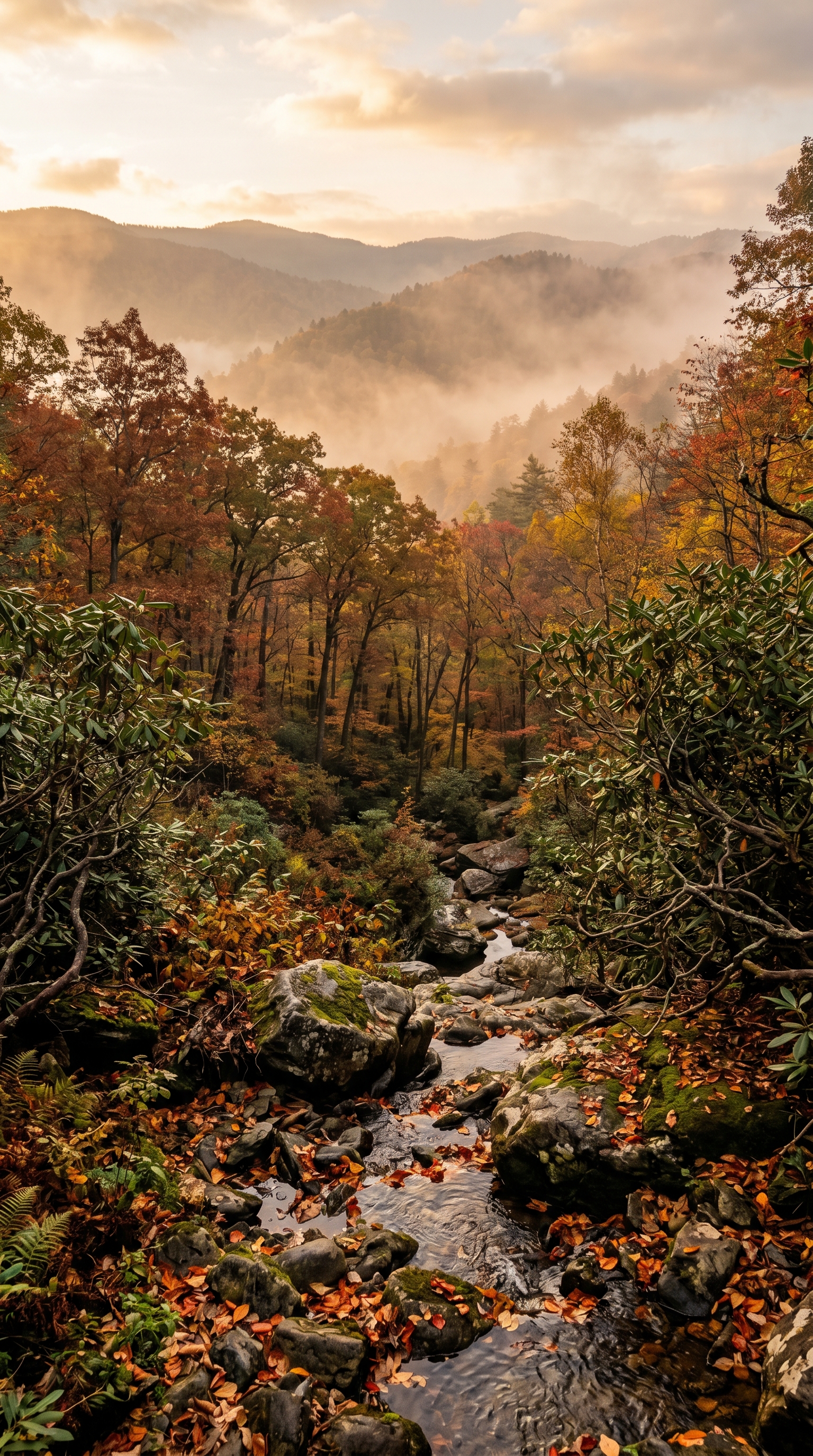
Great Smokies forest at ground level — Appalachian hardwood understory thick with mast, berries and den trees. -
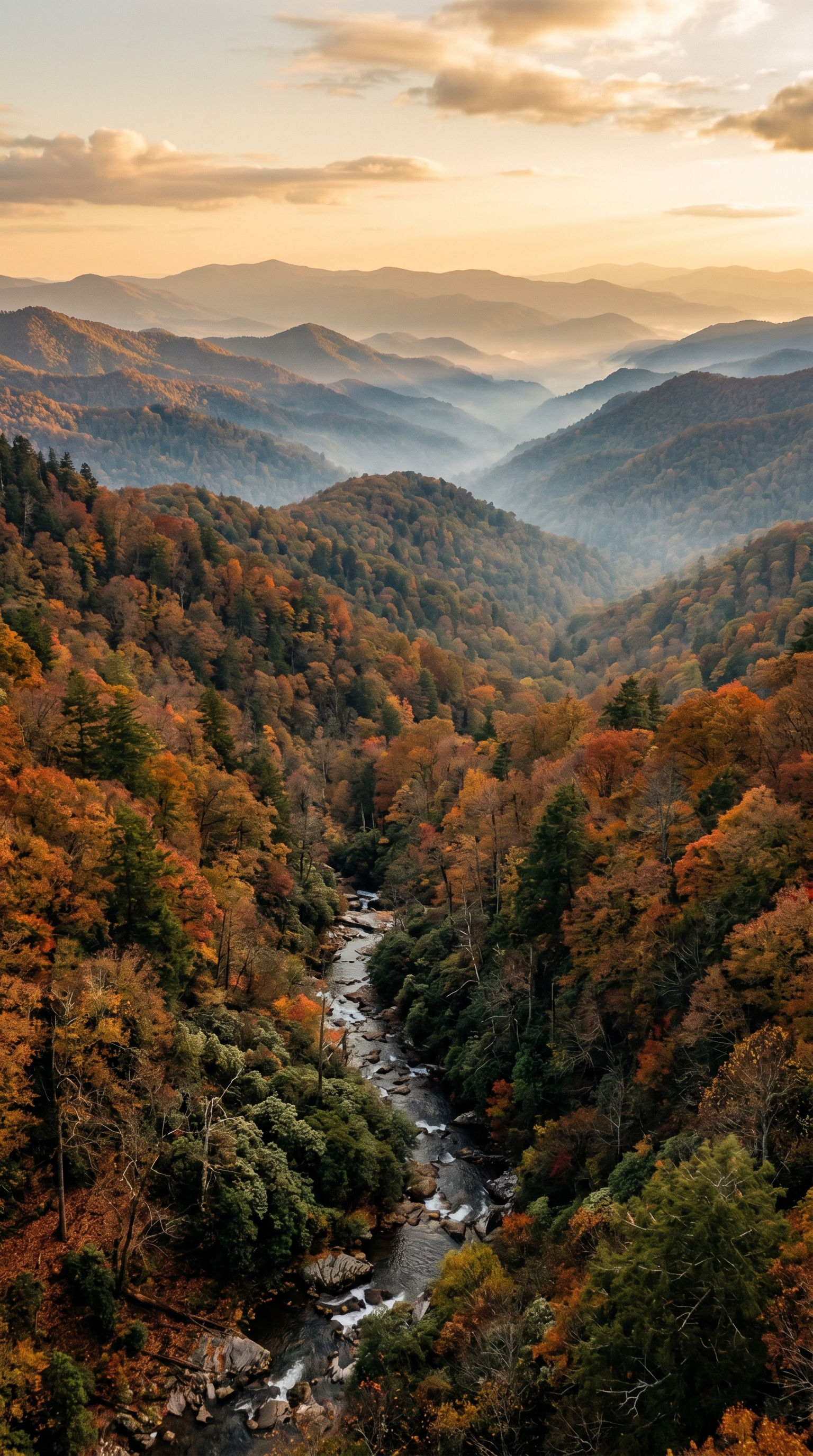
The Great Smoky Mountains from above — America's most biodiverse temperate forest, home to ~1,500 black bears. -
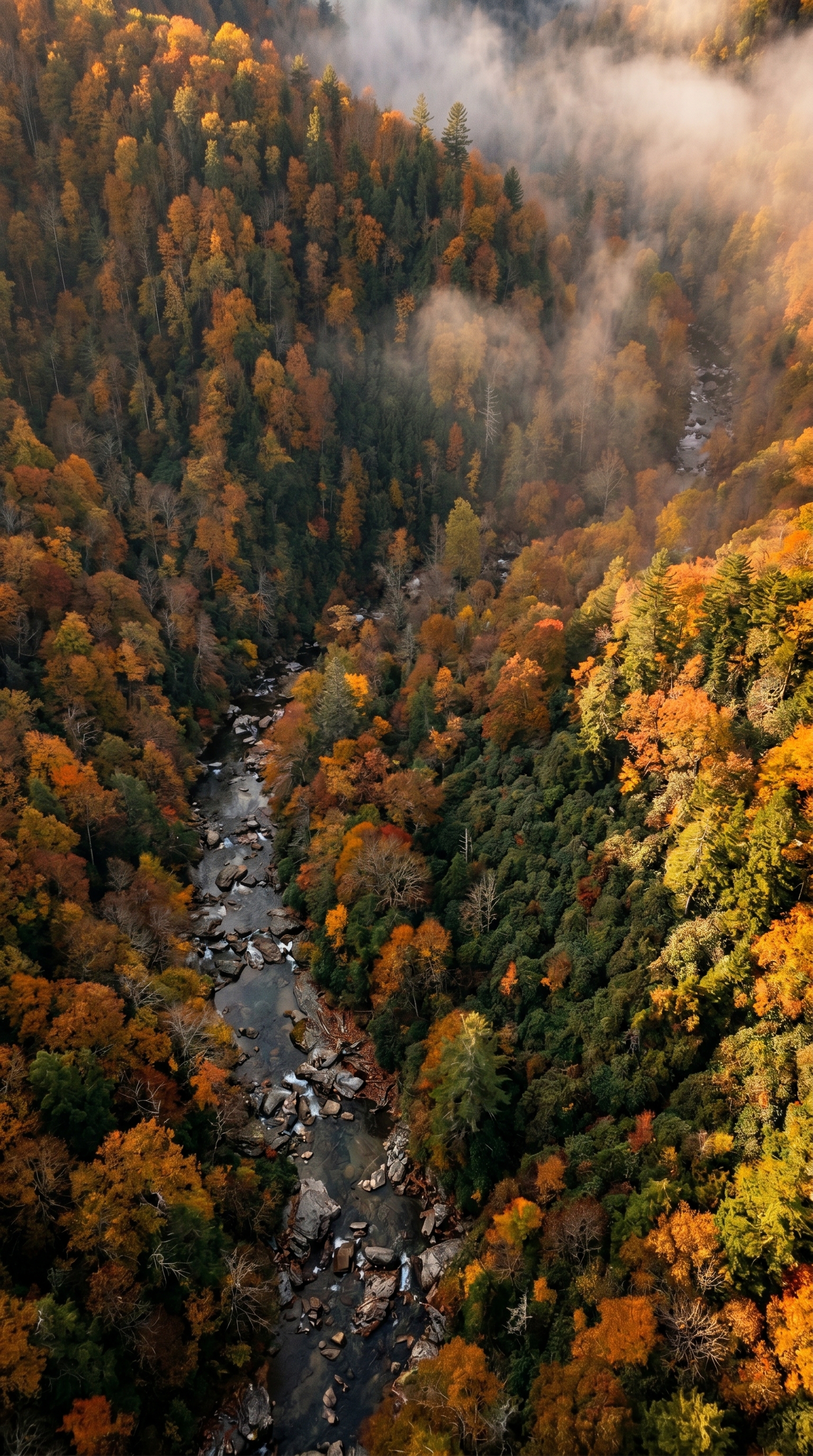
Black bear country from high overhead — North America's largest forested ranges, from Alaska to Mexico.
Native range
American black bears are North America's most widespread bears. They live from Alaska and almost all of Canada through roughly 40 US states and into the mountains of northern Mexico, using boreal forest, Pacific rainforest, Appalachian hardwoods, Rocky Mountain conifers, southern swamps, and the Sierra Madre. The Great Smoky Mountains are a classic stronghold: dense oak-hickory forest, hollow-tree dens, berries, acorns, and around 1,900 bears.
The range
Six regions, one species.
The american black bear doesn't live in one place. Across the map below, each region has its own pressures, prey, and politics — same biology, different worlds.
-
United States
Great Smoky Mountains National Park
Approximately 1,900 black bears at ~2 bears per square mile — the densest population in the eastern United States. Southern Appalachian hardwood forest, oak–hickory mast, and famous for denning in standing hollow trees high above the ground. Cultural/linguistic anchor for character Yona (Cherokee 'ᏲᎾ' = bear); candidate home range for B1. No grizzly sympatry (absent from Appalachians since 19th century).
Source ↗ -
United States
Yellowstone National Park (Wyoming / Montana / Idaho)
Sympatric with grizzly bear (Ursus arctos horribilis, ~150–200 in-park / ~1,030 greater ecosystem) and gray wolf. Black bears adapted to forest and forest edge; grizzlies dominate open meadows and valleys. Mattson et al. 1992 documented predation of black bears by adult male grizzlies. Strongest Tier-1 apex-sympatry anchor for future nemesis options.
Source ↗ -
United States
Glacier National Park (Montana)
~600 black bears sympatric with ~300 grizzlies plus gray wolf and cougar — the richest apex-predator assemblage in the contiguous US. Crown of the Continent ecosystem. High-quality nemesis-sympatry candidate (multiple predator species in one protected range).
Source ↗ -
United States
Olympic National Park (Washington)
Pacific temperate rainforest subspecies. No grizzly sympatry (Olympic Peninsula lacks Ursus arctos); cougar and gray wolf are the sympatric carnivores. Distinctive dark-phase pelage and salmon-supplemented diet.
Source ↗ -
United States
Shenandoah National Park (Virginia)
Blue Ridge / central Appalachian population of the nominate subspecies. Eastern deciduous forest, acorn-driven autumn hyperphagia. Coyote and bobcat are the principal sympatric carnivores; no grizzly, no wolf. Yona candidate home if Cherokee cultural tie is weighted less heavily than Appalachian ecology.
Source ↗ -
Canada
Banff National Park (Alberta)
Canadian Rocky Mountains — sympatric with grizzly bear, gray wolf and cougar. Part of the ~450,000-bear Canadian population. Alternative nemesis-sympatry candidate for a Canadian-origin variant of Yona.
Source ↗
Daily life
What the american black bear does, day to day.
Diet, social behaviour, climate — the everyday biology that shapes how this species hunts, defends and survives.
-
Diet
Omnivorous, with ~85% of intake from plant matter in typical populations.
-
Social life
Solitary apart from mother-cub family groups, breeding pairs briefly in summer, and seasonal congregations at concentrated food sources (salmon runs, berry patches).
-
Climate
Highly adaptable across temperate North America — from boreal Alaska through Appalachian deciduous forest, Rocky Mountain mixed-conifer, Pacific temperate rainforest and down into the Sierra Madre of Mexico.
Wyld Trivia
Five questions. Most people get them wrong.
But you're not most people.
Tap to reveal.
-
Why are American black bears better tree climbers than grizzlies?
Show me HideBlack bears have short, sharp curved claws — about 4 centimetres long — designed for gripping bark. Grizzlies have long, straighter claws made for digging, and they're heavier. So when a grizzly chases a black bear up a tree in places where they live together, the black bear keeps going up. The grizzly stops at the first branch.
-
Where are baby American black bears born?
Show me HideInside the winter den, while their mum is asleep. Black bear cubs are born in late January or early February, weighing less than half a kilogram each — the size of a guinea pig. The mother gives birth, nurses them, and starts raising them all without waking up properly. By spring the cubs are big enough to walk out of the den with her.
-
Is the American black bear a comeback story?
Show me HideYes. Many American black bear populations have increased in numbers and occupied range after heavy hunting and habitat loss. There are around 850,000 to 950,000 in North America today, using about 65% of the species' historic range. Adaptive omnivory — eating many seasonal foods — is part of that success.
-
Are all American black bears actually black?
Show me HideNo. The species comes in 16 different subspecies and a rainbow of colours. The 'spirit bear' of British Columbia is pure white. The 'glacier bear' of Alaska is bluish-grey. There are brown, cinnamon, and even blonde black bears. The name describes the species, not the colour — and the colour varies more than in any other bear.
-
How does a sleeping bear's heart slow down in winter?
Show me HideAn active black bear's heart beats around 50 to 70 times a minute. In winter torpor, that drops as low as 8 to 19 beats per minute. Body temperature falls 7 to 8°C and metabolism slows by more than half. Bears in this state can go four to six months without eating, drinking, peeing, or pooing. Then spring comes, and they walk out fully alive.
The terrain
Where the american black bear thrives.
Every animal is built for some places more than others. These are the ground, hours and weather where this species shows its best — and its worst.
Ground
- Deciduous forest Excels
- Mixed forest Excels
- Mountain forest Strong
- Temperate rainforest Strong
- Swamp wetland Strong
- Open tundra Struggles
- Urban Struggles
Hours
- Dawn Excels
- Dusk Excels
- Twilight Excels
- Day Strong
- Night Strong
Weather
- Moderate Excels
- Cold Strong
- Rain Strong
- Wind Average
- Hot Struggles
- Storm Struggles

Five things you didn't know about the american black bear.
Cited biology that shapes how the american black bear feeds, defends, survives.
-
Ursus americanus is listed as Least Concern on the IUCN Red List. Continental populations number an estimated 850,000–950,000 individuals across Canada, the United States and Mexico — roughly 300,000+ in the lower 48 US states, 100,000–200,000 in Alaska, and ~450,000 in Canada — occupying around 10,500,000 km², equivalent to 65% of the species' historic range. Source ↗
-
Sixteen subspecies of Ursus americanus are currently recognised, including the all-white-phase 'spirit bear' (U. a. kermodei) of coastal British Columbia, the blue 'glacier bear' (U. a. emmonsii) of Alaska, and the Olympic black bear (U. a. altifrontalis) of the Pacific Northwest — making Ursus americanus the most widely distributed bear species in North America, ranging from northern Alaska across virtually all of Canada south into central Mexico. Source ↗
-
American black bears are exceptional tree climbers. Their short, strongly curved, non-retractable claws and flat-footed gait help them grip bark; where black bears share landscapes with grizzlies, tree escape is one reason they can survive around a larger bear that dominates more open ground. Source ↗
-
Black bears exhibit delayed implantation — a form of embryonic diapause unique among mammals. Females mate in summer but the fertilised embryo does not implant in the uterine wall until late November / early December. Implantation, gestation, parturition and the start of lactation then all occur inside the winter den during torpor, when the bear is not eating, drinking, urinating or defecating. Cubs are born in late January / early February weighing under half a pound. Source ↗
-
In winter torpor — not true hibernation — American black bears drop body temperature by only 7–8 °C (true hibernators fall far further), reduce metabolism by 50–60% and slow heart rate to 8–19 beats per minute. Bears can rouse and defend themselves within minutes if the den is disturbed, and pregnant females remain alert enough to give birth and nurse cubs without waking fully. Source ↗
About the american black bear
Where the american black bear sits on the tree of life.
-
Class
Mammalia
Warm-blooded animals with fur or hair that feed their young milk.
-
Order
Carnivora
Mostly meat-eating mammals — cats, dogs, bears and their relatives.
-
Family
Ursidae
The bear family — large, strong, mostly omnivorous.
-
Species
Ursus americanus
American Black Bear — the species this page is about.


American Black Bear
Every fact, cited.
Biology cited on this page comes from peer-reviewed zoology and the major species databases. Click through for the underlying study, dataset or assessment.
- bearbiology.org · bearbiology.org
- Animal Diversity Web · Animal Diversity Web
- academic.oup.com · academic.oup.com
- academic.oup.com · academic.oup.com
- bearbiology.org · bearbiology.org


