
Grizzly Bear
Scientific name Ursus arctos horribilis
Adult size
- Weight
- ♀F 170 kg ♂M 270 kg
- Length
- ♀F 1.85 m ♂M 2.15 m
- Shoulder height
- ♀F 0.95 m ♂M 1.05 m
- Top speed
- ♀F 56 km/h ♂M 56 km/h
- Lifespan
- Brown Bears can live about 20-30 years in the wild, and captive records can reach about 50 years.
Grizzly bears occupy interior North America from northern Alaska south through the Yukon, Northwest Territories, British Columbia, and Alberta, into Montana, Idaho, Wyoming, and remnant populations in northern Washington. Historically the subspecies extended south to northern Mexico and east across the Great Plains to the Mississippi, but it was extirpated from the US plains and California by the late 19th and early 20th century.…
The range
Six regions, one species.
The grizzly bear doesn't live in one place. Across the map below, each region has its own pressures, prey, and politics — same biology, different worlds.
-
United States
Yellowstone National Park (Wyoming / Montana / Idaho)
~150–200 grizzlies in-park; 1,030 in the Greater Yellowstone Ecosystem as of 2024 (NPS). Sympatric with American black bear (Ursus americanus cinnamomum) and gray wolf. Mattson et al. 1992 documented grizzly predation on black bears here, which explains why Yellowstone matters to Yona's natural-rival story. Interior grizzly subspecies sit at the smaller end of the Ursus arctos mass range (~200 kg males).
Source ↗ -
United States
Glacier National Park (Montana)
~300 grizzlies sympatric with ~600 black bears in the Crown of the Continent / Northern Continental Divide Ecosystem. The richest apex-predator assemblage in the contiguous US (grizzly + black bear + gray wolf + cougar + lynx). Strong candidate for cross-border Yona or future Wyld Beast character home range.
Source ↗ -
United States
Denali National Park (Alaska)
Interior Alaskan grizzly population — tundra / taiga habitat, berries and ground-squirrel driven diet, moderate body size between Yukon interior and coastal populations. Year-round daylight variation drives extreme seasonal behaviour.
Source ↗ -
Canada
Banff National Park (Alberta)
Canadian Rocky Mountains grizzly — sympatric with American black bear (U. a. cinnamomum at this range), gray wolf and cougar. Contiguous with the Alberta / BC grizzly population that connects to the Northern Continental Divide Ecosystem across the Montana border.
Source ↗ -
United States
Katmai National Park and Preserve (Alaska)
Coastal Alaska Peninsula brown bear population — salmon-subsidised gigantism. Males commonly 272–408 kg in mid-summer, exceeding 454 kg by October; dominant males catch 30+ salmon per day at peak runs. Body-mass distribution makes Katmai bears candidates for the Wyld Beast league (201–600 kg) rather than Savage (25–200 kg) — same species, different league.
Source ↗ -
United States
Grand Teton National Park (Wyoming)
Greater Yellowstone Ecosystem — contiguous with Yellowstone NP grizzly population; same ~1,030-bear regional total. Whitebark pine seeds and cutthroat trout are historically important seasonal foods, both in decline.
Source ↗
Daily life
What the grizzly bear does, day to day.
Diet, social behaviour, climate — the everyday biology that shapes how this species hunts, defends and survives.
-
Diet
Omnivorous, with an exceptionally broad seasonal diet.
-
Social life
Solitary apart from mother–cub family groups (cubs stay with the mother 2–3 years) and brief breeding pairs.
-
Climate
Temperate through subarctic. Occupies boreal forest, alpine meadow, subalpine conifer, arctic tundra, Pacific coastal rainforest, and historically prairie / plains grassland.
Wyld Trivia
Five questions. Most people get them wrong.
But you're not most people.
Tap to reveal.
-
Why do some brown bears grow much bigger than others?
Show me HideIt comes down to meat. Across North American brown bear populations, females eating more meat — especially salmon — were heavier, had bigger litters, and lived at higher densities. Salmon-rich coasts can support bigger, more productive bears than inland habitats. But it's not 'all coastal bears are giants' — body size still varies a lot by population, sex, age, and food year by year. The food web does the work.
-
How can cubs begin life while their mother is still in the den?
Show me HideDelayed implantation. Brown bears mate in late spring, but the fertilised egg pauses — it doesn't start growing into a cub right away. The mother only continues the pregnancy if she's stored enough body fat by autumn (somewhere between 19 and 33% depending on litter size). She then powers winter pregnancy and milk-feeding entirely from her own body. Cubs are born inside the den, then nurse there until spring.
-
If two bear species share one forest, how do they stay out of each other's way?
Show me HideBy splitting the landscape. Where grizzlies and black bears overlap (the Rockies, Yellowstone, Glacier), studies using DNA hair-traps found the two species use different parts of the forest and turn up together less than chance would predict. Grizzlies dominate open meadows and valley bottoms; black bears stick to thicker forest where their tree-climbing claws give them an escape route. Avoidance, not constant clashes, is the main pattern.
-
Why does one bear catch many fish while another catches few?
Show me HideDirect studies on wild brown bears at salmon streams found dominant bears got the most fish — they visited streams more often, stayed longer, and pushed other bears off the best spots. Catch rates varied massively from bear to bear, even on the same river on the same day. Salmon abundance helps, but it's the combination of dominance, time spent, and stream position that decides who eats.
-
When is a recovering animal population really doing well enough?
Show me HideYellowstone grizzlies grew a lot from a low point in the 1970s — that part is real. But the long-term studies say growth was strong early on, then slowed, and scientists still debate the exact trajectory. One careful demographic analysis linked the slowdown more to bears running out of room than to whitebark pine loss. 'Fully recovered' depends on what method, what time period, and what you measure.
The terrain
Where the grizzly bear thrives.
Every animal is built for some places more than others. These are the ground, hours and weather where this species shows its best — and its worst.
Ground
- Alpine meadow Excels
- Riparian Excels
- Boreal forest Strong
- Open tundra Strong
- Dense forest Average
- Urban Avoids
- Desert Avoids
Hours
- Dawn Excels
- Dusk Excels
- Twilight Excels
- Day Strong
- Night Strong
Weather
- Cold Excels
- Moderate Excels
- Rain Strong
- Wind Average
- Hot Struggles
- Storm Struggles
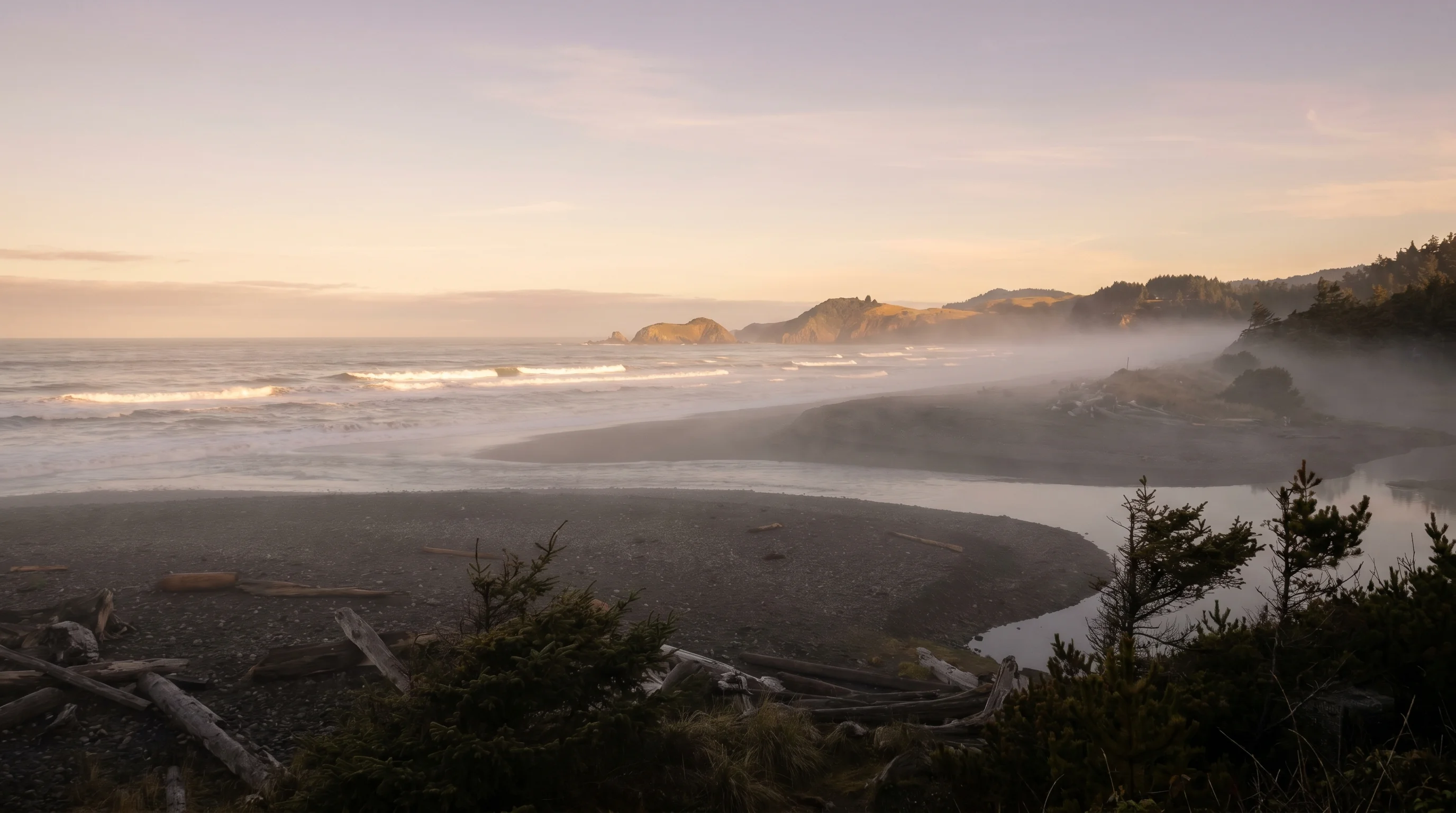
Five things you didn't know about the grizzly bear.
Cited biology that shapes how the grizzly bear feeds, defends, survives.
-
Ursus arctos is listed as Least Concern on the IUCN Red List at the species level, reflecting the large and stable Palearctic + Nearctic global population (~200,000 individuals across ~5,000,000 km² in North America and ~800,000 km² in Europe). The North American grizzly subspecies (U. a. horribilis) is separately protected under the US Endangered Species Act as Threatened in the lower 48 states — status designations operating at different taxonomic levels for different conservation reasons. Source ↗
-
Where grizzly bears and American black bears are sympatric — principally the Yellowstone ecosystem, Glacier NP, the Canadian Rockies and interior Alaska — the grizzly is the apex bear. Mattson, Blanchard and Knight (Journal of Mammalogy, 1992) documented an adult male grizzly preying on a black bear in the Yellowstone ecosystem between 1975–1990, plus four additional cases of intraspecific bear predation. The consequence is clean habitat partitioning: grizzlies hold the open meadows and valley bottoms while black bears are displaced to forest cover where their tree-climbing ability offsets the grizzly's greater mass. Source ↗
-
Coastal brown bear populations with salmon access grow roughly 50% heavier than interior populations of the same species feeding primarily on fruits and hard mast. Coastal Alaskan males average 389 kg — with Katmai-area dominant males exceeding 454 kg (1,000 lbs) by October — while southwestern Yukon interior males average only 140 kg. The Yellowstone grizzly (interior U. a. horribilis) sits at the smaller end of this continuum, with adult males typically ~200 kg despite having the same genes as a 400 kg Katmai bear. Source ↗
-
Grizzly bears exhibit delayed implantation: females mate in late spring / early summer but the fertilised embryo does not implant in the uterine wall until autumn, and only if the female has accumulated at least 20% of her body weight as fat reserves. If body condition is insufficient, the embryo is resorbed and no pregnancy proceeds. Implantation is followed by a 6–8 week gestation and parturition inside the winter den (January–February), with cubs emerging at 2–5 kg in spring. Source ↗
-
As of the 2024 survey the Greater Yellowstone Ecosystem supports an estimated 1,030 grizzly bears — one of three recovered populations in the lower 48 United States (alongside the Northern Continental Divide / Glacier ecosystem and the Selkirks). This is a >20-fold increase from the ~136 bears at the time of ESA listing in 1975 and represents one of the flagship recovery stories of the Endangered Species Act, driven by habitat protection, backcountry food-storage rules, and the 2016 removal of garbage dumps as a food subsidy. Source ↗
About the grizzly bear
Where the grizzly bear sits on the tree of life.
-
Class
Mammalia
Warm-blooded animals with fur or hair that feed their young milk.
-
Order
Carnivora
Mostly meat-eating mammals — cats, dogs, bears and their relatives.
-
Family
Ursidae
The bear family — large, strong, mostly omnivorous.
-
Species
Ursus arctos horribilis
Grizzly Bear — the species this page is about.


Grizzly Bear
Every fact, cited.
Biology cited on this page comes from peer-reviewed zoology and the major species databases. Click through for the underlying study, dataset or assessment.
- IUCN Red List · IUCN Red List
- academic.oup.com · academic.oup.com
- Animal Diversity Web · Animal Diversity Web
- bearbiology.org · bearbiology.org
- U.S. National Park Service · U.S. National Park Service


