
Gray Wolf
Scientific name Canis lupus
Adult size
- Weight
- ♀F 45 kg ♂M 55 kg
- Length
- ♀F 1.3 m ♂M 1.4 m
- Shoulder height
- ♀F 0.72 m ♂M 0.8 m
- Top speed
- ♀F 65 km/h ♂M 65 km/h
- Lifespan
- Gray Wolves often average about 5-6 years in the wild, can reach about 13 years, and may reach about 15 years in captivity.
Gray wolves once roamed across almost the whole northern half of the world: North America from the Arctic to Mexico, and Eurasia from western Europe through Russia, Central Asia, Mongolia, northern China, and the Tibetan Plateau. They can live in tundra, forest, mountains, steppe, and semi-desert as long as there is prey and enough space for a pack to travel.
The range
Seven regions, one species.
The gray wolf doesn't live in one place. Across the map below, each region has its own pressures, prey, and politics — same biology, different worlds.
-
United States
Yellowstone National Park (Wyoming / Montana / Idaho)
Reintroduced 1995; ~108 wolves in the park as of January 2025 (NPS). Source for the Ripple & Beschta trophic-cascade studies. Classic showcase for wolf-driven ecosystem recovery.
Source ↗ -
United States
Denali National Park (Alaska)
Alaskan population of 6,000–8,000 statewide; Denali supports a long-term-studied population of large-bodied northern wolves. Prey base dominated by moose and caribou.
Source ↗ -
Canada
Banff National Park (Alberta)
Core of the Canadian Rocky Mountain wolf population; sympatric with grizzly bear, elk, moose, and mountain caribou.
Source ↗ -
Poland
Bialowieza Forest
One of the last fragments of European primary lowland forest; UNESCO World Heritage site straddling the Poland-Belarus border (Belarusian portion known as Belavezhskaya Pushcha). Supports a continuous wolf population that feeds the broader Central European recovery. Session 8 sympatry anchor for Taran (European Wild Boar, Group E E2) — region string normalised to bare park name to match `european-wild-boar.md` entry for validator Rule 1 exact-match sympatry.
Source ↗ -
Sweden
Sarek National Park / Norrbotten (Scandinavian wolf range)
Scandinavian recolonisation founded by a handful of migrant Finnish/Russian wolves in the 1980s–90s; small population under active management with reindeer-conflict pressure.
Source ↗ -
Italy
Abruzzo, Lazio and Molise National Park (Apennines)
Apennine wolf — survived the 20th-century nadir at ~100 animals in the central Italian mountains; now recolonised most of the Italian mainland and has crossed into France and Switzerland.
Source ↗ -
India
Hemis National Park (Ladakh)
Himalayan / Tibetan wolf — high-altitude alpine population at 3,000-5,500 m elevation. *C. l. chanco* is a genetically distinct lineage per Werhahn et al. 2018 *Royal Society Open Science* (proposed full-species status *Canis himalayensis*). Documented prey-competition and direct-encounter predator-to-predator interactions with snow leopard across blue sheep / ibex / argali prey base per Lyngdoh et al. 2014 *PLOS ONE* and Johansson et al. long-term Mongolian overlap work. Tenzin-nemesis sympatry anchor (Group H1, Session 11) — wolf packs at Hemis NP overlap directly with snow leopard territorial patrol circuits and contest the same ungulate-prey resource. Exact-match region string with `snow-leopard.md` ranges entry #1.
Source ↗
Daily life
What the gray wolf does, day to day.
Diet, social behaviour, climate — the everyday biology that shapes how this species hunts, defends and survives.
-
Diet
Obligate carnivore and cooperative pack-hunter. Primary prey is large ungulates — moose, elk, caribou, bison, white-tailed deer, mule deer, and wild boar across the species range — which wolves take down in coordinated pack pursuits.
-
Social life
Pack-living and strongly territorial. Packs are typically extended family units — a breeding pair plus offspring from one or two prior litters — ranging from 2 to 36 individuals, with a typical size of 5–9.
-
Climate
Broad thermal tolerance — functions from –40 °C arctic winters through +40 °C continental summers.
Wyld Trivia
Five questions. Most people get them wrong.
But you're not most people.
Tap to reveal.
-
Why would four wolves be enough to hunt elk — but not enough to hunt bison?
Show me HideIt comes down to danger. Yellowstone studies of real wolf hunts show that for elk, success stops improving much past about four wolves — bigger packs don't help. For bison, success keeps climbing into much larger groups (nine, thirteen, more) because bison are heavier, tougher, and far more dangerous to grab. There isn't a 'right' pack size for wolves. The prey decides.
-
Can one predator change a whole park all by itself?
Show me HideWolves came back to Yellowstone in 1995 — and yes, things changed. Elk numbers fell. Trees in some places recovered. But the strongest long-term studies say wolves alone didn't rebuild the ecosystem. Beavers, water tables, elk density, and even how scientists sampled trees all mattered too. The popular story — 'wolves single-handedly restored Yellowstone' — is too simple. Real ecosystems have many causes.
-
If dogs came from wolves, why aren't today's wolves their direct parents?
Show me HideDogs and modern wolves share a common ancestor — but it's a wolf relative that no longer exists. Ancient DNA shows the split happened in the late Ice Age, sometime between about 14,000 and 28,000 years ago. Some dog lineages later picked up ancestry from a SECOND wolf relative. So dogs aren't descended from the wolves you'd see today — they came from wolves that didn't survive.
-
How can a wolf bite above its weight class?
Show me HideA wolf's jaw isn't the strongest in nature — a tiger or lion bites with much greater raw force. But for its body size, a wolf bites well above what you'd expect. Its skull and jaw muscles are built for gripping and holding prey heavier than itself. Combined with the pack, that's enough to bring down moose, bison, and elk.
-
How far can a wolf pack travel before the next sunrise?
Show me HideIt depends — that's the honest answer. In Poland's Białowieża Forest, radio-collared wolves often travelled 22 to 28 kilometres in a day. Their routes changed with the season, the sex of the wolf, what they were hunting, and the shape of the forest. Numbers from one place don't apply everywhere. But for a 50 kg animal walking through deep snow or thick forest, even 22 km is hard work.
The terrain
Where the gray wolf thrives.
Every animal is built for some places more than others. These are the ground, hours and weather where this species shows its best — and its worst.
Ground
- Boreal forest Excels
- Taiga Excels
- Tundra Strong
- Open plains Strong
- Mountain forest Strong
- Desert Struggles
- Urban Avoids
Hours
- Dawn Excels
- Dusk Excels
- Twilight Excels
- Night Strong
- Day Struggles
Weather
- Cold Excels
- Moderate Strong
- Rain Average
- Wind Struggles
- Hot Avoids
- Storm Avoids
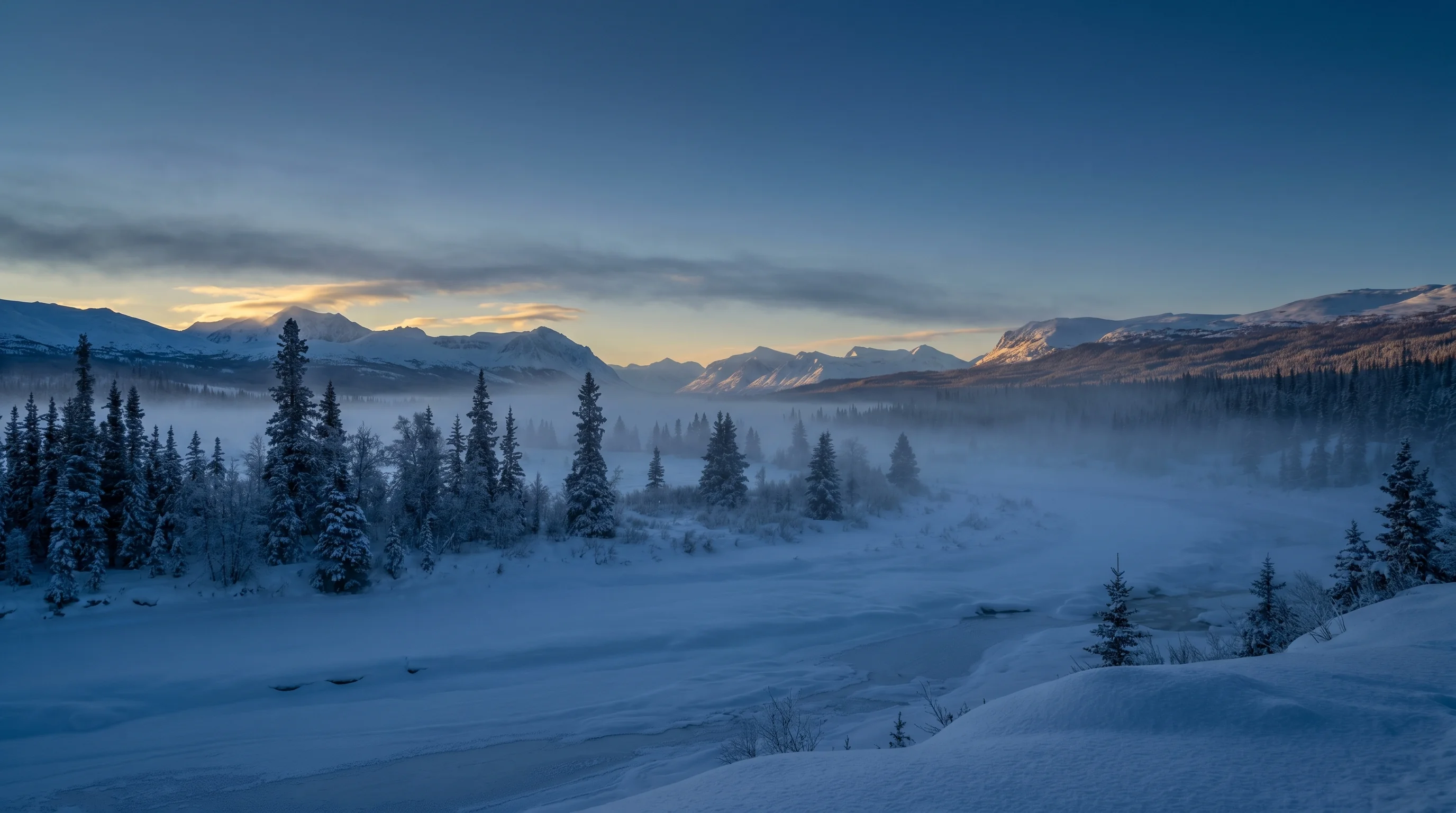
Five things you didn't know about the gray wolf.
Cited biology that shapes how the gray wolf feeds, defends, survives.
-
The gray wolf (Canis lupus) is the largest wild canid alive today and historically held the broadest natural range of any terrestrial mammal except humans — occupying most of the Northern Hemisphere from arctic tundra south to approximately 20 °N latitude before human persecution reduced the range to isolated remnants in Eurasia and most of North America by the mid-20th century. Source ↗
-
Wolves hunt cooperatively as packs, which lets them routinely kill prey 3–10× their own body mass — moose (up to 700 kg), bison (up to 900 kg), elk, and caribou. Pack hunting relies on endurance pursuit (sustained pace ~8 km/h, burst ~55–70 km/h), role-specialisation within the pack, and the ability of several wolves to overwhelm a defended ungulate that no single wolf could handle. Source ↗
-
The 1995 reintroduction of gray wolves to Yellowstone National Park triggered one of the most-studied trophic cascades in ecology. Peer-reviewed work by Ripple & Beschta documented that elk numbers fell from over 15,000 in the early 1990s to around 6,100 by 2010, while browsing pressure on young aspen dropped from 100% of measured leaders in 1998 to under 25% by 2010, with beaver and bison populations subsequently recovering. Source ↗
-
Domestic dogs (Canis lupus familiaris) descend from ancient gray wolf populations. Genome sequencing of a 35,000-year-old Taimyr Peninsula wolf recalibrated the dog-wolf molecular clock and showed the dog lineage diverged from the common ancestor of modern wolves close to this same time window — pushing divergence well before the Last Glacial Maximum and indicating multiple ancestral wolf populations contributed to modern breeds. Source ↗
-
Biomechanical modelling by Wroe, McHenry & Thomason (2005, Proceedings of the Royal Society B) calculated the gray wolf's canine bite force at 593 N — the strongest bite among living canines. But contest performance is driven less by raw bite force than by the pack: endurance pursuit, cooperative tactics, and social coordination let wolves prevail against prey their individual physiology could never subdue alone. Source ↗
About the gray wolf
Where the gray wolf sits on the tree of life.
-
Class
Mammalia
Warm-blooded animals with fur or hair that feed their young milk.
-
Order
Carnivora
Mostly meat-eating mammals — cats, dogs, bears and their relatives.
-
Family
Canidae
The dog family — pack-hunting, long-distance runners.
-
Species
Canis lupus
Gray Wolf — the species this page is about.


Gray Wolf
Every fact, cited.
Biology cited on this page comes from peer-reviewed zoology and the major species databases. Click through for the underlying study, dataset or assessment.
- Animal Diversity Web · Animal Diversity Web
- Animal Diversity Web · Animal Diversity Web
- sciencedirect.com · sciencedirect.com
- PubMed · PubMed
- PubMed · PubMed


