
King Cobra
Scientific name Ophiophagus hannah
Adult size
- Weight
- ♀F 7 kg ♂M 9 kg
- Length
- ♀F 3.3 m ♂M 3.7 m
- Body girth
- ♀F 0.045 m ♂M 0.05 m
- Top speed
- ♀F 20 km/h ♂M 20 km/h
- Lifespan
- A clean wild lifespan for King Cobra is not safely reported; the honest answer is not known well enough to print as a single age.
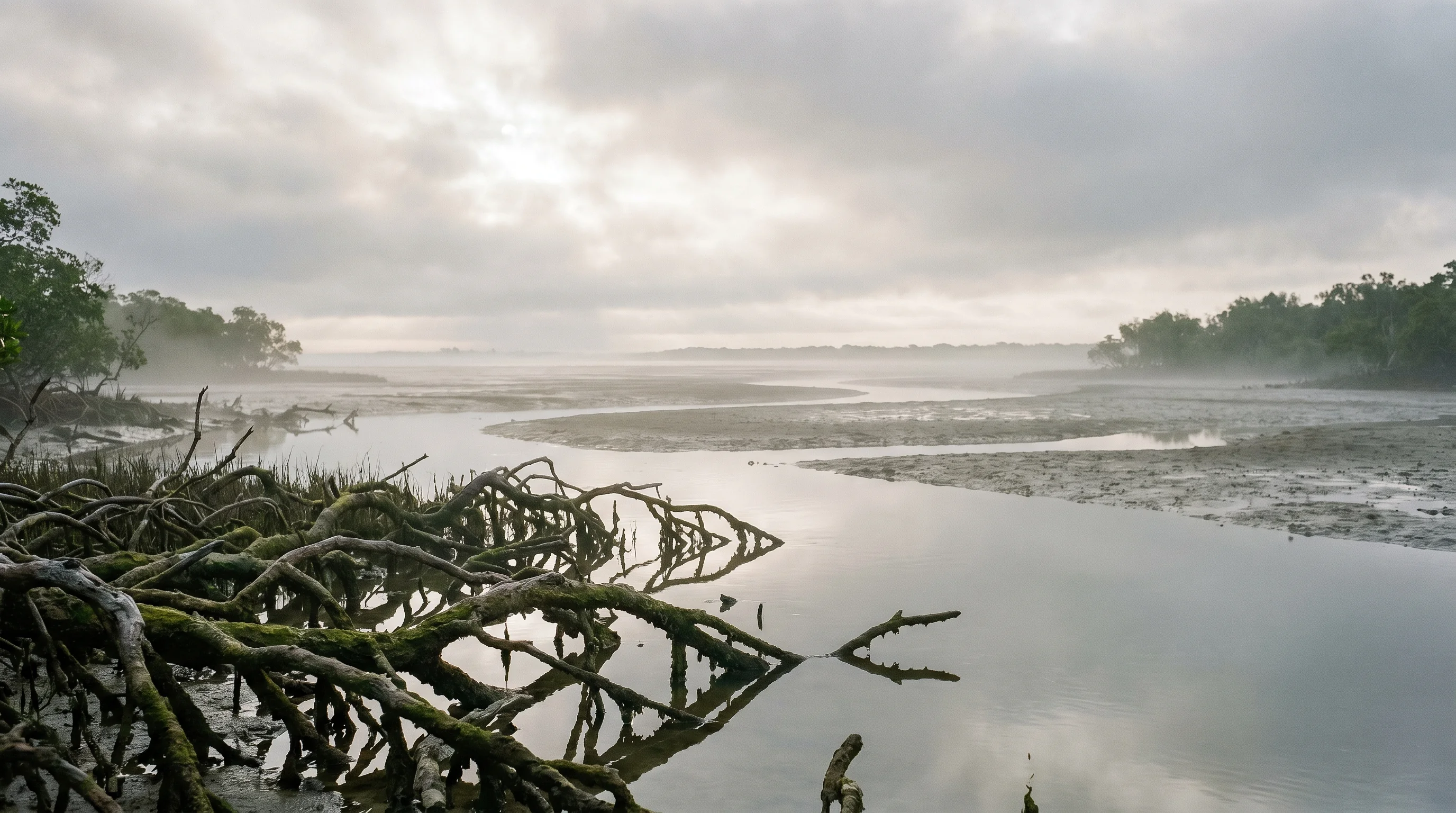
King cobras live across South and Southeast Asia: India, Nepal, Bhutan, Bangladesh, Myanmar, Thailand, Laos, Cambodia, Vietnam, southern China, Malaysia, Singapore, Indonesia, and the Philippines. They favour warm forest and forest-edge country near water: lowland rainforest, bamboo thickets, mangrove swamps, wet grassland edges, and farm canals where other snakes move too.
The range
Five regions, one species.
The king cobra doesn't live in one place. Across the map below, each region has its own pressures, prey, and politics — same biology, different worlds.
-
Thailand
Kaeng Krachan National Park
Thailand's largest national park; Tenasserim Hills. Documented King Cobra populations in lowland rainforest and riparian systems. Sympatric with Asian Water Monitor (Varanus salvator macromaculatus) — Natee (Group F4) home territory; canonical V7.1 §67 nemesis match.
Source ↗ -
India
Western Ghats
Core peninsular-Indian stronghold. One of the most-studied King Cobra populations; subject of ongoing Kalinga Centre for Rainforest Ecology field research.
Source ↗ -
Indonesia
Gunung Leuser National Park
Sumatran lowland dipterocarp forest. Sympatric with Sumatran Tiger, Sumatran Orangutan, and Reticulated Python across the Leuser Ecosystem.
Source ↗ -
Malaysia
Taman Negara
Peninsular Malaysia's flagship lowland tropical forest reserve.
Source ↗ -
India
Sundarbans National Park
Mangrove-delta ecosystem shared with Bengal Tiger, Asian Water Monitor, and Saltwater Crocodile.
Source ↗
Daily life
What the king cobra does, day to day.
Diet, social behaviour, climate — the everyday biology that shapes how this species hunts, defends and survives.
-
Diet
Obligate ophiophage — the only snake-eating specialist genus among all elapids.
-
Social life
Solitary outside the breeding season.
-
Climate
Tropical to subtropical Southeast and South Asian forest and forest-edge habitats.
Wyld Trivia
Five questions. Most people get them wrong.
But you're not most people.
Tap to reveal.
-
Was the 'king cobra' really one species all along?
Show me HideMaybe not. A 2024 taxonomic revision proposed that what people long called the king cobra is actually four species, not one — Ophiophagus hannah, O. bungarus, O. kaalinga, and O. salvatana. Each lives in a different part of Asia. Many older studies on king cobras may have mixed animals from different parts of this complex without realising it.
-
Why would a giant cobra hunt other snakes instead of mice?
Show me HideKing cobras specialise in snakes. Their genus name, Ophiophagus, literally means 'snake-eater' in Greek. Field studies of radio-tracked king cobras in India and Thailand show other snakes — rat snakes, smaller cobras, even pythons — make up the bulk of their diet. They sometimes take monitor lizards too. So 'snake-eater' is supported. 'Eats only snakes' is a step too far.
-
Why would a snake build a leaf nest instead of just laying eggs and leaving?
Show me HideBecause the nest helps the eggs. Female king cobras gather leaf litter into a mound, lay 20–40 eggs inside, and guard them. A 2023 wild-nest study in India found these nests stayed warmer and steadier than the surrounding air — and more eggs hatched as a result. King cobras are the only snake well-documented to BUILD a nest like this. But other snakes also brood or attend their eggs in different ways.
-
How can a snakebite make it hard to breathe?
Show me HideKing cobra venom contains nerve toxins that block the signals from nerves to muscles. In a Malaysia clinical study of 32 confirmed bites, drooping eyelids were the most common early sign. About 4 in 10 patients needed help breathing; their breathing muscles couldn't fire properly. With antivenom and breathing support, many survived. The bites are real medical emergencies — not 'instantly fatal' but always serious.
-
Where does a king cobra go when forests meet farms?
Show me HideRight through them. Radio-telemetry studies in northeastern Thailand tracked king cobras moving across farm-edge habitat and along irrigation canals — not staying only deep inside untouched jungle. They travel widely, often during the day, and use both forest and human-shaped landscapes. So the popular 'jungle-only mythical king' image isn't accurate. The honest version: king cobras adapt and move further than you'd expect.
The terrain
Where the king cobra thrives.
Every animal is built for some places more than others. These are the ground, hours and weather where this species shows its best — and its worst.
Ground
- Tropical forest Excels
- Mangrove Excels
- Riparian Excels
- Bamboo thicket Excels
- Grassland Average
- Dry scrub Struggles
- Desert Avoids
Hours
- Dawn Excels
- Dusk Excels
- Day Strong
- Twilight Strong
- Night Strong
Weather
- Moderate Excels
- Hot Strong
- Rain Strong
- Wind Average
- Storm Struggles
- Cold Avoids
Five things you didn't know about the king cobra.
Cited biology that shapes how the king cobra feeds, defends, survives.
-
Ophiophagus hannah is the longest venomous snake on Earth, with adults typically reaching 3-4 m in length and exceptional individuals documented at up to 5.85 m. The genus name means 'snake-eater' in Greek — King Cobras are the only snake-eating specialist genus among all elapids, and their diet is dominated by other snakes including rat snakes, Asian cobras, and juvenile pythons. Source ↗
-
King Cobras are famous for an almost unbelievable snake behaviour; females build a leaf-litter nest, lay 20-40 eggs inside, and guard the mound while the eggs develop. A wild-nest study found those nests stayed warmer and steadier than the surrounding air. Source ↗
-
A 2024 taxonomic revision proposed that the animals long grouped as King Cobras may actually be four species across different parts of Asia, which means older "king cobra" studies may have mixed more than one lineage. Source ↗
-
King Cobra venom can stop breathing muscles from working properly. In a Malaysia clinical study of confirmed bites, about 4 in 10 patients needed help breathing, showing why serious medical care matters so much. Source ↗
-
Radio-tracked King Cobras in northeastern Thailand moved through forest edges, farm country, and irrigation canals, so the real animal is not a jungle-only myth; it can travel through human-shaped landscapes when prey and cover are there. Source ↗
About the king cobra
Where the king cobra sits on the tree of life.
-
Class
Reptilia
Cold-blooded animals with scales — like crocodiles, lizards and snakes.
-
Order
Squamata
The scaly reptiles — snakes and lizards.
-
Family
Elapidae
A family of related species — Elapidae.
-
Species
Ophiophagus hannah
King Cobra — the species this page is about.


King Cobra
Every fact, cited.
Biology cited on this page comes from peer-reviewed zoology and the major species databases. Click through for the underlying study, dataset or assessment.
- IUCN Red List · IUCN Red List
- doi.org · doi.org
- doi.org · doi.org
- doi.org · doi.org
- doi.org · doi.org


