
Moose
Scientific name Alces alces
Adult size
- Weight
- ♀F 350 kg ♂M 500 kg
- Length
- ♀F 2.5 m ♂M 2.7 m
- Shoulder height
- ♀F 1.7 m ♂M 2 m
- Top speed
- ♀F 56 km/h ♂M 56 km/h
- Lifespan
- Few wild Moose live past 15 years, but one wild cow was recorded at 22 years.
Moose live across the northern forest belt of North America, Europe, and Asia. In North America they range through Alaska, Canada, and the northern United States; in Europe through Scandinavia, the Baltic region, Poland, Belarus, and Russia; and in Asia across Siberia into the Russian Far East, northern Mongolia, and north-east China. Their best habitat is cold forest stitched with lakes, marshes, beaver ponds, willow, birch, and aspen.
The range
Five regions, one species.
The moose doesn't live in one place. Across the map below, each region has its own pressures, prey, and politics — same biology, different worlds.
-
United States
Denali National Park, Alaska
~1,800 moose on the north side of the Alaska Range. Alaskan subspecies — the largest moose subspecies in the world.
Source ↗ -
United States
Isle Royale National Park, Michigan
Site of the world's longest continuous predator–prey study (>60 years). Wolves are the sole moose predator; moose are essentially the sole wolf prey.
Source ↗ -
United States
Voyageurs National Park, Minnesota
Northern Minnesota boreal-forest population; Minnesota moose are declining, with summer heat stress cited as a contributing factor.
Source ↗ -
Sweden
Sarek National Park
Scandinavian stronghold of the European moose subspecies (locally called 'älg' / 'elg').
Source ↗ -
Canada
Algonquin Provincial Park, Ontario
Eastern-moose population in mixed boreal / Great Lakes-St. Lawrence forest.
Source ↗
Daily life
What the moose does, day to day.
Diet, social behaviour, climate — the everyday biology that shapes how this species hunts, defends and survives.
-
Diet
Obligate herbivore — browser. Winter diet: stems and twigs of woody plants (willow preferred where available, aspen, birch, balsam fir).
-
Social life
Among the least social of all cervids. Adults are solitary outside the breeding season; males and females remain sexually segregated.
-
Climate
Cold-adapted boreal and temperate specialist. Dense dark coat and large body mass retain heat efficiently in winter and allow activity in deep snow, but create a strong upper thermal limit: moose cannot tolerate ambient temperatures above approximately 27°C for extended periods without heat stress.
Wyld Trivia
Five questions. Most people get them wrong.
But you're not most people.
Tap to reveal.
-
What can 65 years of watching wolves and moose teach us?
Show me HideThat predator-prey dynamics aren't simple. The Isle Royale wolf-moose study is the longest continuous predator-prey study in the world. By 1999 it had already shown that the popular 'wolves keep moose in check' story was too clean — population cycles were shaped by wolves, but also by winters, food, parasites, and chance events. Real ecosystems have many causes layered on top of each other.
-
How does a mother moose decide between guarding her calf and finding food?
Show me HideShe watches her calf. Field studies of Alaskan moose facing grizzly bears and wolves found mothers adjusted their vigilance based on what their calf was doing. When calves were active and harder to keep close, mothers spent more time scanning for predators and less time feeding. When calves rested, mothers fed more. It's a real trade-off. She can't do both at once.
-
Why do moose antlers tell us about a bull's health?
Show me HideBecause growing them takes a lot. Bull moose grow new antlers every year — and good growing conditions mean bigger, more symmetrical antlers. A 1993 study tested whether ANTLER ASYMMETRY (the difference between left and right side) signals male quality. The answer was nuanced: there's a connection, but it's not a simple 'best antlers = best male' story. Antlers track condition, but they're not a perfect score.
-
What's making moose smaller in some places?
Show me HideWarming winters. A 40-year study of moose at Isle Royale found that as winter temperatures rose, male skull size dropped 19% and female skull size dropped 13%. Smaller-skulled moose also had shorter lifespans. Scientists call this a harmful change, not an adaptation — moose at the southern edge of their range are paying a price for warmer winters in body size and how long they live.
-
Can ticks really kill a moose calf?
Show me HideYes — by the thousand. A 2019 study followed 179 moose calves in New Hampshire and Maine across three winters. 88% of the calves that died were carrying moderate to heavy winter tick infestations. Examinations found anaemia, weight loss, and parasites. Three winters of tick outbreaks in a row was unprecedented — and scientists tie it to climate warming reaching the southern edge of moose habitat.
The terrain
Where the moose thrives.
Every animal is built for some places more than others. These are the ground, hours and weather where this species shows its best — and its worst.
Ground
- Boreal forest Excels
- Wetland Excels
- Riparian Strong
- Mixed forest Strong
- Tundra Average
- Desert Avoids
- Lowland hot Avoids
Hours
- Dawn Excels
- Dusk Excels
- Twilight Excels
- Night Strong
- Day Average
Weather
- Cold Excels
- Moderate Strong
- Rain Strong
- Wind Average
- Storm Average
- Hot Avoids
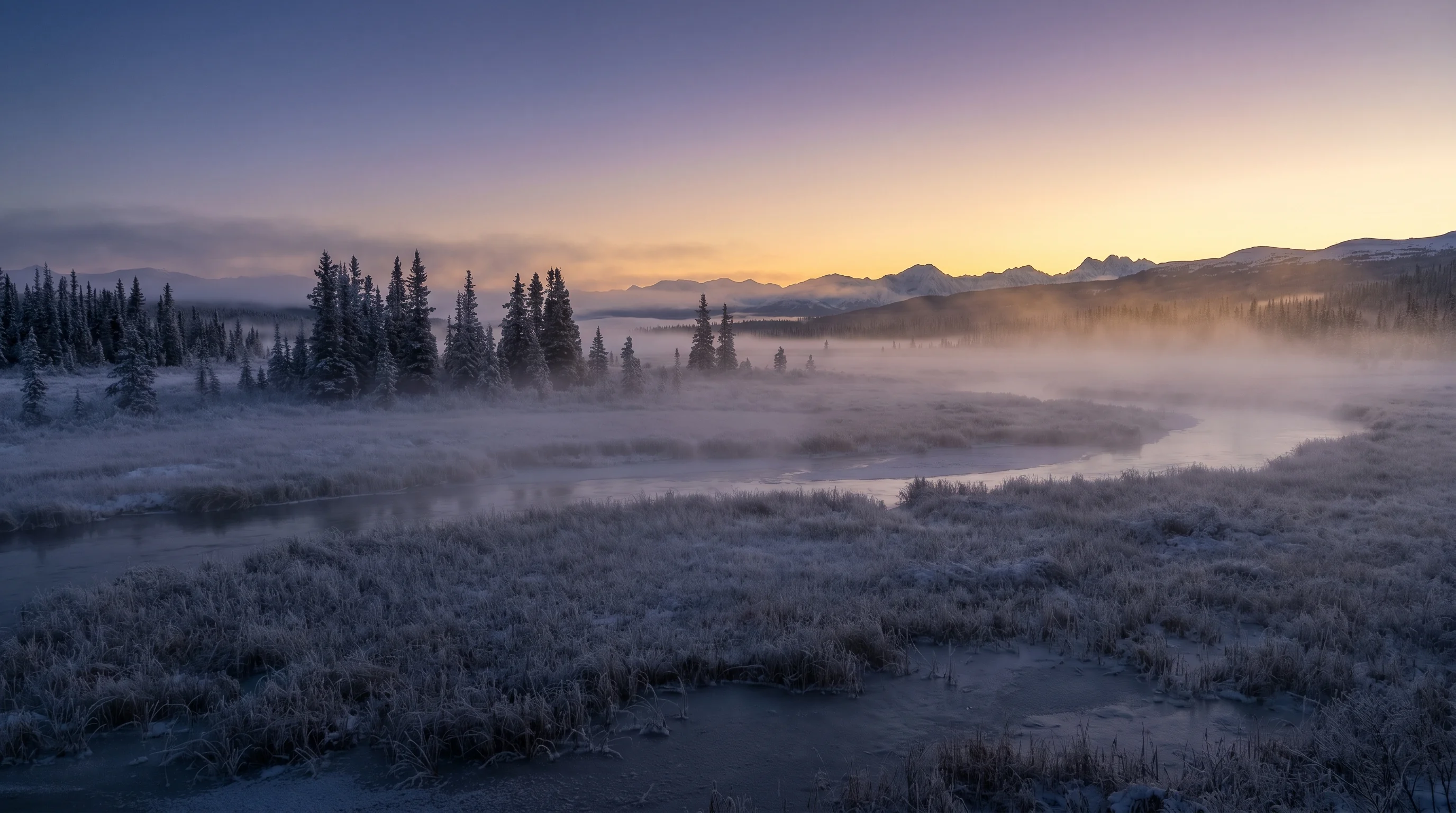
Five things you didn't know about the moose.
Cited biology that shapes how the moose feeds, defends, survives.
-
The moose (Alces alces) is the largest living member of the deer family Cervidae. Males of the Alaskan subspecies (A. a. gigas) can exceed 700 kg, with typical bulls weighing 360–600 kg and cows 270–400 kg across the species. Source ↗
-
Bull moose carry the largest antlers of any living mammal — palmate racks with recorded spreads up to 2,048 mm (just over 2 m) and masses up to 35 kg. Antlers are shed annually between December and March and regrown each spring. Source ↗
-
Moose are highly heat-intolerant: ambient temperatures above approximately 27°C for extended periods induce heat stress, making climate warming a direct threat to southern populations — a documented driver of range contraction in the contiguous US. Source ↗
-
The Isle Royale wolf–moose project in Lake Superior's Isle Royale National Park is the longest continuous predator–prey study in the world — ongoing for more than six decades, led historically by Rolf Peterson and now by John Vucetich and Sarah Hoy, documenting natural wolf–moose population cycles in an island system where wolves are the sole moose predator. Source ↗
-
Four subspecies of Alces alces are commonly recognised: A. a. alces (European moose / elk, Scandinavia & European Russia), A. a. americanus (eastern Canada), A. a. andersoni (northwestern Canada & northern Great Lakes), and A. a. gigas (Alaskan moose — the largest, with males up to 771 kg). Source ↗
About the moose
Where the moose sits on the tree of life.
-
Class
Mammalia
Warm-blooded animals with fur or hair that feed their young milk.
-
Order
Artiodactyla
Hoofed mammals with an even number of toes — pigs, deer, cattle.
-
Family
Cervidae
A family of related species — Cervidae.
-
Species
Alces alces
Moose — the species this page is about.


Moose
Every fact, cited.
Biology cited on this page comes from peer-reviewed zoology and the major species databases. Click through for the underlying study, dataset or assessment.
- Animal Diversity Web · Animal Diversity Web
- Animal Diversity Web · Animal Diversity Web
- Animal Diversity Web · Animal Diversity Web
- isleroyalewolf.org · isleroyalewolf.org
- Animal Diversity Web · Animal Diversity Web


