
Pantanal Puma
Scientific name Puma concolor
Adult size
- Weight
- ♀F 42 kg ♂M 60 kg
- Length
- ♀F 1.15 m ♂M 1.25 m
- Shoulder height
- ♀F 0.6 m ♂M 0.65 m
- Top speed sprint
- ♀F 50 km/h ♂M 50 km/h
- Lifespan
- Pumas can live about 18-20 years in the wild and slightly longer in captivity.
Represented by Vulto Pantanal Wetlands, Brazil

Pantanal pumas are part of the wider puma family, which ranges from Canada to the southern tip of South America. This record focuses on the South American lowland cats of the Pantanal wetlands in Brazil, Bolivia, and Paraguay, plus nearby Cerrado savanna, Chaco dry woodland, and southern Amazon edges. The Pantanal is a huge seasonal wetland: gallery forest, flooded grassland, scrub, river margins, and dry islands where deer, capybara, and peccary concentrate.
Where they live
Three angles, one home.
The pantanal puma represented in the Wyld Savage League lives in Pantanal Wetlands, Brazil. Three views of the same patch of country — at ground level, from above, and bird's-eye.
-
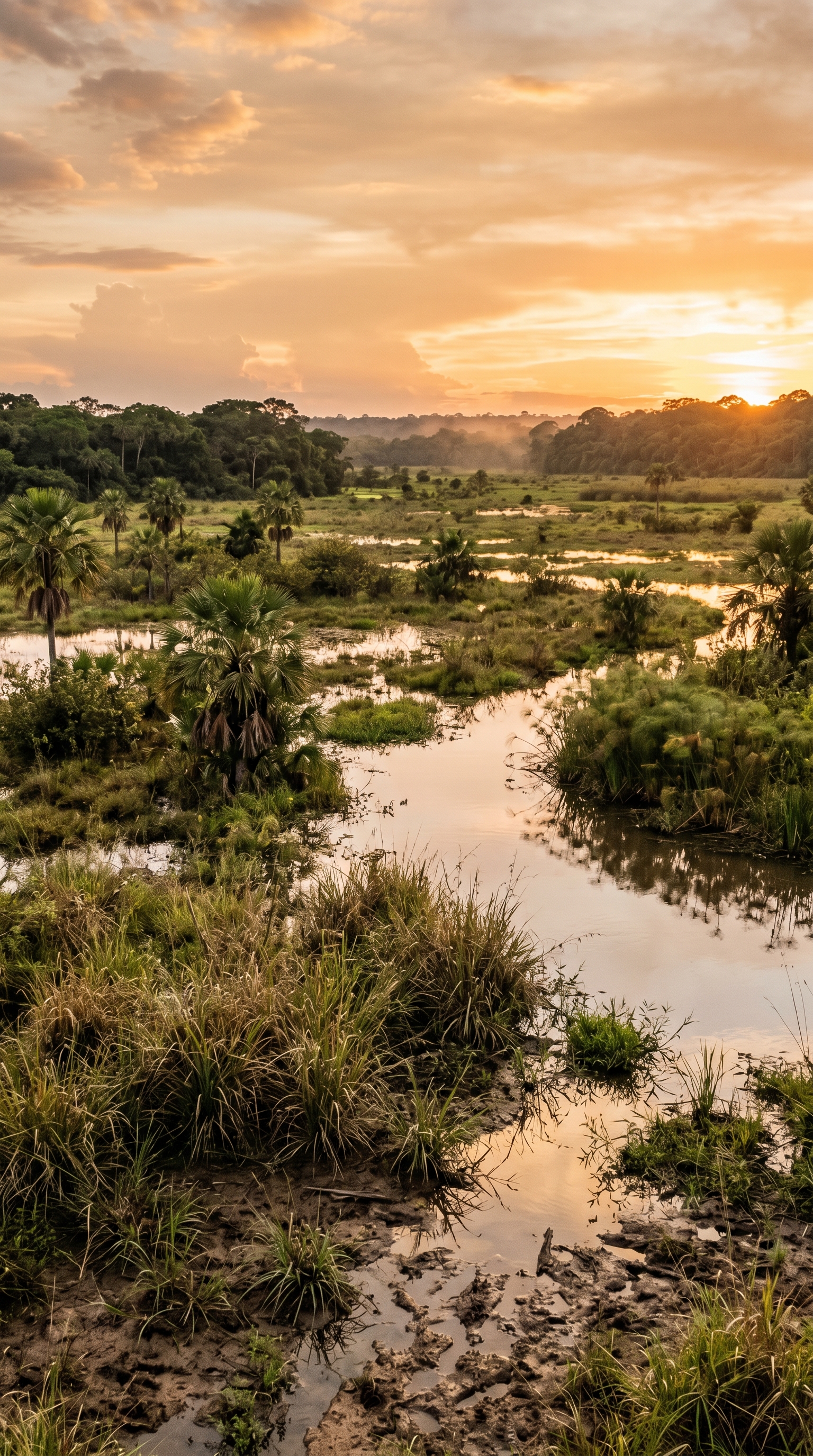
Pantanal Wetlands, Brazil at ground level — home of the pantanal puma. -
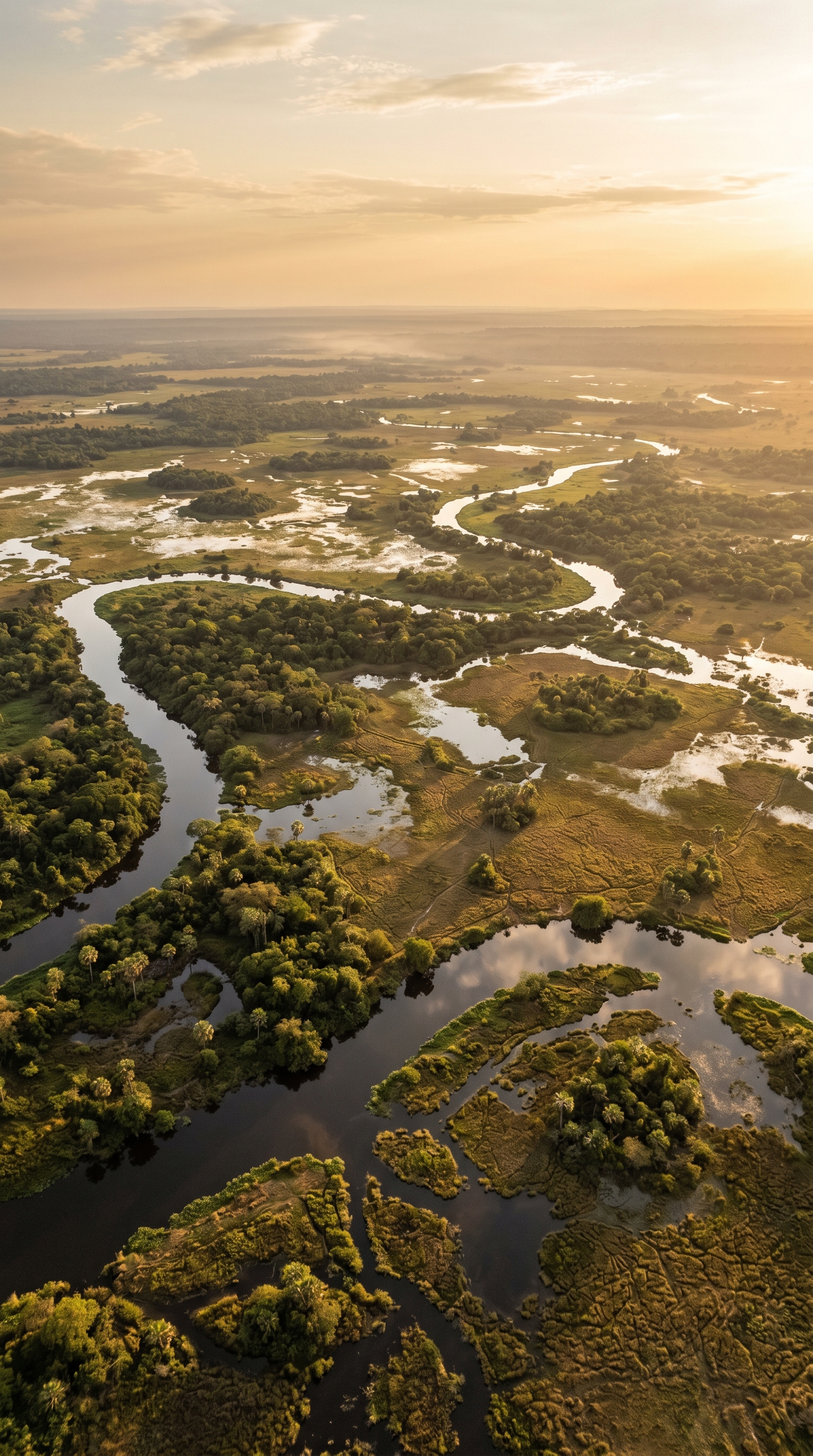
Pantanal Wetlands, Brazil seen from above — home of the pantanal puma. -
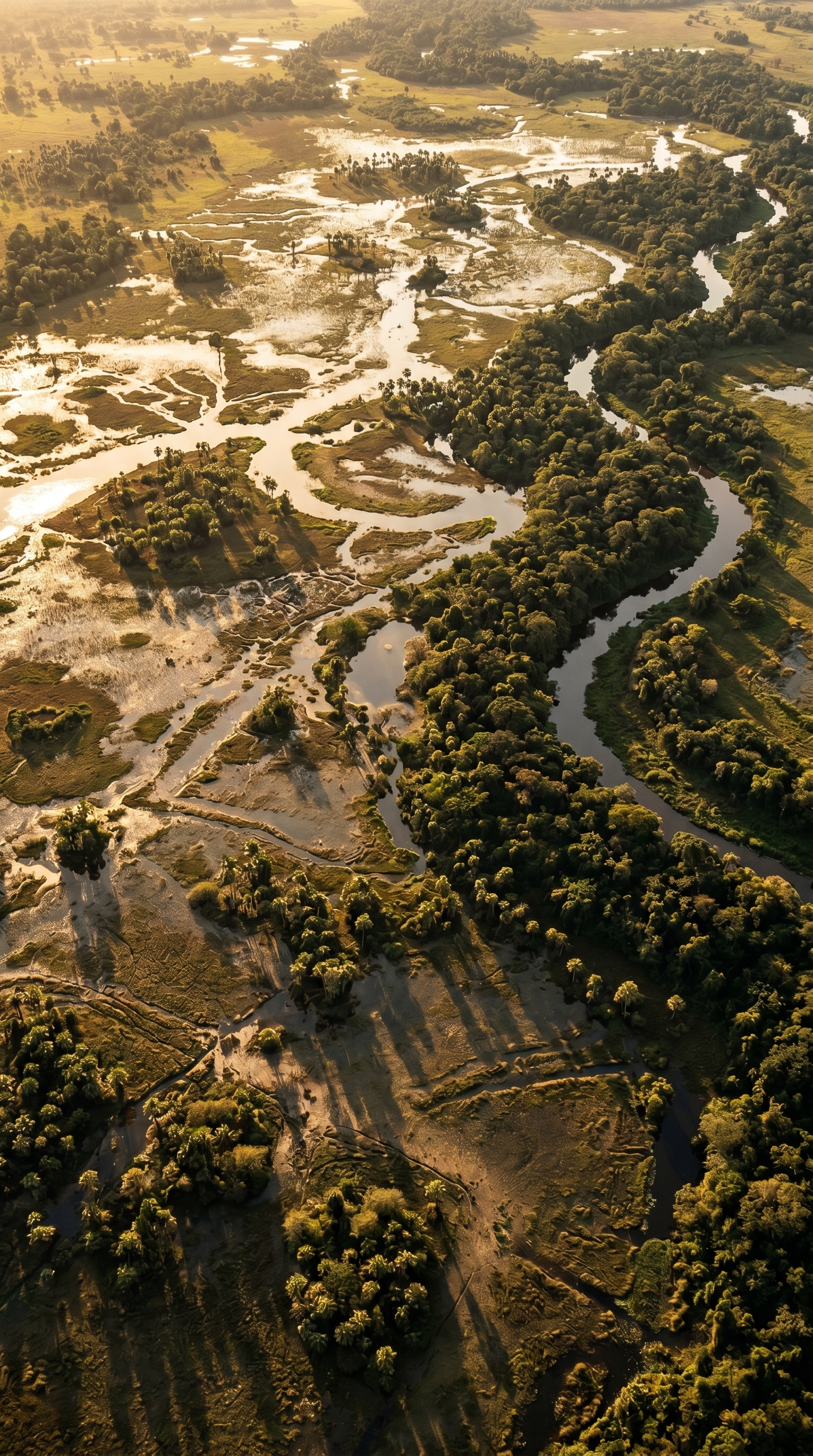
Pantanal Wetlands, Brazil from high overhead — home of the pantanal puma.
Native range
Pantanal pumas are part of the wider puma family, which ranges from Canada to the southern tip of South America. This record focuses on the South American lowland cats of the Pantanal wetlands in Brazil, Bolivia, and Paraguay, plus nearby Cerrado savanna, Chaco dry woodland, and southern Amazon edges. The Pantanal is a huge seasonal wetland: gallery forest, flooded grassland, scrub, river margins, and dry islands where deer, capybara, and peccary concentrate.
The range
Six regions, one species.
The pantanal puma doesn't live in one place. Across the map below, each region has its own pressures, prey, and politics — same biology, different worlds.
-
Brazil
Pantanal Wetlands
Primary population for this file. One of the highest-density puma landscapes recorded; fully sympatric with jaguar. Vulto's home territory.
Source ↗ -
Brazil
Pantanal Matogrossense National Park
IUCN-documented protected stronghold within the Brazilian Pantanal.
Source ↗ -
Brazil
Serra da Capivara National Park
Cerrado / Caatinga transition population; drier habitat than the Pantanal core.
Source ↗ -
Argentina
Iberá National Park
Southern extension of the Paraná–Pantanal wetland complex; active rewilding landscape.
Source ↗ -
Paraguay
Gran Chaco
Trans-boundary Chaco population shared with Bolivia and northern Argentina.
Source ↗ -
Peru
Manu National Park
Andean-Amazon transition population. Documented co-occurrence with Tremarctos ornatus (spectacled bear); Misti's nemesis-sympatry anchor. Puma is the documented predator of spectacled bear cubs across Peruvian Andean range per IUCN Bear Specialist Group literature. Added Session 7 alongside Misti character authoring — broadens this species file's scope from 'Pantanal Puma' strictly to 'South American Puma' including Andean populations, consistent with Kitchener 2017 monotypic taxonomy.
Source ↗
Daily life
What the pantanal puma does, day to day.
Diet, social behaviour, climate — the everyday biology that shapes how this species hunts, defends and survives.
-
Diet
Obligate carnivore. Opportunistic solitary ambush predator with the broadest prey range of any New World carnivore.
-
Social life
Strictly solitary outside of brief mating associations and mother–cub dependence (15–26 months).
-
Climate
Broadest climatic tolerance of any New World terrestrial mammal, from sub-Arctic conifer forest to tropical lowland and high Andean desert.
Wyld Trivia
Five questions. Most people get them wrong.
But you're not most people.
Tap to reveal.
-
How fast can a puma actually go?
Show me HideFaster than they look — but not as fast as the internet says. Scientists put GPS trackers on two wild pumas being chased by hounds and measured a top burst of about 50-54 km/h (around 14-15 metres a second). That is sprint speed, not chase speed — pumas go that fast only for a couple of seconds. They are built for surprise, not for long pursuits. Many websites quote 80 km/h, but no peer-reviewed paper supports that number.
-
Which big cat lives in more places than any other animal in the Americas?
Show me HideThe puma. From the Yukon in Canada all the way down to the southern tip of Chile — that's about 110 degrees of latitude. They live in mountains, deserts, forests, swamps, and even the edges of cities. No other big cat — and no other big land mammal in the Americas — covers as much ground.
-
Why doesn't a puma roar like a tiger or lion?
Show me HidePumas are the largest 'small cat' on Earth. They sit on a different branch of the family tree to tigers, lions, leopards, and jaguars — and they don't have the special throat anatomy needed to roar. Instead, they hiss, growl, purr, yowl, and let out a long-distance scream that sounds almost human.
-
How do jaguars and pumas share the same forest without clashing?
Show me HideBy eating different things. In the Pantanal, jaguars take the biggest prey — caiman, capybara, cattle. Pumas take medium-sized prey — deer, peccary, smaller capybara. The two cats avoid the same kills, so they avoid the same clashes. Scientists call it prey-size partitioning.
-
How does a puma actually catch its dinner?
Show me HideSilently. Pumas creep within 10 to 15 metres of their prey using cover and slow, careful steps. Then they explode in a single short pounce and deliver one killing bite to the back of the neck. They don't chase — once they break cover, the kill is over in about two seconds.
The terrain
Where the pantanal puma thrives.
Every animal is built for some places more than others. These are the ground, hours and weather where this species shows its best — and its worst.
Ground
- Gallery forest Excels
- Wetland edge Excels
- Scrubland Strong
- Savanna Strong
- Open water Average
- Dense jungle Struggles
Hours
- Dawn Excels
- Dusk Excels
- Night Excels
- Twilight Excels
- Day Struggles
Weather
- Moderate Excels
- Hot Strong
- Cold Strong
- Rain Strong
- Wind Average
- Storm Struggles

Five things you didn't know about the pantanal puma.
Cited biology that shapes how the pantanal puma feeds, defends, survives.
-
Puma concolor has the largest geographic range of any native terrestrial mammal in the Western Hemisphere, extending from British Columbia, Canada through Central and South America to southern Chile — an unmatched distribution among New World mammals. Source ↗
-
Pumas are built for short explosive ambush rather than long open chases. Peer-reviewed accelerometer + GPS work documents brief high-acceleration attack clusters and energetically expensive bursts; the strongest puma-specific number in the literature is an instantaneous escape peak of 14.5-15.0 m/s (~50-54 km/h) measured in two California wild pumas under hound pursuit — not a species ceiling, but a real measurement of how fast a puma actually moves when it has to. Source ↗
-
Across much of South America, Puma concolor is sympatric with the jaguar (Panthera onca). Where the two coexist, pumas systematically take smaller prey than jaguars (mid-sized deer, peccaries, capybara, armadillo), a resource-partitioning pattern documented in long-term Pantanal telemetry studies. Source ↗
-
Puma concolor belongs to the subfamily Felinae, not Pantherinae, and lacks the specialised laryngeal morphology that allows Panthera species to roar. Pumas instead use low-pitched hisses, growls, purrs, yowls, and long-distance screams to communicate territory and receptivity. Source ↗
-
Pumas kill by silent stalking to close range followed by a short, explosive pounce and a bite delivered to the base of the skull or nape — the same ambush template used from Yukon boreal forest to the Chilean steppe, with prey identity shifting by region. Source ↗
About the pantanal puma
Where the pantanal puma sits on the tree of life.
-
Class
Mammalia
Warm-blooded animals with fur or hair that feed their young milk.
-
Order
Carnivora
Mostly meat-eating mammals — cats, dogs, bears and their relatives.
-
Family
Felidae
The cat family — solitary hunters with retractable claws.
-
Species
Puma concolor
Pantanal Puma — the species this page is about.


Pantanal Puma
Every fact, cited.
Biology cited on this page comes from peer-reviewed zoology and the major species databases. Click through for the underlying study, dataset or assessment.
- catsg.org · catsg.org
- doi.org · doi.org
- catsg.org · catsg.org
- Animal Diversity Web · Animal Diversity Web
- Animal Diversity Web · Animal Diversity Web


