
Snow Leopard
Scientific name Panthera uncia
Adult size
- Weight
- ♀F 36 kg ♂M 42 kg
- Length
- ♀F 1.06 m ♂M 1.16 m
- Shoulder height
- ♀F 0.64 m ♂M 0.64 m
- Top speed sprint
- ♂M 40 km/h
- Lifespan
- Snow Leopards are adults after about 3 years, with full big-cat adult size around 4-5 years.
Represented by Tenzin Hemis National Park (Ladakh), India

Snow leopards live in the high mountains of Central and South Asia across 12 countries: Afghanistan, Bhutan, China, India, Kazakhstan, Kyrgyzstan, Mongolia, Nepal, Pakistan, Russia, Tajikistan, and Uzbekistan. Their strongholds include the Himalaya, Karakoram, Pamir, Tien Shan, Altai, and the Tibetan Plateau. These are cold, dry, rocky places where cliffs, scree slopes, and open ridgelines replace forest.
Where they live
Three angles, one home.
The snow leopard represented in the Wyld Savage League lives in Hemis National Park (Ladakh), India. Three views of the same patch of country — at ground level, from above, and bird's-eye.
-
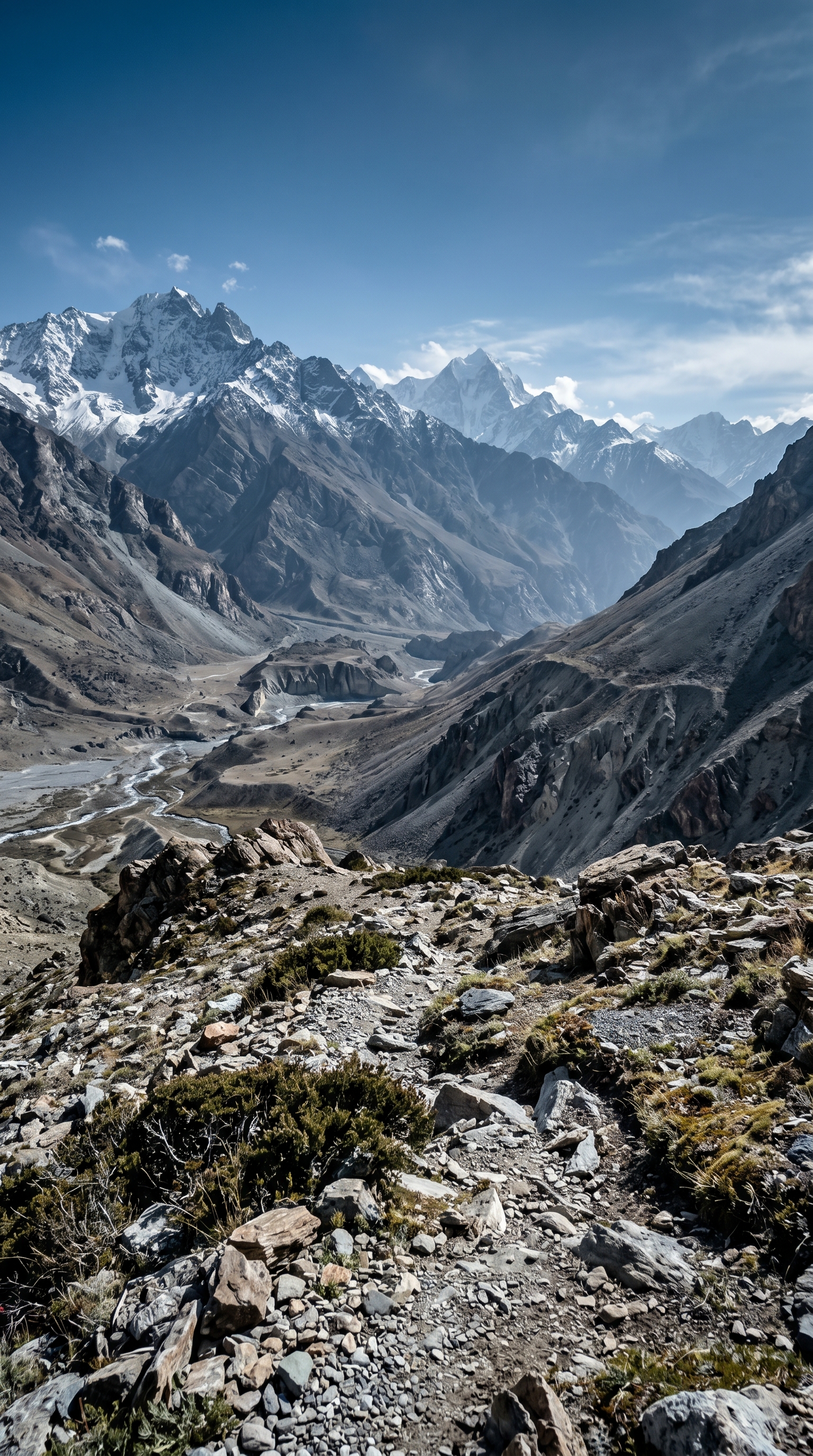
Hemis ridge at ground level — the rocky scree of the Karakoram, where snow leopards stalk blue sheep in thin air. -
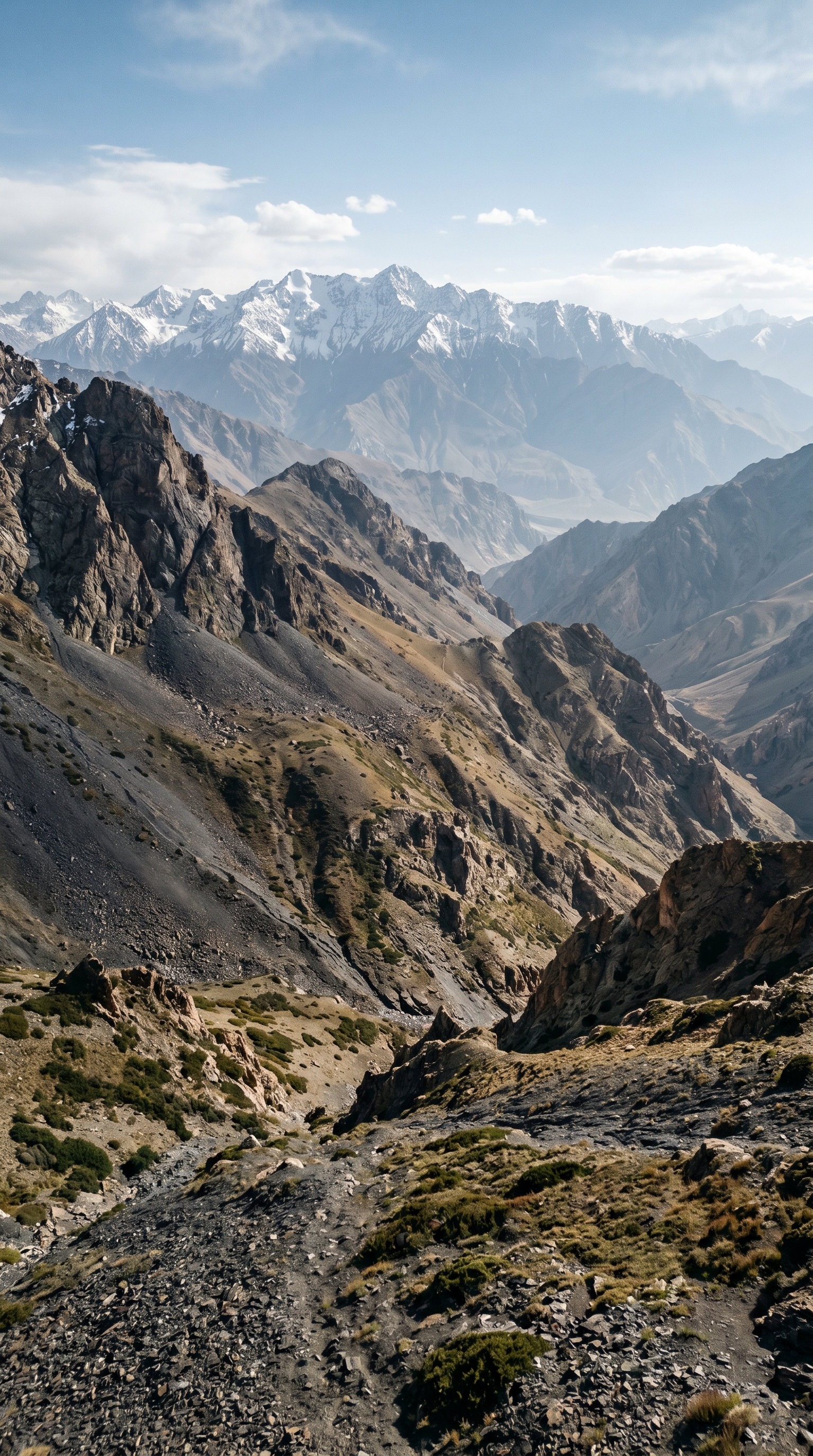
Hemis National Park from above — Ladakh's high-altitude desert, India's largest national park. -
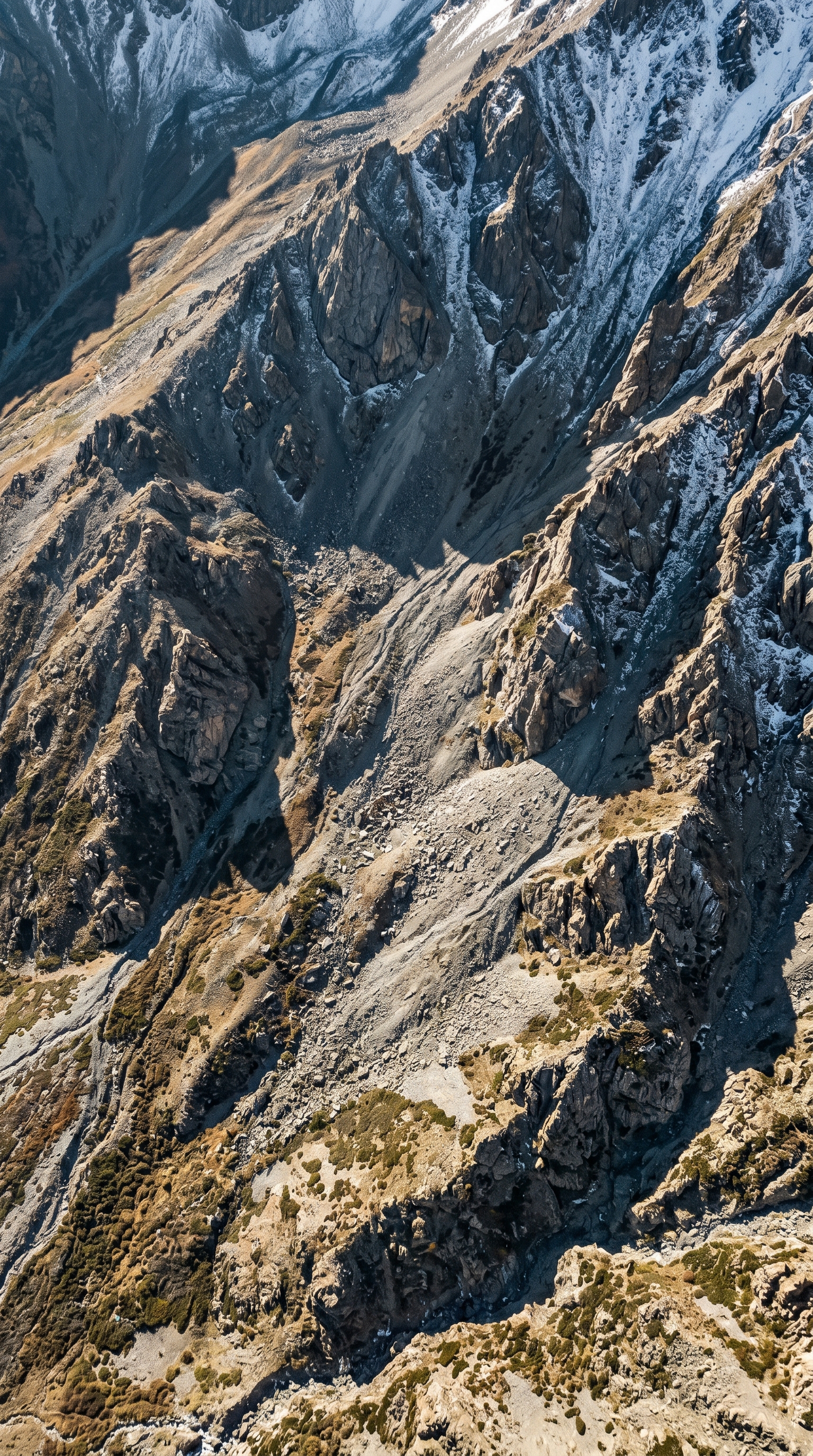
Snow leopard country from high overhead — twelve Asian countries, all above the tree line.
Native range
Snow leopards live in the high mountains of Central and South Asia across 12 countries: Afghanistan, Bhutan, China, India, Kazakhstan, Kyrgyzstan, Mongolia, Nepal, Pakistan, Russia, Tajikistan, and Uzbekistan. Their strongholds include the Himalaya, Karakoram, Pamir, Tien Shan, Altai, and the Tibetan Plateau. These are cold, dry, rocky places where cliffs, scree slopes, and open ridgelines replace forest.
The range
Six regions, one species.
The snow leopard doesn't live in one place. Across the map below, each region has its own pressures, prey, and politics — same biology, different worlds.
-
India
Hemis National Park (Ladakh)
Hemis sits inside a key Ladakh snow-leopard landscape; anchor site for long-term monitoring and community conservation. Tenzin's home territory.
Source ↗ -
Nepal
Sagarmatha National Park
Everest region; breeding population confirmed at 3,000–5,000 m elevation.
Source ↗ -
Bhutan
Jigme Dorji National Park
Shares high-altitude mixed-conifer forest with Bengal tigers documented breeding above 4,400 m (WWF 2022). Wyld Rivals cross-character overlap with Tejas — potential encounter/nemesis angle.
Source ↗ -
Mongolia
Gobi Gurvansaikhan National Park
Gobi-Altai transition; exceptionally large individual home ranges (>500 km²) recorded via satellite collaring.
Source ↗ -
China
Qinghai / Sanjiangyuan
Tibetan Plateau stronghold; China holds ~50–60% of global range.
Source ↗ -
Kyrgyzstan
Sarychat-Ertash State Reserve
Tien Shan range; flagship protected area for Central Asian snow leopard conservation.
Source ↗
Daily life
What the snow leopard does, day to day.
Diet, social behaviour, climate — the everyday biology that shapes how this species hunts, defends and survives.
-
Diet
Obligate carnivore and apex predator of Central Asian high mountains.
-
Social life
Solitary and highly elusive. Only long-term bond is mother-cub; cubs remain with the mother for roughly 18 months.
-
Climate
Cold, arid, high-mountain. Strongly associated with rugged, high-elevation country in Ladakh and across Central Asian mountain systems.
Wyld Trivia
Five questions. Most people get them wrong.
But you're not most people.
Tap to reveal.
-
How can a snow leopard hunt on cliffs?
Show me HideSnow leopards are built for steep terrain. They stalk close, then attack downhill from rock and snow. Long back legs power the jump, large fur-covered paws grip the slope, and the long tail helps them balance.
-
What's special about a snow leopard's tail?
Show me HideIt is huge for a cat. In free-ranging adult males, tail length averaged about 95 cm. That long tail helps a snow leopard balance on steep rock and can wrap around the body when it rests in freezing weather.
-
How does a snow leopard survive winters at the top of the world?
Show me HideTheir winter coat is up to 12 centimetres deep on the belly — twice as thick as in summer. Their ears are small and rounded so less heat escapes. And their paws are oversized and fur-covered, working like built-in snowshoes to spread their weight across snow.
-
Why doesn't a snow leopard roar like a tiger?
Show me HideSnow leopards are big cats, but they are not built for the deep true roar of lions, tigers, leopards, and jaguars. Their mountain voice is quieter and more ghost-like.
-
How many snow leopards are left in the wild — and where do most of them live?
Show me HideOnly about 4,500 to 7,000 are left across 12 Asian mountain countries. Half of all snow leopard habitat is in China alone — the rest spreads from Afghanistan to Mongolia, including the highest mountains on Earth.
The terrain
Where the snow leopard thrives.
Every animal is built for some places more than others. These are the ground, hours and weather where this species shows its best — and its worst.
Ground
- High mountain Excels
- Rocky cliff Excels
- Alpine Excels
- Steppe Strong
- Mountain forest Average
- Desert Struggles
- Lowland Avoids
Hours
- Dawn Excels
- Dusk Excels
- Twilight Excels
- Night Strong
- Day Average
Weather
- Cold Excels
- Moderate Strong
- Wind Strong
- Rain Average
- Storm Average
- Hot Avoids

Five things you didn't know about the snow leopard.
Cited biology that shapes how the snow leopard feeds, defends, survives.
-
Panthera uncia is a high-mountain cat of Central and South Asia; in Ladakh, habitat models link it strongly with rugged mountain terrain. Source ↗
-
The snow leopard is not built for the deep true roar of some other big cats; use vocal claims cautiously unless tied to direct anatomy sources. Source ↗
-
Free-ranging adult male snow leopards in Johansson et al. 2022 averaged 42 kg in body mass, 116 cm in head-body length, 95 cm in tail length, and 64 cm at the shoulder. Source ↗
-
The snow leopard was downlisted from Endangered to Vulnerable on the IUCN Red List in 2017, with an estimated global wild population of roughly 4,000–7,500 mature individuals distributed across 12 Asian range countries; the population trend remains decreasing. Source ↗
-
In the Indian Trans-Himalaya, snow leopards often hunt mountain hoofed animals such as blue sheep and ibex, while their exact prey mix changes by region. Source ↗
About the snow leopard
Where the snow leopard sits on the tree of life.
-
Class
Mammalia
Warm-blooded animals with fur or hair that feed their young milk.
-
Order
Carnivora
Mostly meat-eating mammals — cats, dogs, bears and their relatives.
-
Family
Felidae
The cat family — solitary hunters with retractable claws.
-
Species
Panthera uncia
Snow Leopard — the species this page is about.


Snow Leopard
Every fact, cited.
Biology cited on this page comes from peer-reviewed zoology and the major species databases. Click through for the underlying study, dataset or assessment.
- doi.org · doi.org
- Animal Diversity Web · Animal Diversity Web
- doi.org · doi.org
- panthera.org · panthera.org
- doi.org · doi.org


